Freezer breakfast sandwiches earn their spot in the rotation because they reheat into something that still feels like breakfast, not a compromise. The English muffin stays sturdy, the egg bakes into a neat layer instead of turning rubbery, and the cheese melts back into the sausage and muffin in a way that makes the whole thing taste freshly assembled. They’re the kind of make-ahead breakfast that saves a hectic morning without asking you to settle for bland.
The trick is baking the eggs in a muffin tin instead of scrambling them in a pan. That gives you uniform rounds that fit the muffins cleanly and freeze better than loose, fluffy eggs. Lightly toasting the English muffins first also matters more than people think. It helps them survive the freezer and the microwave without going soggy, especially if you’re wrapping and stacking a full dozen at once.
Below, I’ve included the detail that makes these hold together after freezing, plus a few ways to change them up if you want bacon, a different cheese, or a lighter version for the week ahead.
The eggs held their shape after freezing, and the cheese melted right back into the sausage when I microwaved them for breakfast all week. I loved that the English muffins didn’t get gummy.
Keep these freezer breakfast sandwiches on hand for busy mornings when you need a hot, grab-and-go breakfast that actually tastes homemade.
The Part That Keeps the Muffins from Going Soggy
Most freezer sandwiches fail for one of two reasons: the bread steams itself soft, or the egg turns spongy after reheating. This version avoids both by building in layers that each hold up on their own. The muffin is lightly toasted, the egg is baked until just set, and the cheese sits between warm fillings so it can melt back into place instead of disappearing into the bread.
The other important detail is the order of assembly. Put the cheese near the hot egg and sausage so it starts softening before freezing. That gives you a better melt when you reheat, and it also helps the sandwich stay together. If your muffins are fresh and extra soft, toast them a little more than you think you need to. They should feel dry on the cut side before you stack anything on them.
What Each Layer Is Doing in These Sandwiches

- English muffins — These are the backbone of the sandwich because they freeze and reheat better than soft sandwich bread. A standard plain muffin works best, but whole wheat is fine if you like a nuttier flavor. Toasting before assembly is the step that keeps the crumb from turning damp.
- Eggs — Baking the eggs in a muffin tin gives you neat rounds that fit the sandwich and freeze cleanly. If you want a firmer bite, break the yolks before baking. Scrambled eggs can work, but they’re harder to keep tidy and more likely to spill out when reheated.
- Breakfast sausage patties — These bring the savory, salty center that makes the sandwich feel complete. Store-bought patties are fine here because consistency matters more than finesse. Bacon works too, but it reheats a little less evenly and adds more crispness loss after freezing.
- American or cheddar cheese — American gives the smoothest melt, while cheddar brings a sharper flavor. If you want the most reliable reheated texture, American is the better choice. If using cheddar, slice it thin so it melts before the muffin gets hot and tough.
Building and Freezing the Sandwiches So They Reheat Cleanly
Baking the Eggs in the Muffin Tin
Spray the muffin tin generously so the eggs release without tearing. Crack one egg into each cup, then break the yolks if you want the sandwich to lay flatter. Bake until the whites are set and the centers no longer look wet, about 12 to 15 minutes at 350°F. Pull them as soon as they’re just cooked through; overbaked eggs turn rubbery once they’ve been frozen and microwaved.
Getting the Sausage and Muffins Ready
Cook the sausage patties all the way through and let them drain for a minute so extra grease doesn’t soak into the bread. Toast the English muffins lightly, just enough to dry the cut surface without making them brittle. If the muffins are too pale, they absorb moisture in the freezer bag and go soft after reheating. If they’re too dark, they can taste stale once thawed.
Assembling and Wrapping for the Freezer
Build each sandwich while the fillings are still warm enough to soften the cheese: muffin bottom, egg, sausage, cheese, muffin top. Wrap each one tightly in plastic wrap, pressing the wrap around the edges so less air gets trapped inside. Then tuck the wrapped sandwiches into freezer bags. The plastic wrap is what prevents freezer burn and keeps the muffin from drying out.
Reheating Without Ruining the Texture
Unwrap the sandwich before microwaving or the plastic will trap steam and make the bread soggy. Start with 1 minute, then add 15 to 20 second bursts until the center is hot and the cheese is melted. If you microwave too long at once, the egg gets tough before the middle warms through. For a better crust, finish the reheated sandwich in a toaster oven for a minute or two after the microwave.
How to Change These Sandwiches Without Losing the Make-Ahead Advantage
Bacon Instead of Sausage
Bacon gives you a saltier, smokier sandwich, but it won’t stay as plush as sausage after freezing. Cook it until just crisp, then blot off the excess grease before assembling. It reheats best if you keep the slices flat and avoid overstuffing the sandwich.
Cheddar for a Sharper Bite
Cheddar adds more flavor than American, especially if you use a medium or sharp block cut into slices. The tradeoff is a slightly less silky melt after freezing. Thin slices help it warm through faster, which keeps the bread from overcooking in the microwave.
Dairy-Free Version
Use a dairy-free cheese that melts well and replace the butter with oil or extra cooking spray. The texture won’t be quite as creamy as the original, but the sandwich still freezes well if you keep the eggs fully set and the muffins toasted. Choose a cheese labeled for melting, not just snacking.
Vegetarian Breakfast Sandwiches
Skip the sausage and add a thin layer of sautéed spinach or a plant-based patty if you want more substance. Just cook any vegetables until the moisture is gone, or they’ll make the muffins soggy after freezing. This version still reheats well, but it works best if you keep the filling fairly compact.
Storage and Reheating
- Refrigerator: Keep assembled sandwiches up to 3 days. The muffin softens a little, but they still reheat well for short-term meal prep.
- Freezer: Freeze for up to 3 months. Wrap each sandwich tightly, then store in freezer bags so they don’t dry out or pick up freezer odors.
- Reheating: Unwrap before microwaving, then heat 1 to 2 minutes until hot in the center. If the bread feels too soft, finish in a toaster oven for a crisp edge; the most common mistake is overheating in one long burst, which makes the egg tough.
Questions I Get Asked About This Recipe
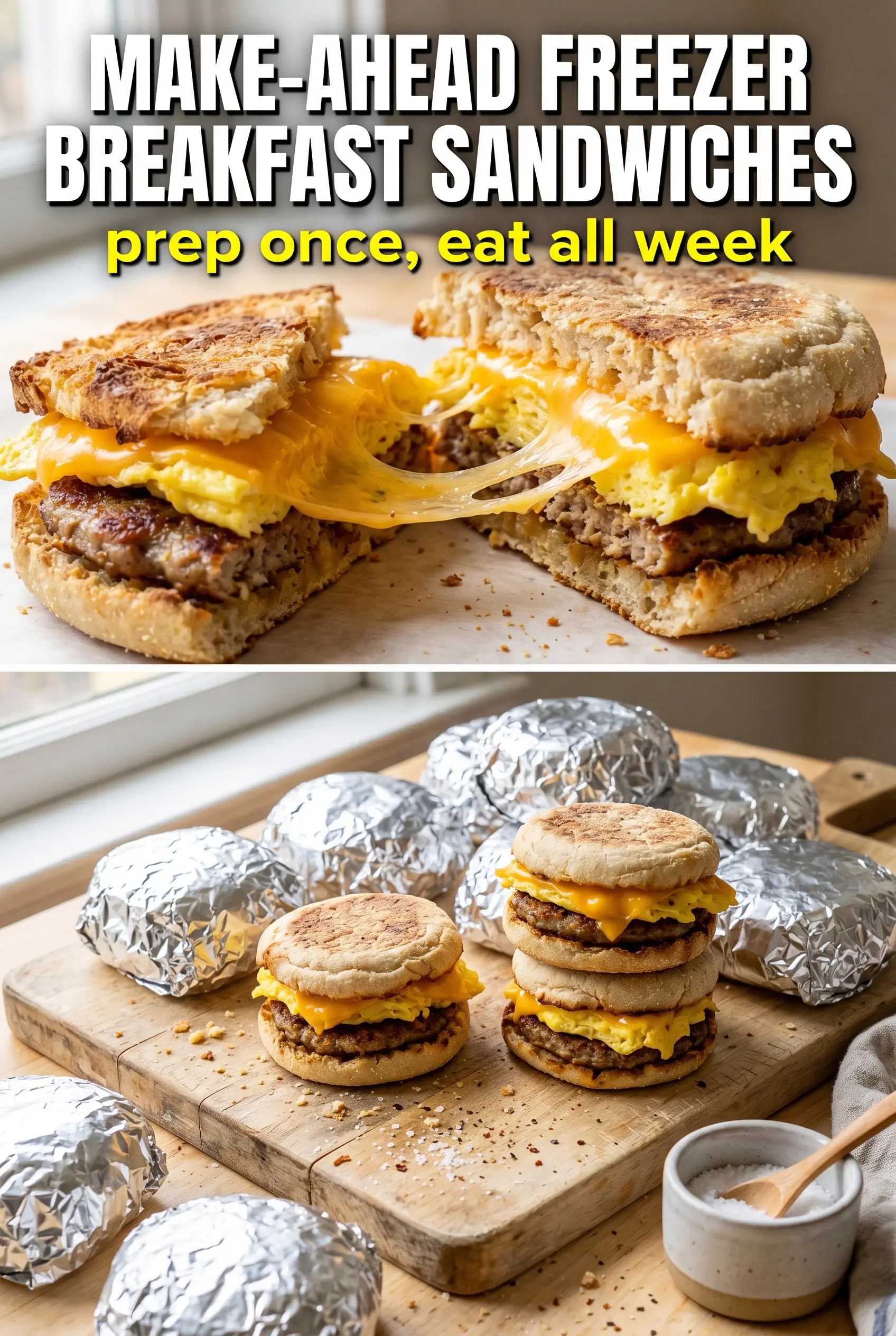
Freezer Breakfast Sandwiches
Ingredients
Equipment
Method
- Cook the breakfast sausage patties according to package directions, then set aside while you bake the eggs.
- Spray a muffin tin with cooking spray, then crack one egg into each cup and break yolks if desired.
- Season the eggs with salt and pepper, then bake at 350°F for 12-15 minutes until set.
- Lightly toast the English muffins so they hold up during freezing and reheating.
- Assemble each sandwich with muffin bottom, egg, sausage patty, cheese slice, and muffin top.
- Wrap each sandwich individually in plastic wrap, then place into freezer bags.
- Freeze sandwiches for up to 3 months; to reheat, unwrap and microwave for 1-2 minutes until heated through.