Silky noodles coated in a glossy egg-and-cheese sauce, sweet charred corn, and crisp bacon make this elote pasta carbonara the kind of dinner that disappears fast. It has the salty richness of carbonara, but the lime, tajín, and cotija pull it into elote territory in the best way. Every bite lands somewhere between creamy, smoky, tangy, and a little bit spicy.
The trick is treating the sauce like carbonara, not like alfredo. The egg yolks and cheese go onto hot pasta off the heat, then a splash of pasta water loosens everything into a sauce that clings instead of scrambling. Charred corn adds sweetness and texture, while bacon fat carries the smoky, savory base so the dish tastes layered instead of heavy.
Below, you’ll find the one timing detail that keeps the sauce smooth, plus a few swaps if you want to adjust the heat, the cheese, or make it work with what you’ve got in the fridge.
The sauce stayed silky when I tossed the pasta off the heat, and the charred corn made every bite taste like elote with a carbonara twist. My kids were scraping the bowl for the last little bits.
Save this elote pasta carbonara for the night you want creamy pasta, charred corn, and tajín in one bowl.
The Sauce Breaks When You Treat It Like Alfredo
Carbonara behaves differently from a cream sauce. The eggs need residual heat from the pasta, not direct burner heat, or they tighten too fast and turn grainy. That’s the whole game here: hot pasta, off the heat, then the yolk-and-cheese mixture stirred in quickly enough to emulsify before anything scrambles.
The bacon fat matters because it gives the sauce a slick, savory base without needing extra cream. If the pan is still blazing hot when the egg mixture goes in, the yolks cook in streaks. Pulling the skillet off the burner first gives you a glossy sauce that wraps around the spaghetti instead of clumping on top of it.
- Off-heat assembly — This is what keeps the eggs from curdling.
- Reserved pasta water — The starch helps the sauce turn silky and clingy instead of thick and pasty.
- Charred corn — You want browned spots, not just warmed kernels. That little bit of bitterness balances the sweetness.
What Each Ingredient Is Actually Doing in This Dish
Fresh corn earns its place here. Frozen corn will work in a pinch, but it won’t char as deeply and it won’t bring the same juicy pop. If you use frozen, thaw it first and cook it in a single layer so the pan can brown it instead of steaming it.
Cotija gives the salty, crumbly bite that makes this taste like elote instead of plain bacon pasta. Parmesan adds a firmer, nuttier backbone and helps the sauce emulsify. Tajín is doing more than adding heat; it brings citrusy chile flavor that ties the lime juice and corn together. If you only have one of the cheeses, use more Parmesan and a little extra salt, but the finished dish will lose some of that tangy, street-corn edge.
- Egg yolks — Whole eggs can work, but yolks give the sauce its rich, velvety body.
- Bacon — Pancetta also works if you want a cleaner pork flavor. Turkey bacon won’t give the same amount of rendered fat, so the sauce will need more help from pasta water.
- Lime juice and cilantro — Add these at the end. Heat dulls both, and this dish needs that fresh finish to keep the richness in check.
Getting the Corn, Pasta, and Eggs to Come Together Fast
Render the Bacon First
Cook the chopped bacon until it’s crisp and the fat in the pan has enough color to look almost amber. That fat carries a lot of the seasoning for the whole dish, so don’t drain the pan dry. Lift the bacon out and leave a thin film of fat behind. If you leave too much, the finished pasta can feel greasy instead of glossy.
Char the Corn in the Bacon Fat
Add the kernels straight to the hot skillet and let them sit long enough to pick up color before stirring. You’re looking for browned edges and a little smoke, not just softened corn. If the pan is crowded, the kernels will steam. Use a large skillet and keep the corn in close contact with the surface so it develops those sweet, toasted spots.
Build the Sauce Off the Heat
Toss the hot drained spaghetti with the corn and bacon fat, then pull the pan off the burner before the egg mixture goes in. Stir fast and keep the pasta moving while you add pasta water a splash at a time. The sauce should turn creamy and coat the noodles in a thin sheen. If it starts looking thick and scrambled, add a little more pasta water right away and keep tossing.
Finish with Lime and Cheese
Once the sauce is smooth, fold in the bacon, then hit it with lime juice, extra cotija, and a pinch more tajín if you want it louder. Taste before salting because the bacon, cheese, and seasoning already bring plenty. Serve immediately while the sauce is still loose and glossy. Carbonara tightens as it sits, and this version is best at the table, not five minutes later.
How to Adapt This for Different Kitchens and Different Heat Levels
Make It Spicier Without Throwing Off the Sauce
Add more tajín at the end or stir in a pinch of cayenne with the egg mixture. Keep the heat in the seasoning, not the pan, because extra chile in the skillet can mask the sweet corn and make the bacon fat taste harsh.
Dairy-Free Version That Still Tastes Rich
Swap the cheeses for a dairy-free Parmesan-style alternative and add an extra tablespoon of pasta water plus a small drizzle of olive oil to help the sauce coat the noodles. You’ll lose some of the sharp, salty bite from cotija, so add a little more tajín and salt at the end to bring the flavor back up.
Vegetarian Elote Pasta Carbonara
Skip the bacon and cook the corn in butter or olive oil until browned in spots. Add a pinch of smoked paprika for the smoky note bacon would normally bring. The pasta still turns creamy, but the flavor leans brighter and more corn-forward.
Using Frozen Corn
Thaw the corn first and pat it dry so it can brown instead of steaming. Frozen kernels taste fine here, but they need a little more time in the skillet to pick up color, and you may want an extra squeeze of lime to wake the whole dish up.
Storage and Reheating
- Refrigerator: Store leftovers in an airtight container for up to 3 days. The sauce will tighten and the pasta will soak up moisture.
- Freezer: I don’t recommend freezing this one. The egg-based sauce and cheese separate after thawing, and the corn loses its texture.
- Reheating: Warm gently in a skillet over low heat with a splash of water or milk, stirring constantly until the sauce loosens. High heat will scramble the eggs and make the pasta clumpy.
The Things That Trip People Up With This Dish
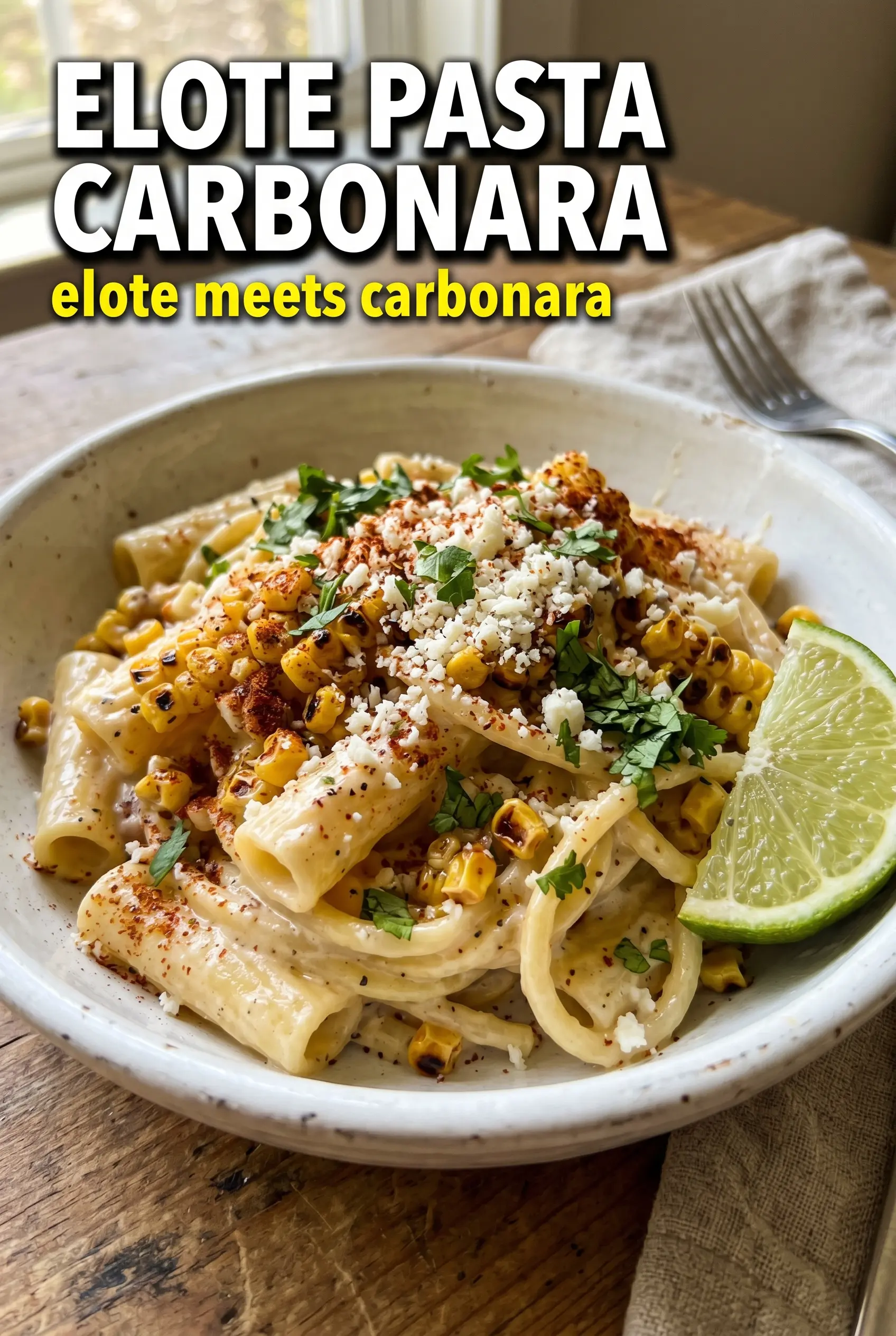
Elote Pasta Carbonara
Ingredients
Equipment
Method
- Bring a large pot of salted water to a boil, then cook the spaghetti until al dente, about 9-11 minutes. Visual cue: pasta should be tender but still firm in the center.
- Before draining, reserve 1 cup of pasta water, then drain the spaghetti. Visual cue: keep the pasta water close for making the sauce.
- Whisk the egg yolks, Cotija, Parmesan, tajín, and cilantro together until smooth and thick. Visual cue: mixture turns pale and creamy with no visible egg streaks.
- Cook the chopped bacon in a large skillet over medium heat until crispy, then remove and set aside. Visual cue: bacon fat remains in the skillet and bacon edges look browned.
- Add corn kernels to the bacon fat and cook 3-4 minutes, stirring occasionally, until charred in spots. Visual cue: some kernels are golden-brown with darker caramelized patches.
- Off the heat, combine the hot pasta with the corn mixture in the skillet. Visual cue: steam rises but the mixture is not bubbling aggressively.
- Quickly stir in the egg mixture, adding reserved pasta water a little at a time until creamy. Visual cue: sauce clings to the pasta and turns glossy rather than streaky.
- Toss in the crispy bacon, then season with lime juice, salt, and pepper, and serve immediately. Visual cue: pasta looks evenly coated with a light sheen and visible corn and bacon flecks.