Egg roll soup turns the takeout favorite into a fast, savory bowl with all the parts people actually want: tender cabbage, sweet carrots, rich broth, and seasoned meat in every spoonful. What makes it work is that nothing gets fussy. The pork or chicken browns first for depth, then the ginger, garlic, soy, sesame, and vinegar build a broth that tastes layered instead of flat. The vegetables stay lively enough to feel like a real meal, not a soft, overcooked soup.
The key is treating the cabbage like the star, not an afterthought. It needs just enough simmer time to go silky around the edges while still holding some bite, and the carrots should be thin enough to soften at the same pace. A little rice vinegar wakes up the broth at the end, and the sesame oil gives it that unmistakable egg roll character without making the soup heavy.
If you’ve ever wanted egg roll flavor in a weeknight-friendly pot, this version gives you the shortcut without losing the payoff. The crisp topping matters too, so I’ve included the one garnish that makes each bowl feel finished.
The broth had that classic egg roll taste, and the cabbage stayed tender but not mushy. I added the wonton strips right before serving and they stayed crisp just long enough for dinner.
Love the savory ginger-soy broth and crispy wonton finish? Save this Egg Roll Soup for an easy one-pot dinner with takeout flavor.
The Trick to Keeping the Broth Bold Without Turning the Vegetables to Mush
The broth in egg roll soup needs to taste seasoned before the vegetables go in, because cabbage and carrots release a little sweetness as they cook. If the base tastes timid at the start, it usually ends up bland at the table. That’s why the soy sauce, sesame oil, rice vinegar, and sriracha go in right after the broth; they season the liquid from the inside out instead of being sprinkled on top at the end.
The other thing that matters is timing. Cabbage can go from crisp to limp fast, so keep the simmer gentle and stop cooking when the shreds are tender with a little texture left. If you boil the soup hard, the broth can taste flat and the vegetables lose the clean, cabbage-forward bite that makes this dish feel like egg roll filling in a bowl.
What Each Ingredient Is Actually Doing in This Bowl

- Ground pork or chicken — Pork gives the soup the closest nod to classic egg roll filling because it brings a little richness with very little effort. Chicken works well if you want something lighter. If you use chicken, don’t overcook it during the browning stage; it only needs enough time to lose its pink color before the broth goes in.
- Cabbage — This is the backbone of the soup. Thin shreds soften quickly and soak up the ginger-soy broth without disappearing. Pre-shredded coleslaw mix works in a pinch, but a plain cabbage mix is better than one loaded with dressing or extra kale.
- Ginger and garlic — These need to hit the hot pan briefly before the liquid goes in so their aroma blooms. Skip this step and the soup tastes one-note. Fresh ginger matters more than fresh garlic here because it gives the broth that sharp, familiar takeout warmth.
- Sesame oil, soy sauce, and rice vinegar — This trio defines the flavor. Sesame oil adds the nutty finish, soy sauce brings salt and depth, and rice vinegar keeps the broth from tasting heavy. If you substitute regular vinegar, use less and taste as you go because it can come across harsher.
- Crispy wonton strips — These are the piece that make the bowl feel complete. Add them right before serving so they stay crunchy. If you’re avoiding gluten, leave them off and finish with toasted sesame seeds and extra green onions instead.
How to Build the Soup So the Flavor Lands in Every Spoonful
Brown the Meat First
Start with a hot pot and let the ground pork or chicken cook until it loses its raw color and picks up a few browned edges. Those bits at the bottom are not a problem; they’re part of the flavor. If the pot looks greasy after browning pork, drain off the excess fat, but leave enough behind to cook the garlic and ginger without sticking.
Wake Up the Aromatics
Add the garlic and ginger straight into the hot pot and cook them for just 1 to 2 minutes. You’re looking for a fragrant, punchy smell, not browning. If they start to darken, the heat is too high and the garlic can turn bitter, which shows up fast in a broth this simple.
Season the Broth Before the Vegetables Go In
Pour in the broth, soy sauce, sesame oil, rice vinegar, and sriracha, then bring everything to a boil before reducing to a simmer. This is where the soup gets its backbone. Taste the broth now if you want to adjust salt later; once the cabbage goes in, the soup will taste softer and a little sweeter.
Cook the Cabbage Just to Tender
Add the cabbage and carrots and simmer until the vegetables are tender but not collapsing, usually 8 to 10 minutes. Thin shreds will cook faster than thick ones, so watch the cabbage, not just the clock. If the soup boils hard here, the vegetables lose their shape and the broth can get cloudy instead of clean and savory.
Finish With Freshness and Crunch
Stir in the green onions at the end so they stay bright. Taste again and add salt and pepper only after the broth has reduced a bit and the vegetables have had time to release their sweetness. Serve immediately with crispy wonton strips and sesame seeds; if they sit in the soup too long, they soften and you lose the contrast that makes the bowl special.
Three Smart Ways to Make This Soup Fit Your Kitchen
Make It Gluten-Free
Use tamari instead of soy sauce and skip the wonton strips or replace them with toasted sesame seeds and crispy rice noodles that are certified gluten-free. The broth keeps the same savory depth, but the topping changes the final crunch.
Go Leaner With Ground Chicken
Ground chicken makes a lighter bowl, though it won’t bring quite the same richness as pork. If you go this route, keep the sesame oil in the broth and don’t skip the ginger, since those two ingredients help replace the flavor you lose when you swap out the pork.
Add More Vegetables Without Diluting the Soup
Mushrooms, snap peas, or shredded bok choy fit in well, but add them with the cabbage so they cook at the same pace. Extra vegetables work best when they add texture, not just volume, because this soup already relies on a balanced broth-to-filling ratio.
Storage and Reheating
- Refrigerator: Store in an airtight container for up to 4 days. The cabbage softens a little more each day, but the flavor stays strong.
- Freezer: It freezes well for up to 2 months, though the vegetables will be softer after thawing. For the best texture, freeze the soup without the wonton strips and add fresh garnish when serving.
- Reheating: Warm it gently on the stove over medium-low heat until just steaming. Don’t boil it hard, or the cabbage can go limp and the broth can taste a little thin.
Answers to the Questions Worth Asking
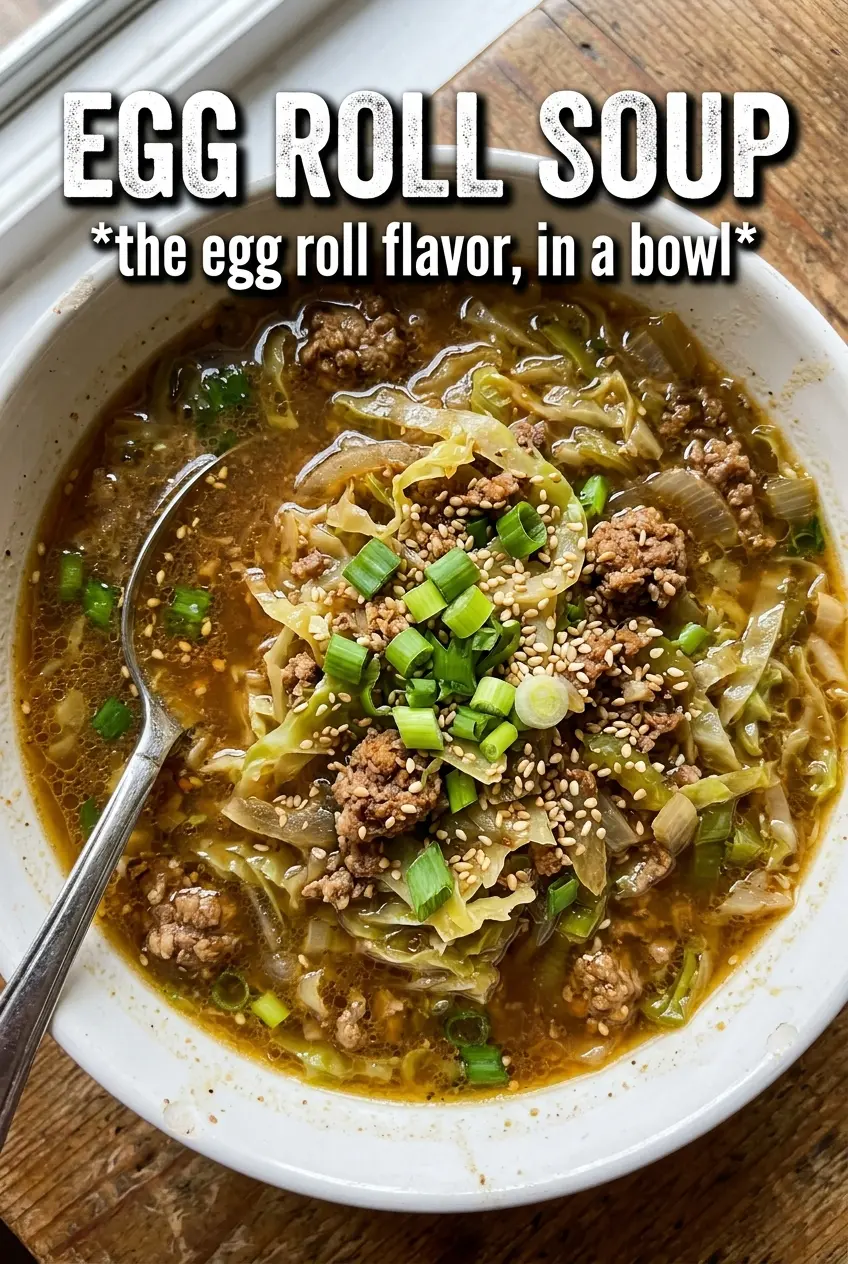
Egg Roll Soup
Ingredients
Equipment
Method
- Heat vegetable oil in a large pot over medium-high heat. Add ground pork and break it up as it cooks, then drain excess fat.
- Add garlic and grated fresh ginger to the pot and cook 1-2 minutes until fragrant. Stir constantly so the garlic doesn’t brown.
- Pour in chicken broth, soy sauce, sesame oil, rice vinegar, and sriracha, then bring the mixture to a boil. Scrape up any browned bits from the bottom of the pot.
- Add shredded cabbage and carrots to the boiling broth. Simmer for 8-10 minutes until the vegetables are tender.
- Stir in sliced green onions and season with salt and pepper to taste. Ladle into bowls and top each serving with crispy wonton strips, sesame seeds, and extra green onions.