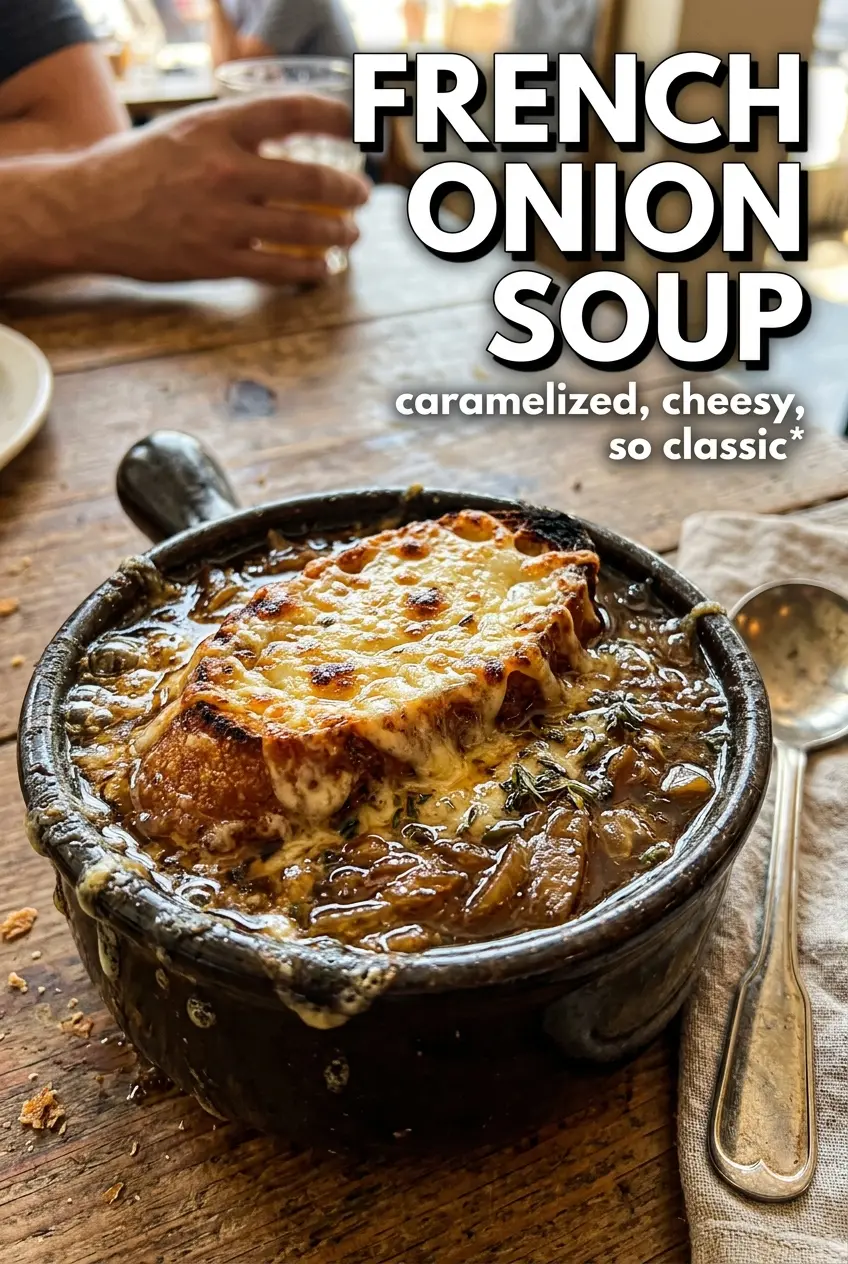
French onion soup earns its reputation the hard way: by taking humble onions all the way to a deep, sweet, savory base that tastes like hours of work because, well, it is. When it’s done right, the broth clings to the spoon, the onions melt into the liquid instead of floating in it, and the cheese cap cracks under a spoon with that unmistakable pull of Gruyere and toasted bread. It’s the kind of soup that feels simple from a distance and deeply satisfying in the bowl.
The key is patience at the stove. Onions need time to shed their moisture first, then slowly pick up color without scorching, and that long cook is what gives the soup its signature body and sweetness. A dry white wine or sherry scrapes up the browned bits in the pot, and those bits carry a lot of the flavor you’ll taste later. Gruyere matters here because it melts smoothly and stays stretchy under the broiler, while parmesan adds a sharper edge that keeps the topping from tasting flat.
Below you’ll find the exact cues I look for when the onions are ready, plus the small adjustments that keep the broth balanced and the cheese topping from sliding off the bread.
The onions turned out jammy and sweet, and the broth had so much depth after simmering. The cheese melted into a thick, bubbly top instead of sliding off the bread like mine usually does.
Save this French onion soup for the nights when you want deeply caramelized onions, a savory broth, and a bubbling Gruyere crust.
The Moment the Onions Stop Looking Like Onions
French onion soup fails when people rush the onions. At the beginning they look glossy and full of volume, then they soften, then they go through a stage that feels like nothing is happening. That’s the stretch that matters. Keep the heat at medium, stir every 10 to 15 minutes, and let the moisture cook off before you expect real color. If you push the heat too high, the outsides darken before the onions have a chance to turn sweet and jammy, and the soup ends up tasting sharp instead of rounded.
The target isn’t just brown onions. It’s onions that have collapsed almost into a spreadable tangle with browned edges and a deep amber color in the pot. That’s where the body of the soup comes from, because those softened onions melt into the broth instead of staying stringy. If the pot starts to look dry before the onions are fully caramelized, lower the heat and give them another few minutes with the lid off.
What Each Ingredient Is Actually Doing in the Bowl

- Yellow onions — These are the backbone of the soup. They turn sweet and silky when cooked low and slow, and that long caramelization is what gives the broth its signature depth. White onions work in a pinch, but they’re sharper and less round.
- Butter plus olive oil — Butter gives flavor, while the oil helps keep the butter from scorching during the long onion cook. You need both here because the onions spend a long time in the pot, and pure butter can brown too fast.
- Dry white wine or sherry — This deglazes the pot and lifts the browned bits into the broth. Use a wine you’d actually drink; the flavor stays in the soup. If you skip it, the soup still works, but it loses that layered, slightly tangy finish.
- Beef broth — This is what gives the soup its classic savory backbone. A good boxed broth is fine, but if you use a weak one, the finished soup will taste flat. Low-sodium broth is easier to control because the onions and cheese already bring salt.
- Gruyere — Gruyere melts into that stretchy, golden top people expect from French onion soup. It’s worth buying real Gruyere if you can, because it browns beautifully and doesn’t turn greasy under the broiler.
- Baguette — Toast it well before it goes into the soup. The bread needs enough structure to sit under the cheese without dissolving immediately, or you end up with a soggy lid instead of a proper cap.
Building the Soup So the Cheese Top Stays Put
Caramelizing the onions patiently
Melt the butter with the olive oil in a heavy pot, then add the onions and salt. Stir them well so every strand gets coated, and keep them over medium heat until they collapse and slowly deepen in color. The pot should smell sweet, not burned, and the onions should look sticky and jammy by the end. If they start to scorch at the edges, lower the heat right away and keep stirring more often.
Deglazing for depth
Pour in the wine or sherry and scrape the bottom of the pot while it sizzles. Those browned bits are concentrated flavor, and once they dissolve into the liquid, the broth tastes fuller and more complex. Let the wine cook for a few minutes so the sharp alcohol smell fades. If you rush this step, the soup can taste boozy instead of balanced.
Simmering the broth
Add the broth, thyme, bay leaf, and Worcestershire sauce, then simmer long enough for everything to come together. The soup should taste rich but still clear, with the onions suspended through the liquid and not falling apart into mush. Pull out the thyme and bay leaf before seasoning at the end. If the broth tastes thin, it usually means the onions needed more time before the liquid went in.
Broiling the crocks
Ladle the soup into oven-safe crocks, top each one with toasted bread, then cover the bread generously with Gruyere and parmesan. Broil just until the cheese is melted, bubbling, and browned in spots. Watch closely because the difference between golden and burnt can be less than a minute under the broiler. If the bread wasn’t toasted enough, it sinks too fast and the cheese loses its perch.
How to Adapt This Without Losing the Classic Character
Make it gluten-free
Use a sturdy gluten-free baguette or loaf and toast it well before broiling. The broth itself is naturally close to gluten-free, but check the Worcestershire sauce and broth label if you’re cooking for someone with celiac disease, since both can hide wheat-based ingredients.
Make it vegetarian
Swap the beef broth for a rich vegetable broth and replace the Worcestershire sauce with a vegetarian version. The soup will still be deeply savory if you caramelize the onions fully, though it will taste a little lighter and less meaty than the classic version.
Use sherry for a warmer finish
Sherry adds a slightly nutty sweetness that fits this soup beautifully, especially if you want a deeper, rounder finish than white wine gives. Use the same amount and let it cook down fully so the alcohol edge disappears before the broth goes in.
Storage and Reheating
- Refrigerator: Store the soup without the bread and cheese for up to 4 days. The flavor deepens overnight, and the onions get even softer.
- Freezer: The soup base freezes well for up to 3 months. Freeze it before adding the bread and cheese, since the topping won’t hold up after thawing.
- Reheating: Warm the soup gently on the stove over medium-low heat until steaming, then add fresh toasted bread and cheese before broiling. Reheating it too hard can make the onions stringy and flatten the broth.
Answers to the Questions Worth Asking
French Onion Soup
Ingredients
Equipment
Method
- Melt butter with olive oil in a large heavy pot over medium heat, then add onions and 1/2 teaspoon salt.
- Cook onions 60-70 minutes, stirring every 10-15 minutes, until deeply golden, jammy, and caramelized.
- Pour in the white wine or sherry and cook for 3 minutes, scraping up all browned bits.
- Add beef broth, thyme, bay leaf, and Worcestershire, then simmer for 20 minutes.
- Remove thyme and bay leaf, then season the broth with salt and pepper to taste.
- Ladle soup into oven-safe crocks, then float toasted baguette slices on top.
- Pile Gruyère and parmesan over the bread, then broil for 3-4 minutes until melted and bubbly and visibly golden at the edges.