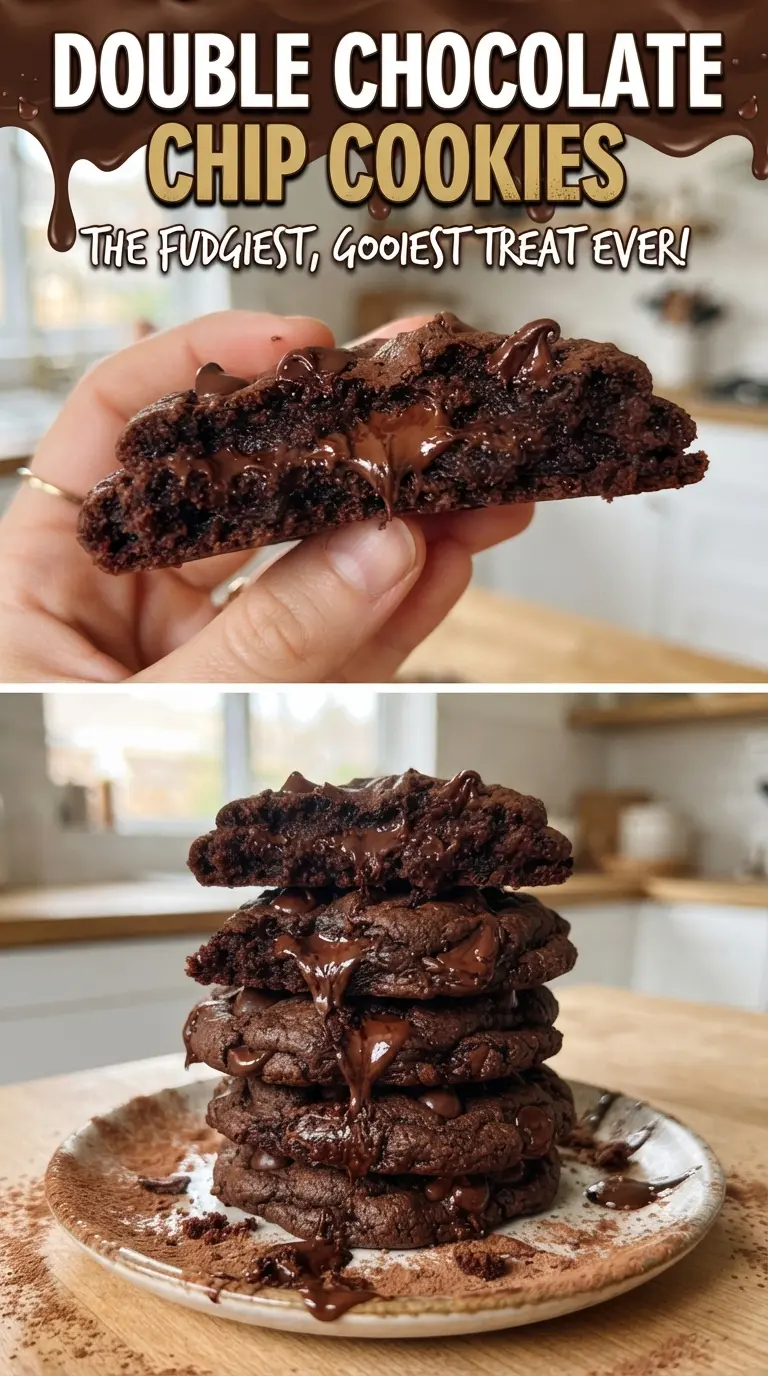
These double chocolate chip cookies bake up thick, fudgy, and just shy of brownie-like in the center, with crackly tops and pools of melted chocolate in every bite. They’re the kind of cookie that disappears from the cooling rack before the tray has a chance to settle, especially when the edges are set and the middle still feels soft enough to promise a dense, moist crumb after cooling.
The cocoa does more than add chocolate flavor here. It gives the dough a drier, more structured base that keeps the cookies from spreading into thin puddles, while the brown sugar brings chew and a little caramel depth. A full 2 cups of chocolate chips sounds generous, but it’s what gives each cookie those glossy pockets you want when you break one open. The short bake time matters too: pull them when the centers still look slightly underdone, because they finish setting on the pan.
Below, I’ve included the one texture cue that matters most, plus a couple of swaps and storage notes so you can bake these on repeat without second-guessing the dough.
The centers came out soft and fudgy with those crinkly tops I always want in a chocolate cookie. I chilled half the dough and baked the rest right away, and both batches turned out great.
Double Chocolate Chip Cookies with fudgy centers and crackly tops are the kind of bake worth keeping close for chocolate cravings.
The Part That Keeps These Cookies Thick Instead of Flat
The biggest mistake with chocolate cookies is treating cocoa like a swap-in for flour and expecting the same behavior. Cocoa powder absorbs moisture differently, which means the dough can go from scoopable to dry if you overmix or add too much flour by accident. Here, the balance of butter, brown sugar, and just enough flour gives you a dough that holds its shape without baking up cakey.
The other detail that matters is the bake window. These cookies should come out when the edges look set and the centers still seem a little soft. If you wait until they look fully baked in the oven, they’ll end up dry once they cool. The pan finish matters as much as the oven time.
What Each Ingredient Is Actually Doing in These Cookies
- Unsweetened cocoa powder — This is where the deep chocolate flavor comes from, and it also helps create that dense, brownie-like texture. Use a good unsweetened cocoa if you can; the flavor difference shows. Dutch-process cocoa will make the cookies darker and smoother, while natural cocoa gives a sharper chocolate note.
- Brown sugar — This keeps the centers chewy and adds moisture that white sugar can’t fully replace. The packed measure matters because loose brown sugar can throw off the texture. If you need to sub, use mostly brown sugar rather than trying to make these with all granulated sugar.
- Butter — Softened butter traps air when you beat it with the sugars, which helps the cookies lift a little and crack on top. Melted butter won’t give the same structure here and usually leads to flatter cookies.
- Semi-sweet chocolate chips — These give you the glossy pockets of melted chocolate that make the cookies feel extra rich. Chopped chocolate works too and melts into wider ribbons, but chips hold their shape better and give you more distinct bursts of chocolate in every bite.
Building the Dough So the Centers Stay Fudgy
Whisk the dry ingredients first
Whisk the flour, cocoa powder, baking soda, and salt until the mixture looks uniform and no cocoa streaks remain. That step keeps the leavening evenly distributed, which matters more in a dark dough where dry pockets are hard to spot. If you dump everything in together and barely stir, the cookies can bake unevenly and taste a little salty in random bites.
Cream the butter and sugars until they look lighter
Beat the softened butter with both sugars until the mixture turns fluffy and a shade paler. That’s not just for airiness; it helps the cookies spread in a controlled way instead of collapsing into greasy discs. If the butter is too cold, it won’t cream properly, and if it’s melted, the dough won’t hold enough structure.
Stop mixing as soon as the chips go in
Once the dry ingredients are added, mix only until the flour disappears, then fold in the chocolate chips. Overmixing after the flour goes in can make the cookies dense in a tough way rather than dense in a fudgy way. Scoop the dough into even 2-tablespoon mounds so the batches bake at the same pace, then pull them from the oven when the edges are set and the tops are crackly.
Make Them Even More Chocolatey with Chopped Bars
Swap half of the chocolate chips for chopped chocolate bars. You’ll get more molten streaks and uneven puddles of chocolate, which makes the cookies look bakery-style. The tradeoff is a slightly messier cookie, but the flavor and texture payoff is worth it.
Use Gluten-Free Flour for a Gluten-Free Batch
A cup-for-cup gluten-free flour blend works well here if it contains xanthan gum. The cookies will be a touch more delicate and slightly less chewy, but the cocoa-heavy dough hides the swap better than lighter cookies do. Let the dough rest for 10 minutes before scooping if it feels loose.
Make Them Dairy-Free Without Losing the Fudgy Center
Use a plant-based butter stick that’s meant for baking, not a soft spread from a tub. The texture stays closest to the original when the fat content is similar to real butter. The cookies may spread a little more, so chill the dough for 20 minutes if the first tray looks too loose.
Storage and Reheating
- Refrigerator: Store baked cookies in an airtight container for up to 5 days. They stay chewy, though the tops soften a bit.
- Freezer: These freeze well baked or as scooped dough balls. Freeze the dough on a tray first, then bag it so you can bake a few at a time straight from frozen.
- Reheating: Warm baked cookies in a 300F oven for 3 to 5 minutes, or microwave one cookie for 8 to 10 seconds. Don’t overheat them or the centers will dry out and the chocolate will turn greasy instead of glossy.
Questions I Get Asked About This Recipe

Double Chocolate Chip Cookies
Ingredients
Equipment
Method
- Preheat the oven to 350°F and line baking sheets with parchment so the cookies lift cleanly. Keep the sheets ready for the moment the dough is portioned.
- Whisk together the all-purpose flour, unsweetened cocoa powder, baking soda, and salt until evenly combined. The mixture should look uniformly dark with no visible cocoa streaks.
- Beat the unsalted butter, brown sugar, and granulated sugar until fluffy. Stop when the mixture looks lighter in color and holds air.
- Beat in the eggs and then the vanilla extract until smooth. Scrape down as needed so the dough is consistent.
- Mix in the dry ingredients just until no flour remains. The dough should come together and look thick and chocolatey.
- Fold in the semi-sweet chocolate chips so they’re evenly distributed. You should see glossy chocolate chips throughout the dough.
- Scoop 2-tablespoon balls onto the prepared sheets, spacing them apart for spreading. Aim for evenly sized scoops so bake time stays consistent.
- Bake for 9-11 minutes at 350°F until the edges are set and the tops are crackly. Look for a brownie-like center with glossy, melted chips at the surface.
- Cool for 5 minutes on the sheet before transferring. The cookies should firm slightly while staying soft in the middle.