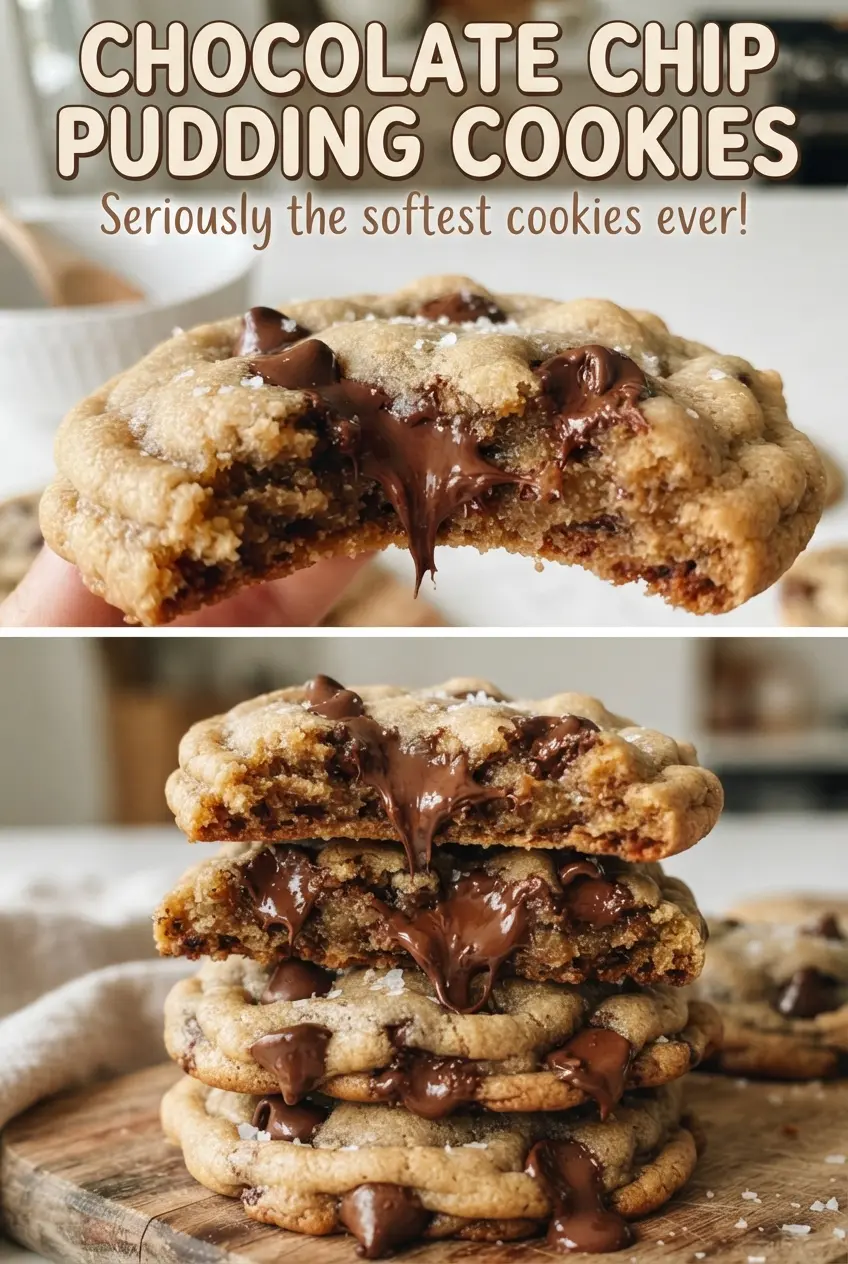
Soft centers, golden edges, and a cookie that stays chewy long after it leaves the oven — that’s what makes chocolate chip pudding cookies worth keeping in the rotation. The instant pudding mix doesn’t make them taste like vanilla pudding; it gives the dough a plush, almost bakery-style softness that holds up for days. Each bite lands rich and buttery first, then melts into pockets of chocolate.
The trick is in the balance. Brown sugar brings depth and chew, while the granulated sugar helps the edges set just enough to give the cookies structure. The dough bakes up thick because the pudding mix adds body and moisture without making the cookies cakey. A short bake time matters here. Pull them when the centers still look a little underdone, and they finish on the hot pan instead of drying out in the oven.
Below, I’m walking through the small details that keep these cookies soft instead of flat, plus a few easy swaps and storage notes for when you want to bake ahead.
These stayed thick and soft for three days, and the centers were still chewy instead of dry. I chilled half the dough overnight and they baked up even better the next day.
Keep these chocolate chip pudding cookies in your back pocket for the kind of soft, thick cookie that never bakes up dry.
The Ingredient That Keeps These Cookies Soft for Days
Most chocolate chip cookies dry out because the dough is built for spread, not staying power. The instant pudding mix changes that. It brings starch and emulsifiers into the dough, which helps the cookies hold moisture and bake up with that thick, tender center people usually chase by underbaking. You still need the right fat-and-sugar balance, though. Too little flour and they flatten; too much and the texture turns bready.
The other part that matters is timing. These cookies should come out when the edges are set and lightly golden, but the centers still look soft and pale. That’s not underdone in a bad way — that’s the point. The sheet pan finish carries the cookies through the last bit of baking without pushing them over the edge.
- Instant vanilla pudding mix — Use instant, not cook-and-serve. Cook-and-serve has a different starch setup and won’t give you the same soft, dense texture.
- Brown sugar — This adds chew and a little caramel depth. Dark brown sugar works if that’s what you have, but the cookies will taste a touch richer.
- Butter — Softened butter beats creamed-to-melty butter here. If it’s too warm, the cookies spread before the flour has a chance to set the shape.
- Semi-sweet chocolate chips — These keep the sweetness in check. Milk chocolate makes the cookies sweeter and softer on the palate, but it can overpower the vanilla pudding flavor.
What Each Ingredient Is Actually Doing in This Recipe

- Primary ingredient (the star) — Quality matters most. Choose the best you can find.
- Cooking medium (oil, butter, or broth) — This carries flavors and prevents dryness.
- Seasonings (salt, pepper, spices, herbs) — Layer flavors so nothing overpowers. Build depth gradually.
- Aromatics (garlic, onion, herbs) — Cook with fat to bloom flavors. Become the foundation.
- Supporting ingredients — Complement the main ingredient without overpowering it.
- Sauce or liquid (if applicable) — Brings flavors together. Balance richness with acid.
- Acid (lemon, vinegar, wine, or other) — Brightens and prevents flat-tasting results.
- Final finish (garnish, glaze, or sauce) — Prevents one-dimensional taste and adds visual appeal.
Building the Dough Without Losing the Soft Center
Whipping the butter and sugars
Beat the butter, brown sugar, granulated sugar, and pudding mix until the mixture looks fluffy and lighter in color. That little bit of air gives the cookies a better lift and keeps them from baking into dense little pucks. If the butter is too cold, the mixture stays grainy; if it’s greasy and glossy, the cookies will spread too much. Aim for soft and creamy, not melted.
Adding the eggs and vanilla
Mix in the eggs one at a time, then the vanilla, and stop as soon as the dough looks smooth. Overbeating at this stage can make the dough looser than it should be, which works against the thick texture you’re after. The dough will look rich and a little heavy, and that’s exactly right.
Finishing the flour and chips
Stir in the flour, baking soda, and salt just until the dry streaks disappear, then fold in the chocolate chips. If you keep mixing after the flour goes in, the cookies can turn tough instead of soft. The dough should be thick enough to scoop cleanly and hold its shape on the baking sheet. If it feels sticky, let it sit for a few minutes before scooping instead of adding extra flour right away.
Baking until the edges barely set
Scoop the dough into 2-tablespoon portions and bake on parchment-lined sheets at 350°F for 9 to 11 minutes. Pull them when the edges are lightly golden and the centers still look soft and a little underbaked. Letting them sit on the hot sheet for 5 minutes finishes the bake without drying out the middle. That rest time is part of the recipe, not an afterthought.
Three Ways to Adjust These Cookies Without Ruining the Texture
Make them freezer-friendly
Scoop the dough first, then freeze the balls on a tray until firm and transfer them to a bag. Bake from frozen with 1 to 2 extra minutes on the clock. This keeps the cookies thick and helps the centers stay soft because the outside doesn’t race ahead of the middle.
Swap in a different chip
Dark chocolate chips make the cookies feel less sweet and a little more grown-up. White chocolate works too, but the cookies will taste sweeter and the vanilla pudding note will stand out more. Keep the total amount the same so the dough doesn’t get overloaded and crumble apart.
Gluten-free version
Use a 1:1 gluten-free all-purpose flour blend that includes xanthan gum. The texture will still be soft, but the cookies may spread a touch less and brown a little differently. Let the dough rest for 10 minutes before scooping so the flour hydrates and the cookies hold together better.
Storage and Reheating
- Refrigerator: Store in an airtight container for up to 5 days. They stay soft, though the centers firm up a little as they chill.
- Freezer: Baked cookies freeze well for up to 2 months. Layer them with parchment so they don’t stick together.
- Reheating: Warm a cookie in the microwave for 8 to 10 seconds to bring back the soft center. Longer heating makes the chocolate hard and the edges dry.
Answers to the Questions Worth Asking
Chocolate Chip Pudding Cookies
Ingredients
Equipment
Method
- Preheat the oven to 350F and line baking sheets with parchment for easy release and even browning.
- Beat the softened unsalted butter, brown sugar, granulated sugar, and instant vanilla pudding mix until fluffy for a thick, chewy base.
- Beat in the eggs and vanilla extract until the mixture looks smooth and cohesive.
- Mix in the all-purpose flour, baking soda, and salt, then fold in the semi-sweet chocolate chips until just combined.
- Scoop 2-tablespoon balls onto the sheets, spacing them apart so each cookie can spread without merging.
- Bake for 9-11 minutes at 350F until the edges are lightly golden while the centers still look soft.
- Cool for 5 minutes on the sheet, then serve warm or transfer to a rack to finish cooling.