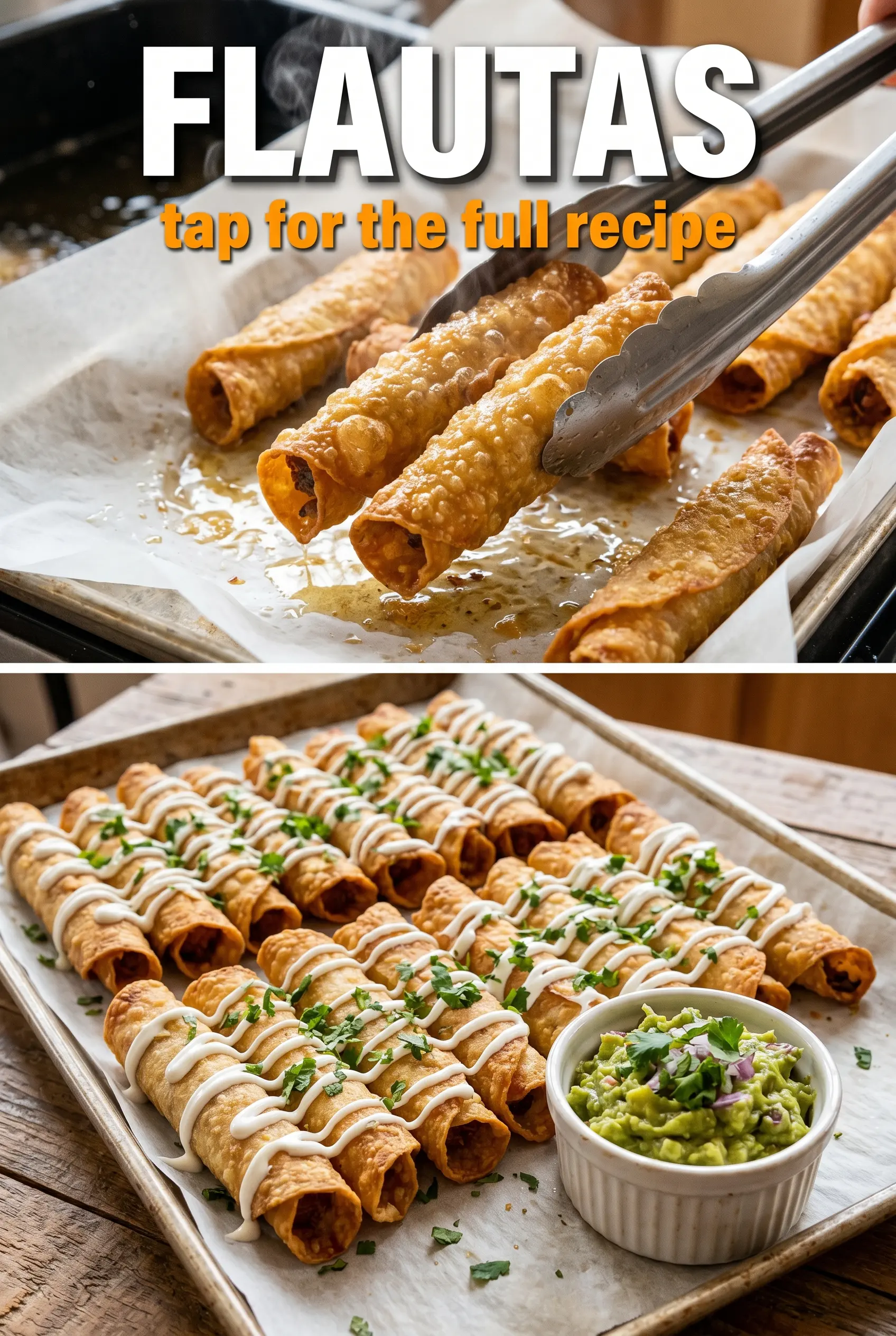
Crispy flautas land on the plate with that shattering, blistered shell that gives way to a savory filling and a little stretch of melted cheese. They’re one of those dishes that disappears fast because every bite has contrast: hot and crunchy outside, juicy and seasoned inside, with cool sour cream or salsa cutting through the richness. When they’re rolled tightly and fried at the right temperature, they stay sealed instead of unraveling in the oil.
The details matter here. Flour tortillas are sturdier than corn for this style, so they hold the roll without cracking, and a little cheese in the center helps bind the filling as it heats. The oil needs to stay at 350°F, because too cool and the tortillas drink up grease, too hot and the outside browns before the center is hot. That balance is what turns a simple filling into flautas that taste like they came off a good kitchen line.
Below, I’ve included the timing cues I use to keep the rolls tight and crisp, plus a few swaps that still keep the texture right if you’re working with what’s already in the fridge.
The tortillas stayed sealed and crisp, and the jalapeños gave just enough heat without taking over. I fried them in two batches and they came out golden all the way around, not greasy at all.
Save these crispy chicken or beef flautas for the nights when you want a crunchy, crowd-pleasing dinner with salsa and sour cream on the side.
The Trick to Keeping Flautas Tight Instead of Unrolling in the Oil
The most common flauta failure starts before the pan ever heats up. If the tortillas are overloaded, the seam pops open as soon as the filling warms and expands. Keep the filling modest. Two tablespoons of meat and a spoonful of cheese is enough to create a full bite without turning the roll into a leak.
The second problem is moisture. Wet filling softens the tortilla from the inside, which makes it harder to seal and easier to split during frying. Cooked meat works best when it’s chopped or shredded and not swimming in sauce. If your chicken or beef is juicy, let it cool a minute and drain off any excess liquid before rolling.
- Shredded cooked chicken or beef — Use meat that’s already tender and well seasoned. Rotisserie chicken works when you need speed, and leftover roast beef or taco-style beef works if it’s chopped fine enough to roll cleanly.
- Flour tortillas — These are the right choice here because they bend without cracking. Corn tortillas can work if they’re warmed until pliable, but they’re more likely to split unless they’re very fresh and soft.
- Cheddar cheese — Cheddar melts into the filling and helps hold everything together. A sharper cheddar gives more flavor, but any good melting cheese works if it’s shredded fine.
- Jalapeños and cilantro — The jalapeños bring heat and a little crunch, while cilantro lifts the filling so it doesn’t taste heavy. If you want less heat, use only half the jalapeños and keep the cilantro for freshness.
- Vegetable oil — A neutral oil with a high smoke point keeps the tortillas crisp without adding competing flavor. Shallow frying works best here because the rolls brown evenly and you can watch the seam side closely.
Rolling, Frying, and Getting That Deep Golden Crunch
Mix the filling without making it wet
Stir the shredded meat with jalapeños, cilantro, salt, and pepper until the seasoning is evenly distributed. Don’t add anything saucy or the tortillas will soften before they hit the oil. The filling should look loose but not damp, with the herbs and peppers scattered through every bite.
Fill and roll with the seam tucked tight
Lay the tortillas flat and keep the filling in a narrow line through the center. Add the cheese on top of the meat, then roll firmly and tuck the sides in as you go. If the tortilla resists, warm it for a few seconds so it bends instead of tearing. A toothpick can help hold a stubborn roll closed, but a tight seam usually stays put on its own.
Fry at 350°F and watch for even browning
Heat the oil until it shimmers and a small corner of tortilla sizzles immediately. Fry in batches so the temperature doesn’t drop, and turn the flautas halfway through until both sides are deep golden and blistered. If they brown too quickly, the oil is too hot; if they come out pale and greasy, it’s too cool. Pull them when they feel crisp and light, not soft at the center.
Drain and serve while the shell is still sharp
Set the flautas on paper towels for a minute to catch the extra oil, then serve right away. Waiting too long lets steam soften the crust, and that crisp shell is the whole point. Sour cream, salsa, and guacamole belong on the side so each person can decide how much richness they want with the crunch.
How to Adapt These Flautas for Different Fillings and Different Nights
Use leftover shredded chicken for a faster version
Leftover rotisserie or roasted chicken works perfectly here because it already has structure and won’t turn watery in the fryer. If the chicken is plain, season it a little more aggressively than you think you need, since frying mutes flavor a touch.
Make them with beef for a richer filling
Shredded beef gives you a deeper, beefier flavor and a softer bite. Use meat that’s been cooked until it falls apart easily, then chop it a little so the rolls pack neatly without poking through the tortilla.
Go dairy-free by skipping the cheese
You can leave out the cheddar and still get a crisp, satisfying flauta, though the filling won’t bind quite as much. If you want extra richness without dairy, add a little mashed avocado after frying instead of trying to force a cheese substitute into the roll.
Bake them when you don’t want to fry
Brushing the rolls with oil and baking them on a wire rack gives you a lighter version with less mess, though the crust won’t blister the same way it does in hot oil. Bake until the tortillas are browned and crisp at the edges, then serve them immediately so they don’t soften on the pan.
Storage and Reheating
- Refrigerator: Store leftovers in an airtight container for up to 3 days. The tortillas soften as they sit, so the texture won’t be as crisp the next day.
- Freezer: Freeze cooked flautas on a tray, then transfer to a bag once solid. They freeze well, but reheat them from frozen for the best crunch instead of thawing first.
- Reheating: Reheat in a 400°F oven or air fryer until hot and crisp again. The mistake people make is microwaving them, which steams the shell and turns it chewy.
Questions I Get Asked About This Recipe
Crispy Flautas with Chicken or Beef
Ingredients
Equipment
Method
- Combine shredded cooked chicken or beef with diced jalapeños, chopped cilantro, salt, and pepper in a bowl until evenly mixed.
- Lay out flour tortillas and spoon about 2 tablespoons of the filling and 1 tablespoon shredded cheddar cheese into the center of each.
- Roll tightly, tucking in the sides, and secure with a toothpick if needed so the filling stays inside while frying.
- Heat vegetable oil in a Dutch oven to 350°F, maintaining the temperature for steady frying.
- Fry flautas in batches for about 2 minutes per side, turning when they look golden-brown and crispy.
- Drain the flautas on paper towels until they stop steaming and the shells look dry and crisp.
- Serve immediately with sour cream, salsa, and guacamole on the side.