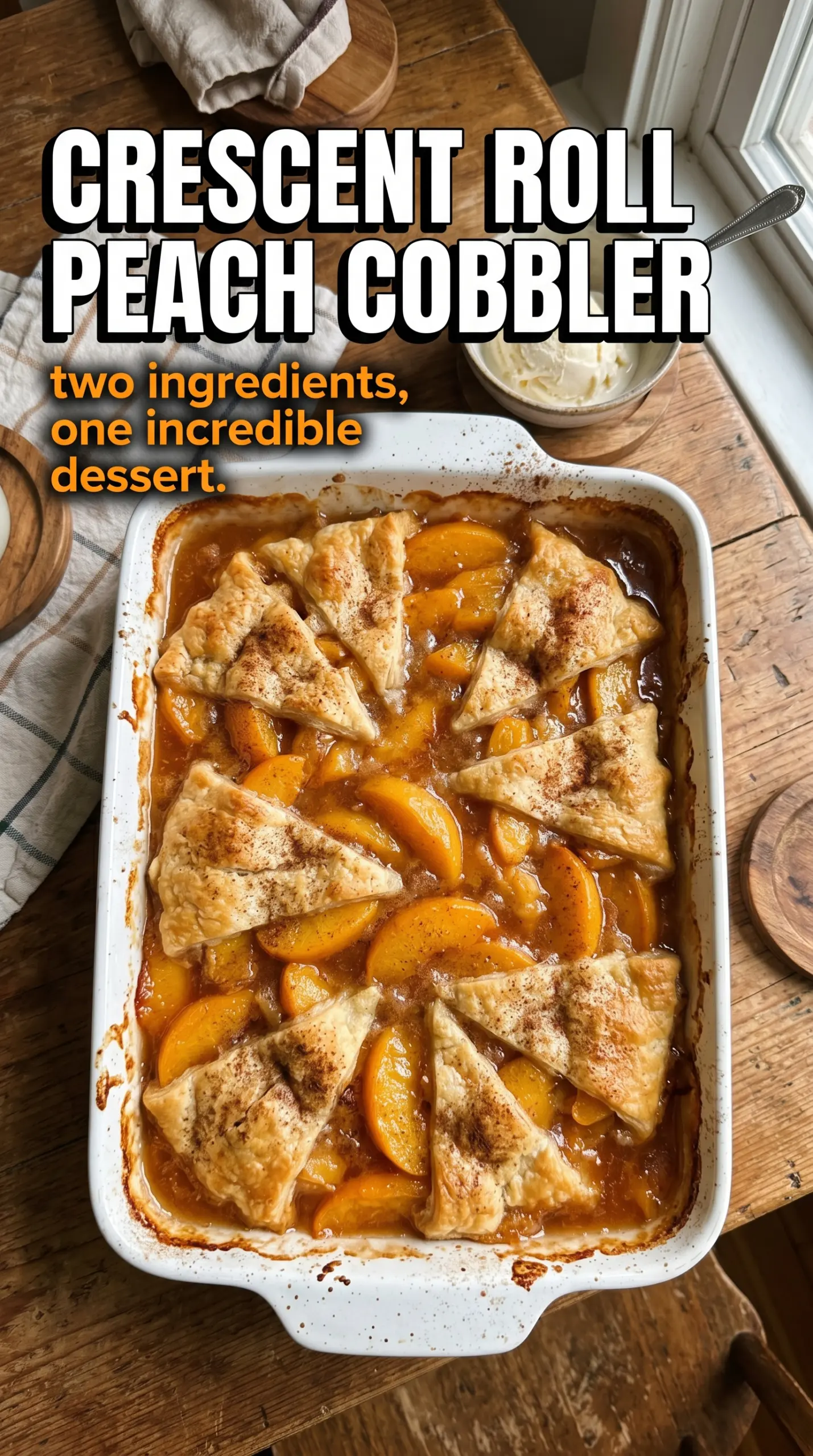
Flaky crescent roll dough turns this peach cobbler into something between a bakery-style pastry and the kind of bubbling fruit dessert you want to scoop straight from the pan. The top bakes up golden and crisp at the edges, then softens where it soaks in the cinnamon-scented peach syrup. Every bite lands somewhere between buttery crust, jammy fruit, and a little pool of sweet sauce at the bottom of the dish.
What makes this version work is the layering. The bottom sheet of crescent dough catches the peach juices, so the filling stays thick instead of running all over the pan. The syrup, butter, sugar, and cinnamon mixture poured over the top does double duty: it helps the dough brown and gives the cobbler that sticky, glossy finish that makes people go back for a second spoonful before they’ve finished the first.
Below you’ll find the one detail that keeps the dough from baking up soggy, plus a few smart swaps if you want to use fresh peaches or change the sweetness a bit. It’s an easy dessert, but the little choices matter here.
The crescent dough baked up flaky on top and stayed tender underneath, and the peach filling thickened just enough after ten minutes of cooling. My family kept sneaking spoonfuls from the pan.
Save this crescent roll peach cobbler for the nights when you want a flaky crust, syrupy peaches, and a dessert that comes together fast.
The Shortcut That Keeps the Bottom from Turning Soggy
The biggest mistake with crescent roll cobbler is letting the filling sit too wet against the dough. Drained peaches are important, but the reserved syrup is what gives the topping its glossy, cobbler-like finish without flooding the pan. Use the peaches themselves for body and texture, then add the syrup back in a controlled way so the top bakes into a golden sheet instead of steaming.
Pressing the seams together matters more than it sounds like it should. If the dough stays perforated, the peach juices leak through and the bottom layer turns loose instead of set. You want that bottom sheet to bake into one soft crust that can hold the fruit and scoop cleanly once it cools for a few minutes.
What the Crescent Dough, Butter, and Peach Syrup Each Do
- Crescent roll dough — This is what gives the cobbler its flaky, pull-apart top and a tender base underneath. Homemade pastry won’t behave the same here, and that’s the point; refrigerated dough bakes fast, browns evenly, and stands up to the syrup without needing blind baking.
- Canned peaches in syrup — The syrupy peaches bring the right softness and sweetness for this shortcut dessert. Fresh peaches can work, but they need more sugar and a little extra moisture on the stove or the filling tastes thin instead of jammy.
- Reserved peach syrup — This is the part that ties the topping together. It adds peach flavor back into the butter mixture and helps the sugar melt into a glossy layer instead of sitting dry on top of the dough.
- Melted butter — Butter carries the cinnamon and helps the top brown into that deep golden crust. If you use it cold or only barely melted, the sugar mixture won’t spread evenly and you’ll get patchy browning.
- Cinnamon and vanilla — Cinnamon gives the whole dish warmth, and vanilla rounds out the canned-peach sweetness. The vanilla doesn’t need to be expensive, but it does need to be there; without it, the syrup tastes flatter and more one-note.
Building the Layers So the Cobbler Bakes Cleanly
Pressing in the Bottom Crust
Grease the baking dish well, then unroll one can of crescent dough and press it into the bottom, pinching the seams together as you go. The dough should cover the pan edge to edge so the peach juices don’t sneak underneath and loosen it. If the dough tears, patch it with scraps and press lightly; it doesn’t need to look perfect, just sealed.
Adding the Peaches
Spread the drained peaches in an even layer so the filling bakes consistently from corner to corner. A mound in the center leaves the edges underfilled and the middle too wet. If the peaches still seem wet after draining, give them a quick pat with paper towels; that small step keeps the bottom crust from becoming gummy.
Making the Glossy Topping
Mix the melted butter, sugar, cinnamon, vanilla, and reserved syrup until the sugar starts to dissolve and the mixture looks sandy and glossy at the same time. Pour it slowly over the top dough so it can seep into the seams and coat the whole surface. If you dump it in one spot, that area caramelizes too fast while the rest stays pale.
Baking Until the Edges Bubble
Bake until the top is deeply golden and the peach filling bubbles around the edges, not just in the center. That bubbling is your cue that the syrup has thickened and the bottom layer has had enough time in the oven to set. If the top browns early, lay a loose piece of foil over it for the last few minutes so the crust doesn’t over-darken before the filling is ready.
How to Adapt This for a Different Peach Drawer
Fresh Peach Version
Use about 4 to 5 cups peeled sliced peaches, then toss them with a little extra sugar and let them sit until juicy before layering. Fresh peaches give a brighter, less syrupy filling, but they need help producing enough liquid to soften the bottom crust and keep the cobbler from tasting dry.
Dairy-Free Version
Swap in a dairy-free crescent dough and use a plant-based butter that melts cleanly. The texture stays close to the original, but check the browning as it bakes since some dairy-free butters darken faster and can give the top a deeper color before the filling finishes bubbling.
Less-Sweet Cobbler
Cut the sugar back a few tablespoons if your peaches are very sweet or the dessert is going on top of ice cream. Don’t remove it completely, though; the sugar helps the topping brown and gives the syrup the sticky finish that makes this cobbler taste finished instead of just baked fruit.
Storage and Reheating
- Refrigerator: Store covered for up to 4 days. The top softens as it sits, but the flavor holds up well.
- Freezer: It freezes, but the crescent layers lose some of their flake after thawing. Freeze tightly wrapped portions for up to 2 months if you don’t mind a softer crust.
- Reheating: Warm in a 325F oven until heated through. The oven keeps the top closer to crisp; the microwave turns the dough chewy and flabby, especially around the peach syrup.
Questions I Get Asked About This Recipe

Crescent Roll Peach Cobbler
Ingredients
Equipment
Method
- Preheat oven to 350F and grease a 9x13 baking dish.
- Unroll one can of crescent roll dough and press it into the bottom of the dish, pinching seams together.
- Layer the drained peaches evenly over the dough.
- Unroll the second can of crescent roll dough over the peaches, pinching seams together.
- Mix melted butter, granulated sugar, cinnamon, vanilla extract, and reserved peach syrup until combined.
- Pour the mixture evenly over the top, making sure the dough edges are lightly covered.
- Bake for 30-35 minutes at 350F until the top is deeply golden and the filling is bubbling around the edges.
- Let cool for 10 minutes before cutting so the filling sets slightly.
- Serve warm as-is or with ice cream or whipped cream.