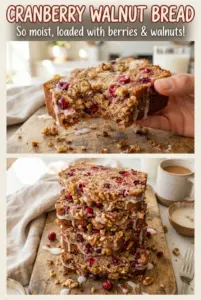
Cranberry walnut bread bakes up with a tender crumb, a deep orange perfume, and little bursts of tart fruit that keep each slice from tasting heavy. The toasted walnuts add just enough bitterness and crunch to balance the sugar, and the loaf stays sturdy enough to slice cleanly once it cools.
The key here is the orange juice and zest working together. Zest carries the oils, which gives the bread its bright aroma, while the juice brings enough acidity to help the baking soda do its job. The other thing that matters is restraint when you mix the batter. Stop as soon as the flour disappears, because overmixing turns quick bread tight and bready instead of soft and open.
Below, I’ve included the small details that make this loaf reliable every time, plus a few smart swaps if you’re working with frozen cranberries or want to change the nut situation.
The loaf came out with a soft middle, crisp edges, and the cranberries stayed nicely tart instead of disappearing into the batter. Toasting the walnuts first made a huge difference.
Save this cranberry walnut bread for a tender, citrusy loaf with tart berries and toasted crunch.
The Reason This Loaf Stays Tender Instead of Dense
Quick bread can go wrong in two places: the batter gets overmixed, or the fruit sinks and turns the crumb wet near the bottom. This loaf avoids both by keeping the batter thick but still stirrable, then folding in the cranberries and walnuts at the very end. The flour only needs to hydrate; it doesn’t need to be beaten.
The other detail that matters is the balance of acid and lift. Orange juice gives enough brightness to keep the crumb lively, while baking soda helps the loaf rise and softens the texture. If you skip the zest, the bread still works, but it loses the part that makes the orange flavor taste fresh instead of flat.
- Orange zest — This is where the strongest citrus flavor lives. Use a fine grater and only take the orange part; the white pith adds bitterness.
- Cranberries — Fresh or frozen both work. Chop them roughly so every bite gets some tartness instead of a few huge pockets.
- Walnuts — Toasting them first deepens the flavor and keeps the bread from tasting one-note. Skip the toasting and the nut flavor stays softer and less distinct.
What Each Ingredient Is Actually Doing in the Batter
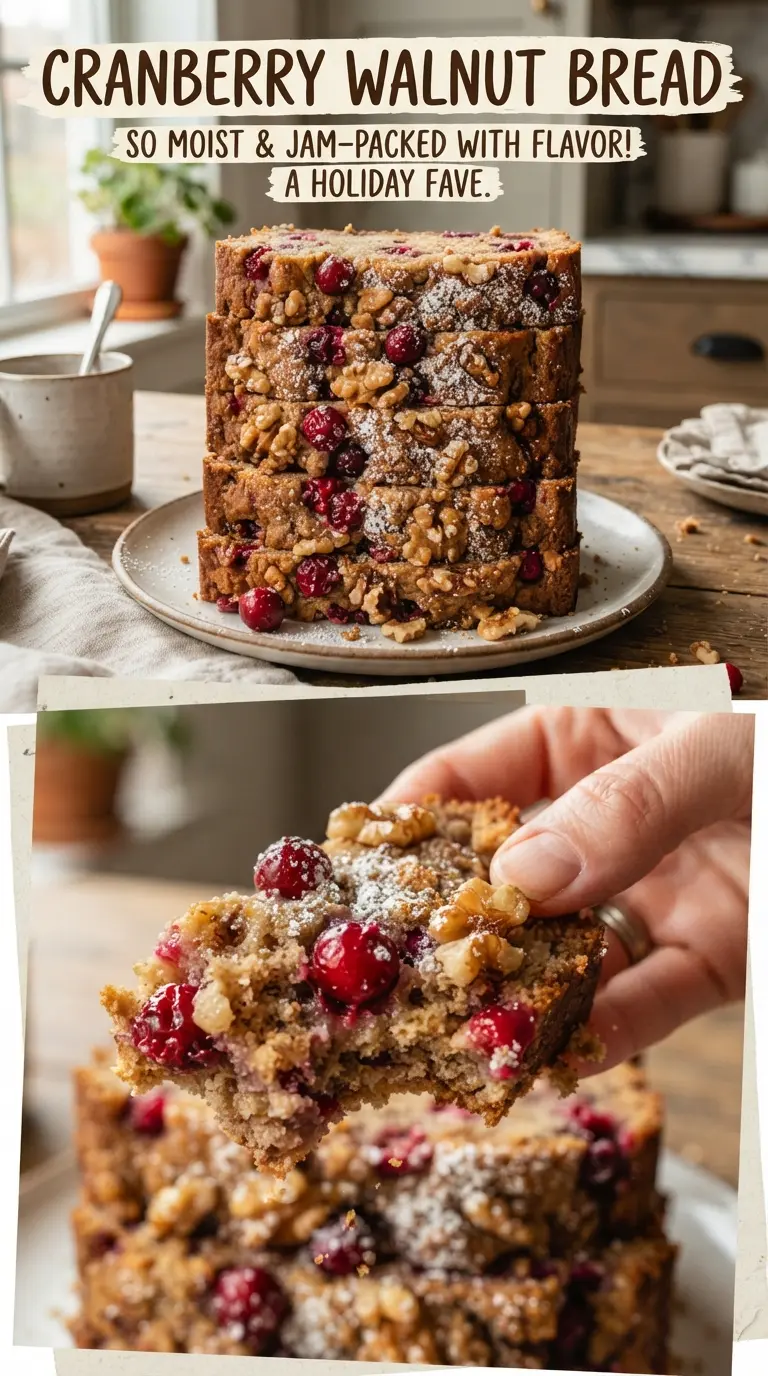
- All-purpose flour — Gives the loaf enough structure to hold the fruit and nuts without becoming cakey. Bread flour is too strong here and makes the crumb tougher.
- Sugar — Sweetens the loaf and helps with browning. It also softens the texture, which matters because cranberries bring a lot of sharp acidity.
- Baking powder and baking soda — The combination gives the loaf lift without a soapy taste. The juice activates the soda, while the powder gives the batter a second boost as it heats.
- Orange juice and butter — Juice brings moisture and brightness; melted butter gives richness and a tender crumb. If you use oil instead, the loaf stays moist but loses some of the buttery flavor.
- Cranberries and walnuts — Both should be folded in gently at the end so they stay evenly distributed. Too much stirring will smash the fruit and streak the batter pink.
How to Mix the Batter So the Crumb Stays Soft
Start With the Dry Bowl
Whisk the flour, sugar, leaveners, salt, and orange zest until everything looks evenly blended and the zest no longer clumps. Rubbing the zest into the dry ingredients with your fingers works even better because it releases the oils into the sugar and flour. If the zest goes in later with the liquid, the orange flavor stays less vivid in the finished loaf.
Bring the Wet Ingredients Together First
Whisk the orange juice, egg, melted butter, and vanilla until the mixture looks smooth and unified. The butter should be melted, not hot enough to cook the egg, or you’ll get little bits of cooked egg in the batter. Let it cool for a minute if it feels hot on the spoon.
Stop Mixing the Second the Flour Disappears
Pour the wet mixture into the dry and stir just until no dry streaks remain. The batter will look thick and a little rough, and that’s exactly what you want. Fold in the cranberries and walnuts with a few broad strokes, then stop; if you keep working the batter, the loaf turns tight and can tunnel through the center.
Watch for the Right Bake
Scrape the batter into a greased, lined 9×5-inch loaf pan and bake until the top is deeply golden and a toothpick comes out clean or with a few moist crumbs. If the top browns too quickly before the center is done, tent it loosely with foil for the last stretch. Let it cool in the pan for 10 minutes, then move it to a rack so the bottom doesn’t steam and go gummy.
Three Ways to Adjust the Loaf Without Ruining the Texture
Make it dairy-free
Swap the melted butter for an equal amount of neutral oil or melted coconut oil. Oil keeps the loaf moist a little longer, while coconut oil adds a faint sweetness that works well with orange. You’ll lose some buttery flavor, but the crumb stays tender.
Use frozen cranberries
Frozen cranberries can go in straight from the freezer. Chop them while still frozen if they’re too firm, then fold them in quickly so they don’t bleed into the batter. The loaf may need a couple extra minutes in the oven if the berries are very cold.
Skip the nuts
Leave out the walnuts if you need a nut-free loaf, or replace them with sunflower seeds for some crunch. The texture gets a little less rich without the walnuts, so the toasting step matters even more if you use seeds instead.
Make two smaller loaves
Divide the batter between two mini loaf pans and start checking them early. Smaller loaves bake faster and dry out sooner if you leave them in until the tops look very dark. This is the best route if you want one loaf for now and one for the freezer.
Storage and Reheating
- Refrigerator: Store tightly wrapped for up to 5 days. The crumb firms up a little in the fridge, but the flavor stays bright.
- Freezer: This loaf freezes well. Wrap slices or the whole cooled loaf in plastic, then foil, and freeze for up to 3 months.
- Reheating: Thaw at room temperature, then warm slices in a toaster oven or low oven. Don’t microwave too long or the crumb turns rubbery.
Answers to the Questions Worth Asking
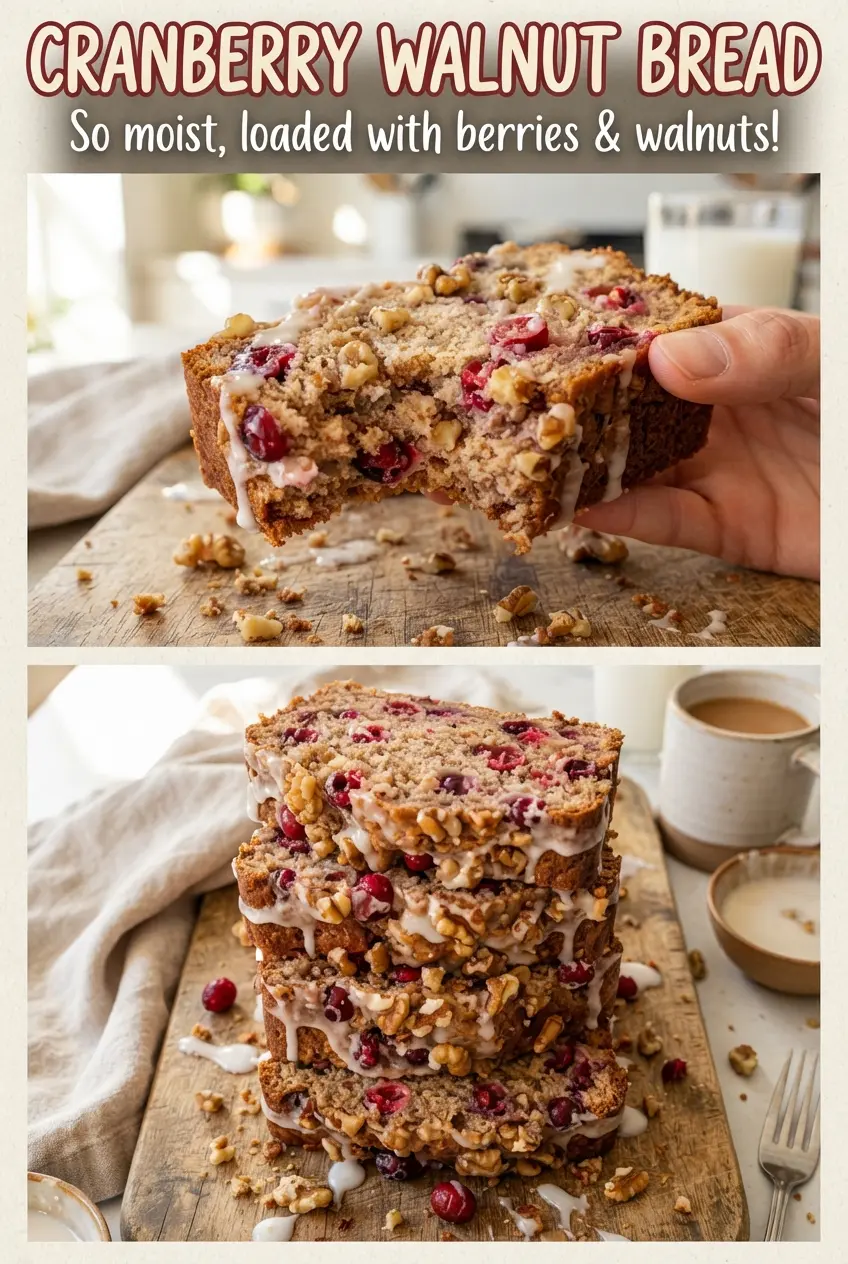
Cranberry Walnut Bread
Ingredients
Equipment
Method
- Preheat the oven to 350F, then grease and line a 9x5-inch loaf pan so the bread releases cleanly.
- Whisk all-purpose flour, sugar, baking powder, baking soda, salt, and orange zest until evenly combined, with no visible streaks of zest.
- Whisk orange juice, large egg, melted butter, and vanilla extract until smooth and glossy.
- Stir wet into dry just until moistened, stopping as soon as the flour disappears and the batter looks thick but not dry.
- Fold in cranberries and walnuts, then spread the batter into the loaf pan evenly.
- Bake at 350F for 55-60 minutes, until the loaf is golden and a toothpick comes out clean.
- Cool for 10 minutes in the pan, then fully cool on a rack before slicing so the crumb sets.