Moist, light sponge cake soaked through with three milks and finished with a cloud of whipped cream is the kind of dessert that disappears fast and never leaves leftovers to complain about. This tres leches cake stays plush instead of soggy because the batter bakes up airy enough to drink in the milk mixture without collapsing. Every bite has that cool, creamy richness at the center and a soft crumb that holds together on the fork.
The key is beating the egg whites to stiff peaks and folding them in gently, which gives the cake its lift before the milk soak turns it tender. The three-milk mixture needs to be poured over a cake that’s still warm enough to absorb it, but not so hot that it turns gummy. That balance is what gives you clean slices and a texture that tastes more refined than dense or wet.
Below, you’ll find the small details that matter most: how to keep the sponge from deflating, why the soak should go in slowly, and how to top it so every slice looks bakery-worthy without extra fuss.
The cake soaked up the milk mixture perfectly and still sliced cleanly after chilling overnight. The whipped cream stayed fluffy, and the berries on top made each piece taste fresh instead of heavy.
Save this tres leches cake for the soft, milky crumb and berry-topped finish that slice beautifully at any celebration.
The Sponge Has to Hold the Milk, Not Collapse Under It
Tres leches cake fails when the batter is too heavy or the egg whites get knocked flat. This version works because the cake starts with a whipped egg foam, not a butter-heavy crumb. That gives the baked cake enough structure to absorb a generous soak without turning dense.
There’s another detail that matters: the cake should be pierced while it’s still slightly warm, not stone-cold. Warm cake opens up better, and the milk mixture moves through the crumb more evenly. If you wait too long, the top can resist the soak and leave you with a dry layer over a wet base.
What Each Milk Is Actually Doing in the Soak
Sweetened condensed milk brings sweetness and body. It’s thick, and nothing else quite gives you that lush, spoon-coating richness.
Evaporated milk loosens the soak so it can spread through the cake instead of sitting in a puddle. If you swap in regular milk, the dessert tastes thinner and the texture loses that signature depth.
Heavy cream or Media Crema adds roundness and keeps the soak from tasting one-note sweet. Media Crema gives a slightly more traditional finish, but heavy cream works well and is easier to find. For the topping, use heavy whipping cream only; it whips cleanly and holds its shape longer than a lighter cream.
Eggs separated are the structure here. The yolks enrich the batter, while the whipped whites give it lift. Don’t skip the folding step or the cake will bake up too compact to take on the milk mixture properly.
Building the Cake So It Soaks Evenly
Whipping the Egg Whites
Beat the egg whites until they hold stiff peaks that stand up straight when you lift the beater. If they look glossy but still droop, keep going. Underwhipped whites won’t give the cake enough rise, and overwhipped whites get dry and clumpy, which makes folding harder and steals volume from the batter.
Making the Batter Light
Whisk the yolks and sugar until pale and thicker, then add the dry ingredients and milk in alternating additions. That keeps the batter smooth instead of lumping up. Fold in the vanilla and egg whites gently, using a broad motion from the bottom of the bowl, and stop as soon as you stop seeing streaks. If you stir hard here, the cake bakes up tight and won’t absorb the milk the way it should.
Baking and Piercing the Cake
Bake until the top is set and a toothpick comes out clean, with the surface just barely springing back when touched. Ten minutes of cooling is enough before you start piercing it all over with a fork. The holes should go nearly to the bottom and be spaced close together; this isn’t the place to be neat. Shallow holes leave the soak sitting on top instead of moving through the crumb.
Soaking and Chilling
Pour the milk mixture slowly and evenly across the surface, letting each section absorb before adding more. A cold cake is fine for this stage, but the soak needs time — at least two hours in the refrigerator, and longer if you want cleaner slices. If the cake still looks pooled after a few minutes, that’s normal; it settles as it chills. Don’t rush the resting time or the center will taste under-soaked while the edges are too rich.
Three Ways to Adjust the Cake Without Losing What Makes It Work
Dairy-Free Tres Leches Style
Use canned coconut milk in place of the evaporated milk and a dairy-free condensed milk alternative if you can find one. The cake will still soak up liquid well, but the finish will taste more coconut-forward and a little less classic. Top with a coconut whipped cream if you want the whole dessert to stay dairy-free.
Gluten-Free Version
Swap in a 1:1 gluten-free baking flour that includes xanthan gum. The crumb may be a touch more delicate, so let the cake cool before you poke it and pour the milk mixture slowly to avoid breaking the surface. The soaking and chilling time stay the same.
Make It Ahead for a Crowd
Bake and soak the cake a day in advance, then add the whipped cream and berries just before serving. That gives the milk time to settle through the crumb and makes the slices neater. If you frost it too early, the topping can soften and blur into the cake.
Storing Leftovers
Keep the cake covered in the refrigerator for up to 4 days. It actually tastes better after a night in the fridge, but the berries should be added close to serving so they stay fresh. This cake doesn’t freeze well once soaked, since the dairy mixture can turn grainy after thawing.
Questions I Get Asked About This Recipe
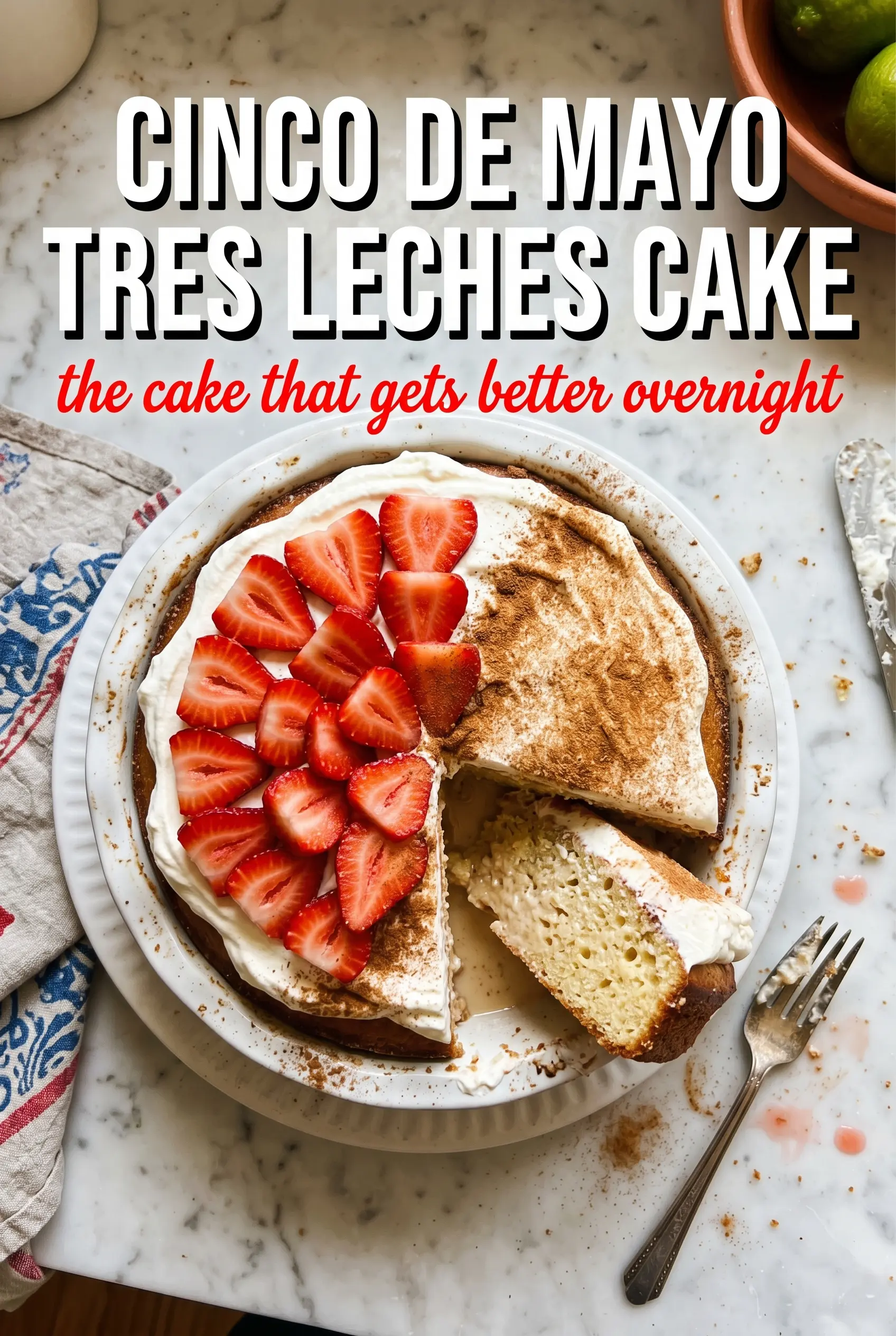
Cinco de Mayo Tres Leches Cake
Ingredients
Equipment
Method
- Preheat the oven to 350°F and grease a 9x13 inch baking pan.
- Whisk together the all-purpose flour, baking powder, and salt.
- Beat the egg whites until stiff peaks form, then set aside.
- Beat the egg yolks with the granulated sugar until pale.
- Add the flour mixture and whole milk alternately, stirring gently.
- Fold in the vanilla extract, then fold in the egg whites in two additions.
- Pour the batter into the prepared pan and bake for 22-25 minutes, until a toothpick comes out clean.
- Cool for 10 minutes, then pierce all over with a fork.
- Combine the sweetened condensed milk, evaporated milk, and heavy cream or Media Crema.
- Pour the three-milk mixture evenly over the cake and refrigerate for at least 2 hours.
- Whip the heavy whipping cream with the powdered sugar and vanilla extract until it holds soft peaks.
- Spread the whipped cream over the chilled cake.
- Top with fresh strawberries and raspberries and finish with fresh mint for garnish.