Chile verde earns its place in the regular dinner rotation because it gives you two things at once: deeply tender pork and a bright, green sauce that tastes alive, not heavy. The tomatillos bring a clean tang, the roasted poblanos add a soft pepper warmth, and the pork soaks up all of it until every bite feels rich without becoming muddy.
The part that makes this version work is the balance between blending the sauce smooth and leaving enough body in the pot for it to cling to the meat. Roasting the poblanos first matters, because that little bit of char keeps the chile flavor round instead of sharp. Searing the pork before it simmers is just as important; those browned edges build the base flavor the sauce needs.
Below you’ll find the timing that keeps the pork tender instead of dry, the ingredient swaps that still hold the dish together, and a few answers for the moments when the sauce looks thin or the tomatillos taste a little too tart.
The sauce thickened beautifully and the pork shredded right in the pot after 40 minutes. I served it with warm tortillas and my husband said it tasted like the chile verde from our favorite taqueria.
Save this chile verde for nights when you want tender shredded pork and a bright tomatillo sauce that tastes like it simmered all afternoon.
The Mistake That Makes Chile Verde Watery Instead of Glossy
Chile verde falls apart when the sauce is treated like a soup base instead of a braising sauce. Tomatillos hold a lot of moisture, and if you don’t give the pork a chance to sear before the liquid goes in, the pot never develops the deeper flavor that keeps the dish from tasting flat. You want a simmer that gently reduces the sauce and concentrates the green chile flavor while the pork turns tender.
The other common problem is overcooking the tomatillos before blending. They should be softened and bright, not cooked down until dull and brown. Roasting the poblanos separately gives the sauce a smoky edge, while the cilantro goes in raw so the whole thing keeps its fresh, green finish.
What Each Ingredient Is Actually Doing in This Dish
The pork shoulder is the backbone of the recipe. Its marbling breaks down during the simmer and gives the sauce body, which lean pork can’t match. If you swap in pork loin, the meat cooks faster and dries out before the sauce has time to deepen.
Tomatillos are what make chile verde taste like chile verde. Fresh ones should feel firm under the husk, and their tartness balances the pork. If yours are especially acidic, a longer simmer smooths that edge; if you need a substitute in a pinch, a mix of green salsa and a handful of fresh cilantro can stand in, but the flavor will be less clean and more cooked.
Roasted poblanos bring the soft pepper flavor and mild heat. The char is part of the flavor, so don’t skip the roasting step unless you have to. Onion, garlic, cumin, and oregano build the savory base, while the chicken broth loosens the puree just enough for the pork to simmer without sticking.
- Pork shoulder — Best for shreddable texture and a rich, satisfying finish.
- Tomatillos — They provide the tart green backbone; remove the husks and rinse off the sticky film before blending.
- Poblano peppers — Roast them until blistered so the sauce picks up that mellow, smoky depth.
- Cilantro — Added raw for brightness; if you cook it too long, the color and flavor dull fast.
- Chicken broth — Use a good-tasting broth, since it becomes part of the sauce instead of disappearing into the background.
Building the Green Sauce and Tender Pork at the Same Time
Roasting and Blending the Base
Roast the poblano peppers until the skins blister and darken, then dice them once they’re cool enough to handle. Blend them with the tomatillos, onion, garlic, and cilantro until the mixture looks smooth and loose, with only tiny flecks of pepper skin left. If the blender stalls, add a splash of broth, not extra water, so the sauce keeps its flavor. You’re looking for a puree that pours easily but still looks thick enough to coat a spoon.
Searing the Pork Properly
Heat the oil in a large pot until it shimmers, then add the pork in a single layer. Let each side sit long enough to turn deep golden brown before moving it, because pale pork gives you a pale sauce. If the pot is crowded, the meat steams and you’ll lose that browned flavor. Work in batches if needed; the extra few minutes here pay off later.
Simmering Until the Meat Falls Apart
Pour the sauce over the pork and add the broth, cumin, and oregano. Bring it to a steady simmer, then cover the pot and lower the heat so the surface only moves in lazy bubbles. A hard boil tightens the pork and pushes the sauce toward a thin, sharp taste, so keep it gentle. After 35 to 40 minutes, the pork should pull apart with a fork and the sauce should look slightly reduced around the edges.
Shredding and Finishing in the Pot
Shred the meat right in the pot so it can soak up the sauce while it cools for a few minutes. Stir well, then taste and season with salt and pepper at the end. If the sauce tastes flat, it usually needs salt more than anything else; if it tastes too sharp, let it sit for 5 to 10 minutes before serving and the flavors settle into each other. Warm tortillas on the side and spoon the chile verde over them while it’s still steaming hot.
How to Adapt This for Lighter, Spicier, or Make-Ahead Nights
Make It Spicier Without Breaking the Sauce
Add one seeded jalapeño or serrano to the blender with the tomatillos. That keeps the heat inside the sauce itself instead of just sprinkling it on top, so every bite has the same level of warmth. If you go heavier on chiles, keep the broth amount the same and taste after simmering; extra heat can hide salt and make the sauce seem thinner than it is.
Dairy-Free and Naturally Gluten-Free
This dish already fits both without extra work as long as you serve it with corn tortillas. Just check that your broth is gluten-free if that matters in your kitchen. The sauce gets its body from the tomatillos and pork, not from flour or dairy, so you don’t lose texture by keeping it simple.
What to Do If You Want a Thicker Chile Verde
Uncover the pot for the last 10 minutes and let the sauce reduce a little more after shredding the pork. That concentrates the tomatillo flavor without changing the ingredient list. If you’re in a hurry, mash a few pieces of pork against the side of the pot; the shredded meat releases just enough starch and fat to make the sauce cling better.
Storage and Reheating
- Refrigerator: Keeps for 4 days in a sealed container. The flavor gets even better by day two, though the sauce will thicken as it chills.
- Freezer: Freezes well for up to 3 months. Cool it completely, then pack it in airtight containers with a little space at the top for expansion.
- Reheating: Warm it gently on the stove over low heat with a splash of broth if needed. A hard boil can dry out the pork and make the sauce separate around the edges.
Answers to the Questions Worth Asking
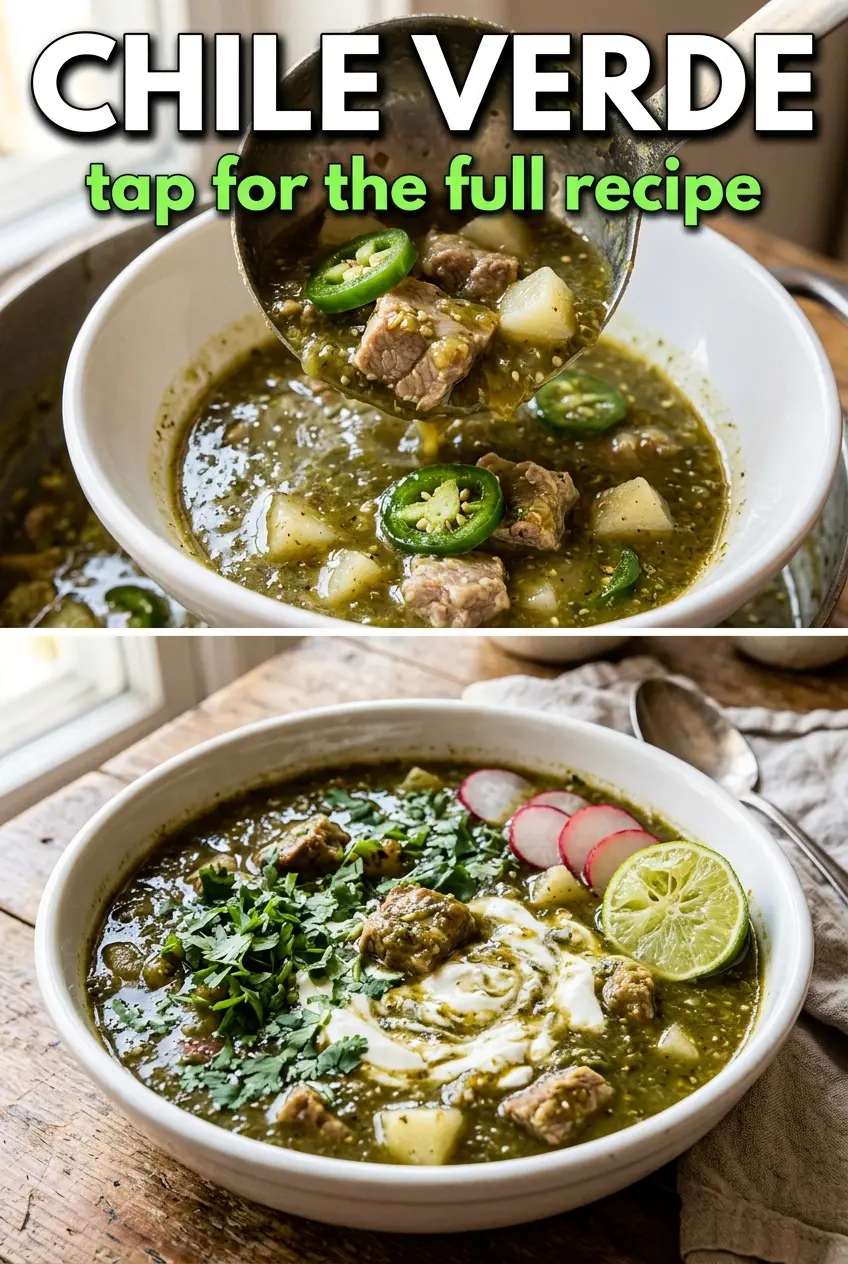
Chile Verde
Ingredients
Equipment
Method
- Blend tomatillos, poblano peppers, onion, garlic, and cilantro until smooth, scraping down as needed (no visible chunks except the pepper texture you want). Stop blending once the mixture looks like a thick, pourable green sauce.
- Heat vegetable oil in a large pot over medium-high heat and sear pork cubes on all sides until browned, about 6–8 minutes total. You should see dark edges on the pork and a lightly sizzling surface.
- Pour the blended tomatillo mixture over the pork and add chicken broth, cumin, and oregano, stirring to combine. Bring the mixture to a simmer with steady bubbling across the surface.
- Cover and cook at a gentle simmer for 35–40 minutes, until the pork is very tender. Stir once or twice so the sauce thickens evenly and doesn’t scorch.
- Shred the meat directly in the pot and stir well so the pork is coated in the green chile sauce. Continue stirring until you no longer see large chunks.
- Season with salt and pepper to taste and simmer 2–3 minutes more to marry flavors. Look for the sauce to look glossy and evenly green.
- Let the chile verde rest, covered, for 10 minutes before serving. The sauce will thicken slightly and the pork will stay tender when ladled.
- Serve the chile verde hot with warm corn tortillas on the side. Garnish with extra cilantro if desired for a bright green finish.