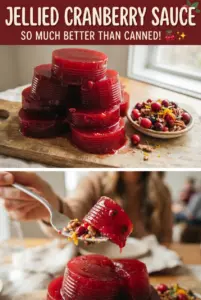
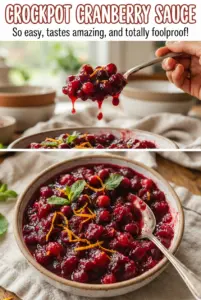
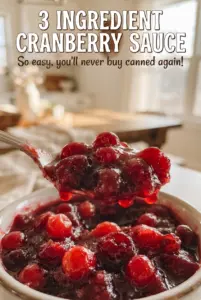
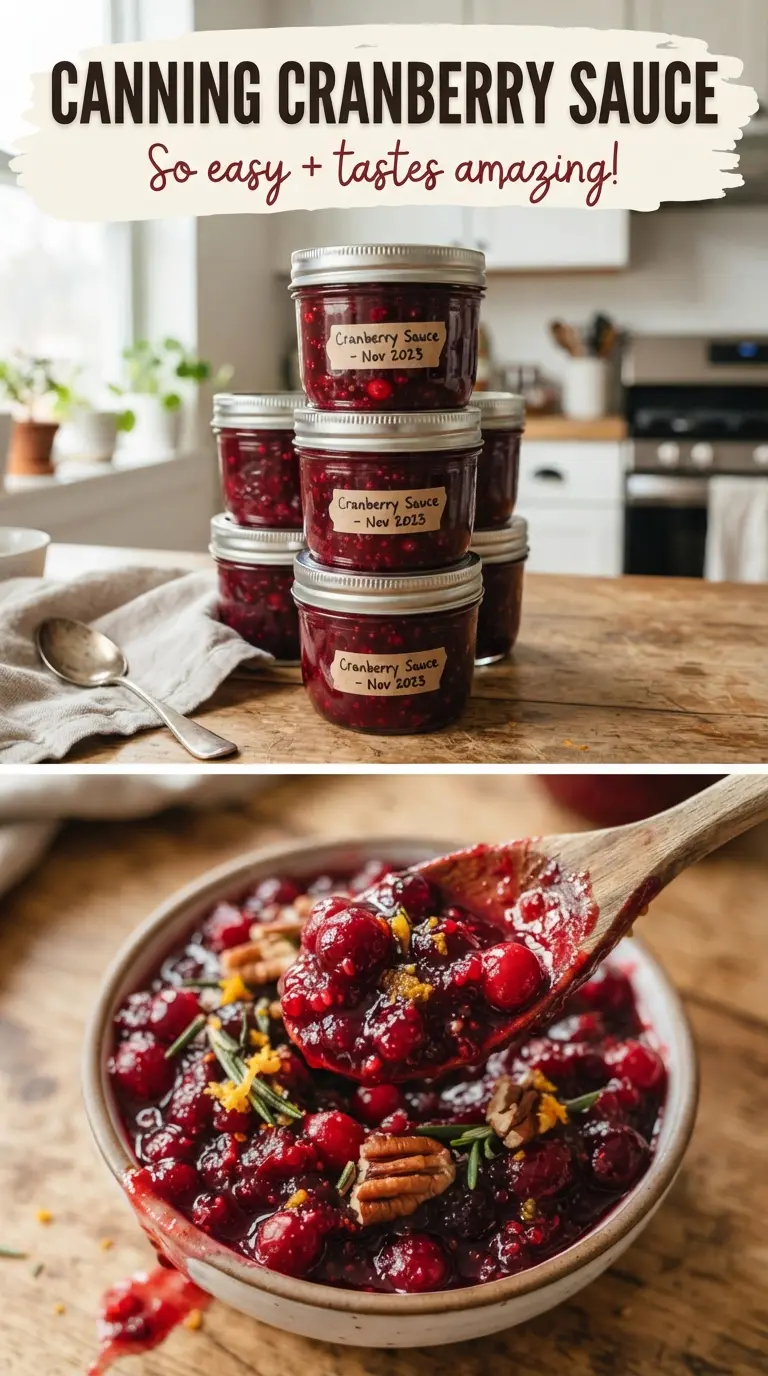
Glossy cranberry sauce that sets up with whole berries and a bright citrus finish earns its place on the shelf fast. The sauce stays spoonable, but once it cools and seals, it turns into that perfect sweet-tart balance you want next to roast turkey, ham, or a sharp cheese board. It also looks beautiful in the jar, which matters when you’re putting up something you’ll actually be proud to hand out or set on the table.
The trick is keeping enough liquid in the pot at the start so the sugar dissolves cleanly before the cranberries go in, then cooking long enough for the berries to burst and the sauce to thicken without reducing it so far that it turns jammy. Bottled lemon juice matters here because it gives you reliable acidity for safe canning, while the orange juice and zest round out the sharp edges with a softer citrus note.
Below, I’ve covered the canning step that matters most, the texture cues I watch for, and a few smart ways to adjust the batch if you want to change the citrus or scale it up for gifting.
The sauce set up beautifully in the jars and the orange zest kept it from tasting flat. I used it with roast chicken too, and it had that same bright cranberry snap without being too thick.
Canning cranberry sauce with whole berries, orange zest, and that bright, glossy finish for the pantry
The Part That Keeps the Cranberries From Turning to Jam
Most cranberry sauces go wrong when they’re cooked down too aggressively after the berries burst. Once that happens, the pectin starts tightening fast and the sauce can set up thicker than you want after processing. You’re looking for a simmer that stays lively but not violent, with a few berries still holding their shape until the very end.
The other place people lose the texture is by skipping the initial sugar-and-liquid boil. That first boil dissolves the sugar completely, which keeps the finished sauce smooth instead of grainy. It also gives you a better read on thickness before the fruit goes in, so you’re not guessing at the end.
- Whole cranberries — Fresh berries give you the best texture for canning because they burst in stages, which is what creates that glossy, spoonable sauce. Frozen cranberries work too; use them straight from frozen and don’t thaw them first.
- Orange juice and zest — The juice softens the sharp cranberry edge, while the zest adds aroma after cooking. Use fresh zest, not dried peel, because the oils in fresh zest carry the citrus note through the whole batch.
- Bottled lemon juice — This is the ingredient that matters for safe acidity. Fresh lemon juice can vary more from fruit to fruit, so bottled juice gives you consistency where canning safety depends on it.
- Sugar — This isn’t just for sweetness; it helps the sauce thicken and gives the berries a clean, glossy finish. Cutting it too far changes the balance and can leave the sauce thin and tart.
What Each Ingredient Is Actually Doing in This Recipe
- Primary ingredient (the star) — Quality matters most. Choose the best you can find.
- Cooking medium (oil, butter, or broth) — This carries flavors and prevents dryness.
- Seasonings (salt, pepper, spices, herbs) — Layer flavors so nothing overpowers. Build depth gradually.
- Aromatics (garlic, onion, herbs) — Cook with fat to bloom flavors. Become the foundation.
- Supporting ingredients — Complement the main ingredient without overpowering it.
- Sauce or liquid (if applicable) — Brings flavors together. Balance richness with acid.
- Acid (lemon, vinegar, wine, or other) — Brightens and prevents flat-tasting results.
- Final finish (garnish, glaze, or sauce) — Prevents one-dimensional taste and adds visual appeal.
Getting the Jars Filled Before the Sauce Cools Down
Start With Hot Jars and a Ready Canner
Keep the half-pint jars hot in simmering water before you fill them. Cold jars meeting hot sauce can crack, and that’s the kind of mistake that wastes a full batch. Set out the lids, bands, ladle, and a damp cloth before you start the sauce so you can move fast once it’s ready.
Cook Until the Berries Burst and the Sauce Thickens
Bring the sugar, water, and orange juice to a boil first and stir until the sugar disappears. Add the cranberries and lemon juice, then cook just until the berries pop and the sauce looks slightly looser than you want; it thickens more as it cools and again after processing. Stir in the orange zest at the end so it stays bright instead of cooked flat.
Fill, Clear the Rims, and Process Correctly
Ladle the hot sauce into the hot jars with 1/4-inch headspace. Wipe the rims carefully because even a thin smear of sauce can stop a lid from sealing. Screw the bands on fingertip tight, not cranked down hard, then process in a boiling water bath for 15 minutes, adjusting for altitude. When the timer’s up, turn off the heat and let the jars sit in the canner for 5 minutes before lifting them out; that short rest helps keep the siphoning down.
Make It More Orange Forward
Increase the orange zest to 2 tablespoons and keep the juice the same. The result is brighter and more aromatic, but the sauce still keeps its cranberry backbone. Don’t add extra juice without also testing the batch, since more liquid can leave it looser in the jar.
Reduce the Sugar a Little, Not a Lot
You can trim the sugar slightly if you like a sharper sauce, but don’t cut it in half. Sugar helps the sauce finish with a glossy body, and too little can make the texture thin and overly tart. If you want a less sweet jar, serve it with salty foods where the contrast works.
Use Frozen Cranberries
Frozen cranberries are a good standby when fresh ones aren’t available. Add them straight from frozen so they burst gradually instead of bleeding out too fast. Expect the boil to take a minute or two longer, but the finished texture stays just as good.
Storage and Reheating
- Refrigerator: Once opened, keep the jars chilled and use within 2 to 3 weeks. The sauce may loosen a touch in the fridge, but it stays spoonable.
- Freezer: Fully processed jars are best stored at room temperature; freezing isn’t necessary and can crack sealed jars. If you want to freeze extra sauce, use freezer-safe containers and leave headspace for expansion.
- Reheating: Warm only the amount you’re serving in a small saucepan over low heat. High heat can scorch the sugars and turn the sauce sticky before it’s hot through.
Answers to the Questions Worth Asking
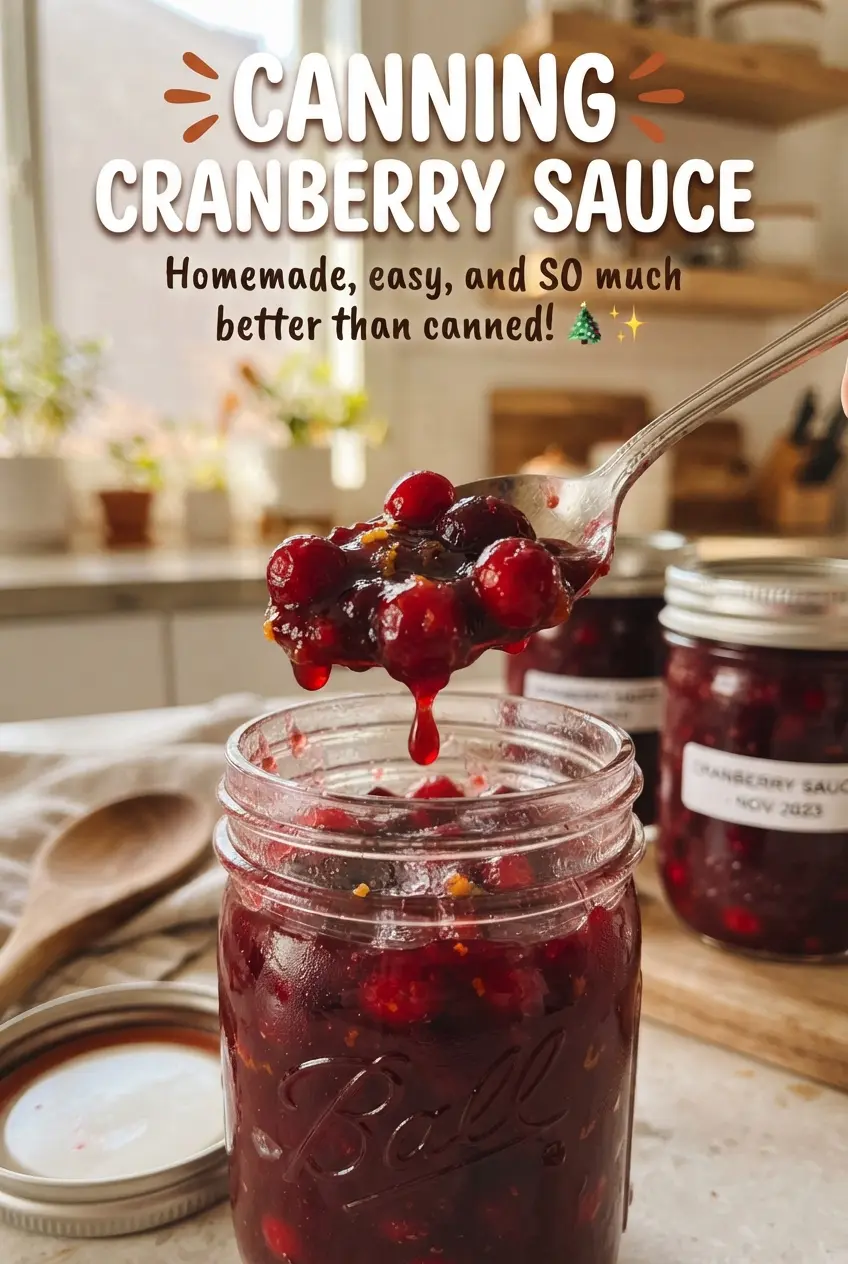
Canning Cranberry Sauce
Ingredients
Equipment
Method
- Wash 12 half-pint jars, lids, and bands, then keep the jars hot in simmering water so they’re ready for filling.
- Prepare a boiling water bath canner and keep it ready so you can process the filled jars immediately after filling.
- Bring sugar, water, and orange juice to a boil in a large pot, stirring until the sugar dissolves.
- Add cranberries and bottled lemon juice, then boil gently for 10-12 minutes until the berries burst and the sauce thickens.
- Stir in the orange zest and keep the sauce hot while you ladle it into jars.
- Ladle the hot sauce into the hot jars, leaving 1/4-inch headspace.
- Wipe the rims clean, then apply lids and bands fingertip tight.
- Process the jars in a boiling water bath canner for 15 minutes, adjusting processing time for altitude as needed.
- Turn off the heat, rest the jars in the canner for 5 minutes, then lift out the jars and cool undisturbed for 24 hours.
- Check that the lids have sealed, then store sealed jars in a cool dark place for up to 1 year.