Ruby-red cranberry sauce turns glossy and jammy in the pan with almost no effort, and the payoff is a spoonful that cuts through rich holiday food with bright, clean acidity. The texture lands somewhere between fruit compote and soft set jam: whole berries burst, the liquid thickens as it cools, and the final result holds its shape on the plate instead of running into everything else.
The short ingredient list is the whole reason this version works. Sugar balances the tart cranberries, water gives the berries enough room to soften and pop without scorching, and a brief simmer keeps the sauce from turning harsh or overly reduced. The trick is to stop cooking when most of the berries have burst and the sauce still looks a little loose in the pan — it tightens as it cools.
Below, I’ve included the small timing details that keep cranberry sauce from turning thin or cloudy, plus a few swaps and make-ahead notes if you want to serve it with less last-minute fuss.
The berries popped right on time and it set up thick and spoonable after chilling. I used it on turkey sandwiches the next day and it held its shape instead of turning watery.
Bookmark this jammy 3 ingredient cranberry sauce for an easy make-ahead side that thickens beautifully as it chills.
The Detail That Keeps Cranberry Sauce Thick Instead of Watery
Cranberries give up a lot of juice as they burst, so the mistake most people make is judging the sauce too early. It looks thin while it is hot, then it firms up after it cools. If you keep boiling until it looks fully thick in the saucepan, it usually ends up too stiff once chilled.
The other thing that matters is the boil at the beginning. Dissolving the sugar in the water first gives you an even syrup, so the cranberries cook in a sweet liquid instead of a gritty one. Once the berries go in, you want a steady simmer, not a hard rolling boil, because aggressive heat can split the berries too fast and make the sauce break down into mush.
What Each Ingredient Is Actually Doing Here
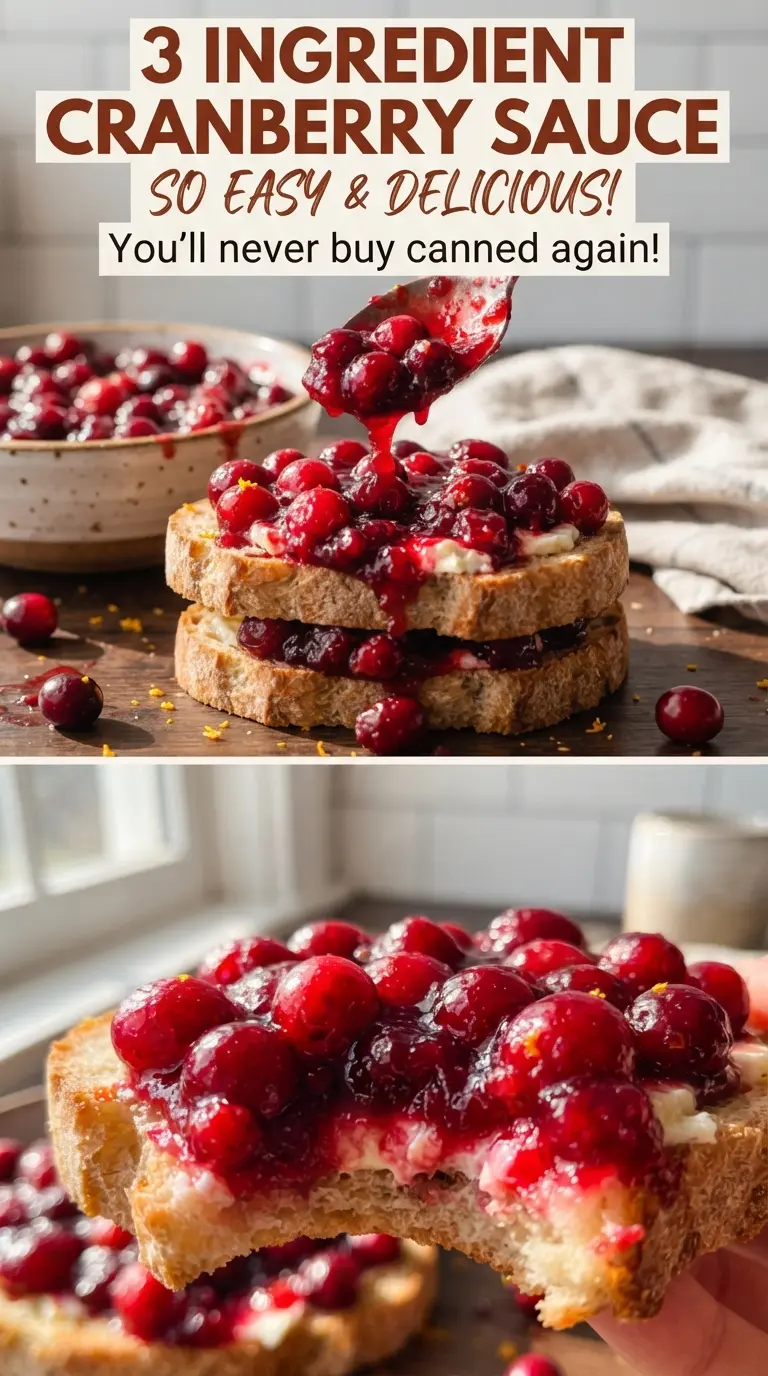
- Fresh cranberries — These are the backbone of the whole dish. They bring the tartness and the natural pectin that helps the sauce set as it cools. Frozen cranberries work too; use them straight from the freezer and add a minute or two to the simmer.
- Granulated sugar — This doesn’t just sweeten the sauce. It rounds out the sharp cranberry bite and helps the liquid cook down into something glossy. Brown sugar will make the sauce deeper and a little more molasses-y, but it changes the classic flavor.
- Water — Water looks plain, but it is what keeps the sugar from scorching and gives the berries enough liquid to burst evenly. Orange juice can replace some or all of it if you want a citrus note, though the sauce will taste less clean and a little more layered.
The 12 Minutes That Turn Berries Into Sauce
Dissolving the Sugar First
Bring the water and sugar to a full boil and stir until the crystals disappear. You want the liquid clear, not sandy on the bottom of the pan. If you skip this part and toss everything in at once, the sauce can cook unevenly and leave a faint grainy texture behind.
Cooking the Cranberries Until They Pop
Add the cranberries and bring the pan back to a boil, then reduce it to a steady simmer. You’ll hear the berries start to pop after a couple of minutes, and that sound tells you the skins are splitting and the pectin is doing its job. Stir occasionally so the berries on the bottom don’t stick, but don’t stir so often that you break every berry before they have time to soften.
Knowing When to Stop
After about 10 minutes, most of the berries should be burst and the liquid should look slightly syrupy, though still loose enough to pour. Pull it off the heat at that point. If you wait until it seems thick in the pan, it usually ends up past the sweet spot once chilled. Let it cool completely before covering and refrigerating so the steam doesn’t condense back into the sauce.
Three Practical Ways to Adjust This Cranberry Sauce
Orange-Scented Cranberry Sauce
Replace half the water with orange juice and add a strip of orange zest while the sauce simmers. The result tastes brighter and a little more layered, with a citrus edge that pairs well with roasted turkey or pork. Keep the zest strip large so it’s easy to remove before chilling.
Lower-Sugar Version
Cut the sugar to 3/4 cup if you like a sharper sauce, but don’t go much lower or the cranberries can taste harsh instead of balanced. The texture will still set, though it may stay a little looser. If you want to keep the flavor round, add a spoonful of honey at the end.
Make-Ahead, Holiday-Friendly Batch
Double the recipe in a wider saucepan so the berries have room to simmer evenly. A crowded pot takes longer to reduce and can splash more as the cranberries burst. This version is already a good make-ahead side, and a larger batch holds in the fridge beautifully for several days.
Storage and Reheating
- Refrigerator: Store covered for up to 1 week. It will continue to thicken as it chills.
- Freezer: Freezes well for up to 2 months. Cool completely, then pack into an airtight container with a little headspace.
- Reheating: Serve it cold or let it sit at room temperature for 20 to 30 minutes. If you warm it, do it gently over low heat; hard boiling after chilling can make the sauce separate and turn loose.
Answers to the Questions Worth Asking
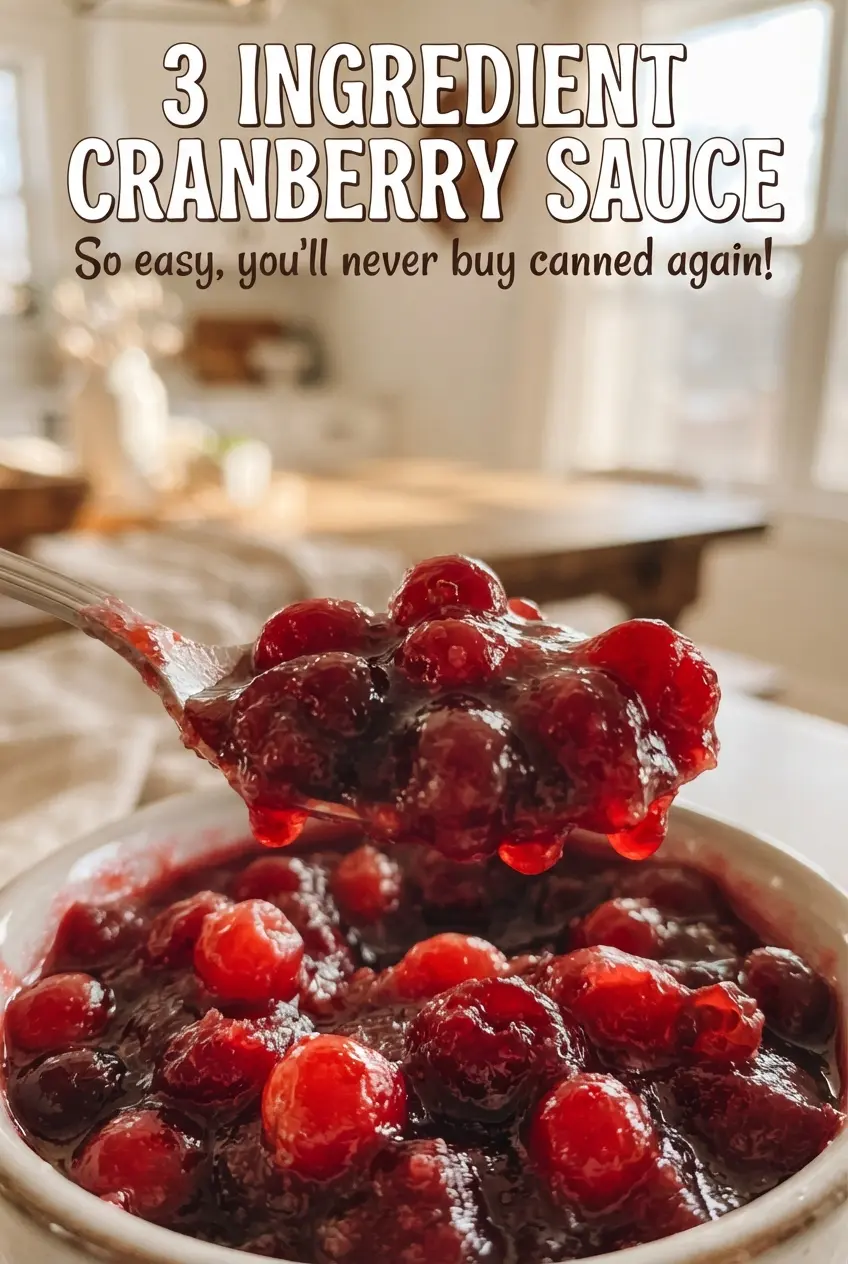
3 Ingredient Cranberry Sauce
Ingredients
Equipment
Method
- Bring the granulated sugar and water to a boil in a saucepan over high heat, stirring until the sugar fully dissolves (you should see clear syrup). Keep it at a steady boil for 1 minute so the base starts to thicken slightly.
- Add the fresh cranberries to the boiling syrup and return to a boil, stirring to coat the berries. Once boiling, reduce heat and keep it at a gentle simmer for 10 minutes.
- Simmer until the berries burst and the sauce turns glossy and thick, stirring occasionally to prevent sticking. Look for popped berries throughout and a spoonable jam texture.
- Remove the saucepan from heat and let the cranberry sauce cool completely at room temperature. As it cools, it will thicken and set like jam.
- Chill the sauce until serving for the thickest, spoon-liftable consistency. Serve cold or at cool room temperature; re-stir if any separation occurs.