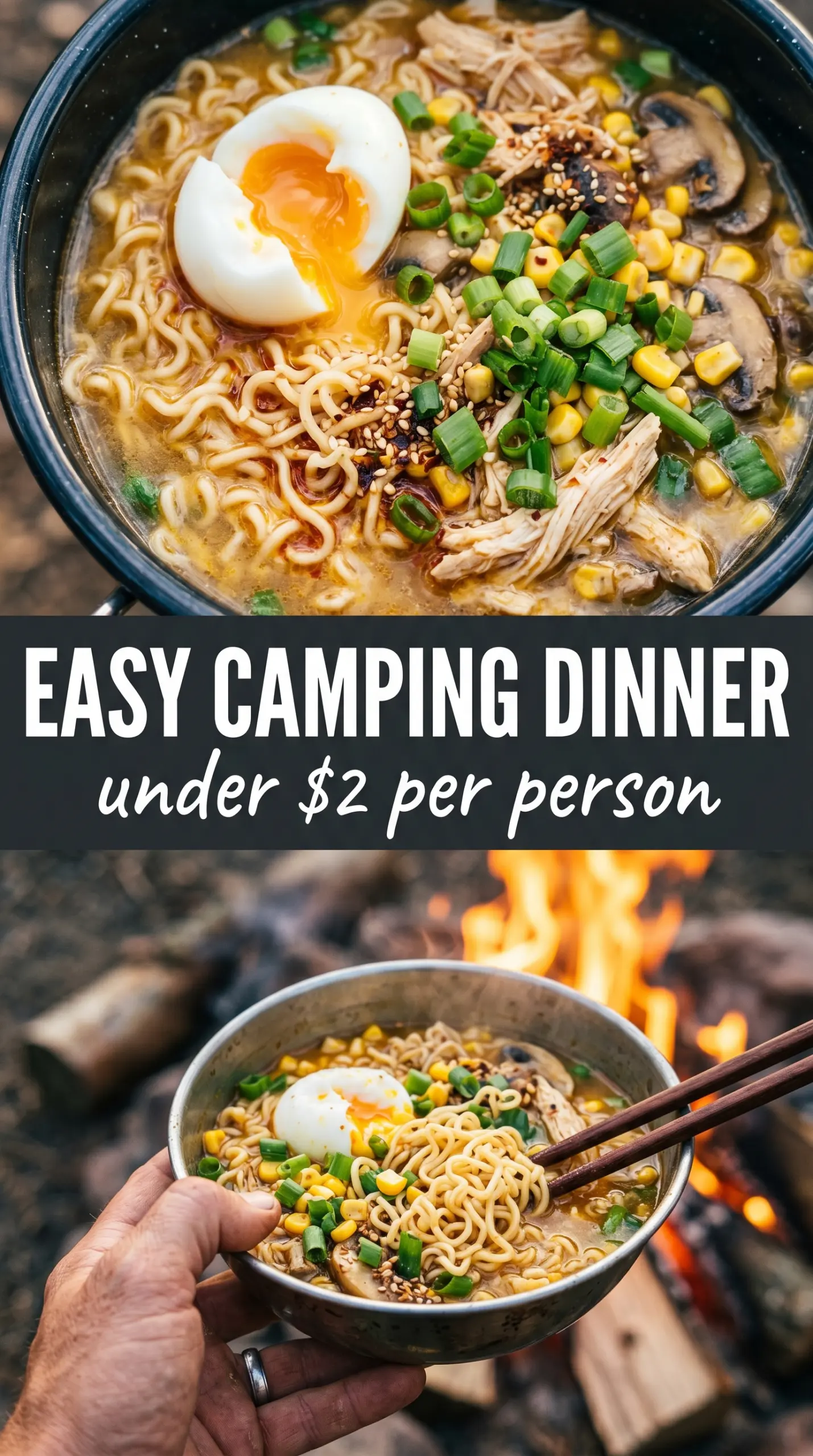
Steaming ramen cooked over a campfire hits the table fast, but it still feels like a real meal instead of a box of emergency food. The broth turns savory and a little cloudy from the noodles, the eggs poach right in the pot, and the frozen vegetables bring enough color and bite to keep every spoonful interesting.
The trick is holding back the seasoning packets until the end. If they go in too early, the broth can taste flat and overly salty before the noodles are even tender. Cooking the eggs directly in the pot gives you soft whites and yolks that enrich the broth without needing another pan or any extra cleanup.
Below, I’ll walk through the one timing detail that matters most, plus a few smart swaps for making this work with whatever you packed. It’s the kind of camp meal that earns its keep because it’s quick, filling, and easy to stretch.
I was skeptical about adding the eggs straight into the pot, but they came out tender and the broth got this rich, silky texture. The noodles were perfect at 3 minutes, and the whole thing tasted way better than I expected from camp ramen.
Save this campfire ramen for the nights when you want a fast, hearty pot meal with eggs, vegetables, and barely any cleanup.
The Timing Window That Keeps Campfire Ramen Tender
The biggest mistake with ramen over a fire is letting the broth roll too hard once the noodles are in. Camp pots heat unevenly, and a lively boil can turn instant noodles gummy fast. You want a steady boil at the start, then a gentler simmer once the noodles, vegetables, and eggs are in the pot.
The other detail that matters is when you crack in the eggs. Add them after the noodles have had a few minutes to soften, then leave them alone long enough for the whites to set. Stirring too early breaks them into wisps and clouds the broth; if you like neat poached eggs, resist the urge to poke around.
What the Seasoning Packets Are Doing at the End
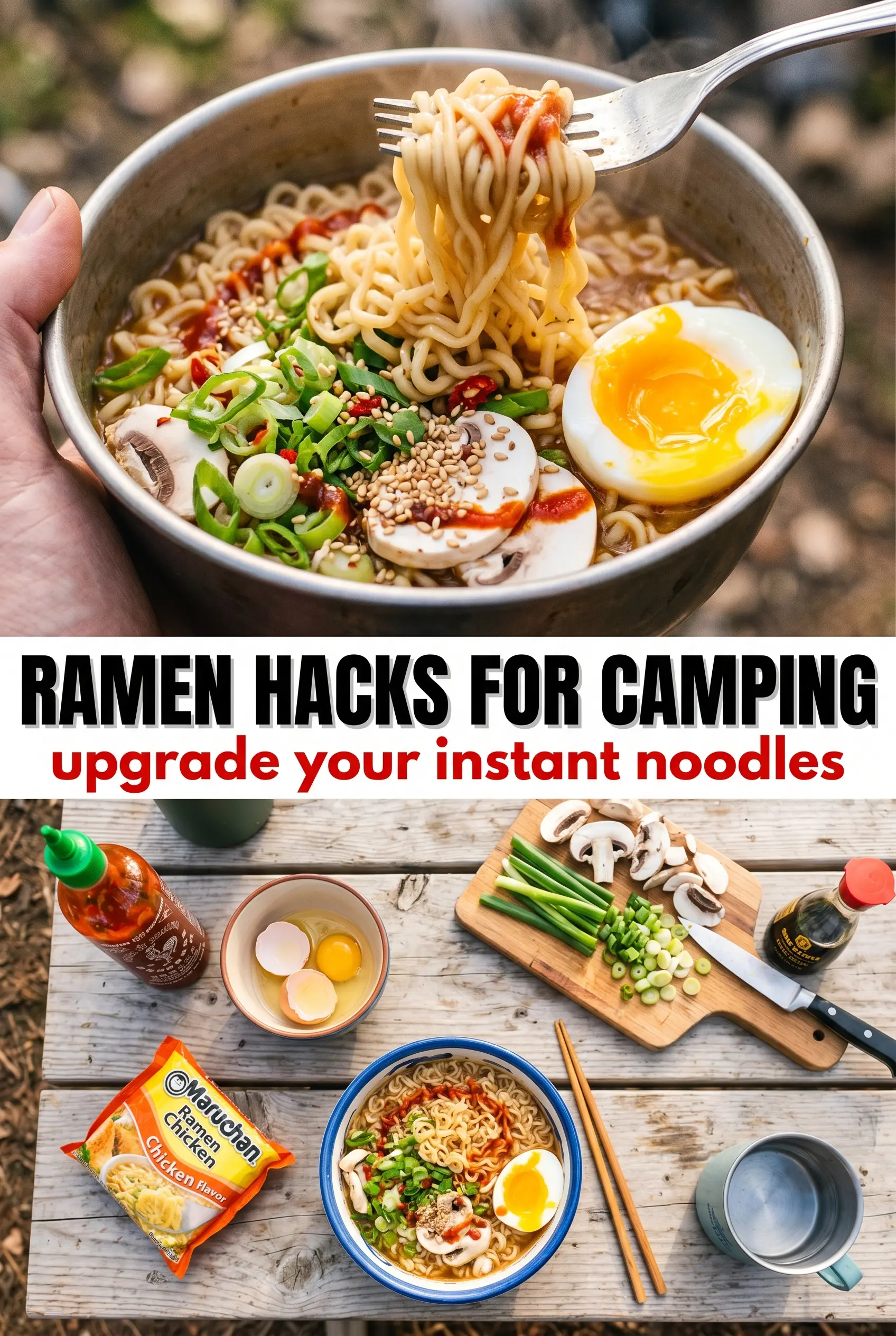
- Instant ramen noodles — These are built to cook fast and absorb flavor quickly, which is exactly what you want at camp. Standard cheap packages work fine here because the noodles are the point. If you use a sturdier brand, add a minute or two and watch the texture closely.
- Frozen mixed vegetables — Frozen vegetables are the smartest camp shortcut in the pot because they add color and body without any chopping. They also cool the broth a little, which helps prevent the noodles from overcooking in the first minute after they go in. Fresh vegetables can work, but they need more prep and won’t soften as evenly.
- Eggs — The eggs make this feel like a full meal and give the broth a richer, silkier finish. Crack them straight into the simmering pot if you want soft poached eggs; if you prefer firmer pieces, whisk them lightly before adding in a slow stream. Very fresh eggs hold together better, but any eggs will work if you keep the heat gentle.
- Soy sauce and hot sauce — The seasoning packets get the base flavor started, but soy sauce lets you dial in salt and depth at the end instead of locking yourself into whatever the packet gives you. Hot sauce is optional, but it cuts through the richness nicely when the eggs are in the broth. Add both after tasting, not before, so the bowl stays balanced.
Building the Pot So the Eggs Stay Tender
Start with a full boil
Bring the water to a boil before anything else goes in. A half-hearted simmer slows everything down and can leave you with bloated noodles and undercooked vegetables. If your fire is running low, move the pot to the hottest part of the grate and wait for a real boil before adding the ramen.
Cook the noodles and vegetables first
Add the noodles and frozen vegetables together and cook them for about 3 minutes. The vegetables should thaw and soften while the noodles loosen up, but they shouldn’t fall apart. If the pot starts losing heat, cover it briefly between stirs to hold the temperature without overboiling the noodles.
Poach the eggs in the simmering broth
Crack the eggs directly into the pot and leave them undisturbed for 3 to 4 minutes. The whites should turn opaque and set around the yolks, which stay soft if the broth is just simmering. If the eggs start shredding, the boil was too aggressive; pull the pot off the hottest flame and let the surface calm down before the next batch.
Season at the finish
Stir in the reserved seasoning packets once the noodles are tender and the eggs are cooked. That keeps the broth from turning overly salty while the water is still reducing. Taste before adding soy sauce, then finish each bowl with green onions and hot sauce so the brightness stays fresh.
Ways to Stretch This Camp Ramen Without Losing the Point
Make it vegetarian
This recipe is already close, but if your ramen packets contain meat-based flavoring, swap in a vegetarian ramen base or use only the noodle bricks with soy sauce and extra vegetables. You lose some of the packaged seasoning intensity, but the eggs and vegetables still give the broth enough body to feel satisfying.
Make it dairy-free and gluten-free
The dish is naturally dairy-free, so the main adjustment is the noodles. Use gluten-free ramen or rice noodles and watch the cook time closely, because they can turn soft faster than wheat noodles. Keep the seasoning light and taste as you go, since some gluten-free noodle packs soak up broth differently.
Add protein without another pan
Leftover cooked chicken, sliced sausage, or even canned tofu can go in with the vegetables and warm through in the broth. The key is using already-cooked protein, since campfire ramen moves fast and raw meat would need a longer, safer cook time than this recipe allows.
Storage and Reheating
- Refrigerator: Store leftovers in a sealed container for up to 2 days. The noodles soften as they sit, so expect a thicker, softer bowl the next day.
- Freezer: This doesn’t freeze well. The noodles turn mushy and the eggs lose their texture after thawing.
- Reheating: Warm it gently over low heat with a splash of water or broth. A hard boil will break up the noodles and push the eggs past the point where they stay tender.
Answers to the Questions Worth Asking
Ramen While Camping
Ingredients
Equipment
Method
- Bring 6 cups water to a boil in a pot over the campfire, keeping the water at a steady rolling boil (about 1–2 minutes). Watch for rapid bubbles across the surface before adding anything else.
- Add 4 packages instant ramen noodles and 1 cup frozen mixed vegetables to the boiling water. Stir once so the noodles loosen and the vegetables start to heat through.
- Cook for 3 minutes at a boil. Look for noodles beginning to soften at the edges while the broth stays active with bubbles.
- Crack 4 eggs directly into the pot without stirring them immediately. Cook at a gentle boil until the whites set around the yolks (about 3–4 minutes), with a poached look.
- Stir in the ramen seasoning packets and continue cooking just until fully combined. The broth should look evenly colored and fragrant from the seasoning (about 30–60 seconds).
- Divide the ramen into bowls and top with sliced green onions. Drizzle soy sauce to taste and add hot sauce if using, then serve right away while steaming.