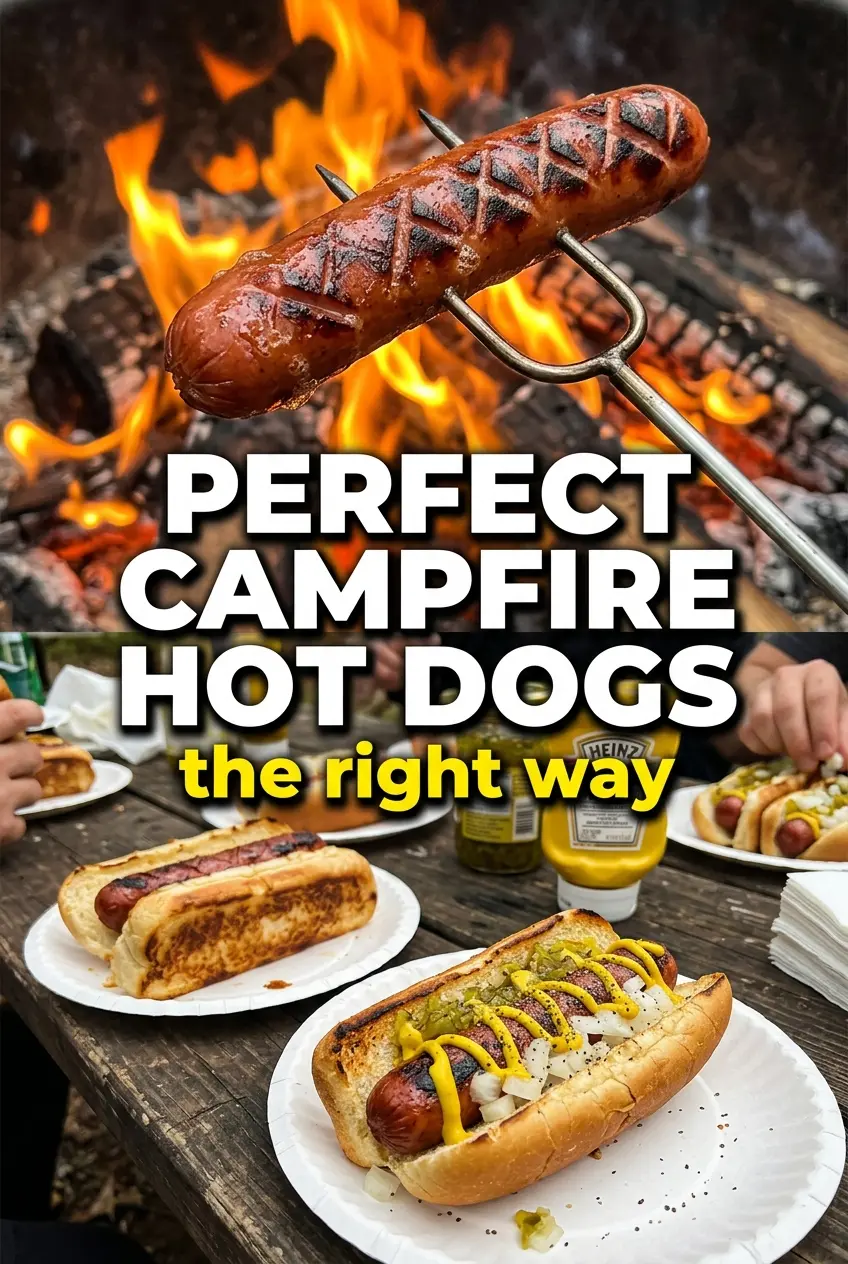
Camping hot dogs hit the table fast, but the best ones still have a little snap, a little smoke, and those dark charred spots that taste like the fire did the work for you. When they’re roasted over open flames and rotated often, the casing blisters instead of splitting, and the bun catches just enough warmth to hold everything together without turning dry.
The trick is not crowding the flame and not rushing the turning. Hot dogs heat through quickly, but if they sit in one spot they burst before the outside has any color. A steady rotation over coals or dancing flame gives you even browning and keeps the juices inside where they belong. Toasting the buns for a few seconds at the end is worth it, especially if you’re loading them up with chili, onions, or sauerkraut.
Below you’ll find the simple fire-side method, the ingredient notes that matter most, and a few ways to adapt these for different campsites and appetites.
The hot dogs got that perfect fire-kissed snap and the buns toasted up just enough without getting hard. I used the chili and onions on half of them, and even the plain ones disappeared fast.
Save these campfire hot dogs for the nights when you want a no-fuss dinner with smoky char and toasted buns.
Why Rotating the Dogs Matters More Than the Flame
With campfire hot dogs, the biggest mistake is holding them too close to the hottest part of the fire and letting the skin split before the center warms up. A hot dog only needs enough heat to get hot all the way through and pick up a little color, so constant turning does more for the final result than big flames ever will. If you’ve only got a blazing fire, wait for a bed of coals to form and work there instead.
That even rotation keeps the casing intact and gives you the browned, slightly blistered exterior people expect from good camping food. The goal is not a deep sear like a steak. It’s a steady roast with a little smoke and char, which is what makes these taste like they were made outside instead of just reheated outside.
What Each Camping Ingredient Is Actually Doing Here
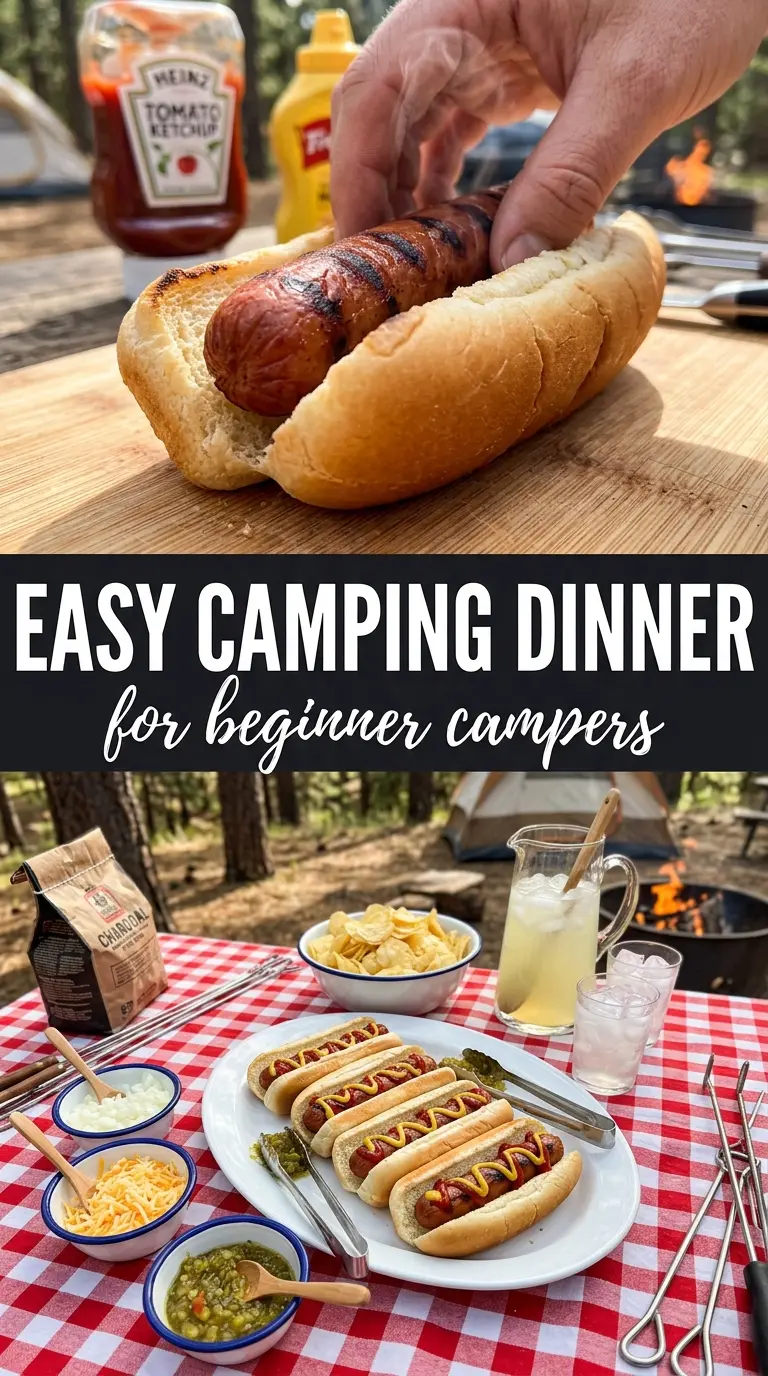
- Hot dogs — This is where the snap and smoky char come from. A standard beef or pork hot dog works best because it holds up over the fire and tastes good with very little added to it. If you use a thinner hot dog, watch it closely because it will warm faster and can dry out at the edges.
- Hot dog buns — Fresh buns matter more than people think because they’re what keep the toppings from sliding off. You can skip toasting them if the fire is wild, but a quick warm-up over the coals gives them a better texture and keeps them from feeling soft and stale next to the hot dog.
- Ketchup, mustard, and relish — These are the classic camping finish because they add brightness and a little sweetness to balance the smoke. Use what you like, but keep the condiments cold until the dogs are ready so they stay clean and sharp-tasting.
- Shredded cheese, diced onions, chili, sauerkraut, jalapeños — These toppings turn a basic campfire dog into a more filling meal. Chili and cheese need the hot dog to be piping hot so they melt and cling; onions, sauerkraut, and jalapeños add crunch, acidity, and heat that cut through the richness.
The Few Minutes of Fire Time That Actually Matter
Skewering for a Clean Turn
Push each hot dog lengthwise onto a roasting stick or long fork so it stays stable while you turn it. The lengthwise setup gives you more control than spearing it through the middle, which is how a lot of dogs end up spinning off or splitting open early. Leave enough of the stick exposed to keep your hand far from the heat.
Roasting Over Flames or Coals
Hold the hot dogs over the fire and rotate them every few seconds, especially when the skin starts to blister. If the flame is licking one side too hard, move higher or toward the coals so the outside doesn’t burn before the center heats through. You’re looking for a little charring in spots and an evenly hot dog that still feels plump, not shriveled.
Warming the Buns at the End
Toast the buns briefly only after the hot dogs are ready, because buns go from warm to dry in a hurry. A few seconds near the fire is enough to soften them and add a little toast without turning them brittle. If the buns get too close to direct flame, they’ll scorch before the inside feels warm.
Building the Finished Dog
Set each hot dog in a bun right away and add condiments and toppings while the sausage is still hot. That heat helps melt cheese and loosen chili just enough to hold together. Serve them immediately, because once the hot dogs sit, the buns lose that nice contrast between soft inside and lightly toasted outside.
How to Adjust These for Different Campsites and Crowds
Chili Cheese Campfire Dogs
Spoon warm chili over the hot dogs right after they come off the fire, then finish with shredded cheese so it melts from the residual heat. This makes the dogs heavier and messier, but it also turns them into a full meal with almost no extra work.
Dairy-Free and Gluten-Free Serving Style
Use gluten-free buns and skip the cheese, or choose a dairy-free cheese that melts well if your group wants that classic topping. The hot dogs themselves are often naturally gluten-free, but check the package because some brands use fillers that change that.
Sauerkraut and Mustard Dogs
Pile on warmed sauerkraut with a generous stripe of mustard for a sharper, tangier version that cuts through the smoke. This variation tastes best when the kraut is drained well, or the bun gets soggy fast.
Making a Bigger Batch for a Group
Roast the hot dogs in shifts and keep the finished ones wrapped loosely in foil near the edge of the fire. Don’t stack them tightly or they’ll steam and lose the char you worked for. Warm the buns last so everyone gets a soft bun with a hot dog that still has texture.
Storage and Reheating
- Refrigerator: Store leftover cooked hot dogs in an airtight container for up to 3 days. The buns are best kept separate so they don’t get soggy.
- Freezer: Cooked hot dogs can be frozen for about 1 month, but the texture softens a little after thawing. Freeze them without buns and wrap tightly.
- Reheating: Rewarm the hot dogs over low heat, in a skillet, or wrapped in foil near the fire until hot through. High heat is the mistake here because it splits the casing and dries out the inside before the center is warm.
Questions I Get Asked About This Recipe
Camping Hot Dogs
Ingredients
Method
- Skewer each hot dog lengthwise on a roasting stick or long fork. Keep a steady grip so the hot dog stays centered as it roasts.
- Hold the hot dogs over campfire flames or coals, rotating frequently, for 8-10 minutes until heated through and slightly charred. Look for charred spots and steaming centers as the visual cue.
- Toast the hot dog buns briefly over the fire if desired. Stop as soon as the buns feel warm and lightly toasted.
- Place the hot dogs in buns. Add charred hot dogs immediately so they stay hot in the bun.
- Add ketchup, mustard, and relish to taste. Use a quick zigzag or dollops so each hot dog gets condiments evenly.
- Top with any desired optional toppings such as shredded cheese, diced onions, chili, sauerkraut, or jalapeños. Finish with toppings that match your preferred flavor profile, aiming for warm heat on the cheese or chili.
- Serve immediately while hot. Keep them close to the heat source so the charred exterior stays warm and the center remains steaming.