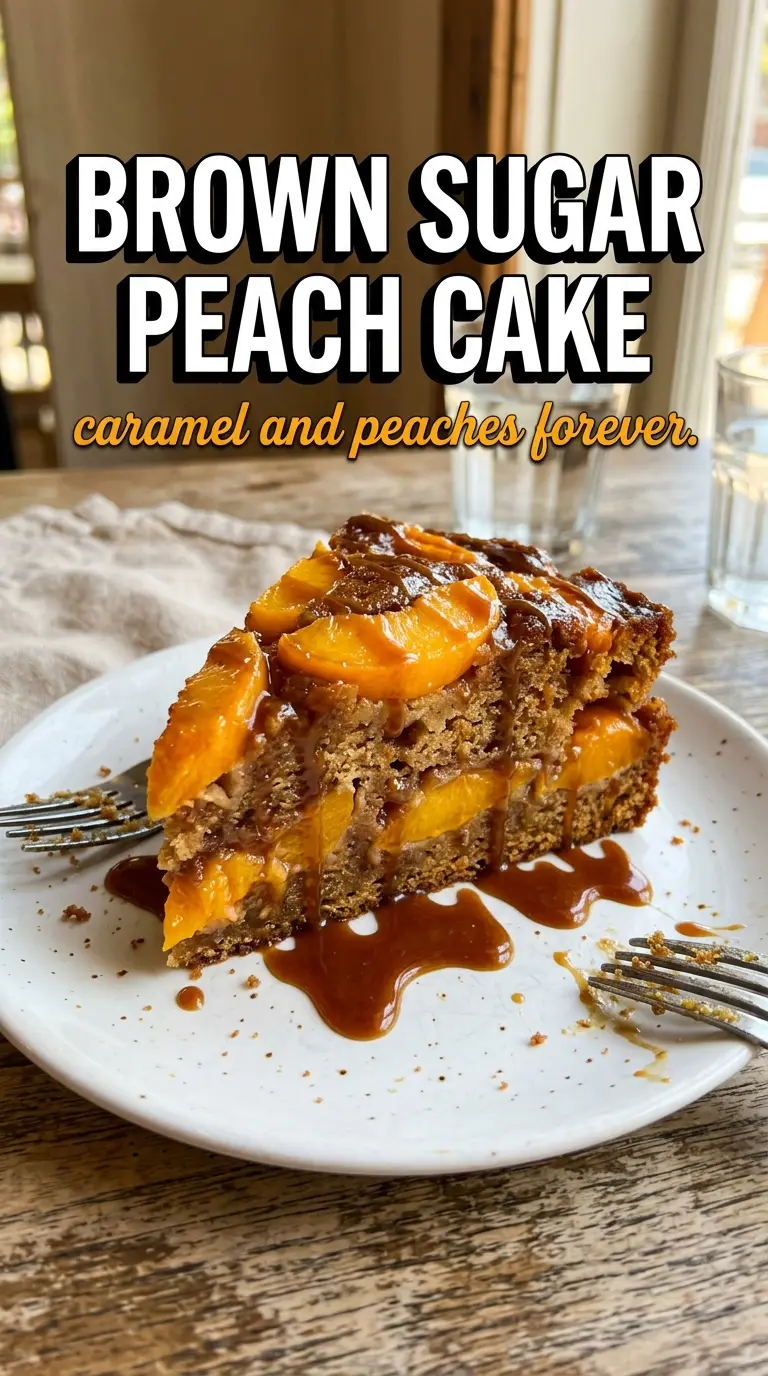
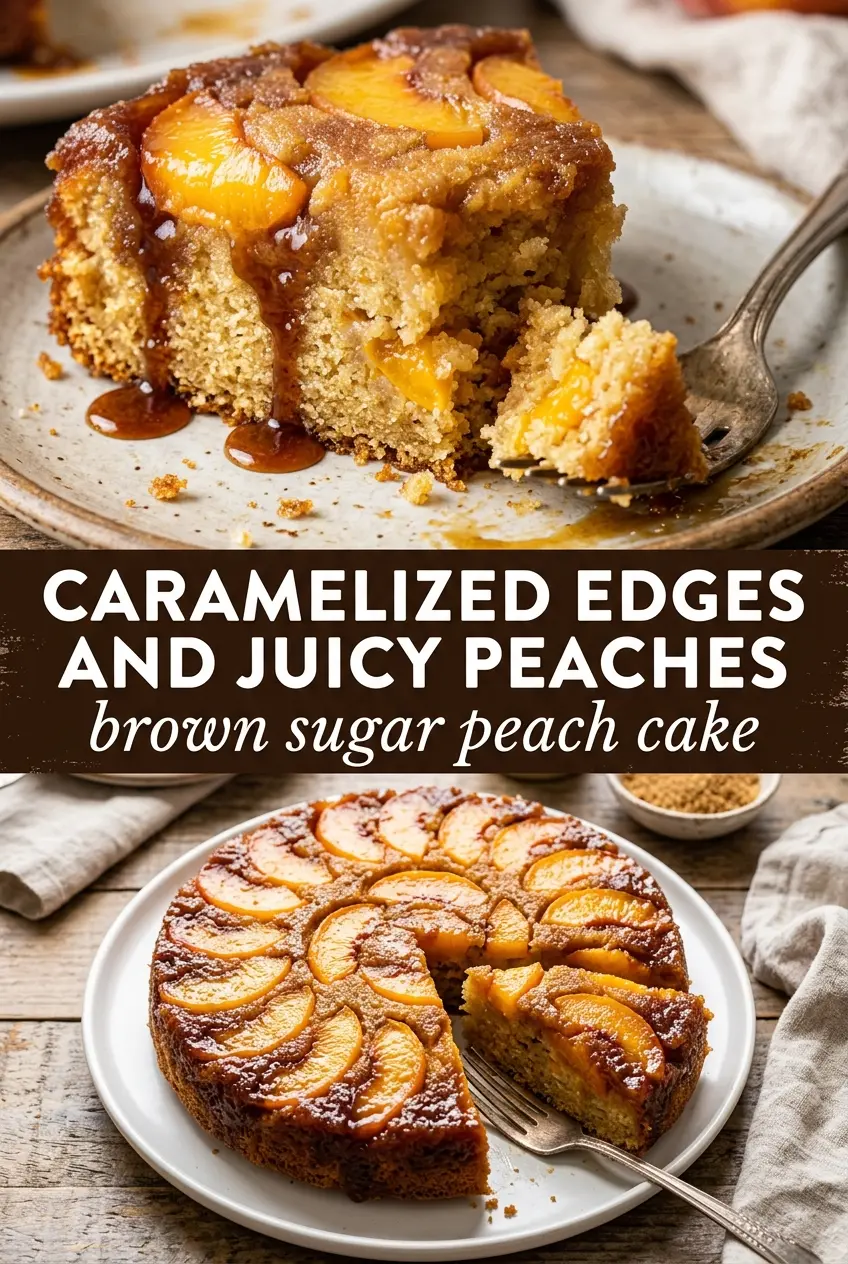
Brown sugar peach cake comes out with the kind of tender crumb that makes people stop mid-sentence for a second bite. The peaches bake down into soft, juicy pockets, while the brown sugar brings a deep caramel note that tastes richer than a standard peach cake without turning heavy. That glaze on top isn’t just decoration either. It melts into the warm cake and leaves the surface glossy, sticky, and full of brown sugar flavor.
What makes this version work is the balance of moisture and structure. Sour cream keeps the crumb soft and plush, while the butter-and-brown-sugar base gives the cake that old-fashioned bakery texture that slices cleanly without feeling dry. The peaches stay suspended because the batter is thick enough to hold them, but not so stiff that it bakes up dense. If you’ve had peach cakes turn gummy or sink in the middle, the mixing order here matters more than people think.
Below, I’ve included the small details that keep the cake from turning soggy, the glaze timing that gives you the best finish, and a few swaps that make sense if your peaches are extra juicy or you need to work with what’s already in the kitchen.
The glaze soaked right into the cake and the crumb stayed soft for two days. I used very ripe peaches and was worried it would get mushy, but it sliced beautifully and the center baked through perfectly.
Save this brown sugar peach cake for the day you want a moist peach dessert with caramel notes and a glaze that soaks into every slice.
The Part That Keeps Peach Cake from Turning Heavy
Peach cake fails in two common ways: the batter gets overmixed and tight, or the fruit sinks and leaves a gummy layer at the bottom. This version avoids both by using a thick but soft batter and folding the peaches in at the very end. The sour cream gives you moisture without thinning the structure, which is what lets the cake rise around the fruit instead of collapsing under it.
The other thing that matters here is the pan. A bundt or tube pan gives this cake enough height to bake through evenly, and the center tube helps the middle set before the outside dries out. If you use a pan with intricate details, grease every groove well because the brown sugar glaze loves to cling, and so does any stuck crumb if you miss a spot.
- Fresh peaches — Use ripe peaches with a little give, but not the soft, bruised ones that collapse into juice as soon as you cut them. If your peaches are extra juicy, pat the diced pieces lightly with paper towels so the batter doesn’t get weighed down.
- Brown sugar — This does more than sweeten. It brings that caramel depth that plain granulated sugar can’t give, and it’s what makes the cake taste warm and almost toasted even before the glaze goes on.
- Sour cream — This is the moisture insurance. Full-fat sour cream gives the best texture, but plain full-fat Greek yogurt works if that’s what you have. The cake will be a touch tangier, but still tender.
- Butter — Softened butter needs to be beaten with the brown sugar until it turns lighter and fluffy. That step traps air, which helps the cake rise and keeps the crumb from turning dense under all the fruit.
What Each Ingredient Is Actually Doing in This Peach Cake
- Fresh or preserved peaches (the flavor centerpiece) — Fresh peaches add brightness; preserved peaches add depth. Dice or slice evenly.
- Sugar (the sweetness and structure) — This tenderizes the cake and creams with butter to create volume. Don’t reduce too much.
- Butter (the richness and crumb) — Proper creaming adds air and creates tender cake. Use room temperature butter.
- Eggs (the binder and lift) — These create structure and help the cake rise. Beat eggs in gradually for best volume.
- Flour (the structure base) — Don’t overmix or the cake becomes tough. Mix just until combined.
- Leavening (baking powder or soda) — This creates rise and light crumb. Too much makes it bitter and dome-shaped.
- Spices (cinnamon, nutmeg, or allspice) — These warm up the peach flavor. Use in balance so they support, not overpower.
- Frosting or glaze (the finish) — This adds moisture and flavor. Cream cheese frosting works especially well with peach.
Building the Batter So the Peaches Stay Put
Whipping the Butter and Brown Sugar
Beat the butter and brown sugar for the full three minutes until the mixture looks paler and feels fluffy, not grainy. That’s where the cake gets its lift. If you stop early, the crumb will bake up tighter and the sugar won’t disperse evenly, which can leave the texture sandy instead of soft.
Adding Eggs and Vanilla
Add the eggs one at a time and let each one disappear before adding the next. This keeps the batter smooth and prevents it from looking curdled. Vanilla goes in here too, and it rounds out the brown sugar flavor without competing with the peaches.
Alternating Flour and Sour Cream
Add the flour mixture and sour cream in turns, starting and ending with flour. That order keeps the batter from breaking and helps the flour hydrate evenly. If you dump in all the sour cream at once, the batter loosens too quickly and the cake can bake up heavy in the center.
Folding in the Peaches
Fold the peaches in gently with a spatula and stop as soon as they’re distributed. You want pockets of fruit, not mashed fruit streaks. The batter should be thick enough that the pieces stay suspended; if it seems loose, give it one or two turns with the spatula and let it sit for a minute before pouring it into the pan.
Baking and Finishing with Glaze
Bake until a toothpick comes out clean and the top springs back lightly when touched. If the top is browning too quickly but the center still needs time, tent it loosely with foil for the last 10 minutes. Let the cake rest for 15 minutes before inverting, then drizzle the warm glaze over the still-warm cake so it sinks into the crumb instead of sitting on top like candy.
Make It More Peachy
Use 3 1/2 cups of peaches instead of 3 cups if your fruit is firm and not overly juicy. The cake will taste even more fruit-forward, but it also needs the extra step of patting the diced peaches dry so the batter doesn’t turn wet.
Dairy-Free Version
Swap the butter for a good dairy-free baking stick and use thick unsweetened coconut yogurt in place of sour cream. The texture stays moist, though the cake will lose a little of that classic tang and the glaze will taste slightly softer and less rich.
When You Only Have Frozen Peaches
Thaw the peaches completely, then drain them well and blot them dry before folding them in. Frozen peaches work, but they release more liquid than fresh fruit, so the texture will be a little softer and the crumb may need the full bake time.
Storage and Reheating
- Refrigerator: Keep covered for up to 4 days. The crumb stays moist, and the peach flavor deepens a little by day two.
- Freezer: Freeze slices tightly wrapped for up to 2 months. The glaze softens after thawing, but the cake itself freezes well.
- Reheating: Warm slices in the microwave for 10 to 15 seconds or in a 300F oven for a few minutes. Don’t overheat it, or the peaches can turn watery and the crumb will dry out at the edges.
Questions I Get Asked About This Cake
Brown Sugar Peach Cake
Ingredients
Equipment
Method
- Preheat the oven to 350F and grease a 10-inch bundt or tube pan with a light coat of butter or nonstick spray, then set it on a sheet pan for easier handling.
- Whisk all-purpose flour, baking powder, baking soda, cinnamon, and salt in a bowl until evenly combined.
- Beat softened butter and packed brown sugar for 3 minutes until fluffy, then add eggs one at a time, mixing after each addition, and beat in vanilla extract.
- Alternate adding the flour mixture and sour cream to the creamed mixture, starting and ending with flour, and mix only until the batter looks smooth.
- Gently fold in diced fresh peaches just until evenly distributed so the chunks stay intact.
- Pour the batter into the prepared pan, smooth the top, and bake at 350F for 45 to 50 minutes until a toothpick inserted in the center comes out clean.
- Cool the cake for 15 minutes, then invert it onto a plate so the crumb releases cleanly.
- Drizzle warm brown sugar glaze over the top and let it run down the sides for a glossy, caramel-like finish.