Beef Carbonnade Stew lands in that perfect place where the beef turns spoon-tender, the onions melt into the broth, and the beer reduces into a dark, glossy sauce that tastes deeper than the short ingredient list suggests. The mustard bread on top looks unusual if you haven’t made carbonnade before, but it’s the piece that gives the stew its signature tang and helps tighten the sauce as it cooks.
This version works because the onions aren’t rushed. They need time to go from sharp and crisp to soft, sweet, and deeply browned before the liquid goes in. That base is what keeps the stew from tasting flat. The Belgian brown ale adds malty bitterness, while a splash of apple cider vinegar keeps the final bowl from feeling heavy.
Below, I’ve included the one step people usually question, plus the ingredient details that matter most if you want the stew to taste rich instead of merely beefy.
The onions went silky and sweet, and the bread completely melted into the stew without making it greasy. I served it over fries and the sauce clung to everything just right.
Save this Belgian Beef Carbonnade Stew for the night when you want tender beef, caramelized onions, and a rich beer sauce with almost no extra fuss.
The Part Most People Rush in Carbonnade
The onions are the backbone of this stew, and they need the full 20 minutes of cooking before the flour and beer go in. If they only soften instead of taking on deep golden color, the finished sauce tastes thin and one-note. What you want is onions that look almost jammy and smell sweet enough to take the edge off the ale.
Brown the beef in batches, too. Crowding the pot steams the meat, and steamed beef never gives you the same browned bits on the bottom. Those browned bits are what the beer and broth lift back into the sauce, which is why the stew tastes layered instead of muddy.
- Beef chuck — This cut has enough connective tissue to turn silky during the long oven time. Leaner stew meat dries out before the sauce has a chance to thicken around it.
- Belgian brown ale — Use a beer you’d actually drink. A malty brown ale gives depth without sharp bitterness. A dark lager can work in a pinch, but the flavor won’t be as rounded.
- Dijon mustard on the bread — This is not garnish. It melts into the broth and gives the stew its gentle tang. Grainy mustard works if that’s what you have, but Dijon gives the cleanest finish.
- Rustic bread — The bread dissolves and helps body the sauce. Soft sandwich bread turns pasty too fast, so keep the sturdier loaf here.
Building the Stew So the Sauce Turns Rich, Not Watery
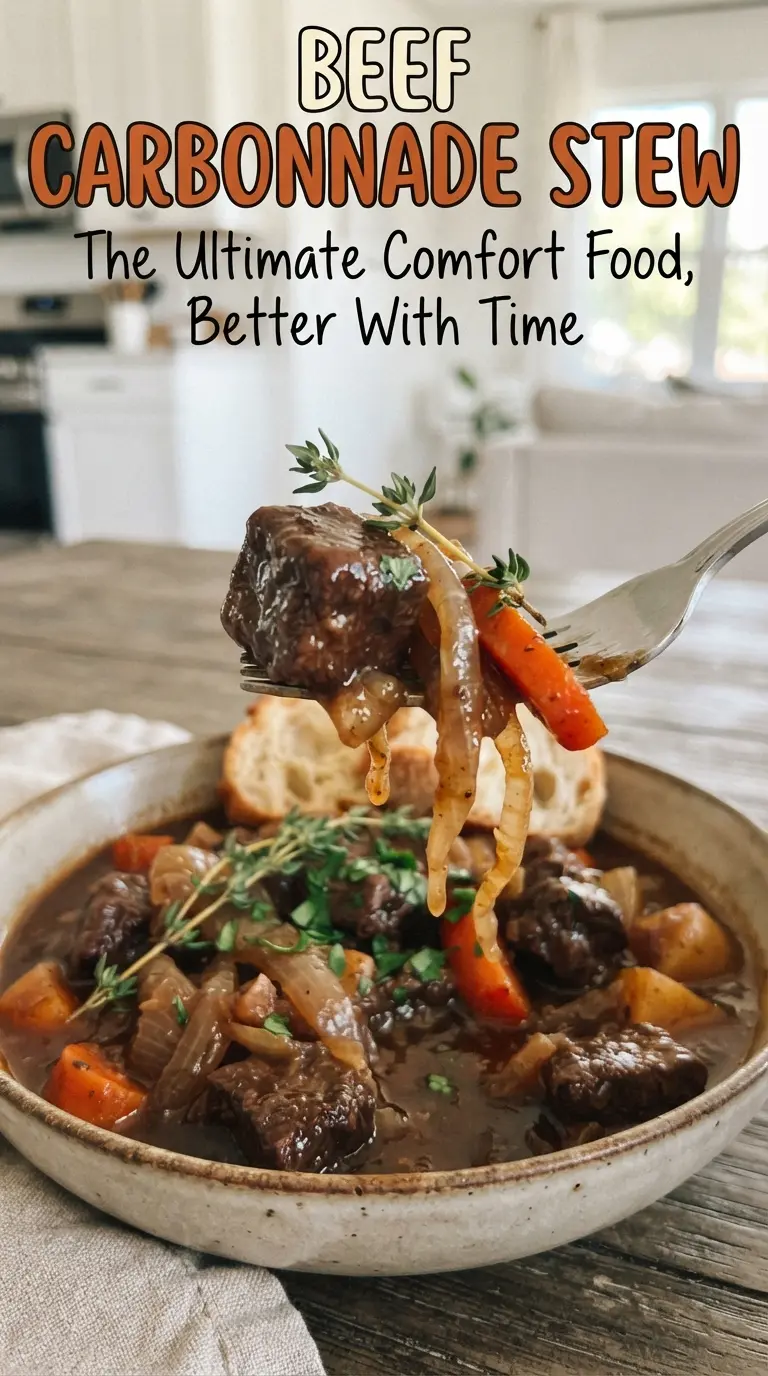
- Beef chuck — This cut has enough collagen to become tender after a long, slow braise. Cut it into 2-inch pieces so it stays substantial after three hours in the oven.
- Belgian brown ale — The beer is the main flavoring liquid, so quality matters here. Pick a malty brown ale with some body; very bitter beers can dominate the stew and taste harsh after reduction.
- Apple cider vinegar — The vinegar keeps the sauce from tasting heavy and flat. You won’t notice it as vinegar in the bowl, but you will notice that the stew tastes brighter and less sticky-sweet.
- Mustard-spread bread — Lay it mustard side down so it can dissolve into the liquid. If the bread sits too high above the surface, it won’t break down properly and won’t help thicken the sauce.
The Three Hours That Turn Tough Beef into Carbonnade
Brown the Beef in Batches
Season the beef first, then brown it in hot butter in a Dutch oven until each piece has a deep crust on more than one side. Don’t dump all the meat in at once; the pot needs space or the temperature drops and the beef starts releasing moisture instead of browning. Move the browned pieces to a plate and keep going until everything has color.
Cook the Onions Until They Collapse
Add the remaining butter and the sliced onions, then let them cook slowly for about 20 minutes. Stir often enough that they don’t scorch, but not so often that they never take on color. When they’re deep golden and soft enough to slump into the spoon, stir in the brown sugar and flour. The sugar supports the caramelized flavor; the flour helps the sauce come together later.
Deglaze and Build the Braising Liquid
Pour in the ale, broth, and vinegar and scrape the bottom of the pot until the browned bits loosen. That fond is where the most concentrated flavor lives, so don’t leave it stuck to the pan. Add the thyme, bay leaves, and beef back in. The liquid should come partway up the meat, not drown it completely.
Let the Oven Do the Work
Lay the mustard bread on top, cover the pot, and bake at 325F for about 2 1/2 hours. Stir once after the bread has dissolved so the sauce stays even. The beef is ready when it pulls apart easily with a spoon and the sauce looks glossy and thick around the edges. If it still feels tight or chewy, give it more time; carbonnade gets better from patience, not from rushing the oven.
How to Tweak Carbonnade Without Losing What Makes It Carbonnade
Gluten-Free Version
Swap the all-purpose flour for a gluten-free flour blend that thickens well, and use gluten-free bread for the mustard topping. The stew still braises the same way, but the bread may dissolve a little faster, so stir once mid-way to keep the texture even.
Alcohol-Free Approach
Replace the beer with an equal amount of beef broth plus 1 tablespoon molasses and an extra teaspoon of vinegar. You’ll lose the malty bitterness that makes carbonnade distinctive, but you’ll keep the dark color, sweetness, and tang that carry the sauce.
Make It Even More Belgian-Style
Serve it with fries and a thick slab of bread on the side, the way it’s often eaten in Belgium. That extra starch is not just for serving — it catches the glossy sauce and makes the meal feel complete without adding anything else to the pot.
Storage and Reheating
- Refrigerator: Keeps well for 4 days. The flavor deepens overnight, and the sauce usually thickens as it chills.
- Freezer: Freezes well for up to 3 months. Cool it completely first and store it without the fries or bread.
- Reheating: Warm it gently on the stove over low heat with a splash of broth if needed. High heat can tighten the beef and make the sauce taste reduced past its best point.
Questions I Get Asked About This Recipe
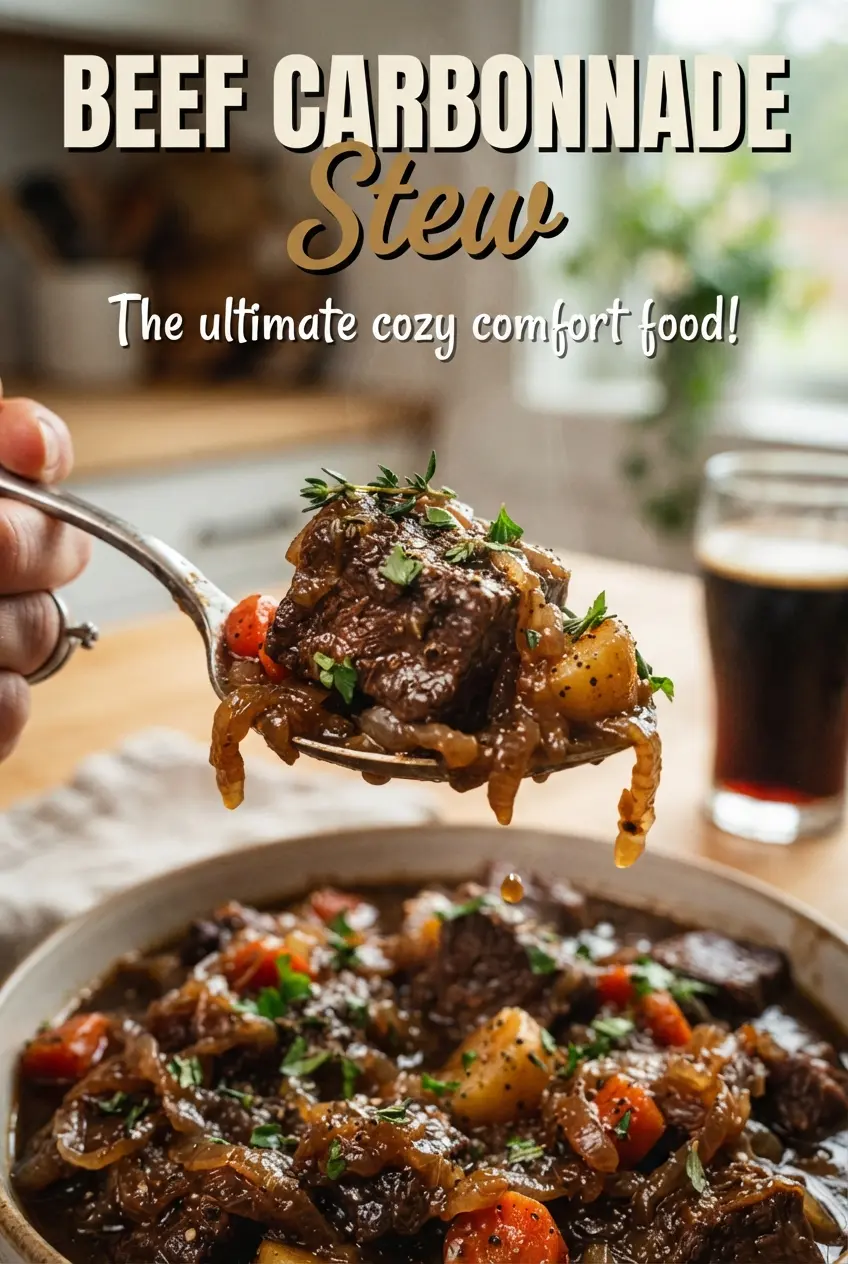
Beef Carbonnade Stew
Ingredients
Equipment
Method
- Preheat oven to 325F. Season beef with salt and black pepper, then brown in batches in 2 tablespoons butter in a Dutch oven.
- Brown in batches until well seared, using steady heat and avoiding overcrowding. Transfer browned beef to a plate while you finish the rest.
- Add remaining butter and the sliced onions to the Dutch oven. Cook at 325F? until deep golden, about 20 minutes, then stir in brown sugar and flour.
- Pour in Belgian brown ale, beef broth, and apple cider vinegar, scraping the bottom to loosen browned bits. Add fresh thyme, bay leaves, and return the beef to the pot.
- Lay mustard-spread rustic bread on top, mustard side down, then cover the Dutch oven. Bake at 325F for 2 1/2 hours.
- After 2 1/2 hours, stir once the bread has dissolved to thicken the sauce and ensure even tenderness. Continue baking only as needed until the beef is very tender, keeping it covered.
- Remove the fresh thyme and bay leaves from the stew. Serve hot with fries or mashed potatoes.