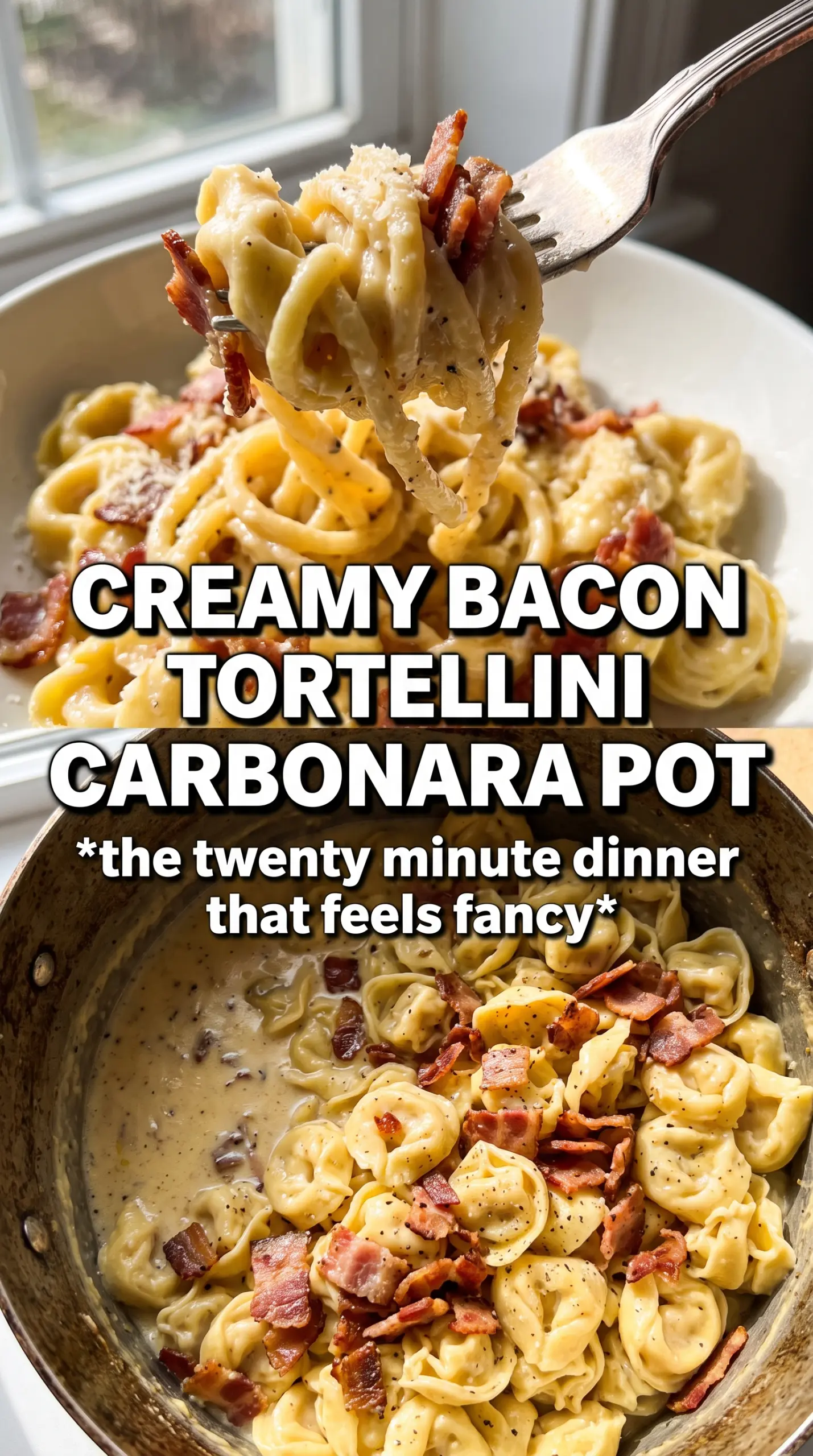
Plump cheese tortellini coated in a silky carbonara sauce is the kind of dinner that lands fast and still feels like you put in real effort. The filling gives every bite more body than regular pasta, and the salty pancetta, parmesan, and black pepper keep the whole dish sharp instead of heavy. When it’s done right, the sauce clings to the tortellini in a glossy coat instead of pooling in the bottom of the bowl.
The trick here is treating the egg and cheese mixture like a sauce you coax into place, not something you cook hard on the stove. Hot pasta and a splash of starchy cooking water are enough to turn the yolks into that classic creamy carbonara texture, as long as the pan is off the heat when the eggs go in. That’s what keeps the sauce smooth instead of scrambling.
Below you’ll find the specific point where most carbonara-style pasta goes wrong, plus the little adjustment that keeps the sauce loose enough to coat every tortellini without turning thin.
The sauce turned silky the second I tossed in the hot tortellini, and the pancetta stayed crisp instead of getting lost. I added the pasta water a splash at a time and it coated everything beautifully.
Save this tortellini carbonara for the nights when you want a creamy pasta that stays silky, peppery, and fast.
The Key to Keeping the Eggs Silky, Not Scrambled
Carbonara lives or dies on heat control. The eggs want warmth, not direct flame, and tortellini makes that even more important because the pasta holds onto the sauce in every fold. If you dump the egg mixture into a hot pan and leave it over the burner, the proteins tighten too fast and you get tiny curds instead of a smooth sheen.
The other common mistake is not using enough starchy pasta water. The sauce needs that looseness to move around the tortellini and finish creamy instead of turning sticky and clumpy as it sits. Add it gradually, and stop as soon as the sauce looks glossy and lightly coats the spoon.
- Hot tortellini — It gives you the residual heat you need to thicken the egg mixture without scrambling it. Drain it fast and move right into the pan.
- Pancetta — This brings the salty, savory base that carbonara depends on. Thick-cut bacon works too, but it tastes a little smokier and renders more fat.
- Parmesan — Finely grated parmesan melts smoothly and helps the sauce emulsify. Pre-grated cheese can stay grainy, so grate it fresh if you can.
- Pasta water — This is what turns the egg-and-cheese mix into a sauce instead of a paste. If you forget to reserve it, warm water can work in a pinch, but it won’t have the same body.
What Each Ingredient Is Doing in the Bowl
- Refrigerated cheese tortellini — This is the shortcut that makes the dish feel extra substantial. Fresh refrigerated tortellini cooks quickly and stays tender; frozen tortellini works too, but it often needs a little more time and can release more water.
- Pancetta or thick-cut bacon — Pancetta gives the cleanest, most classic carbonara-style flavor, while bacon adds more smoke. Either one should be cooked until the fat renders and the edges are crisp so the final dish has texture.
- Egg yolks plus one whole egg — The yolks build richness, and the whole egg keeps the sauce from feeling too heavy. If you use only yolks, the sauce gets denser and more luxurious, but it can also tighten faster.
- Parmesan — This is the backbone of the sauce. Use the best wedge you can get and grate it finely so it melts into the eggs without leaving little bits behind.
- Nutmeg — It’s subtle, but it rounds out the richness and gives the sauce a little warmth. Don’t use much; this should support the dish, not announce itself.
- Freshly cracked black pepper — Carbonara needs a bold hand here. The pepper cuts through the egg and cheese and gives the dish its signature bite.
Building the Sauce Before It Has a Chance to Break
Render the Pancetta Slowly
Start the pancetta in a cold pan and let the fat melt out over medium heat. That gives you crisp edges without scorching the outside before the inside has had time to cook through. When the pieces are deeply golden and the pan has a good layer of fat, add the garlic and cook just until fragrant. Garlic burns fast in rendered pork fat, so one minute is plenty.
Whisk the Egg Mixture Until It’s Fully Unified
Whisk the yolks, whole egg, parmesan, nutmeg, and black pepper until the mixture looks thick and sandy. You want the cheese distributed evenly so it melts at the same pace as the eggs. If the parmesan clumps in one corner of the bowl, the sauce will turn patchy when it hits the pasta.
Use the Pasta Water to Finish, Not to Start
Add the hot tortellini to the pancetta pan after you’ve taken it off the heat, then pour in the egg mixture right away and toss hard. The pan should be hot enough to cook the sauce slightly, but not so hot that it seizes. Add the reserved pasta water a splash at a time until the sauce turns glossy and slides around the tortellini instead of sticking in thick ribbons.
Season at the End, Then Serve Fast
Once the sauce looks smooth, taste it before adding salt. Pancetta and parmesan are both salty, so it may need less seasoning than you expect. Finish with parsley and extra parmesan, then get it to the table right away while the sauce is still loose and silky. Carbonara waits for no one; as it sits, the egg and cheese will tighten.
How to Adjust It When You Need a Different Version
Make it gluten-free
Use a gluten-free cheese tortellini and keep the rest of the method the same. The sauce itself is naturally gluten-free, but you’ll want to watch the texture closely because gluten-free pasta can soften faster and release a little less starch, which means you may need an extra splash of pasta water to get the same silky finish.
Make it lighter on pork flavor
Cut the pancetta amount in half and add a little olive oil to the pan so you still have enough fat for the sauce. You’ll lose some of the deep smoky-salty backbone, but the tortellini still carries the dish well, especially with plenty of black pepper and a generous finish of parmesan.
Turn it vegetarian
Skip the pancetta and build the base with butter and a little olive oil, then add sautéed mushrooms if you want something meaty in the bowl. You won’t get the same salty pork flavor, so go a little heavier on the parmesan and pepper to keep the sauce from tasting flat.
Storage and Reheating
- Refrigerator: Store leftovers for up to 3 days. The sauce will thicken and set as it chills.
- Freezer: I don’t recommend freezing this dish. The egg-based sauce can turn grainy when thawed, and the tortellini can get mushy.
- Reheating: Warm it gently in a skillet over low heat with a splash of water or milk, stirring often. High heat will scramble the eggs and make the sauce separate.
Answers to the Questions Worth Asking
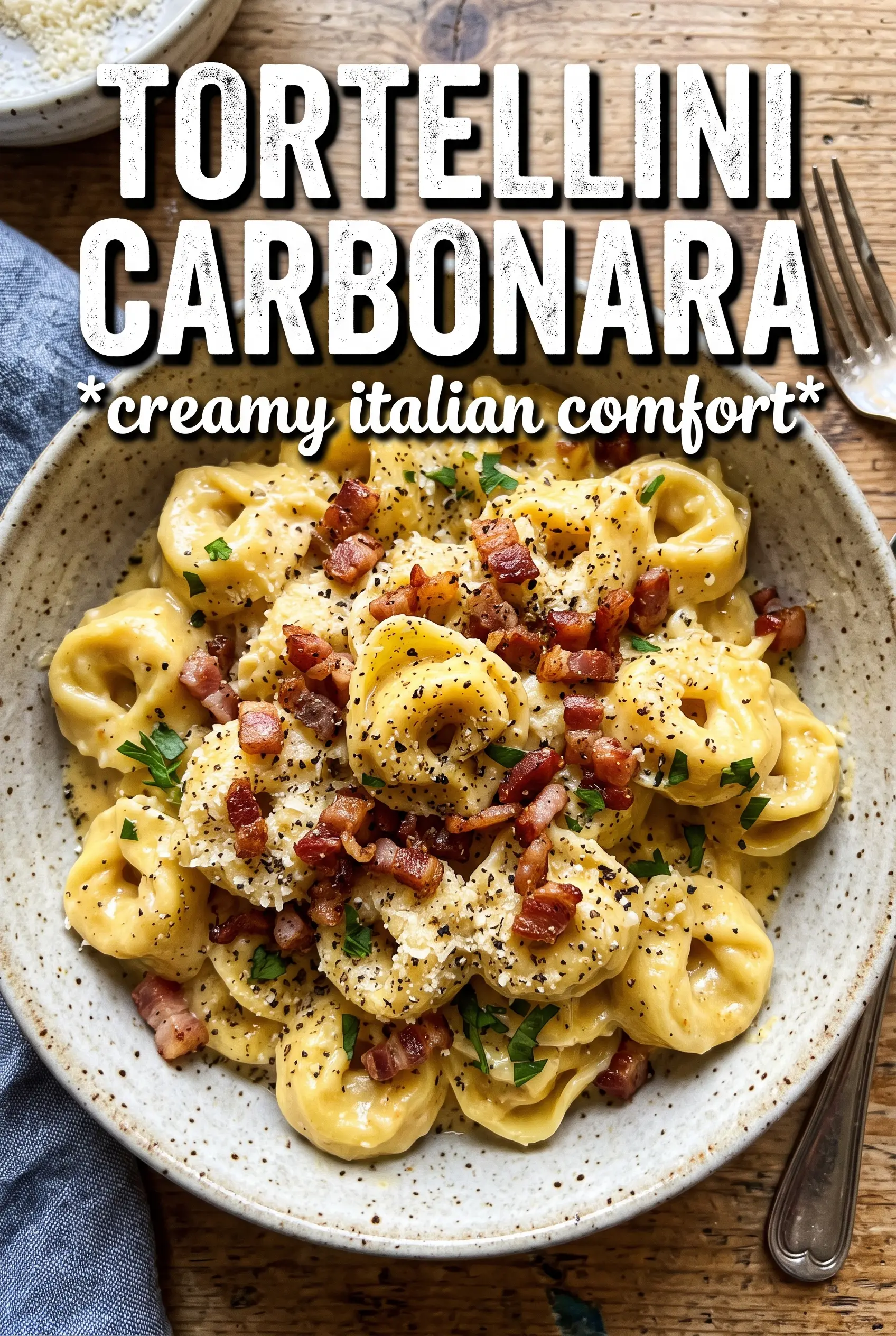
Tortellini Carbonara
Ingredients
Equipment
Method
- Bring a large pot of well-salted water to a boil, then cook the tortellini according to package directions and reserve 1 cup cooking water. The pasta should be tender with a slight bite, and the water should taste seasoned.
- Cook the diced pancetta in a pan over medium heat until crispy, then add the minced garlic and cook for 1 minute. You want the pancetta pieces deeply golden and sizzling, and the garlic fragrant but not browned.
- Remove the pan from the heat once the garlic is cooked, and let it stop cooking immediately so the egg mixture won’t scramble later.
- In a bowl, whisk the egg yolks plus 1 whole egg with the finely grated parmesan, nutmeg, and generous black pepper until smooth. The mixture should look thick and pale-yellow with visible pepper flecks.
- Add the hot tortellini to the pancetta pan off the heat, then quickly pour in the egg mixture. Toss immediately so the eggs coat the pasta without curdling.
- Toss vigorously and add reserved pasta water a splash at a time until the sauce turns silky and creamy. Stop when the coating looks glossy and clings to the tortellini rather than pooling.
- Season with salt to taste, then top with fresh parsley and extra parmesan. The final look should be creamy with crisp pancetta on top and plenty of cracked black pepper.


