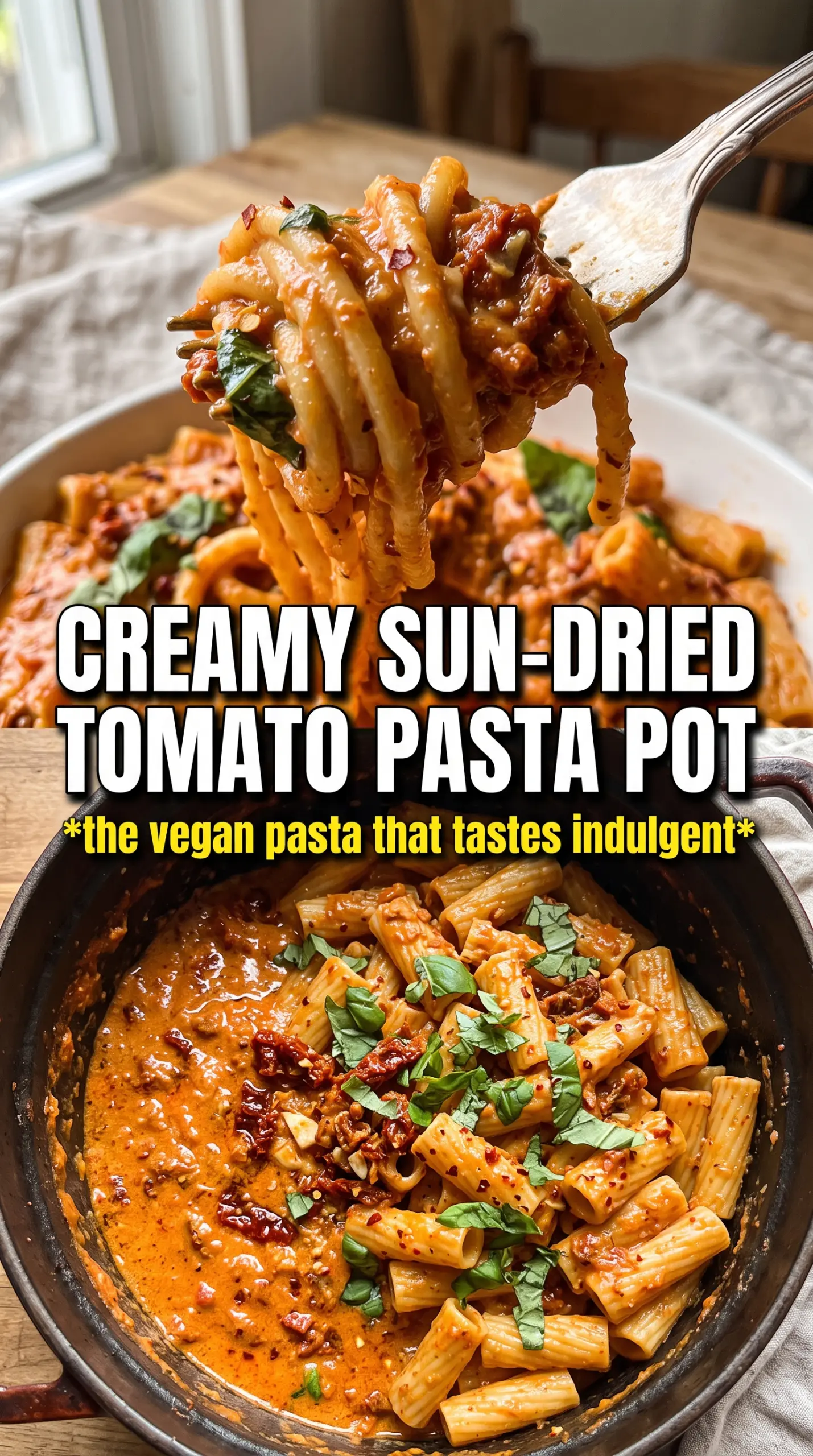
Silky, savory, and coated in a sauce that clings to every ridge, this sun-dried tomato vegan pasta earns its place in the weeknight rotation fast. The coconut cream gives it that rich, spoon-coating texture, while the tomato paste and sun-dried tomatoes build a deep, concentrated base that tastes like it simmered for much longer than 20 minutes. The spinach folds in at the end and softens just enough to keep the bowl feeling fresh.
What makes this version work is the way the sauce is built in layers. Garlic and sun-dried tomatoes go into the flavored oil first, which wakes up their sharp edges, then tomato paste cooks for a minute to lose its raw taste before the coconut cream goes in. Nutritional yeast adds the salty, Parmesan-like finish that keeps the sauce from tasting flat, and a splash of pasta water turns everything glossy instead of heavy.
Below, I’ll show you how to keep the sauce creamy, how to loosen it only when it needs it, and which swaps still give you a bowl that feels complete.
The sauce came together in one pan and stayed perfectly creamy even after I tossed in the pasta. The sun-dried tomatoes and basil gave it so much flavor that nobody missed the cheese.
Love the creamy sun-dried tomato sauce and basil finish? Save this vegan pasta for a fast dinner that still feels rich and satisfying.
The Part That Keeps the Sauce Creamy Instead of Gritty
The biggest risk in a dairy-free pasta like this is a sauce that tastes separated or heavy instead of lush. Coconut cream can handle heat, but it still behaves better when you add it after the tomato paste has cooked out and the pan has a gentle simmer, not a hard boil. That gives the sauce time to emulsify with the starchy pasta water instead of breaking into an oily layer on top.
Another thing that matters here is the sun-dried tomato oil. It isn’t just cooking fat; it carries the flavor from the jar and helps the garlic soften without scorching. If you start with plain olive oil, the pasta still works, but it loses some of the deep, savory edge that makes this dish taste like it has much more going on than a short ingredient list suggests.
- Sun-dried tomatoes in oil — The oil-packed kind bring more flavor and a softer bite than the dry ones. If you only have dry sun-dried tomatoes, rehydrate them in hot water first, then use olive oil in the pan, but expect a brighter, less rich result.
- Coconut cream — Full-fat coconut cream gives the sauce body without needing flour or cashews. Use the thick part from the can if it has separated, and don’t use light coconut milk here; it’s too thin and the sauce won’t cling well.
- Nutritional yeast — This does the work that Parmesan usually does in a pasta like this, adding saltiness and a nutty finish. There isn’t a perfect substitute for the same cheesy note, but finely ground cashews with a pinch of salt can soften the edges if you’re out.
- Pasta water — The starch in the water is what helps the sauce coat the rigatoni instead of sliding off. Reserve more than you think you’ll need, because a dry pan can turn this from silky to pasty in a minute.
What Each Ingredient Is Actually Doing in This Recipe
- Primary ingredient (the star) — Quality matters most. Choose the best you can find.
- Cooking medium (oil, butter, or broth) — This carries flavors and prevents dryness.
- Seasonings (salt, pepper, spices, herbs) — Layer flavors so nothing overpowers. Build depth gradually.
- Aromatics (garlic, onion, herbs) — Cook with fat to bloom flavors. Become the foundation.
- Supporting ingredients — Complement the main ingredient without overpowering it.
- Sauce or liquid (if applicable) — Brings flavors together. Balance richness with acid.
- Acid (lemon, vinegar, wine, or other) — Brightens and prevents flat-tasting results.
- Final finish (garnish, glaze, or sauce) — Prevents one-dimensional taste and adds visual appeal.
Building the Sauce So It Clings to Every Piece of Pasta
Waking Up the Garlic and Tomatoes
Heat the sun-dried tomato oil first, then add the garlic and chopped tomatoes and stir them for about 2 minutes. You want the garlic fragrant and softened, not browned; once garlic goes dark, it turns bitter fast and that bitterness hangs around in the finished sauce. The tomatoes should look glossy and a little more tender, with the edges just starting to break down into the oil.
Cooking Out the Tomato Paste
Tomato paste needs a full minute in the pan before the coconut cream goes in. That short step takes away the raw, tinny taste and deepens the sauce into something rounder and more concentrated. If you skip this, the finished pasta can taste flat in the middle, even if the seasoning is right.
Letting the Coconut Cream and Pasta Water Emulsify
Once the coconut cream, Italian seasoning, red pepper flakes, and nutritional yeast are in, let the sauce simmer gently for about 5 minutes. A soft bubble is enough; a hard boil can make the sauce feel greasy or split around the edges. Add the cooked pasta with a splash of reserved water and toss until every piece looks coated and glossy. The sauce should move like cream, not pool at the bottom of the bowl.
Finishing With Spinach and Basil
Stir the spinach in at the end so it wilts from the heat of the sauce without going dull and overcooked. If the pan looks tight, add a little more pasta water instead of more coconut cream; that keeps the texture light enough to eat like a proper pasta instead of a heavy casserole. Taste for salt after the spinach goes in, since the greens and pasta water can shift the balance a little.
What to Change When You Need a Different Version
Gluten-Free Pasta Swap
Use a gluten-free rigatoni or penne with enough structure to hold the sauce. Cook it just to al dente and reserve extra pasta water, because gluten-free pasta can dry out faster and the starch level varies by brand.
Nut-Free but Still Creamy
This recipe is already nut-free as written, which is one of the reasons I like it for a mixed table. If you need a coconut-free version too, swap in an unsweetened oat cream or a plain vegan cooking cream, but expect a lighter sauce with less body.
More Heat, Less Heat
The red pepper flakes bring a gentle background warmth, not a burn. Increase them if you want the sauce to hit a little harder, or leave them out entirely for a milder bowl; the tomato, garlic, and basil still give the pasta plenty of presence.
Storage and Reheating
- Refrigerator: Store in an airtight container for up to 4 days. The pasta will absorb some sauce as it sits, so expect it to thicken.
- Freezer: It freezes, but the texture is best if you freeze just the sauce and make fresh pasta later. Fully assembled pasta can turn a little soft after thawing.
- Reheating: Warm it gently on the stove with a splash of water or unsweetened plant milk to loosen the sauce. High heat is the fastest way to make coconut-based pasta look oily and separate.
Answers to the Questions Worth Asking
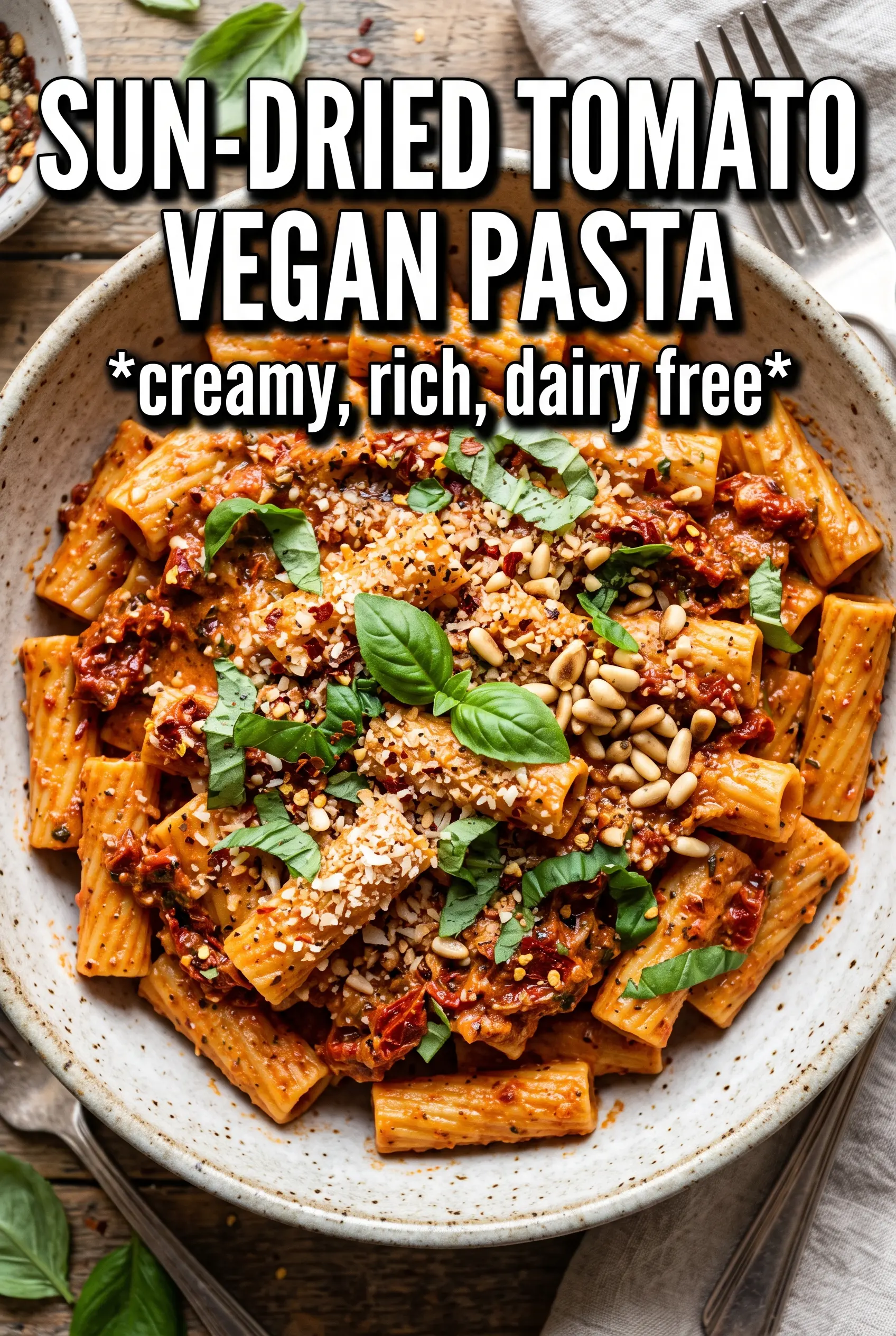
Sun-Dried Tomato Vegan Pasta
Ingredients
Equipment
Method
- Bring a large pot of salted water to a boil and cook rigatoni or penne until al dente, then reserve 1 cup pasta water before draining.
- Keep the drained pasta in the colander while you make the sauce so the texture stays firm.
- In a Dutch oven over medium heat, heat sun-dried tomato oil and sauté garlic and chopped sun-dried tomatoes for 2 minutes, stirring until fragrant.
- Add tomato paste and cook for 1 minute, stirring until it darkens slightly.
- Add full-fat coconut cream, Italian seasoning, red pepper flakes, and nutritional yeast and simmer for 5 minutes until the sauce looks creamy and cohesive.
- Add rigatoni or penne to the Dutch oven and toss with reserved pasta water as needed to loosen the sauce and coat the pasta.
- Add baby spinach and toss until wilted, about 1 minute.
- Season with salt and pepper to taste, then top with fresh basil and extra nutritional yeast before serving.


