Pasta salad gets a lot better when the dressing has enough personality to hold its own against the pasta, and this one does. The sun-dried tomatoes bring that deep, sweet-tart bite, the feta adds a salty creaminess, and the olives keep every forkful from tasting flat. Chilled for an hour, the noodles soak up the vinaigrette just enough to turn the whole bowl from plain side dish into something people keep going back to for “one more spoonful.”
The trick here is balance. You want the pasta cooled before the dressing goes on, but not dried out or stuck together, so a quick rinse under cold water is actually useful in this salad. The vinaigrette is simple on purpose: olive oil, red wine vinegar, garlic, oregano, and basil do the heavy lifting without burying the vegetables and cheese. Toss gently at the end so the feta stays in soft crumbles instead of disappearing into the bowl.
Below, I’ve included the ingredient choices that matter most, the one chilling step that changes the texture, and a few ways to adapt this salad for different diets or make-ahead planning.
The dressing soaked into the rotini after an hour in the fridge, and the feta stayed nicely crumbly instead of turning mushy. I brought it to a cookout and the bowl was scraped clean before the burgers were even done.
Save this sun-dried tomato pasta salad for potlucks, meal prep, and the kind of make-ahead lunch that gets better after chilling.
The Dressing Needs an Hour, Not a Hurry
The biggest mistake with pasta salad is serving it the second it’s tossed. The noodles need time to drink in the vinaigrette, and the flavors need time to settle into something cohesive instead of separate and sharp. That one-hour chill isn’t passive waiting; it’s the step that turns this from a pile of ingredients into a pasta salad that tastes seasoned all the way through.
Rinsing the pasta under cold water helps stop the cooking and keeps the texture from going mushy while it chills. The other detail that matters is cutting the sun-dried tomatoes small enough that they distribute through the bowl instead of clumping in a few bites. If the salad tastes flat after chilling, it usually needs salt, a little more vinegar, or both.
What Each Ingredient Is Doing in the Bowl
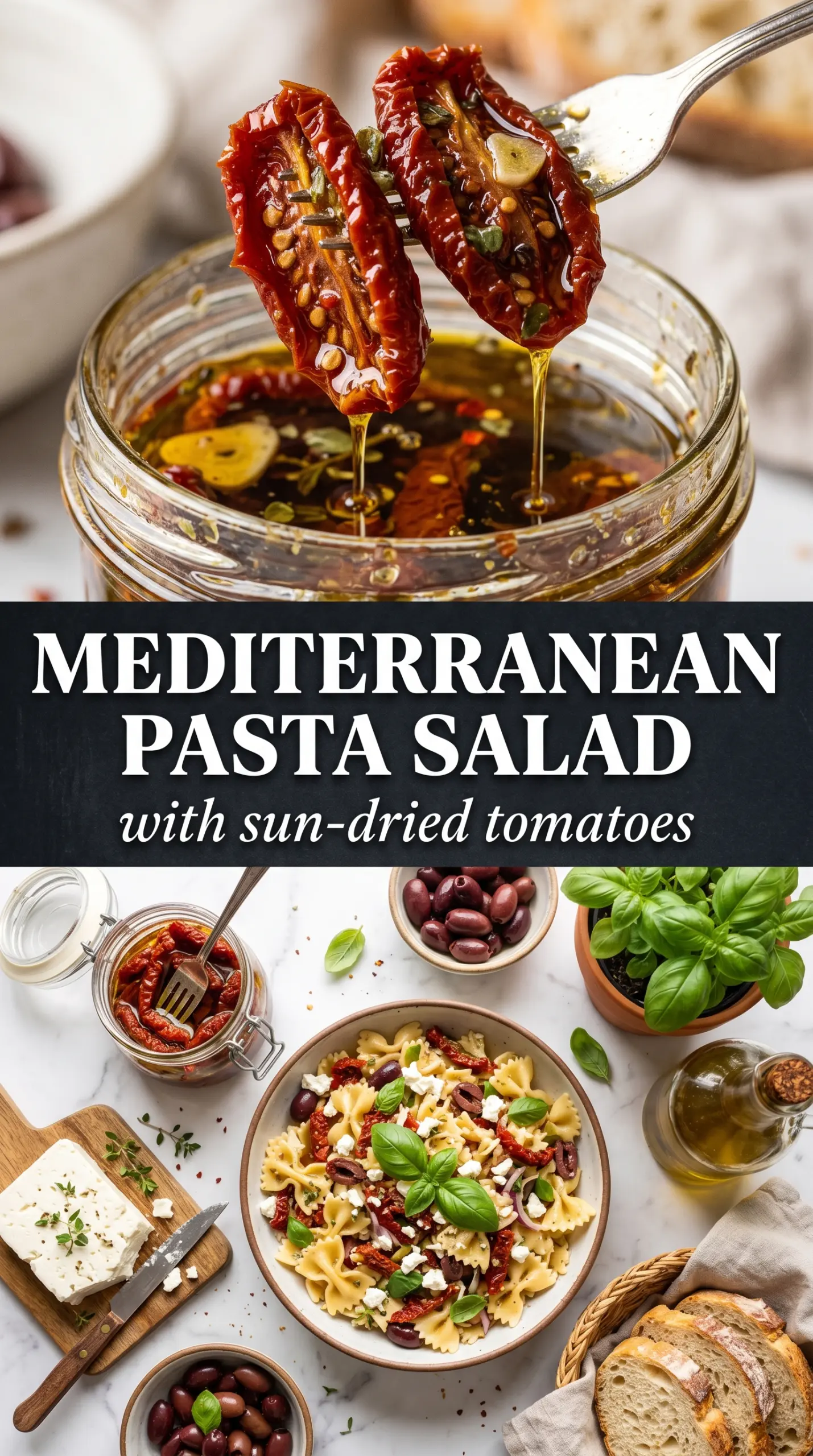
- Rotini or penne — Rotini grabs the dressing in its spirals, while penne gives you a cleaner bite with less surface texture. Use a shape with ridges or curves; smooth pasta won’t hold the vinaigrette as well.
- Sun-dried tomatoes in oil — These bring concentrated tomato flavor and a little richness from the oil-packed jar. If yours are especially firm, chop them finely so they don’t fight the other ingredients.
- Feta — Feta is the salty, creamy anchor here. Buy a block if you can, then crumble it yourself; pre-crumbled feta is drier and can disappear into the salad faster.
- Spinach — Fresh spinach softens just enough in the dressing without turning limp the way sturdier greens would. Chop it so the leaves don’t tangle into big ribbons.
- Kalamata olives — They bring briny depth that keeps the salad from leaning too sweet. If you need a milder option, black olives work, but the salad will taste less Mediterranean and more generic.
- Red wine vinegar and olive oil — This dressing is bright rather than creamy, which is why it works so well with feta and sun-dried tomatoes. Use a decent olive oil here; it’s one of the few ingredients that stays front and center.
Building the Salad So the Pasta Actually Soaks It Up
Cooking the Pasta to the Right Point
Boil the pasta until it’s just tender with a little bite left in the center. That matters because it will soften slightly as it chills in the dressing. Drain it well, then rinse under cold water until the pasta feels cool to the touch and stops steaming. If you skip the rinse, the heat keeps the pasta moving past al dente and the salad turns soft fast.
Whisking a Dressing That Stays Sharp
Whisk the olive oil, vinegar, garlic, oregano, basil, salt, and pepper until the garlic is evenly distributed. The dressing doesn’t need to emulsify into a thick sauce, but it should look cohesive enough that the herbs aren’t sitting in a puddle of oil. If the garlic tastes harsh, it usually needs five extra minutes to sit in the vinegar before you toss everything together.
Tossing Without Crumbling the Feta
Add the pasta, tomatoes, spinach, olives, and feta to a large bowl before pouring the dressing over top. Use a broad spoon or spatula and toss from the bottom up, just enough to coat everything without smashing the cheese. The salad should look evenly dressed but still distinct, with the feta in visible crumbles and the spinach lightly coated rather than wilted into paste.
Chilling for Flavor, Not Just Temperature
Cover the bowl and refrigerate for at least an hour. That resting time is when the pasta absorbs the dressing and the garlic mellows into the oil. Before serving, toss again and taste one more time, because cold pasta dulls seasoning a little and almost always needs a final pinch of salt or splash of vinegar.
How to Adapt This Pasta Salad for Different Tables
Make it gluten-free
Use a gluten-free rotini or penne with good structure. Cook it just until tender and rinse it carefully, because gluten-free pasta can go from sturdy to fragile quickly once it’s overcooked. The rest of the salad stays the same.
Make it dairy-free
Skip the feta and add a handful of chopped artichoke hearts or a few extra olives for more richness and salt. You’ll lose the creamy pops of cheese, but the salad still works because the dressing and tomatoes carry enough flavor on their own.
Make it a fuller meal
Add chickpeas, grilled chicken, or chopped salami if you want the salad to stand in as lunch or dinner. Chickpeas keep it vegetarian and add a firm bite, while chicken makes it lighter and more filling without changing the flavor balance much.
Storage and Reheating
- Refrigerator: Keeps for 3 to 4 days. The spinach softens a bit, but the flavor stays strong.
- Freezer: I don’t recommend freezing this salad. The feta and spinach change texture after thawing, and the pasta turns watery.
- Reheating: This salad is meant to be served cold or cool. If it sits in the fridge, let it rest at room temperature for 10 to 15 minutes, then toss with a small splash of olive oil or vinegar if it looks dry.
Questions I Get Asked About This Recipe
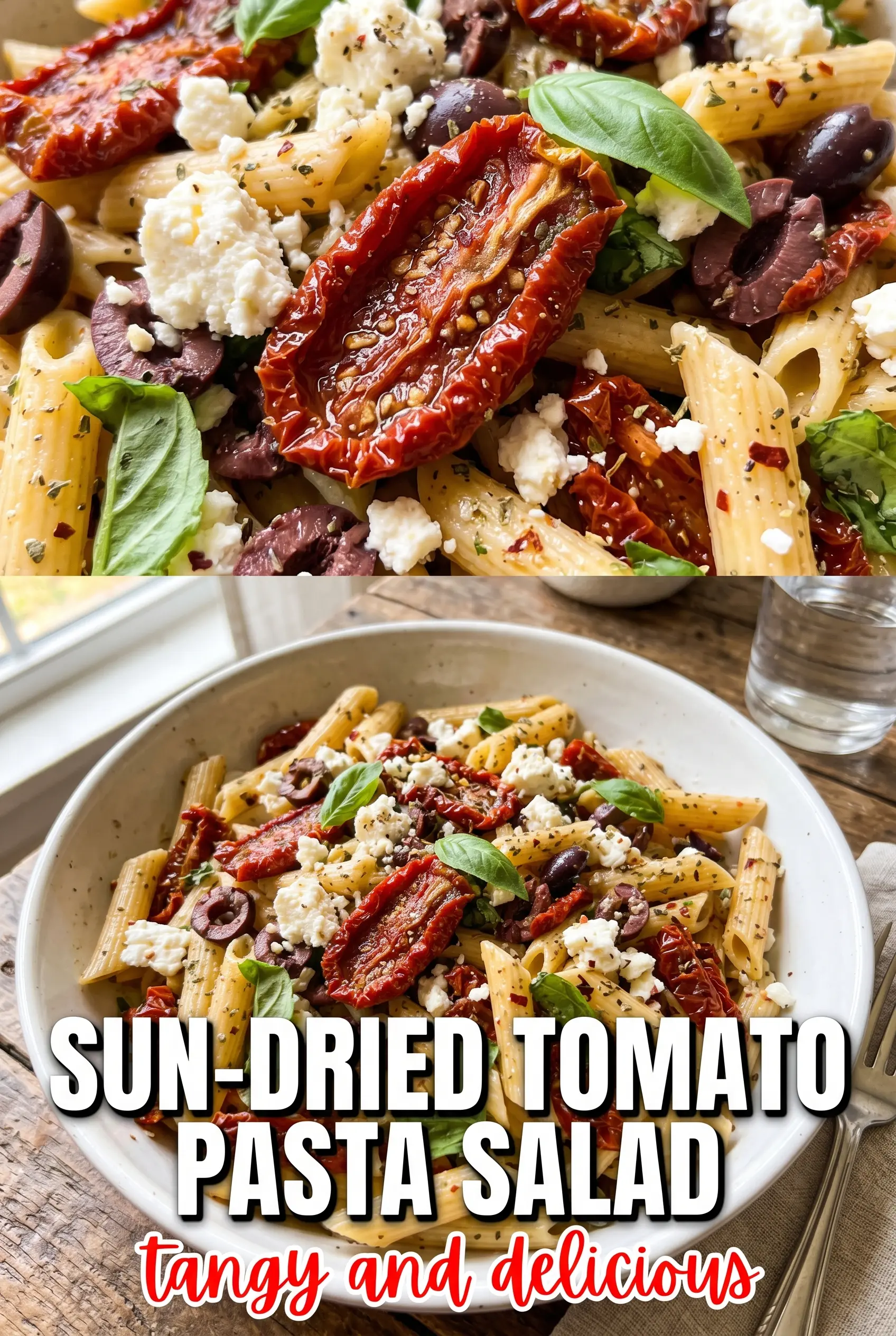
Sun-Dried Tomato Pasta Salad
Ingredients
Equipment
Method
- Cook rotini or penne pasta according to package directions until al dente, then drain and rinse with cold water to stop the cooking. This keeps the pasta from turning mushy and helps it stay firm after dressing.
- Whisk olive oil, red wine vinegar, minced garlic, dried oregano, dried basil, salt, and pepper until the dressing looks evenly blended. Aim for a smooth, fragrant vinaigrette with no visible garlic clumps.
- Combine the pasta, chopped sun-dried tomatoes, crumbled feta, chopped spinach, and sliced Kalamata olives in a large bowl. Distribute everything evenly so feta and spinach are coated throughout.
- Pour the vinaigrette over the salad and toss gently to avoid breaking up feta too much. Stop mixing once the pasta looks lightly glossy.
- Refrigerate the pasta salad for at least 1 hour before serving to let flavors meld. Cover it to prevent the spinach from drying out.
- Toss again right before serving and adjust seasoning with more salt and pepper if needed. Taste for balance after chilling so the vinegar and herbs come through.