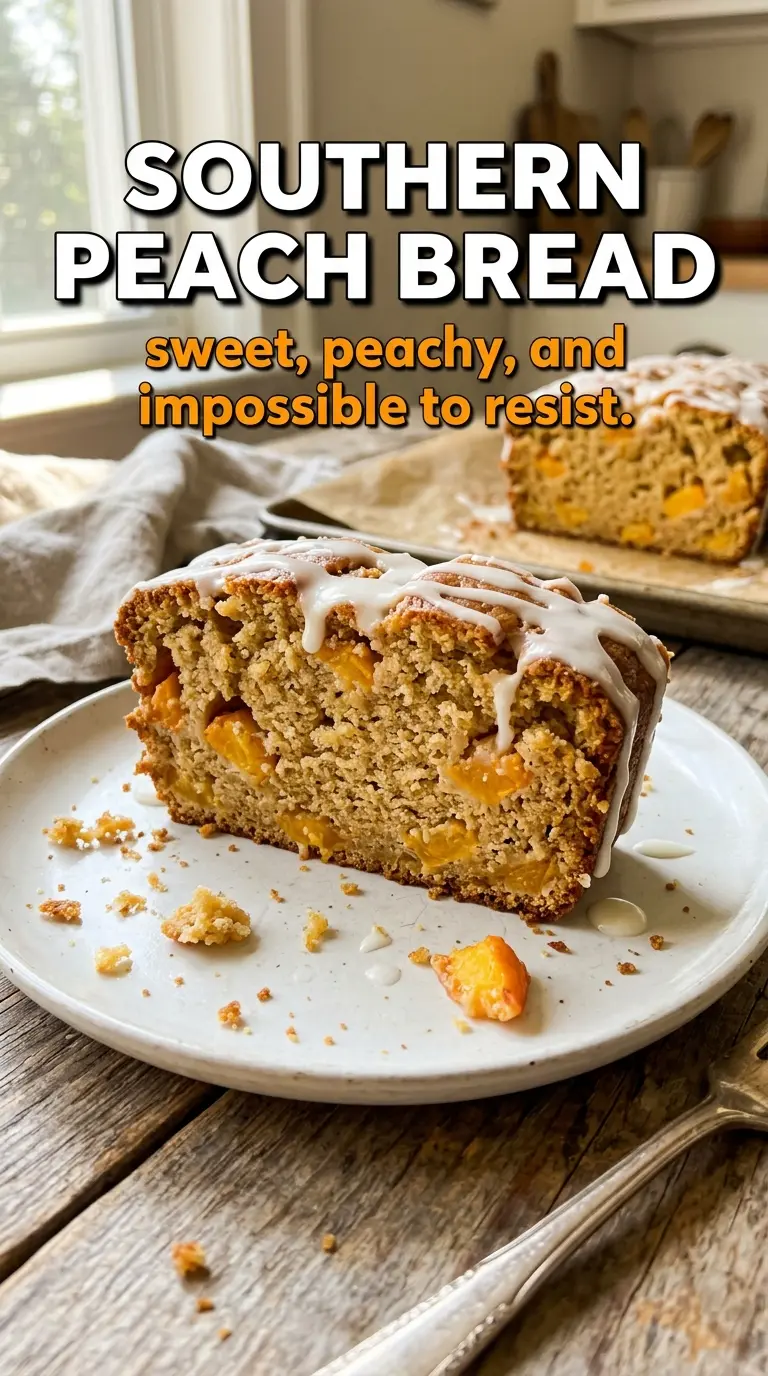
Southern peach bread bakes up with a crackled golden top, a soft middle, and sweet pockets of fresh peach in every slice. It smells like cinnamon and vanilla before it even leaves the oven, and once it cools, the crumb stays tender without turning heavy or gummy. A slice on its own is good. A slice with a little peach jam is the kind of breakfast that disappears fast.
The trick here is balancing moisture. Fresh peaches bring a lot of juice, so the batter needs enough structure from the flour and eggs to hold together without becoming dense. Sour cream helps keep the loaf soft, while a mix of granulated and brown sugar gives it a clean sweetness with just enough depth to play well with the fruit. The other thing that matters is restraint when mixing. Stir only until the flour disappears, or the loaf loses that light, plush texture.
Below, you’ll find the small details that make this loaf bake evenly, plus the substitutions that still keep it worth making when your peaches are extra juicy or you need to work with what’s already in the fridge.
The loaf rose evenly and the peaches stayed in little juicy pockets instead of sinking to the bottom. I baked it for 63 minutes and the crumb was moist but not wet.
Love the crackled top and juicy peach pieces in this Southern peach bread? Save it to Pinterest for slow mornings and peach season baking.
The Detail That Keeps Peach Bread From Turning Wet in the Middle
Fresh peaches are the whole point here, but they’re also the reason quick bread can go sideways. Too much juice in the batter and the center bakes up gummy before the outside sets. This loaf avoids that by keeping the batter thick and relying on the fruit to bake into the crumb instead of dissolving into it.
The other thing that matters is the pan. A 9×5 loaf pan gives enough height for a proper dome without forcing the batter into a deep, underbaked center. If your peaches are especially ripe and juicy, dice them small and don’t add the extra liquid that sneaks off the cutting board. That tiny adjustment keeps the loaf tender instead of soggy.
- Fresh peaches — Ripe peaches give the loaf its juiciness and flavor, but they need to be peeled and diced so the skins don’t turn chewy in the finished crumb. If your peaches are very soft, cut them a little larger so they hold their shape.
- Sour cream or buttermilk — Sour cream makes the bread plush and rich; buttermilk gives a slightly lighter crumb with a little tang. Either one works, but don’t swap in plain milk unless you add acid, or the loaf loses that soft bakery-style texture.
- Brown sugar — Brown sugar adds a little molasses depth that flat granulated sugar can’t match. You can use all granulated sugar in a pinch, but the loaf will taste cleaner and less rounded.
- Vegetable oil — Oil keeps the bread moist for days. Melted butter brings more flavor, but it also firms up faster once the loaf cools, so the texture won’t stay as soft.
What Each Ingredient Is Actually Doing in This Peach Bread
- Fresh or preserved peaches (the flavor) — Fresh peaches add brightness; preserved adds deeper flavor. Choose based on desired intensity.
- Flour (the structure) — Don’t overmix or the bread becomes tough. Mix just until dry ingredients are incorporated.
- Sugar (the sweetness and tenderizer) — This tenderizes baked goods and adds moisture. Adjust based on peach sweetness.
- Butter or oil (the richness and moisture) — This creates tender crumb. Oil makes moister breads; butter makes them richer.
- Eggs (the binder) — These hold everything together and add structure. Room temperature eggs incorporate better.
- Leavening (baking powder or soda) — This creates rise and light crumb. Too much makes it taste bitter.
- Spices (cinnamon, nutmeg, or ginger) — These complement peach without overpowering it. Layer spices so no single one dominates.
- Crumble topping (optional texture) — This adds texture contrast and visual appeal. Bake until golden brown and crunchy.
Building the Batter Before the Fruit Goes In
Mix the dry ingredients first
Whisk the flour, baking soda, baking powder, cinnamon, nutmeg, and salt until they look evenly combined. That keeps the spices from clumping in one bite and helps the leavening spread through the loaf evenly. If you skip this and dump everything together, the bread can bake with uneven tunnels or a bitter pocket of baking soda.
Whisk the wet ingredients until smooth
Beat the eggs, both sugars, oil, sour cream, and vanilla until the mixture looks glossy and uniform. The sugar should start dissolving into the liquid, and the batter will thicken slightly. If it still looks streaky, keep whisking for another minute before adding the flour; that extra smoothness helps the loaf bake into a finer crumb.
Fold in the peaches at the end
Stir the wet mixture into the dry just until the flour disappears, then fold in the diced peaches. The batter should look thick and a little rough, not silky like cake batter. Overmixing here is the fastest way to get a tough loaf, and beating the peaches in too hard can break them down before they even hit the oven.
Watch for the baked center, not just the color
Pour the batter into the prepared pan and bake until the top is deeply golden and a toothpick comes out clean from the center. The top will crack open as it rises, which is exactly what you want. If the crust browns too quickly before the middle sets, tent it loosely with foil for the last 10 to 15 minutes.
How to Make This Peach Bread Fit Your Pantry
Use buttermilk instead of sour cream
Buttermilk makes the crumb a touch lighter and adds a gentle tang that works well with sweet peaches. The loaf won’t feel quite as rich as it does with sour cream, but it still bakes up soft and moist. If your buttermilk is very thin, don’t add more than the recipe calls for or the center can turn heavy.
Make it dairy-free
Use an unsweetened dairy-free yogurt or a thick plant-based sour cream in place of the sour cream. The loaf stays tender, though the flavor will be a little less tangy than the original. Thin dairy-free milks don’t give the same structure, so stick with a thicker substitute.
Swap in frozen peaches when fresh aren’t available
Frozen peaches work, but thaw them first and drain off the excess liquid before folding them in. If you add them frozen, they dump too much moisture into the batter and throw off the bake time. Expect a slightly softer crumb and a little less bright peach flavor than with fresh fruit.
Storage and Reheating
- Refrigerator: Store tightly wrapped for up to 4 days. The crumb stays moist, but the top crust softens a little after day one.
- Freezer: Freezes well for up to 2 months. Wrap the cooled loaf or individual slices in plastic, then foil, so the peaches don’t pick up freezer flavor.
- Reheating: Warm slices in a 300F oven for about 8 minutes or toast them lightly. Microwaving too long makes the peaches soft and the crumb rubbery, so use short bursts if that’s your only option.
Questions I Get Asked About This Recipe
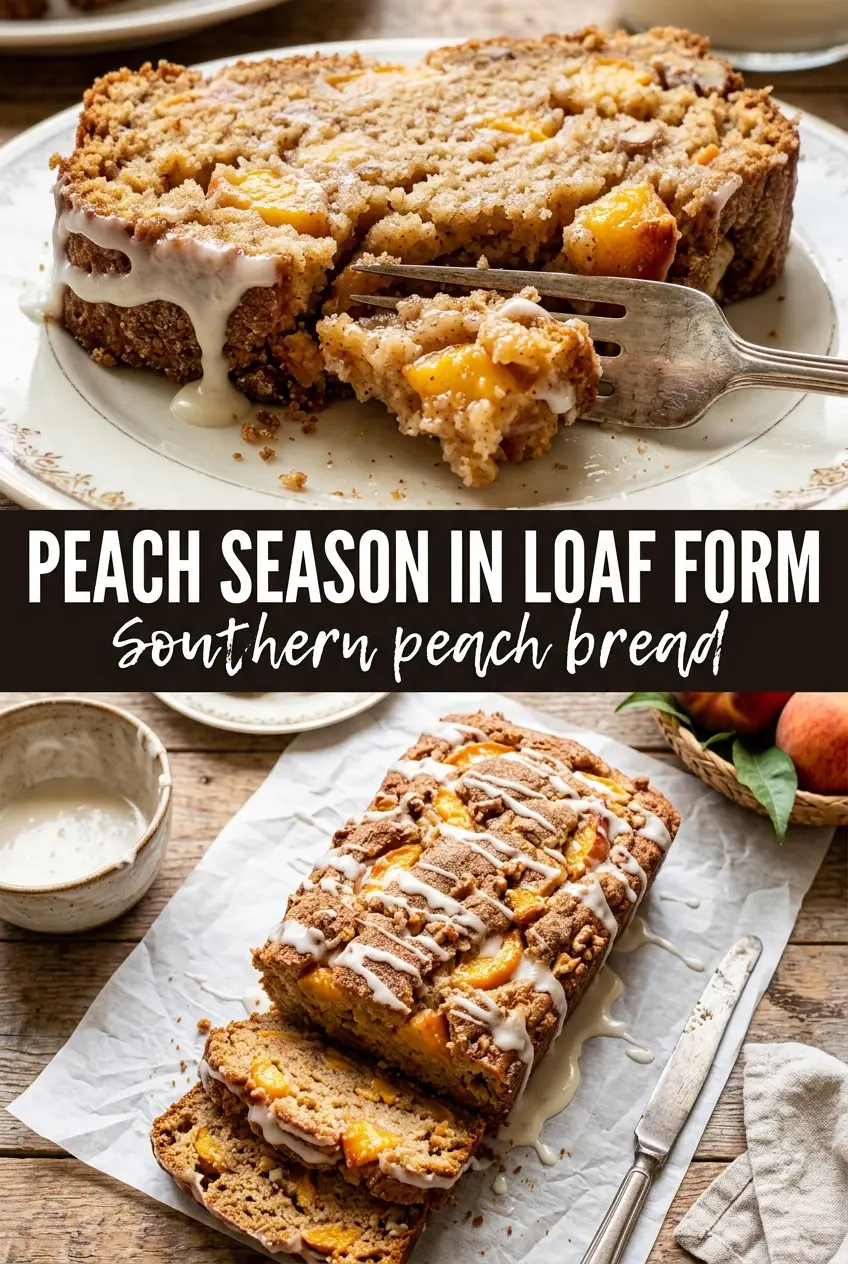
Southern Peach Bread
Ingredients
Equipment
Method
- Preheat the oven to 350F and grease a 9x5 loaf pan, so the batter goes in hot and bakes evenly. Set the pan aside on a sheet pan to catch any drips.
- Whisk all-purpose flour, baking soda, baking powder, cinnamon, nutmeg, and salt in a large bowl until the dry mix is uniform. Look for no visible spice clumps.
- Beat eggs, granulated sugar, brown sugar, vegetable oil, sour cream or buttermilk, and vanilla extract in a separate bowl until smooth. Stop when the mixture looks glossy and fully combined.
- Stir the wet mixture into the dry mixture until just combined, avoiding overmixing. The batter should look thick with a few small streaks.
- Fold in diced fresh peaches until evenly distributed. The batter will be studded with fruit chunks.
- Pour the batter into the prepared loaf pan and bake at 350F for 60-65 minutes, until deeply golden. Watch for a crackled top crust that splits as it bakes.
- Check doneness by inserting a toothpick into the center; it should come out clean. If it still looks wet, bake a few more minutes and recheck.
- Cool in the pan for 15 minutes before turning out. The loaf should be set enough to hold its shape while still warm.