Deep, dark roux gives this shrimp and sausage gumbo its backbone, and once that roux is right, the whole pot tastes like it has been working all afternoon. The broth turns rich and velvety, the andouille brings smoke and heat, and the shrimp stay tender if they go in at the very end where they belong. Spoon it over rice and you get that classic gumbo contrast: thick, savory gravy, plump shrimp, and just enough okra to round everything out.
What makes this version work is patience at the beginning and restraint at the end. The roux needs steady stirring until it reaches a true chocolate-brown color; that’s where the flavor lives, and rushing it leaves you with something pale and flat. The shrimp only need a few minutes, so they should be added after the pot has finished its long simmer. That keeps them juicy instead of rubbery, which is the difference between gumbo that tastes homemade and gumbo that tastes tired.
You’ll find the best way to build the roux without scorching it, when the okra should go in, and how to finish the pot with filé powder if you want that extra Cajun edge. A few small choices make a big difference here, especially if you want the broth to stay smooth and the seasoning balanced.
The roux turned out deep and smooth, and the gumbo had that rich, smoky flavor I never get when I rush it. My shrimp stayed tender, and the broth thickened up beautifully after the okra went in.
Save this shrimp and sausage gumbo for the night when you want a dark roux, smoky andouille, and tender shrimp in one bowl.
The Roux Is the Whole Story Here
In gumbo, the roux is not background work. It is the flavor, the color, and the body of the broth all at once, and if it stops at peanut-butter brown you’ll get something lighter and sweeter than true gumbo. Push it to a deep chocolate shade and it brings that toasted, almost nutty bitterness that makes the sausage taste smokier and the broth taste fuller.
The part most people miss is that the roux keeps cooking from the heat already in the pan, so taking it off too late can turn a perfect base into burnt bitterness in seconds. Stir constantly, scrape the bottom, and watch the color more than the clock. The smell changes too: it starts smelling like raw flour and ends with a warm, toasty aroma that tells you it’s ready for the vegetables.
- Andouille sausage — This carries the smoky backbone of the pot, and the rendered fat helps the gumbo taste layered instead of flat. A good grocery-store andouille works fine here.
- Okra — Okra thickens the broth and gives gumbo that classic body without making it gluey. Slice it before it goes in so it softens evenly.
- Filé powder — This is optional, but it adds earthy depth at the end. Stir it in off the heat so it doesn’t turn stringy.
- Broth — Shrimp broth gives the best seafood flavor, but chicken broth is a solid backup if that’s what you have. Warm broth whisked into a hot roux helps prevent lumps.
What Each Ingredient Is Actually Doing in This Recipe

- Primary ingredient (the star) — Quality matters most. Choose the best you can find.
- Cooking medium (oil, butter, or broth) — This carries flavors and prevents dryness.
- Seasonings (salt, pepper, spices, herbs) — Layer flavors so nothing overpowers. Build depth gradually.
- Aromatics (garlic, onion, herbs) — Cook with fat to bloom flavors. Become the foundation.
- Supporting ingredients — Complement the main ingredient without overpowering it.
- Sauce or liquid (if applicable) — Brings flavors together. Balance richness with acid.
- Acid (lemon, vinegar, wine, or other) — Brightens and prevents flat-tasting results.
- Final finish (garnish, glaze, or sauce) — Prevents one-dimensional taste and adds visual appeal.
Building the Pot Without Breaking the Roux
Cooking the Roux to the Right Color
Set the oil and flour over medium heat and stir the whole time. At first it will look pale and pasty, then sandy, then gradually darker and thinner as the flour toasts. If you see black flecks or smell anything sharp and burnt, it’s gone too far and you need to start over, because a scorched roux makes the whole pot bitter.
Softening the Holy Trinity
Add the onion, celery, and bell pepper once the roux is dark enough, and cook just until they start to soften and the onion turns translucent around the edges. The vegetables will cool the roux a bit, which helps stop the color from darkening too fast. Garlic goes in last because it burns quickly and can turn harsh if it sits in the hot fat for too long.
Letting the Gumbo Simmer Into Itself
Whisk in the broth gradually so the roux stays smooth, then add the sausage, Cajun seasoning, and bay leaves. Let the pot simmer long enough for the broth to darken and the sausage to flavor the liquid, because this is where the gumbo starts tasting like a single dish instead of separate ingredients. Okra goes in near the end so it thickens the pot without disappearing completely, and the shrimp should be added only when the simmering is basically done.
Finishing With Shrimp and Filé
Stir in the shrimp and cook just until they turn pink and curl into loose C-shapes, usually 3 to 5 minutes. If they tighten into hard little rings, they’ve gone too far. Remove the pot from the heat before adding filé powder, if you’re using it, because that’s the easiest way to keep the texture smooth.
How to Adapt This Pot for Different Kitchens
Gluten-Free Gumbo
The classic roux uses all-purpose flour, so to make this gluten-free you’ll need a gluten-free flour blend that can brown without turning grainy. The texture may be a little less silky, but if the blend is designed for cooking and not just baking, you’ll still get a dark, flavorful base.
More Seafood, Less Sausage
You can cut the andouille down by half and add extra shrimp or crab at the end. That makes the broth lighter and more seafood-forward, but you’ll lose some of the smoky depth, so keep the Cajun seasoning bold.
Dairy-Free and Naturally as Written
This gumbo is already dairy-free, which makes it easy to serve a crowd with different needs. The only place to watch labels is the sausage and broth, since some brands sneak in fillers or extra seasoning that can change the flavor.
Storage and Reheating
- Refrigerator: Store for up to 4 days. The gumbo thickens as it chills, which is normal.
- Freezer: Freezes well for up to 3 months. Cool it completely first, and freeze without the rice for the best texture.
- Reheating: Warm gently on the stove over low heat, stirring often and adding a splash of broth if needed. Don’t boil it hard, or the shrimp can turn chewy and the okra can get overly soft.
Answers to the Questions Worth Asking
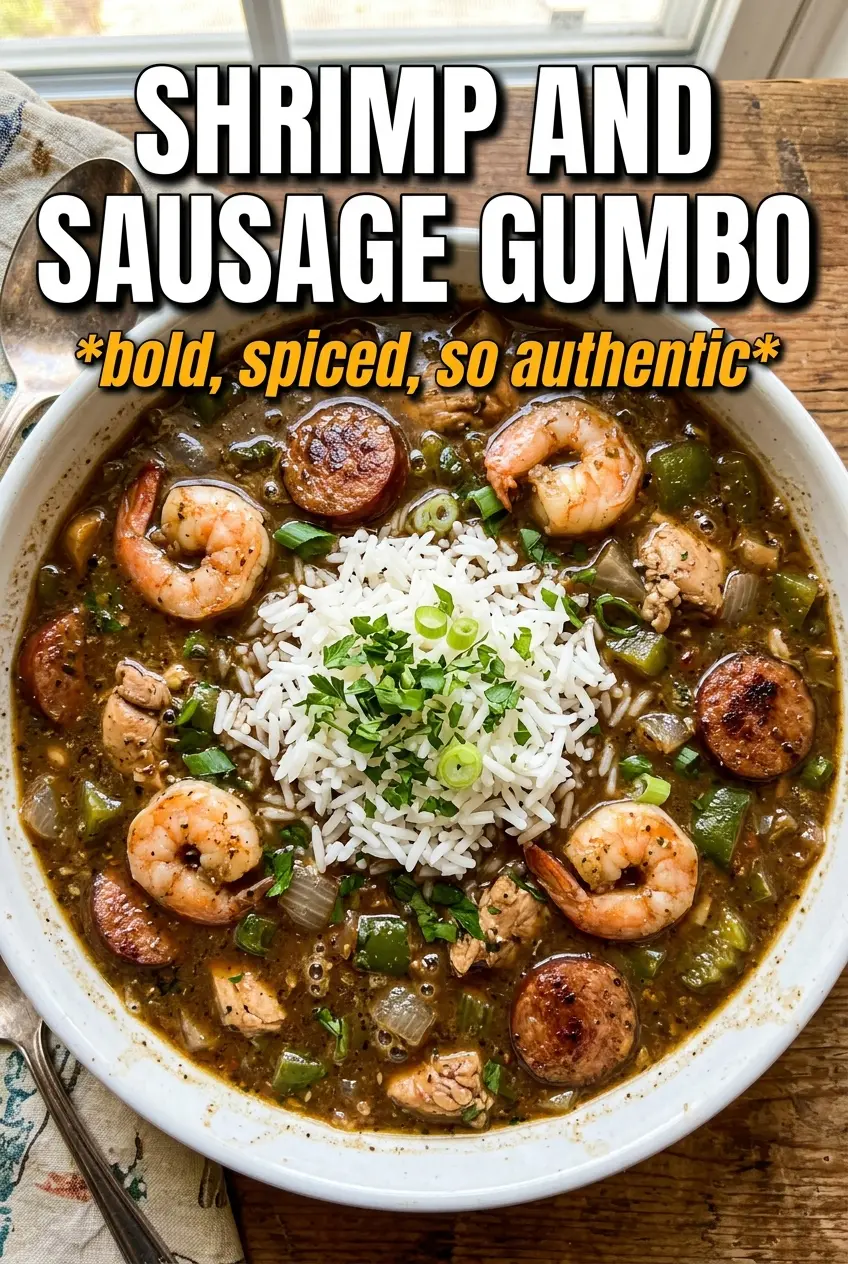
Shrimp And Sausage Gumbo
Ingredients
Equipment
Method
- Cook the flour in the vegetable oil over medium heat, stirring constantly for 30-35 minutes, until the roux turns deep chocolate-brown. Keep stirring so it browns evenly without scorching.
- Add the diced green bell pepper, celery, and onion (the Holy Trinity) and cook for 5 minutes. Stir until the vegetables soften and the roux coats them.
- Add the minced garlic and cook for 1 minute. Stir just until fragrant.
- Gradually add the shrimp or chicken broth while whisking constantly. Pour slowly to prevent lumps and to loosen the roux into a smooth broth.
- Add the sliced andouille sausage, Cajun seasoning, and bay leaves. Stir well so everything is evenly distributed.
- Simmer for 45 minutes. You should see a steady bubble and a thickened, roux-based broth.
- Add the sliced okra and cook for 15 more minutes. Continue simmering until the okra is tender.
- Add the peeled and deveined large shrimp and cook for 3-5 minutes until pink. Stir gently so the shrimp stays plump.
- Add the filé powder if using, then cook for 1 minute to blend. Do not boil hard after adding filé.
- Remove the bay leaves, season with salt and pepper to taste, and serve over steamed rice. Finish with parsley and green onions for a fresh top.