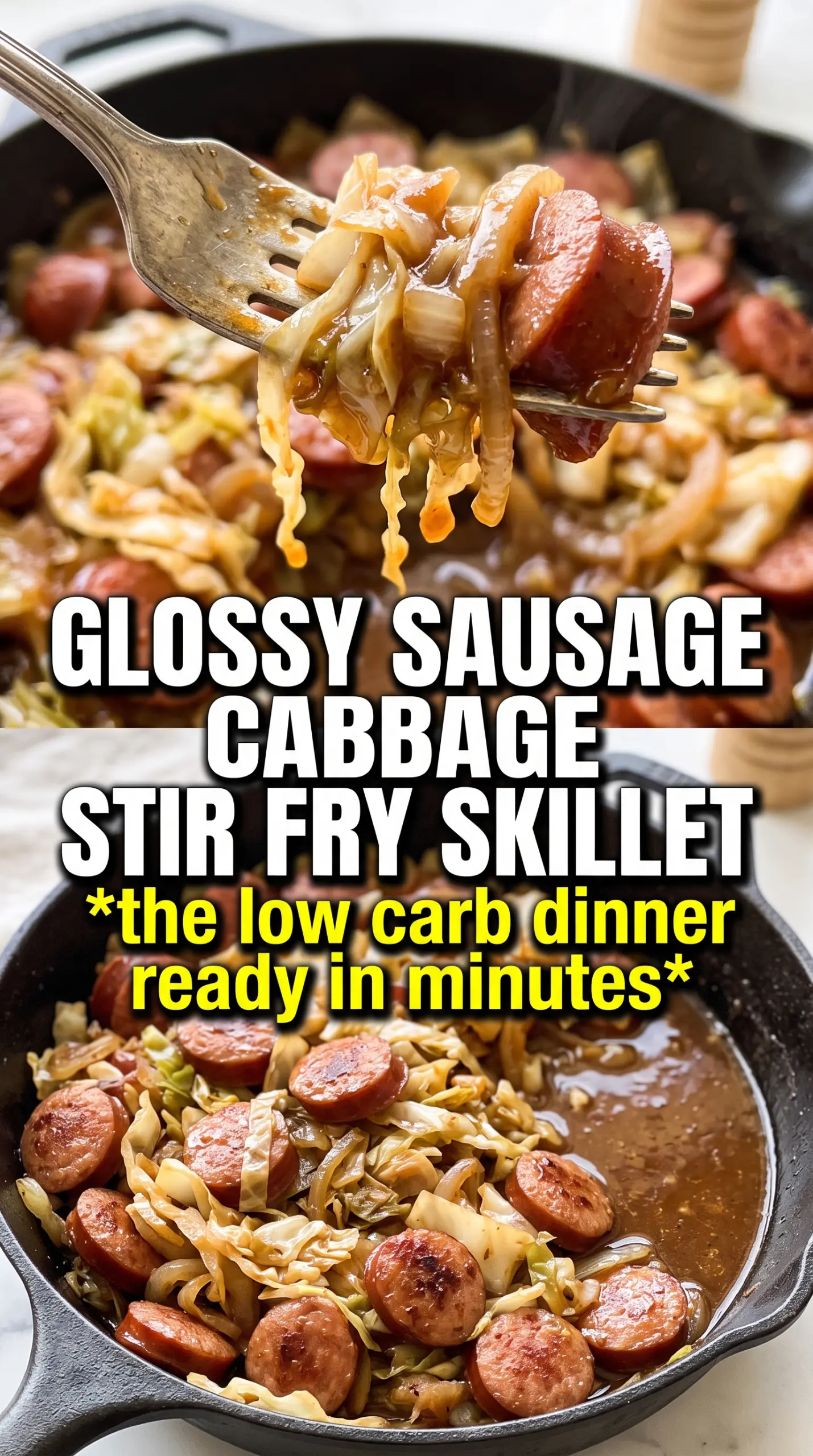
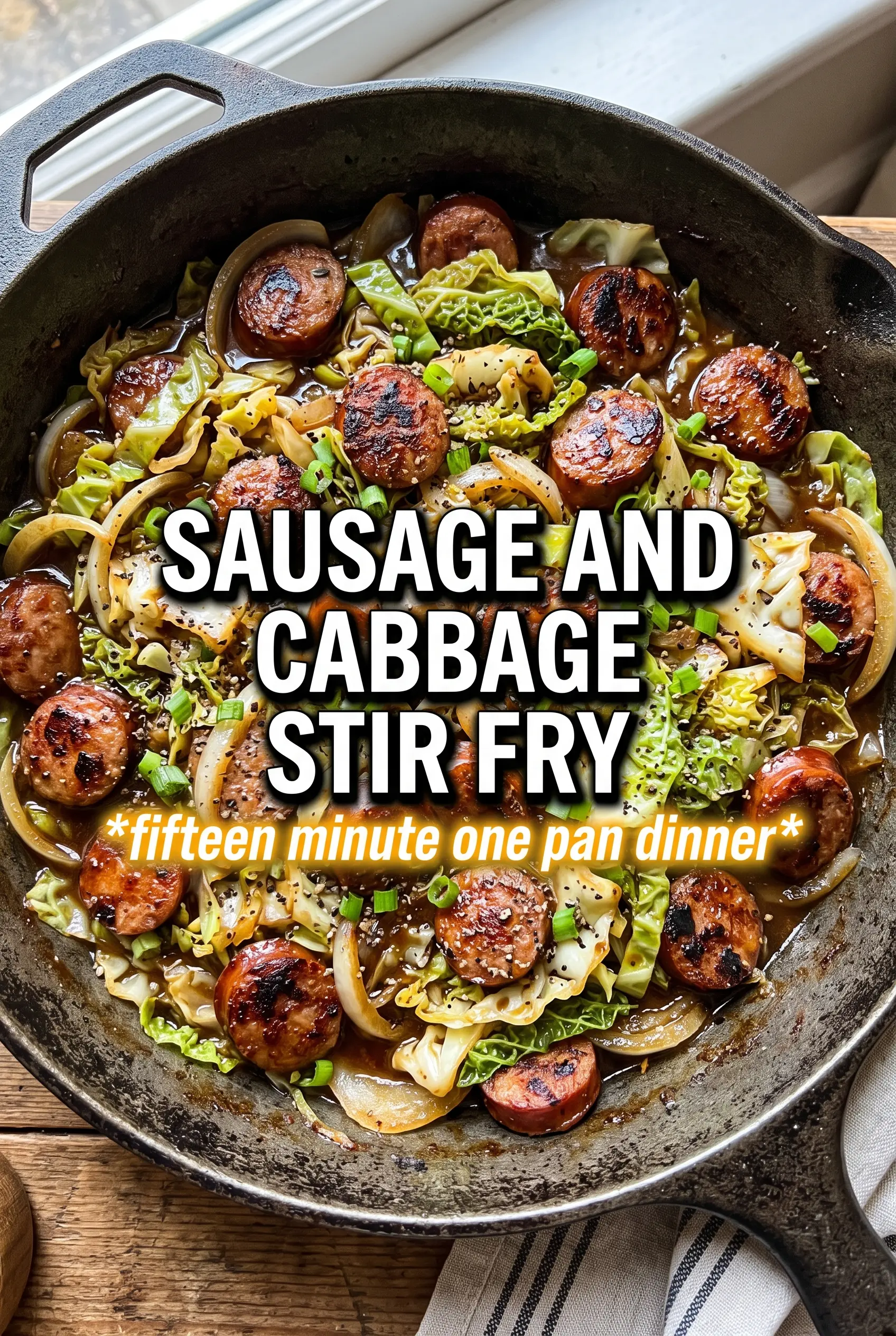
Smoked sausage and cabbage turn into something far better than the sum of their parts when they hit a hot skillet together. The sausage browns into crisp-edged rounds, the cabbage softens and takes on a little color, and the whole pan ends up coated in a tangy, buttery glaze that clings instead of pooling at the bottom. It’s the kind of dinner that lands fast, tastes like it took more effort than it did, and leaves the pan looking suspiciously empty.
The key is building flavor in stages. Browning the sausage first gives you the savory foundation, then the onion and cabbage cook in those drippings and a little butter so they pick up depth instead of steaming into softness. The Dijon, apple cider vinegar, and brown sugar finish works because it cuts through the richness without turning the dish sweet. A pinch of caraway is optional, but it gives the cabbage that old-school deli note that fits the sausage beautifully.
Below, I’ve included the small timing details that keep the cabbage from going limp and the sauce from tasting flat. If you’ve ever ended up with watery skillet cabbage, this version will change that.
The cabbage stayed tender with just enough bite, and the Dijon-vinegar sauce coated everything instead of turning watery. I used kielbasa, and the browned sausage plus the buttery onions made the whole pan taste like comfort food in 30 minutes.
Save this sausage and cabbage stir fry for a fast skillet dinner with caramelized sausage, tender cabbage, and a tangy Dijon glaze.
The Browning Step That Keeps the Cabbage from Going Soft
Most skillet cabbage goes wrong because the pan never gets hot enough before the vegetables go in. When that happens, the cabbage releases water, the onion turns pale and sweet instead of golden, and everything ends up tasting boiled. This recipe avoids that by browning the sausage first and letting the cabbage cook in a hot pan with enough fat to fry the edges instead of steaming the whole pile.
The sausage does more than add protein. It leaves behind browned bits that season the butter, onion, and cabbage from the start, which is why the dish tastes layered instead of flat. If your skillet is crowded, the cabbage will soften before it colors, so use the biggest pan you own and keep the heat at medium-high once the cabbage goes in. You want wilted leaves with some browned edges, not a collapsed heap.
- Smoked sausage — Kielbasa gives you a mellow, garlicky finish, while andouille brings more heat and smoke. Use a fully cooked sausage so the goal is browning, not cooking through.
- Cabbage — Green cabbage holds up best here because it softens without falling apart. Slice it into loose, rough pieces; too fine and it disappears into the pan before it can caramelize.
- Dijon mustard — This is the backbone of the sauce. Yellow mustard tastes sharper and thinner, while Dijon gives the glaze body and a cleaner tang.
- Apple cider vinegar — It cuts the richness and wakes up the sausage. White vinegar works in a pinch, but it tastes harsher, so use a touch less if you swap it in.
- Butter — Butter carries the sauce and helps the cabbage brown. If you use oil instead, the dish will still work, but it loses that rounded finish.
What Each Ingredient Is Actually Doing in This Recipe
- Primary ingredient (the star) — Quality matters most. Choose the best you can find.
- Cooking medium (oil, butter, or broth) — This carries flavors and prevents dryness.
- Seasonings (salt, pepper, spices, herbs) — Layer flavors so nothing overpowers. Build depth gradually.
- Aromatics (garlic, onion, herbs) — Cook with fat to bloom flavors. Become the foundation.
- Supporting ingredients — Complement the main ingredient without overpowering it.
- Sauce or liquid (if applicable) — Brings flavors together. Balance richness with acid.
- Acid (lemon, vinegar, wine, or other) — Brightens and prevents flat-tasting results.
- Final finish (garnish, glaze, or sauce) — Prevents one-dimensional taste and adds visual appeal.
Building the Glaze in the Same Pan
Getting the Sausage Deeply Browned
Lay the sausage rounds in a single layer and leave them alone until the first side turns dark golden and releases cleanly from the pan. If you stir too soon, you’ll just gray the edges instead of building those crisp browned spots that give the dish its best flavor. Once both sides are caramelized, pull the sausage out so it doesn’t dry out while the vegetables cook.
Softening the Onion Without Losing the Color
Let the onion cook in the butter and sausage drippings until it turns translucent at the edges and picks up a little gold on the bottom. This is the point where the pan starts to smell sweet and savory at the same time. If the onion starts to scorch, lower the heat a touch; burnt onion will make the glaze taste bitter.
Letting the Cabbage Brown, Not Collapse
Add the cabbage and stir only every so often. It needs contact with the pan to take on color, and constant stirring traps steam. After 8 to 10 minutes, the cabbage should be wilted with browned edges and a little tenderness in the thicker pieces. If there’s water pooling in the skillet, keep cooking until it evaporates before adding the sauce.
Finishing with Tang and Butter
Whisk the Dijon, vinegar, and brown sugar together before they go into the skillet so the sauce goes in evenly. As soon as it hits the hot cabbage, it should turn glossy and start clinging to the vegetables. Return the sausage at the end and toss just long enough to warm it through. Finish with parsley for a fresh edge that keeps the whole dish from tasting heavy.
How to Adapt the Skillet Without Losing the Good Part
Make It Spicier with Andouille
Swap kielbasa for andouille if you want more heat and a smokier finish. The dish keeps the same structure, but the glaze tastes sharper and the sausage brings its own seasoning, so go lighter on the salt until the end.
Dairy-Free Skillet Dinner
Use olive oil or avocado oil instead of butter. You’ll lose a little richness, but the sausage drippings still give you enough flavor to keep the glaze savory and balanced. Add an extra teaspoon of oil if the pan looks dry before the cabbage goes in.
Lower-Sugar Version
Cut the brown sugar in half if you want the glaze more tangy than sweet. The dish will still work because Dijon and vinegar carry most of the flavor, but the finish will taste leaner and a little more savory.
Storage and Reheating
- Refrigerator: Store leftovers in an airtight container for up to 4 days. The cabbage softens a bit more as it sits, but the flavor holds up well.
- Freezer: It freezes, though the cabbage will be softer after thawing. Cool completely, portion into freezer-safe containers, and freeze for up to 2 months.
- Reheating: Warm it in a skillet over medium heat with a splash of water or broth to loosen the glaze. The common mistake is blasting it in the microwave until the sausage turns rubbery and the cabbage gets limp.
Questions I Get Asked About This Recipe
Sausage and Cabbage Stir Fry
Ingredients
Equipment
Method
- Heat a large skillet over medium-high heat, then add sliced smoked kielbasa or andouille sausage in a single layer. Brown until caramelized, then remove and set aside.
- In the same skillet, melt the unsalted butter over medium heat. Sauté the sliced onion for 5 minutes until softened and golden.
- Add the minced garlic and caraway seeds, if using, then cook for 1 minute while stirring to prevent burning.
- Add the roughly chopped green cabbage and cook for 8-10 minutes, stirring occasionally, until wilted and slightly caramelized at the edges.
- Whisk together the Dijon mustard, apple cider vinegar, and brown sugar in a small bowl, then pour over the cabbage. Return the sausage to the pan and toss everything together until coated.
- Season with salt and pepper to taste, then top with fresh parsley before serving.


