Roasted tomato basil soup tastes deeper, silkier, and more layered than the stovetop version most of us grew up with. The tomatoes pick up a little char in the oven, the onions soften into sweetness, and the garlic turns mellow enough to blend straight into the pot. What you get at the end is a bowl that tastes bright and rich at the same time, with enough body to stand up to grilled cheese croutons without feeling heavy.
The roasting step matters more than any shortcut here. High heat pulls water out of the tomatoes and concentrates their flavor, while a splash of balsamic vinegar wakes everything up without making the soup taste sharp. I also add the cream after the vegetables are blended, not before, so the soup stays smooth and the dairy doesn’t get overworked while the vegetables are still roasting. That little order change keeps the texture plush instead of flat.
Below you’ll find the small details that make this soup work every time, plus a few ways to adjust it depending on what you have on hand. The roasted garlic, the basil finish, and the right amount of seasoning all matter here, and once you see how they fit together, this becomes the kind of soup you can make without checking the recipe twice.
The tomatoes roasted down into this deep, sweet base and the cream made it velvet smooth. I loved that the basil stayed fresh-tasting instead of getting lost, and the grilled cheese croutons made it feel like a full meal.
Save this roasted tomato basil soup for the nights when you want a deeply roasted, creamy bowl with grilled cheese croutons on top.
The Reason Roasting Keeps This Soup from Tasting Flat
Tomato soup can fall flat fast when the tomatoes are watery and the aromatics never get enough heat. Roasting changes that. The oven drives off moisture, concentrates the sweetness, and gives you those browned edges that add depth you can’t get from simmering alone. That is why this soup tastes fuller even though the ingredient list stays short.
The other thing that matters is what happens to the garlic and onion. Roasted garlic turns soft and sweet instead of sharp, and the onion gives the blended soup a round, savory backbone. If the vegetables look a little dark at the edges, that’s a good sign. What you don’t want is a tray that looks pale and steaming; that means the vegetables cooked without caramelizing, and the soup will taste thinner.
What Each Ingredient Is Actually Doing in the Pot

- Roma or vine tomatoes — Roma tomatoes give you meatier flesh and less excess juice, while vine tomatoes bring a little extra sweetness. Either works. If your tomatoes are large and very watery, roast them cut-side up so they don’t flood the pan and steam themselves.
- Garlic — Roasting the whole head turns the cloves soft, spreadable, and mellow. There is no real substitute for that flavor. If you only have pre-peeled garlic, it will work in a pinch, but it won’t give the same sweet roasted finish.
- Onion — The onion adds body and keeps the soup from tasting like blended tomatoes alone. Quartering it before roasting helps it soften evenly. Yellow onion is the best swap if you don’t have a large white onion.
- Balsamic vinegar — This does more than add tang. It sharpens the sweetness from the roasted vegetables and makes the soup taste finished. Add it after roasting so it stays bright instead of cooking down into something dull.
- Heavy cream — Cream gives the soup its plush texture and softens the acidity. Half-and-half can work, but the soup will be thinner and a little less luxurious. Stir it in after blending, over low heat, so it stays smooth.
- Fresh basil — Basil belongs at the end. If you cook it too long, the flavor turns muddy and you lose that fresh, green note that makes the soup taste alive.
How to Build the Soup So It Stays Smooth and Bright
Roasting Until the Edges Char
Spread the tomatoes, onion, and halved garlic on a rimmed baking sheet and give them space. Crowding traps steam, and steam is the enemy of caramelization. Roast at 425F until the tomatoes collapse and the edges pick up dark spots, about 35 to 40 minutes. If the tray looks wet and the vegetables are still glossy pale, give them more time.
Blending the Base
Transfer the roasted vegetables to a large pot and squeeze the softened garlic cloves from their skins before blending. Add the broth and balsamic vinegar, then blend until completely smooth with an immersion blender. If you use a countertop blender, work in batches and leave the lid vented so the hot soup doesn’t build pressure and burst the top. A smooth base matters here because any chunks will interrupt the creamy texture.
Finishing with Cream and Basil
Set the pot over low heat and stir in the cream and basil. Let the soup simmer gently for about 10 minutes so the basil infuses without losing its color. Keep the heat low; boiling can dull the basil and make the cream taste heavy instead of silky. Add the sugar only if the tomatoes need it, then season with salt and pepper until the flavor tastes rounded and bright, not just salty.
How to Adapt This Soup When Your Pantry Looks Different
Dairy-Free Version
Swap the heavy cream for full-fat coconut milk or an unsweetened oat cream. Coconut milk gives the soup a slightly richer body and a faint sweetness, while oat cream keeps the tomato flavor cleaner. Add it at the end over low heat just like the dairy version so it doesn’t separate.
Vegetable Broth Instead of Chicken Broth
Vegetable broth keeps the soup vegetarian and still gives it enough savory depth. Use a broth you actually like sipping, because a weak or overly salty carton will show up in the final bowl. If your broth tastes flat, hold back a little salt until the end and let the roasted vegetables carry the flavor.
No Immersion Blender
A countertop blender works fine, but blend in small batches and never fill it more than halfway with hot soup. Remove the center cap and cover with a towel so steam can escape. That keeps the lid from popping and gives you the same smooth finish.
Storage and Reheating
- Refrigerator: Store in an airtight container for up to 4 days. The flavor gets even better after a day, though the basil note will soften a little.
- Freezer: Freeze for up to 3 months, but freeze it before adding the cream for the best texture. Stir the cream in after reheating if you want the soup to stay perfectly smooth.
- Reheating: Warm gently on the stovetop over low heat, stirring often. Don’t boil it hard after the cream goes in or the texture can turn grainy.
Questions I Get Asked About This Recipe
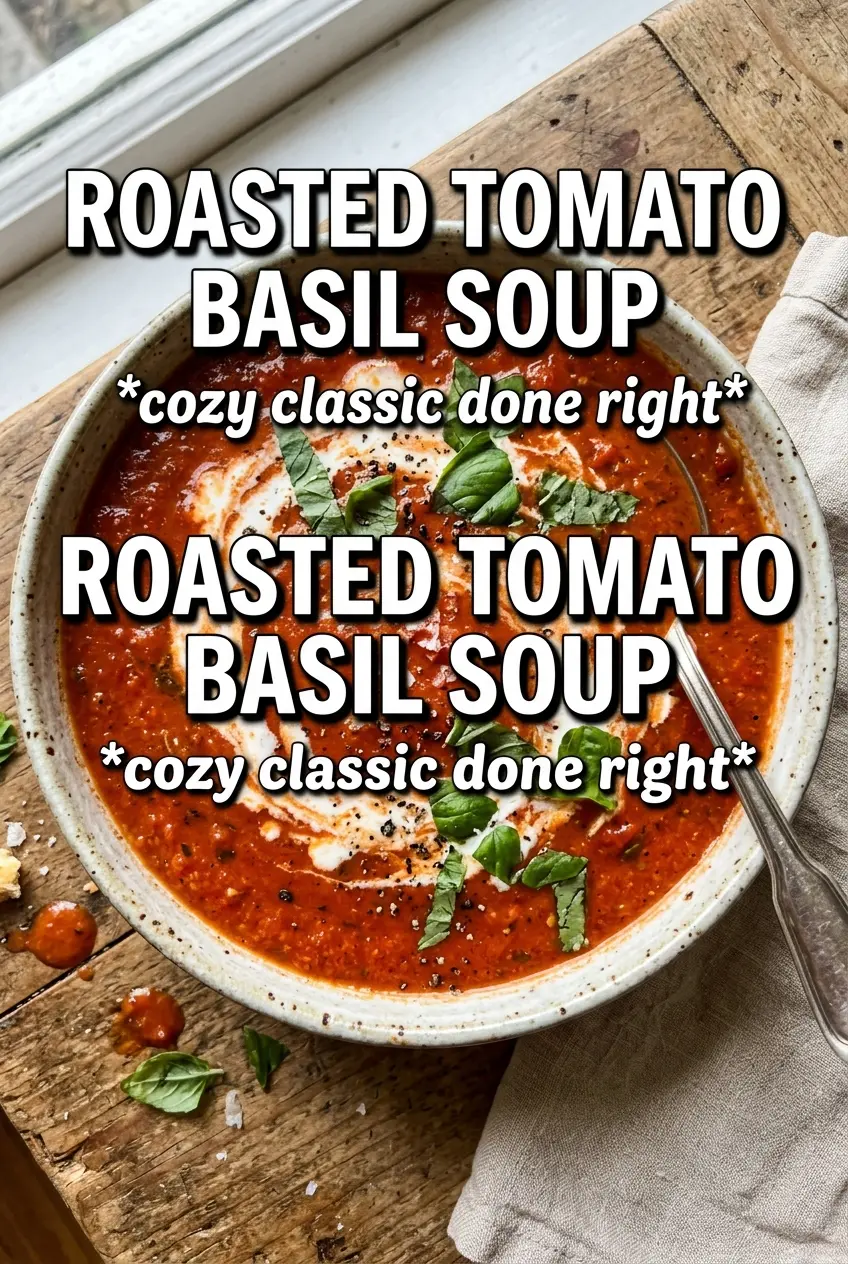
Roasted Tomato Basil Soup
Ingredients
Equipment
Method
- Preheat oven to 425F. Arrange tomatoes, garlic, and onion on a rimmed baking sheet.
- Drizzle with 1/4 cup olive oil, then season with salt, pepper, and dried oregano. Toss lightly so the vegetables are evenly coated.
- Roast 35-40 minutes until caramelized and slightly charred at the edges. Keep roasting until the tomatoes look collapsed and browned.
- Squeeze roasted garlic from skins, then transfer all roasted vegetables to a large pot. Scrape any browned bits from the baking sheet into the pot.
- Add broth and balsamic vinegar, then blend smooth with an immersion blender. Blend until the soup looks fully silky with no tomato chunks.
- Stir in heavy cream and fresh basil, then simmer 10 minutes. Let it gently bubble while the basil darkens slightly.
- Add sugar, then season with salt and pepper to taste. Taste and adjust so the flavor is balanced rather than sharp.
- Serve with grilled cheese croutons or crusty bread. Ladle into bowls and add the bread on the side.


