Remi’s Ratatouille Soup turns all the best parts of classic ratatouille into a deeply savory bowl that eats like a meal. The vegetables keep their shape just enough to give every spoonful texture, while the tomatoes and herbs melt into a broth that tastes slow-cooked even though it comes together in under an hour. It is the kind of soup that gets better as it sits, which means leftovers are never an afterthought.
The trick is treating the vegetables in stages instead of dumping everything in at once. Eggplant gets a brief salt rest so it cooks up silky instead of spongy, then the onions, peppers, garlic, and summer squash each get enough time to soften without disappearing. Herbs de Provence does the heavy lifting here, but fresh basil at the end keeps the soup from tasting flat or overly stewed.
Below you’ll find the small details that make this version dependable, from the best way to keep the eggplant from turning mushy to the finishing move that makes the broth taste round and full.
The eggplant stayed tender instead of turning mushy, and the broth had that rich tomato-herb flavor that tasted like it had been simmering all afternoon. I finished mine with parmesan and a drizzle of olive oil, and it was outstanding.
Like the slow-simmered vegetables and basil finish in Remi’s Ratatouille Soup? Save this one for the nights when you want a hearty French-inspired bowl with almost no fuss.
The Step That Keeps the Vegetables Tender Instead of Muddy
Ratatouille soup lives or dies on how you treat the vegetables before the simmer. Eggplant needs that short salt rest because it pulls out moisture and helps the cubes hold their shape better in the pot. If you skip it, the eggplant still cooks, but it tends to drink up more oil and go softer than you want by the time the soup is done.
The other mistake is rushing the early sauté. Onion and bell pepper need a few minutes in the olive oil first so they lose their raw edge and start building sweetness. Garlic goes in after that so it perfumes the pot without burning, and the eggplant follows while there’s still enough heat to start softening it from the outside in.
Once the zucchini, yellow squash, tomatoes, and broth go in, the goal shifts from browning to gentle simmering. You want the vegetables very tender, not collapsed into paste, so keep the heat at a steady bubble rather than a hard boil.
What Each Ingredient Is Actually Doing in This Pot

- Eggplant — This gives the soup its plush, almost creamy body without adding dairy. A small dice cooks faster and blends into the broth just enough to thicken it a little. If your eggplant is especially seedy or large, peel it in strips instead of fully removing the skin.
- Zucchini and yellow squash — These add sweetness and keep the soup feeling light enough to eat as a main dish. Cut them into even dice so they finish at the same time as the eggplant. Bigger chunks stay watery in the center and throw off the texture.
- Crushed tomatoes and diced tomatoes — The crushed tomatoes make the base rich and spoon-coating, while the diced tomatoes give you little bursts of bright acidity. Using both keeps the soup from tasting one-note. If you only have one type, use it, but expect a thinner or more uniform texture.
- Herbs de Provence, basil, and thyme — This is where the French-American part of the dish comes through. Herbs de Provence brings that classic savory, floral note, while thyme grounds it and basil keeps it tasting fresh. Dried herbs go in with the broth so they have time to bloom; fresh basil waits until the end.
- Good olive oil — Olive oil is part of the flavor here, not just the cooking fat. Use something you’d happily drizzle on bread, especially for the finish. That last slick of oil on top makes the whole bowl taste fuller and smoother.
Building the Soup So the Broth Tastes Rich, Not Watery
Salting the Eggplant First
Toss the diced eggplant with salt and let it sit for 15 minutes, then rinse and pat it dry. That step pulls out excess moisture so the eggplant cooks with a softer, meatier texture instead of turning greasy and spongy. If you leave the pieces wet, they’ll steam in the pot and dilute the flavor of the oil and aromatics around them.
Softening the Aromatics
Heat the olive oil in a large pot and cook the onion and bell peppers for about five minutes until they start to slump and the onion turns translucent. You’re looking for a little sweetness to come out, not browned edges. Garlic only needs a short minute or so after that; if it darkens, it turns bitter and the whole soup tastes sharper than it should.
Layering in the Vegetables
Add the eggplant first, then the zucchini and yellow squash after it has had a chance to absorb some of the oil and soften. The pot should look full but not crowded, and the vegetables should still have some definition before the tomatoes go in. Once the broth is added, stir well and scrape the bottom so any browned bits dissolve into the soup instead of sticking.
The Final Simmer
Let the soup simmer for 20 to 25 minutes until every vegetable is very tender and the broth has taken on a deeper red color. A hard boil can break the vegetables apart before the flavors have a chance to settle together, so keep it at a gentle bubble. Stir in the fresh basil at the end, then season with salt, pepper, and a finishing drizzle of olive oil so the flavors stay bright.
Three Ways to Make Remi’s Ratatouille Soup Work for Your Kitchen
Dairy-Free Serving
Skip the parmesan and finish with extra olive oil plus a pinch of flaky salt. You still get a full, rounded bowl because the tomatoes, eggplant, and herbs carry the flavor on their own, and the oil gives you the same silky finish parmesan would have added.
Make It Heartier With Beans or Grain
Stir in a can of drained white beans or serve the soup over cooked farro, rice, or small pasta. Beans keep the texture soft and creamy; grains make it more filling without changing the soup itself. Add them at the end so they warm through without overcooking.
Extra-Spicy Version
Increase the red pepper flakes to 1 teaspoon or add a pinch of cayenne with the dried herbs. That gives the soup a slow, warming heat that sits underneath the tomatoes instead of shouting over them. It works best if you like your bowl to finish with a little bite.
Storage and Reheating
- Refrigerator: Store in an airtight container for up to 4 days. The vegetables soften a little more as it sits, and the broth gets even better by day two.
- Freezer: This freezes well for up to 3 months. Cool it completely first, then portion it into freezer-safe containers and leave a little room at the top for expansion.
- Reheating: Rewarm gently on the stove over medium-low heat until hot. Don’t boil it hard, or the zucchini and squash will break down too much and the soup will lose its nice texture.
Answers to the Questions Worth Asking
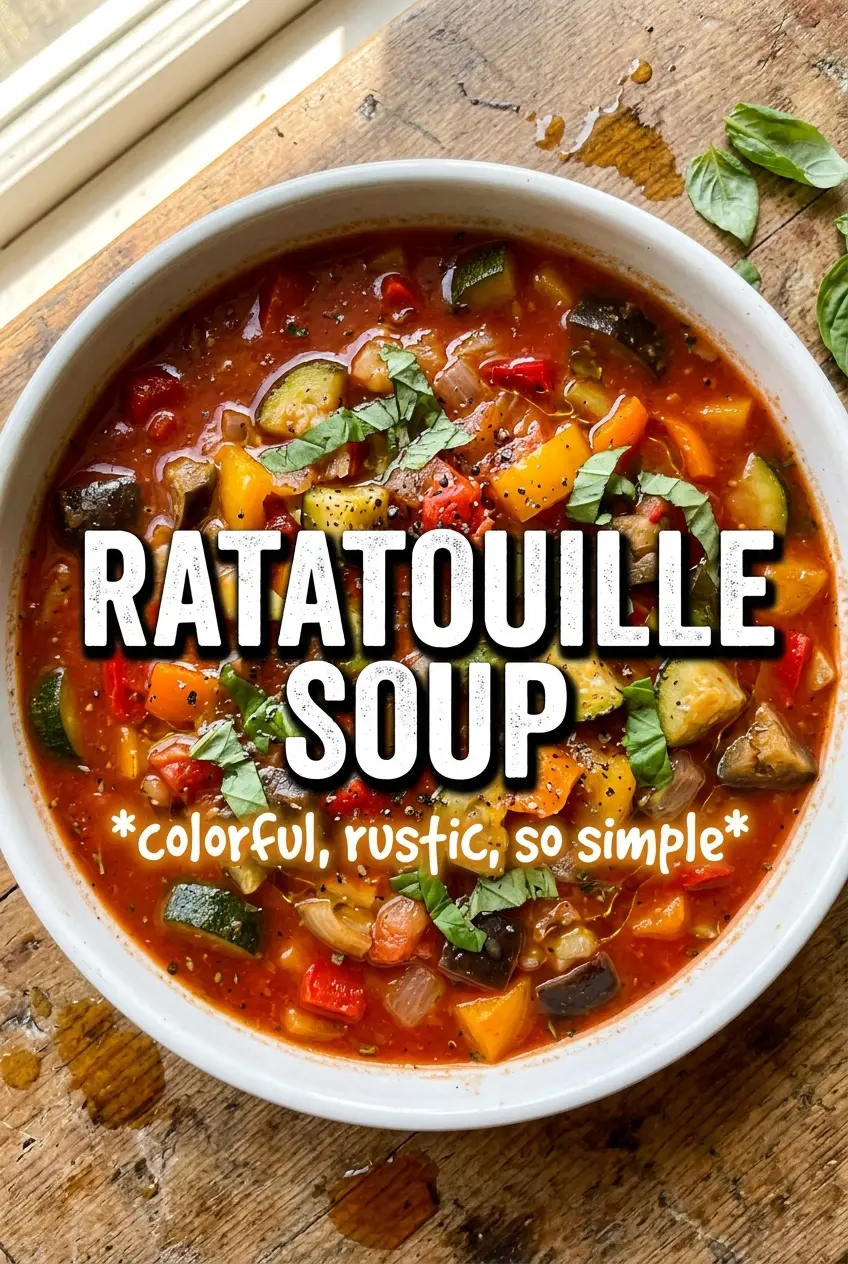
Remi's Ratatouille Soup
Ingredients
Equipment
Method
- Toss the diced eggplant with salt and let sit for 15 minutes. Visual cue: it should look slightly wet as moisture draws out.
- Rinse the salted eggplant and pat it dry. Visual cue: the pieces should no longer look glossy with water.
- Heat the olive oil in a large pot over medium heat. Visual cue: the oil shimmers but does not smoke.
- Sauté the onion and red bell peppers for 5 minutes. Visual cue: they soften and start to turn slightly translucent.
- Add the garlic and cook for 5 minutes. Visual cue: the garlic becomes fragrant without browning too much.
- Add the zucchini and yellow squash and cook for 3 minutes. Visual cue: the vegetables brighten in color and begin to soften.
- Add the crushed tomatoes, diced tomatoes, vegetable broth, herbs de Provence, dried basil, dried thyme, and red pepper flakes. Visual cue: the pot looks richly red and aromatic.
- Simmer for 20-25 minutes until all vegetables are very tender. Visual cue: a spoon easily breaks through eggplant, zucchini, and squash.
- Stir in the fresh chiffonade basil. Visual cue: the soup turns speckled green on top immediately.
- Season with salt and pepper to taste. Visual cue: the flavors feel balanced rather than flat.
- Finish with a drizzle of good olive oil. Visual cue: you’ll see a glossy sheen across the surface before serving.


