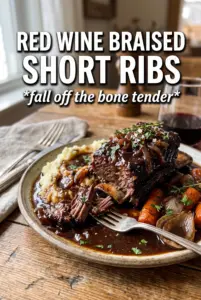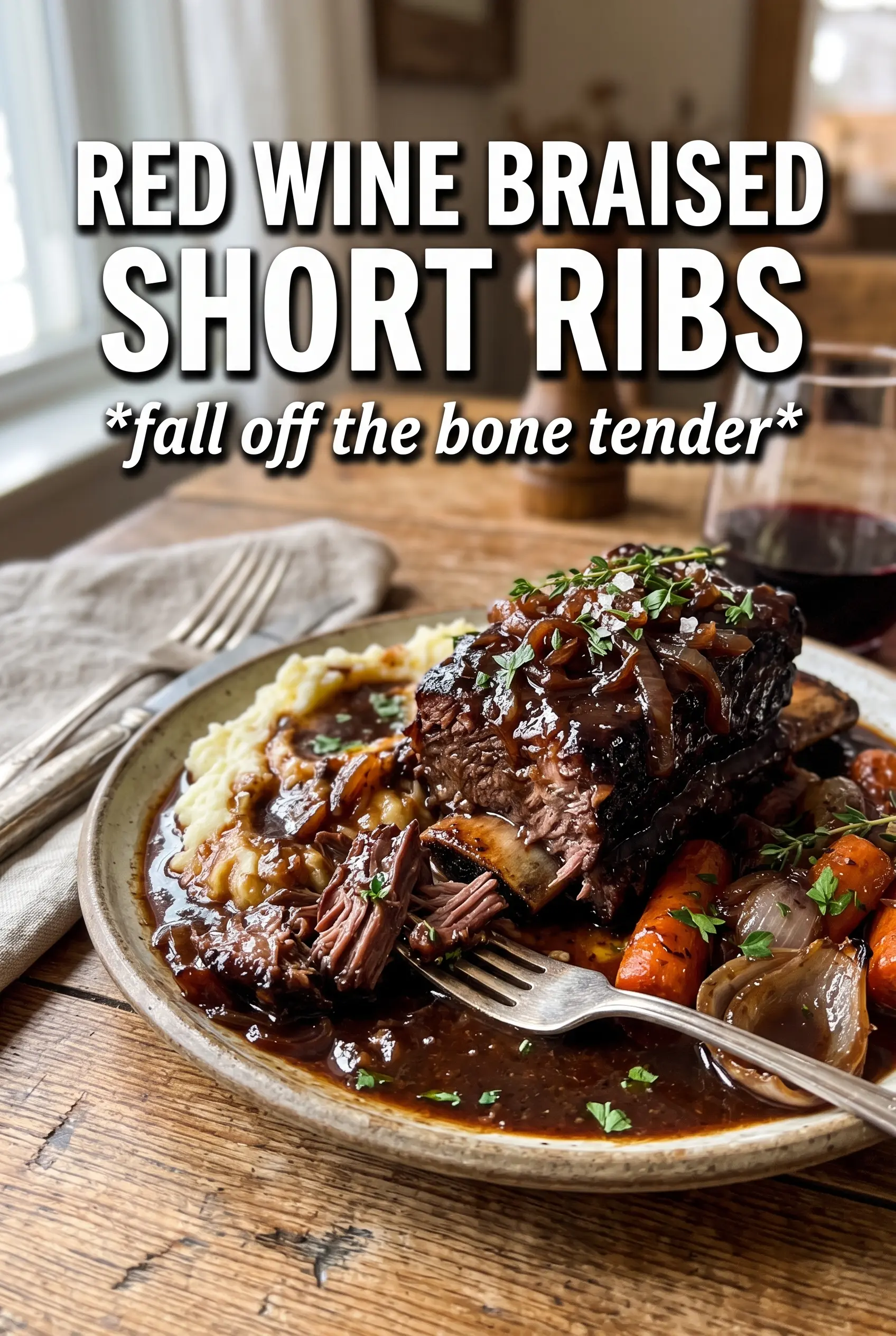
Red wine braised short ribs come out the way braised beef should: spoon-tender, deeply savory, and coated in a glossy sauce that clings to every bite. The meat doesn’t just soften in the oven; it turns rich and silky, while the carrots, onion, and herbs melt into the wine and broth until the whole pot tastes like it cooked all day for a reason.
What makes this version work is the balance between hard searing and patient braising. Browning the ribs first gives the sauce its backbone, and cooking the tomato paste with the vegetables adds a dark, concentrated base before the wine goes in. I also like reducing the braising liquid at the end instead of serving it straight from the pot, because that last step turns a good pot roast-style broth into a sauce that actually coats the ribs.
Below you’ll find the part that matters most if you’ve ever had braised beef turn flat or watery: how to build a sauce with real depth, plus a few practical swaps and storage notes so the whole dish comes together without guesswork.
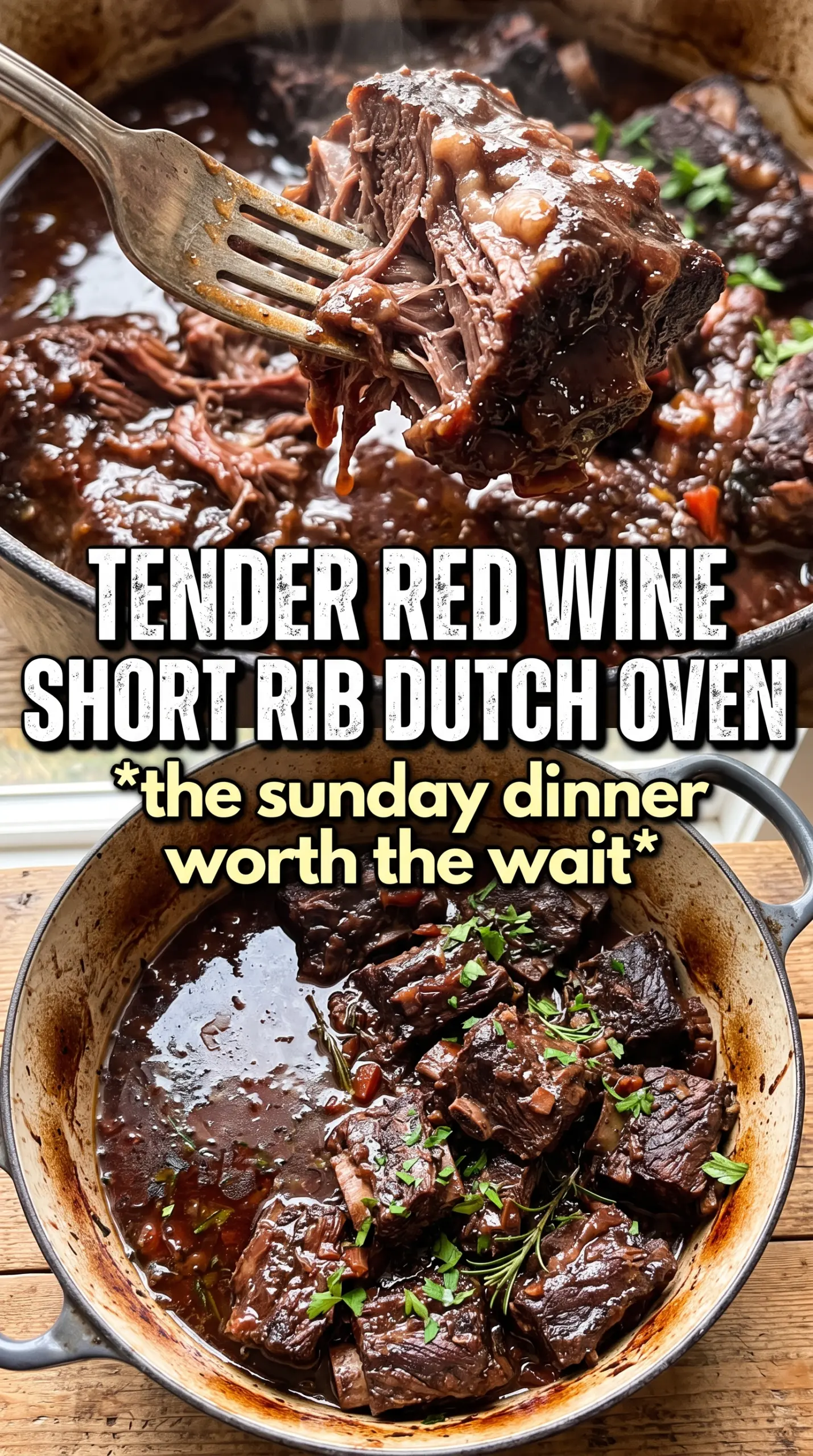
The ribs were fall-apart tender after 3½ hours and the sauce reduced into this glossy, deep red gravy that tasted even better the next day. I served it over mashed potatoes and everyone went back for seconds.
Save these red wine braised short ribs for the night you want fall-off-the-bone beef and a deep mahogany sauce over mashed potatoes.
The Reason the Braising Liquid Needs a Final Reduction
If you stop cooking once the short ribs are tender, the pot will taste good but loose. The liquid has done its job at that point: it has extracted flavor from the meat, vegetables, and herbs. What it hasn’t done yet is concentrate enough to coat the ribs and mashed potatoes the way a proper braising sauce should.
That final reduction is what pulls everything together. The wine mellows, the tomatoes deepen, and the broth turns glossy instead of thin. If your sauce seems salty before reducing, don’t panic and don’t add more liquid yet. Let it simmer after the ribs come out, then taste again once it has thickened; the salt level changes as water evaporates.
What Each Ingredient Is Actually Doing In This Dish
- Bone-in beef short ribs — These are the star because they have enough fat, connective tissue, and bone to stay moist through a long braise. Boneless ribs will work in a pinch, but they won’t give you the same deep beefy flavor or the same silky texture.
- Dry red wine — This builds the backbone of the sauce, so use a wine you’d actually drink. Cabernet brings more structure and Merlot gives a rounder finish; either one works well as long as it isn’t sweet.
- Tomato paste and diced tomatoes — The paste gives the sauce color and concentrated body, while the diced tomatoes add acidity and help the braising liquid taste full instead of flat. Cooking the paste for a couple of minutes with the vegetables matters because it takes away the raw edge.
- Carrots, onion, celery, garlic, and herbs — This is the aromatic base that softens into the sauce during the braise. Fresh thyme and rosemary hold up better than dried here, but if you have to use dried, use much less and add it sparingly.
- Beef broth — This stretches the wine and keeps the braising liquid from becoming too sharp. Homemade is great, but a good boxed broth is perfectly fine because the long cook time builds plenty of flavor on its own.
Building the Pot So the Sauce Turns Glossy, Not Muddy
Season and Sear Hard
Set the ribs on a tray and season them generously with salt and pepper before they hit the pan. When the oil is hot, lay the ribs in without crowding them and let each side get deeply browned. If the meat sticks at first, leave it alone; it will release once a crust forms. Pale ribs lead to pale sauce, and no amount of simmering fixes that later.
Cook the Vegetables Until They Start to Sweeten
After the ribs come out, add the onion, carrots, and celery to the same pot and cook them until the onion softens and the bottom starts picking up color again. Stir in the garlic and tomato paste and give them a full couple of minutes in the hot fat. That step cooks out the raw tomato flavor and keeps the finished sauce from tasting sharp.
De-glaze and Braise Low and Slow
Pour in the wine and scrape the pot well, all the way into the corners where the browned bits hide. That fond is where a lot of the flavor lives, and it should dissolve completely into the liquid before the broth and tomatoes go in. Return the ribs so the liquid comes about halfway up the meat, not all the way over it. The oven does the work here; once the pot is covered, leave it alone until the ribs yield easily when nudged with a fork.
Reduce the Sauce After the Meat Comes Out
Move the ribs to a platter and strain the braising liquid if you want a smoother finish. Then simmer it uncovered until it looks shiny and lightly coats the back of a spoon. This is where you fix a sauce that tastes thin. If you stop too early, it will still seem brothy on the plate even though the flavor is there.
How to Adapt These Short Ribs for Different Tables
Gluten-Free Without Changing the Dish
This recipe is naturally gluten-free as written as long as your broth is certified gluten-free. The braising method doesn’t rely on flour for thickening, so you still get that deep, glossy sauce without any extra steps.
Dairy-Free and Still Rich
The braised ribs themselves are dairy-free, so the only adjustment is the side. Serve them over olive oil mashed potatoes or creamy polenta instead of butter-heavy mash if you want to keep the whole plate dairy-free.
Using Chuck Instead of Short Ribs
Chuck roast will give you a similar braised-beef result if short ribs are out of budget or unavailable. Cut it into large chunks and watch the cooking time closely, because it can become tender a little sooner and starts falling apart fast once it gets there.
Make-Ahead for Easier Serving
This dish tastes even better the next day because the sauce settles and the beef absorbs more of it. Braise, cool, and refrigerate the ribs in their liquid, then reheat gently and reduce the sauce at the end if needed.
Storage and Reheating
- Refrigerator: Store for up to 4 days in an airtight container with the sauce. The texture stays great, and the flavor deepens overnight.
- Freezer: Freeze for up to 3 months. Cool completely first, then portion the ribs with enough sauce to keep them from drying out.
- Reheating: Warm gently in a covered pot over low heat or in a 325°F oven until heated through. Don’t boil it hard, or the meat can tighten and the sauce can separate.