Protein packed Thai pasta salad is the kind of cold main dish that disappears fast because it hits every note at once: creamy, crunchy, savory, bright, and filling enough to stand on its own. The peanut-ginger dressing clings to every piece of pasta instead of pooling at the bottom of the bowl, and the shredded vegetables keep each bite crisp even after chilling.
What makes this version work is the balance. Protein pasta gives the salad enough structure to feel substantial, while chicken adds staying power without making it heavy. The dressing is built with peanut butter, soy sauce, rice vinegar, honey, ginger, and garlic, then loosened with water until it turns silky enough to coat everything evenly. That extra step matters; if the dressing is too thick, it sits on the ingredients instead of dressing them.
Below, I’ve included the small details that keep the noodles from clumping, how to adjust the sauce texture, and a few smart swaps if you want to make it vegetarian or prep it ahead for the week.
The peanut dressing coated everything evenly and the pasta stayed firm after chilling overnight. I added the lime at the table and it made the whole bowl taste brighter.
Save this protein packed Thai pasta salad for a high-protein lunch that stays creamy, crunchy, and bright after chilling.
The Trick to Keeping Protein Pasta from Turning Mushy
Protein pasta can go from pleasantly firm to soft and swollen faster than regular wheat pasta, especially after it sits in dressing. The fix is simple: cook it just until tender, drain it well, and rinse it cold right away so it stops cooking. That rinse also helps wash off excess starch, which keeps the salad from clumping into a heavy mass after it chills.
The other thing people miss is the rest time. This salad needs at least an hour in the fridge because the cold pasta and shredded vegetables need time to absorb the dressing evenly. If you toss and serve immediately, the sauce tastes sharper and the texture feels disconnected. After chilling, the peanut dressing settles in and the whole bowl eats like one dish instead of separate parts.
- Protein pasta — Edamame or chickpea pasta holds up better than many gluten-free noodles, but it still needs careful timing. Pull it when it is just cooked through, not soft.
- Cold rinse — This matters more here than in a hot pasta dish. It arrests cooking and keeps the noodles from sticking while you build the salad.
- Chill time — The hour in the fridge isn’t downtime. It helps the dressing mellow and cling, and it gives the cabbage a little flexibility without losing crunch.
What the Peanut-Ginger Dressing Is Doing Here
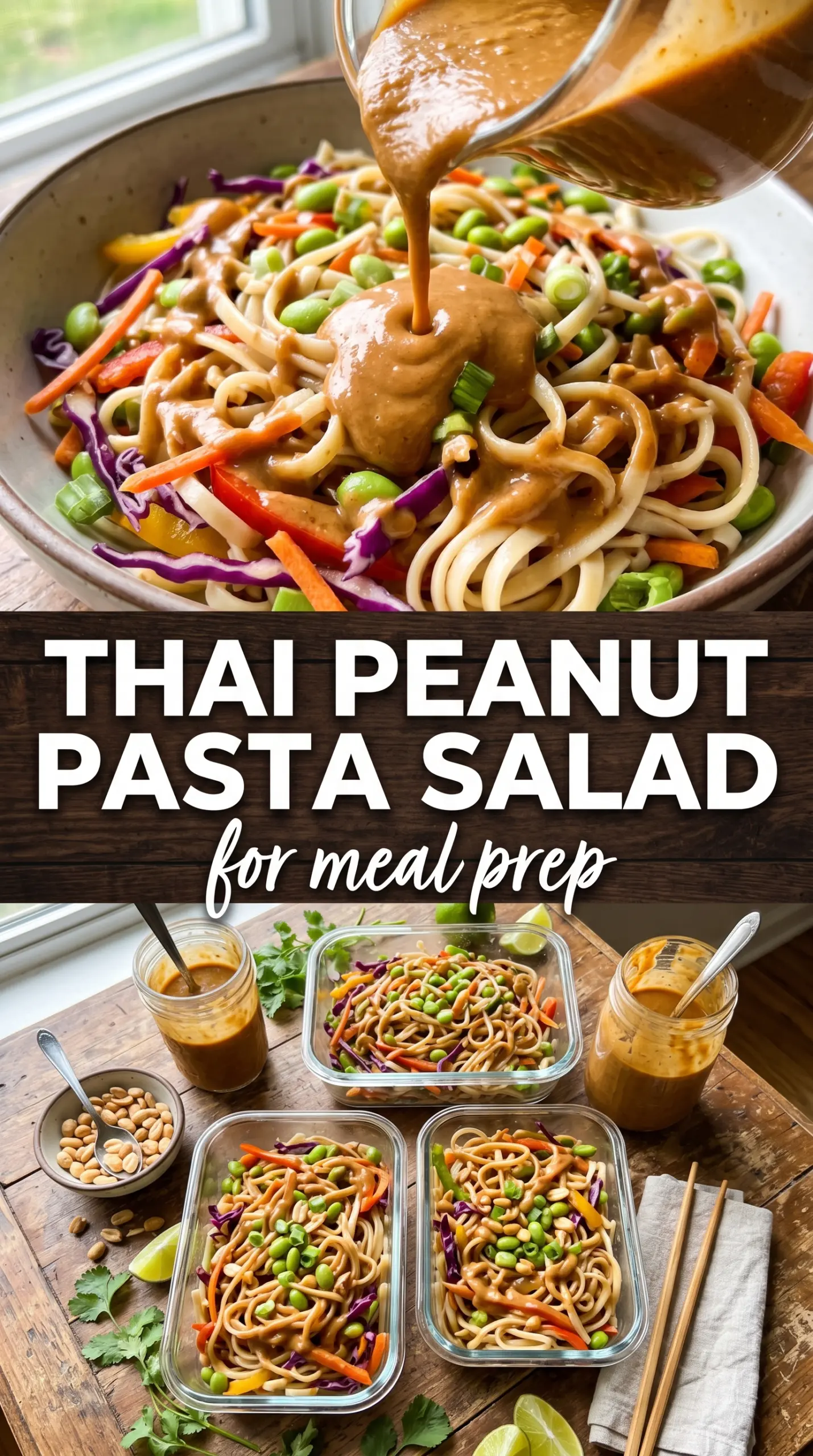
- Peanut butter — This is the body of the dressing. Natural peanut butter works fine, but stir it first so the oil doesn’t throw off the texture.
- Soy sauce — It brings the salty backbone and gives the dressing its savory depth. Use low-sodium if you’re sensitive to salt, then season at the end.
- Rice vinegar and lime — The vinegar is in the dressing for clean acidity, and the lime wedges at the table wake everything up right before serving. That final squeeze is worth it.
- Ginger and garlic — Fresh grated ginger and minced garlic give the dressing its sharp edge. Powdered versions won’t taste the same; they read flatter and less lively in a cold salad.
- Chicken — Shredded chicken turns this from a side dish into a full meal. Rotisserie chicken is the easiest shortcut and works well here because the dressing carries the flavor.
- Cabbage and carrots — These are the crunch insurance. They stay crisp after chilling, which keeps the salad from going soft as the pasta absorbs the sauce.
Building the Salad So Everything Stays Bright and Coated
Cooking the Pasta the Right Way
Cook the pasta according to the package, but stop as soon as it reaches tender with a slight bite. Overcooked protein pasta turns soft once the dressing goes on, and there is no fixing that later. Drain it thoroughly, then rinse with cold water until it feels cool all the way through. If you skip the rinse, the noodles keep steaming in the colander and the texture slips past the point you want.
Whisking the Dressing Until It Turns Silky
Start with the peanut butter, soy sauce, rice vinegar, honey, ginger, and garlic before adding water. The mixture will look thick and stubborn at first, then loosen as you whisk in a little water at a time. Stop when it runs like a thick cream and coats the back of a spoon. If the dressing looks grainy, it usually means it needed more whisking or the peanut butter was too cold.
Tossing and Chilling for the Best Texture
Combine the pasta, chicken, cabbage, carrots, and bell pepper in a large bowl before adding the dressing. Toss from the bottom up so the sauce reaches everything instead of sitting on top. After chilling, give the salad one more toss before serving, because the dressing settles in the fridge and can collect at the bottom. Finish with peanuts and cilantro right before serving so they stay crisp and fresh.
Three Ways to Adapt This for Different Eaters and Different Pantries
Make it vegetarian without losing the protein
Skip the chicken and add cubed baked tofu or shelled edamame. Tofu gives you a soft, neutral base that soaks up the dressing, while edamame keeps the salad firmly in high-protein territory and adds a little extra bite.
Make it gluten-free with the right soy sauce
Use tamari or a certified gluten-free soy sauce instead of standard soy sauce. The flavor stays close, but the salt level can shift a little, so taste the dressing before tossing it with the pasta.
Thin it for meal prep, not for serving right away
If you know the salad will sit overnight, whisk the dressing a little looser than you think you need. Protein pasta and cabbage both absorb moisture as they chill, so a dressing that looks slightly thin on day one will taste balanced after resting.
Swap the chicken for shrimp
Cold cooked shrimp works well if you want a lighter version with a sweeter finish. Keep the shrimp chilled and fold it in gently so it doesn’t break apart, and add extra lime at the table to sharpen the flavor.
Storage and Reheating
- Refrigerator: Store covered for up to 4 days. The noodles soften a little as it sits, but the salad stays good for lunch prep.
- Freezer: Don’t freeze this one. The pasta and vegetables lose their texture, and the peanut dressing separates after thawing.
- Reheating: Serve it cold straight from the fridge. If it tightens up too much, stir in a spoonful of water or a squeeze of lime instead of warming it, which would make the vegetables limp.
Answers to the Questions Worth Asking
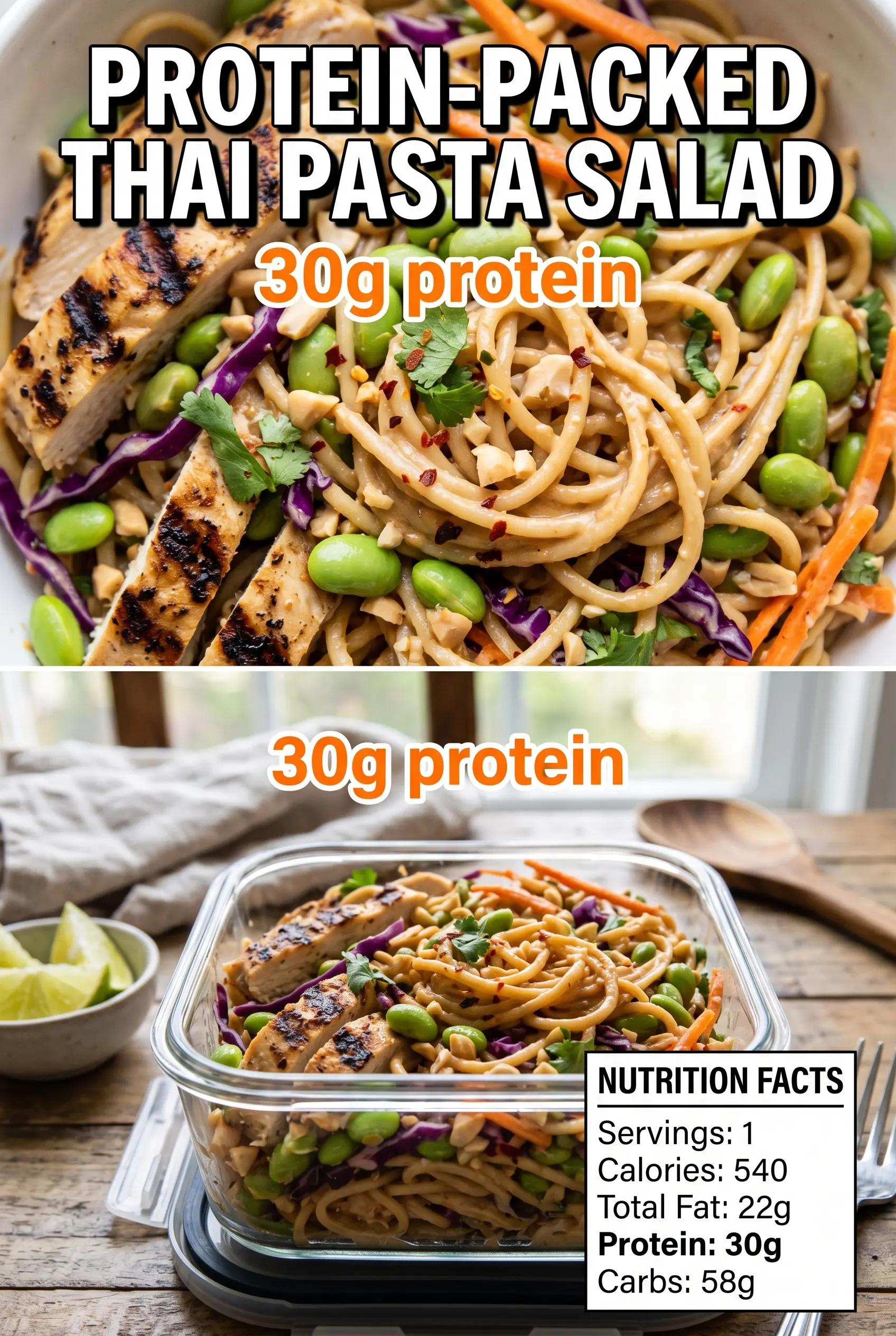
Protein Packed Thai Pasta Salad
Ingredients
Equipment
Method
- Cook protein pasta according to package directions until tender, then drain and rinse under cold water to stop the cooking and cool it quickly.
- Whisk peanut butter, soy sauce, rice vinegar, honey, ginger, and garlic, adding water to thin until you get a pourable, creamy consistency.
- Combine pasta, chicken, red cabbage, carrots, and red bell pepper in a large bowl and toss briefly to distribute the vegetables evenly.
- Pour the peanut dressing over the salad and toss until everything is coated, with a glossy peanut-ginger layer clinging to the noodles and vegetables.
- Refrigerate for at least 1 hour, then top with crushed peanuts and cilantro right before serving for crunch and freshness.
- Serve with lime wedges on the side so each bowl can get a squeeze of lime at the table.