Pecan pie twice-baked sweet potatoes hit that sweet spot between holiday side dish and dessert-adjacent comfort food. The filling turns creamy and lightly spiced, while the pecan topping bakes into a glossy, caramel-like layer that cracks just a little when you spoon into it. The contrast is what keeps this dish from feeling heavy: soft sweet potato underneath, sticky crunch on top.
What makes this version work is the balance. The sweet potatoes are mixed with butter, maple syrup, brown sugar, cinnamon, and vanilla, but the mash stays grounded because the sugar isn’t doing all the work. Then the pecan topping gets cooked briefly on the stove before it ever hits the oven, which helps the sugar dissolve and keeps the final topping from tasting gritty or raw. That extra minute on the stove is the difference between a loose scatter of pecans and a true pecan pie finish.
Below, I’ve included the timing that keeps the skins sturdy, the filling fluffy instead of gluey, and a few smart swaps if you need to adjust for what’s in your kitchen.
The filling stayed creamy and the pecan topping set up with that sticky crunch I was hoping for. I made them ahead, baked the second time right before dinner, and they came out perfect.
Pecan pie twice-baked sweet potatoes bring creamy maple-cinnamon filling and a caramelized pecan topping that sets beautifully.
The Trick to Keeping the Sweet Potato Base Creamy, Not Soupy
Twice-baked sweet potatoes can go wrong fast when the filling gets too loose. The danger is loading in enough maple syrup and butter to make the mixture taste rich, then baking it again until the whole thing turns watery or collapses. Here, the key is that the baked potatoes get cooled just enough to handle, then the flesh is mashed while it’s still warm and fluffy. That texture holds onto the butter and sugar instead of turning gummy.
The second thing that matters is keeping the skins intact when you scoop. Leave a thin border of potato inside each shell so the sweet potatoes hold their shape during the final bake. If you scrape them too clean, the filling spreads out and loses that neat twice-baked look. A sturdy shell also gives you a better bite: creamy center, soft edges, and a crisped rim where the potato skin bakes again.
What Each Ingredient Is Doing in the Filling and Topping
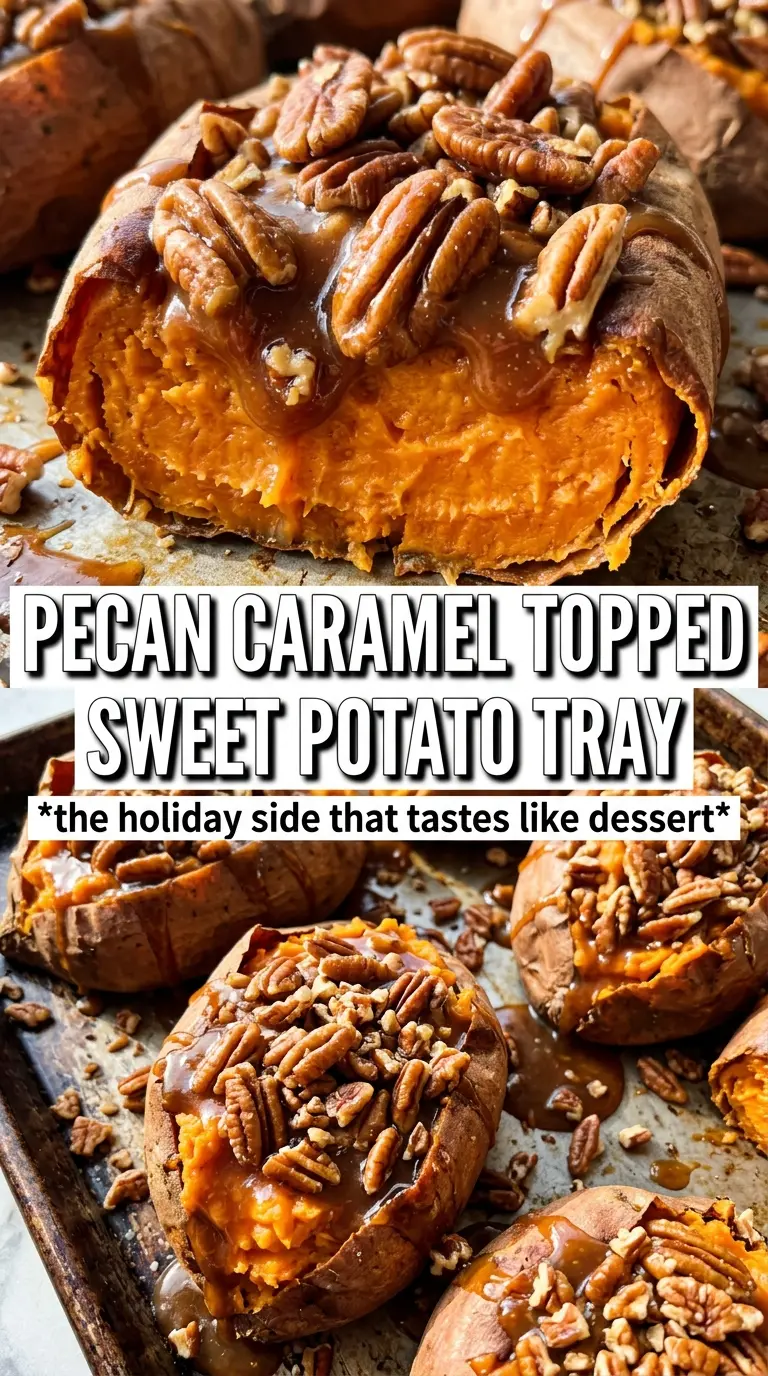
- Sweet potatoes — Use large, evenly sized potatoes so they bake at the same rate and give you enough flesh to mound back into the skins. Smaller potatoes can work, but the filling will be thinner and the topping will dominate.
- Butter — Softened butter in the mash helps the filling turn silky instead of dense. In the topping, melted butter carries the sugar and creates that glossy pecan pie finish.
- Maple syrup — This is the flavor bridge that makes the dish taste like pecan pie instead of plain sweet potato casserole. Real maple syrup matters here; pancake syrup will make the topping taste flatter and sweeter without the same depth.
- Brown sugar — Brown sugar adds molasses notes and helps the topping thicken into a sticky glaze. You can reduce it slightly if your sweet potatoes are very sweet, but don’t skip it or the topping won’t set the same way.
- Cinnamon and vanilla — These season the filling so it tastes warm and pie-like. The vanilla is subtle, but it rounds out the sweetness and keeps the mash from tasting one-note.
- Pecans — Roughly chopped pecans give you both crunch and coverage. If they’re chopped too finely, the topping loses its texture and can drift toward candy instead of a true pie-like layer.
- Heavy cream — Just a little cream loosens the topping enough to coat the pecans without making it runny. Half-and-half can work in a pinch, but the finish won’t be quite as rich.
Building the Layers So the Topping Caramelizes Instead of Slumps
Roasting the Sweet Potatoes First
Bake the sweet potatoes until they give easily when squeezed with a towel and the skins look wrinkled. That means the interior has fully softened and will mash without strings or dry chunks. If they’re underbaked, the filling gets fibrous and the second bake won’t fix it. Let them cool just enough that you can handle them cleanly, then halve and scoop.
Mashing the Filling While It’s Still Warm
Mash the sweet potato flesh with the softened butter, maple syrup, brown sugar, cinnamon, and vanilla until it looks smooth and fluffy, not whipped airy or sticky. A fork works fine if you want a rustic texture, but a potato masher gives the most consistent result. If the mash looks loose, give it a minute to sit before filling the skins; warm potatoes tighten up a bit as they rest.
Cooking the Pecan Topping on the Stove
Melt the butter, stir in the brown sugar, maple syrup, cream, and salt, and let it bubble gently for about 2 minutes. You’re looking for a slightly thickened glaze that coats a spoon, not a hard caramel. If the heat is too high, the sugar can seize or the cream can separate. Keep the bubbles gentle and even.
Finishing in the Oven
Spoon the pecan topping over the filled potatoes and bake until the tops are glossy, deeply golden, and just starting to set at the edges. The sugar should look caramelized, not burnt, and the pecans should smell toasted. If the topping looks done before the potatoes are hot through, give it a few extra minutes rather than cranking the heat. Too much heat here dries out the filling before the topping is ready.
How to Adjust These Pecan Pie Twice-Baked Sweet Potatoes for Your Table
Make-ahead for a holiday meal
Bake, scoop, and fill the sweet potatoes earlier in the day, then cover and chill before adding the pecan topping. The final bake goes best when the topping is added right before the potatoes go back into the oven, so the pecans stay crisp and the glaze stays glossy.
Dairy-free version
Use a good plant-based butter in both the filling and topping, and swap the heavy cream for full-fat coconut cream. The flavor will lean a little richer and less classic pecan pie, but the texture still comes out creamy and the topping still sets.
Less-sweet version
Cut the brown sugar in the filling by half and leave the topping alone. That keeps the balance intact because the topping needs the sugar to caramelize, while the filling can handle being a little less sweet without losing the pecan pie connection.
Gluten-free table-friendly side dish
This recipe is naturally gluten-free as written, so the main job is keeping cross-contact out of the kitchen. It’s a nice option for mixed-diet gatherings because the richness feels special without requiring any flour-based crust or filler.
Storage and Reheating
- Refrigerator: Store leftovers in an airtight container for up to 4 days. The topping will soften a bit, but the flavor holds well.
- Freezer: Freeze the filled sweet potatoes before the final bake for up to 1 month. Thaw overnight in the fridge, then add the pecan topping and bake as directed.
- Reheating: Reheat in a 350F oven until warmed through. The mistake to avoid is microwaving too long, which makes the filling watery and the topping sticky instead of crisp.
Questions I Get Asked About This Recipe
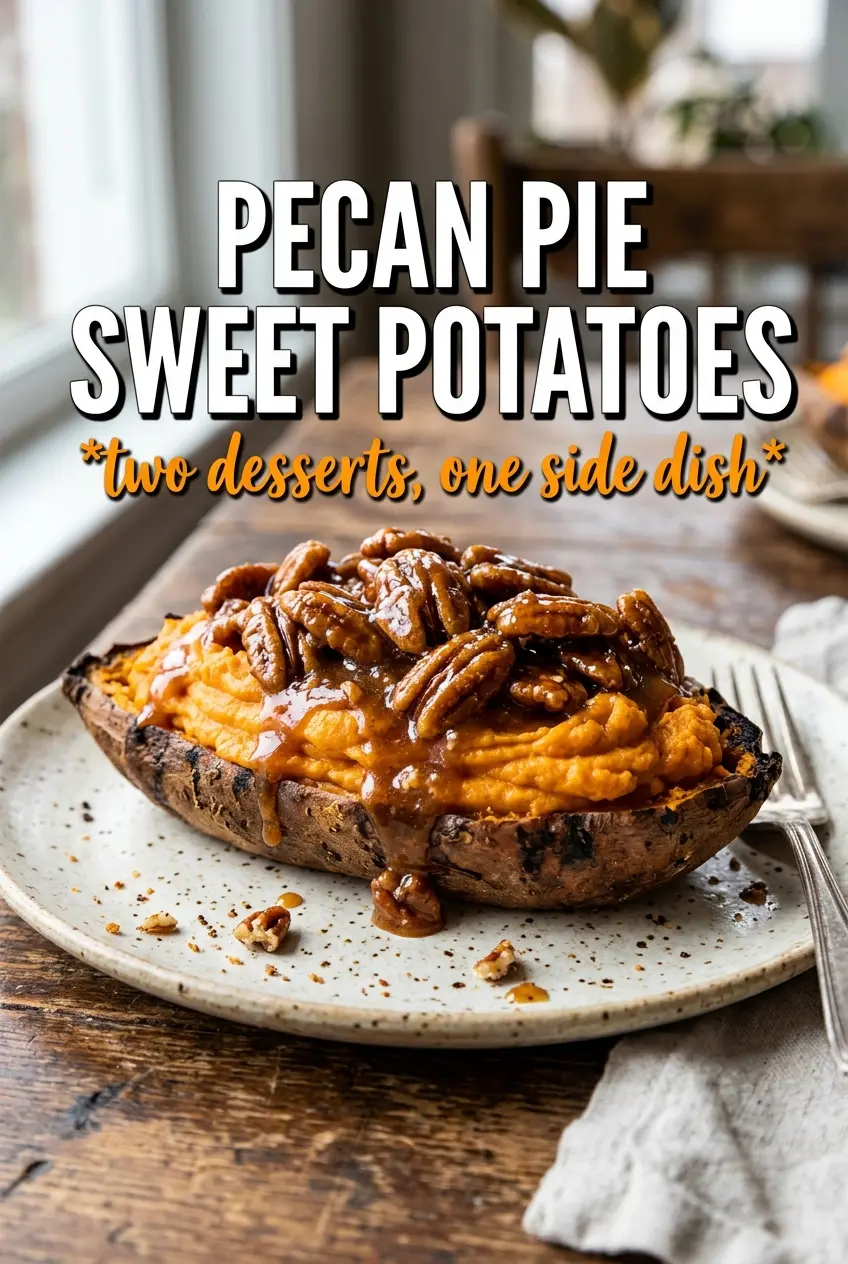
Pecan Pie Twice-Baked Sweet Potatoes
Ingredients
Equipment
Method
- Heat oven to 400F and bake sweet potatoes on a sheet pan for 50 minutes, until very tender. Cool slightly, then halve lengthwise so the skins can hold the filling.
- Scoop the flesh into a mixing area and mash until smooth. Stir in softened unsalted butter, maple syrup, brown sugar, cinnamon, and vanilla until creamy and evenly colored.
- Spoon the sweet mash back into the potato skins, mounding slightly for a fuller look. Arrange filled halves back on the sheet pan in a single layer.
- In a small saucepan, melt unsalted butter, then stir in brown sugar, maple syrup, heavy cream, and salt. Cook for 2 minutes, watching for a bubbling caramel texture.
- Fold in roughly chopped pecans, then spoon the topping over each filled sweet potato half. Make sure the tops are well coated for caramelization.
- Bake at 375F for 15-18 minutes, until the pecan topping is caramelized and golden. Let cool 3-5 minutes before serving so the topping sets slightly.


