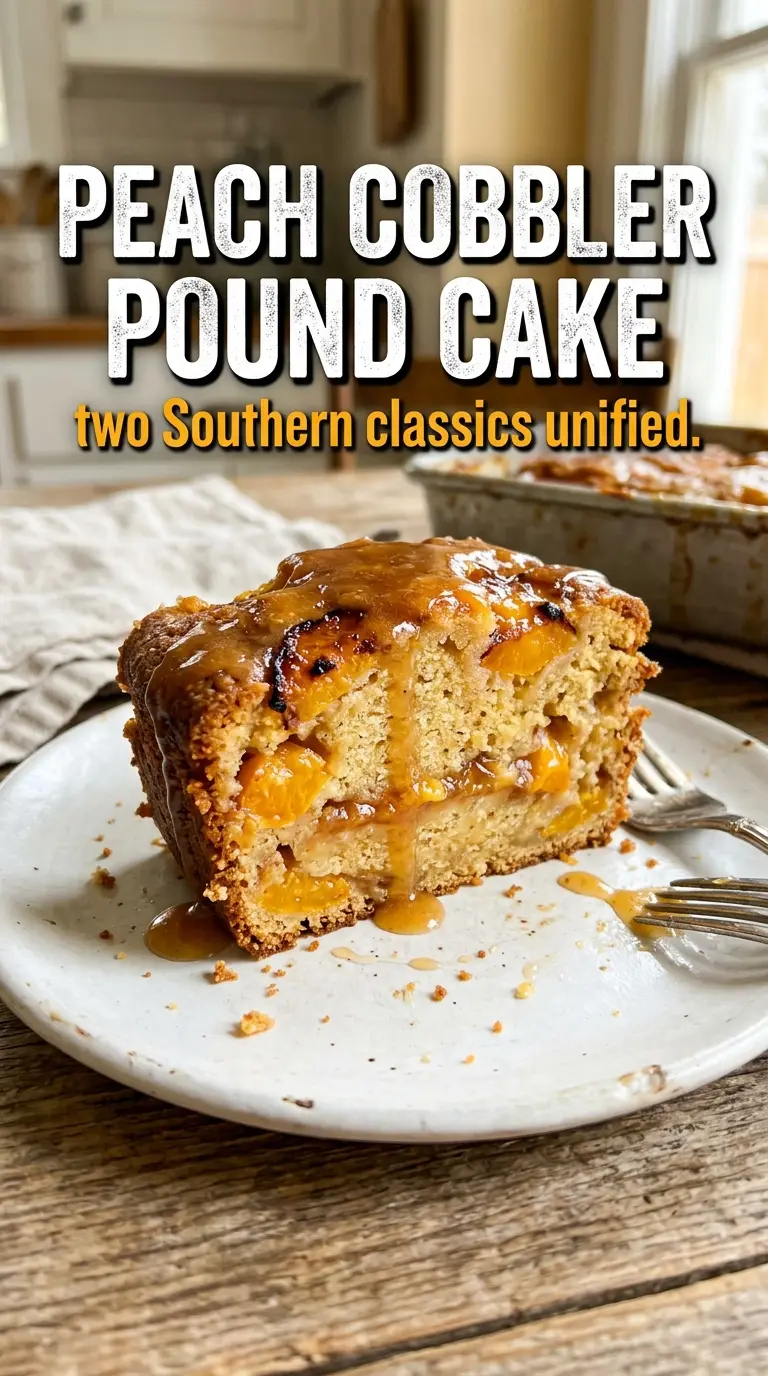
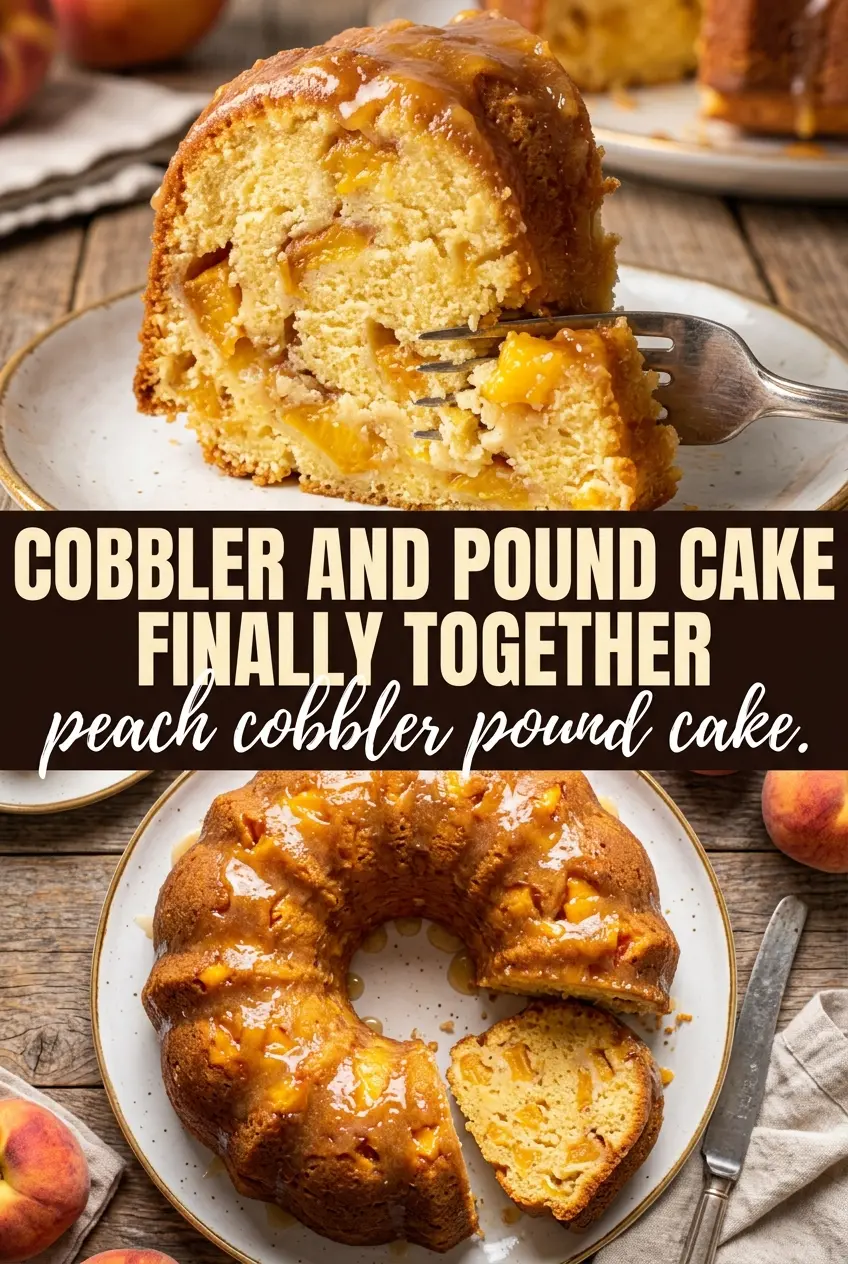
Peach Cobbler Pound Cake brings the best parts of two desserts into one pan: a dense, buttery crumb, pockets of cinnamon-kissed peaches, and a warm glaze that slips into the cake while it’s still slightly warm. The result is sturdy enough to slice cleanly, but soft where the peach filling runs through the center. It eats like a pound cake with the comfort of a cobbler, which is exactly why it disappears fast.
The texture depends on two things: beating the butter and sugar until it looks pale and almost whipped, then folding in the sour cream for a batter that stays rich without turning heavy. The peaches get tossed with brown sugar and cinnamon before they go in, which keeps the fruit from tasting flat and helps it hold its shape instead of melting into the crumb. That little bit of spice in every layer is what makes this taste like peach cobbler, not just peach cake.
Below, I’ve laid out the part that matters most when you’re baking a bundt cake with fruit inside: how to keep the center from sinking, how to judge doneness without overbaking the edges, and what to expect if you use frozen peaches instead of fresh.
The peach layer stayed in place instead of sinking, and the glaze soaked into the warm cake just enough to make every slice taste like cobbler.
Love a thick, buttery peach cobbler pound cake? Save this one for the next time you want a bundt cake that stays moist for days.
The Batter Trick That Keeps the Peach Layer From Sinking
Fruit-heavy pound cakes fail when the batter is too loose or the filling is too wet. Here, the sour cream gives the batter enough body to hold a middle layer of peaches without collapsing around it, and the flour-coated structure bakes up dense enough to support the swirl. The goal isn’t to suspend the fruit perfectly in the center. It’s to keep the peaches distributed in a way that gives you pockets of jammy fruit instead of a soggy seam.
The other thing that matters is where the fruit goes. Spoon half the batter in first, then add the peach mixture, then cover it completely with the rest of the batter. If the peach filling touches the pan walls, it can glue itself to the Bundt and tear the cake on the way out. A thick batter and a clean center layer are what let this release in one piece.
What Each Ingredient Is Doing in This Cake
- Butter — Softened butter is what gives this cake its tight, plush crumb and rich flavor. Cold butter won’t cream properly, and melted butter won’t trap the air you need for a pound cake that rises evenly.
- Sour cream — This is the ingredient that keeps the crumb moist without making it gummy. Full-fat sour cream works best, but plain Greek yogurt will do the job if that’s what you have, though the cake will be a little less luxurious.
- Fresh peaches — Fresh fruit holds its shape better and gives you those soft, sweet bites that make the cake taste like cobbler. If your peaches are very juicy, dice them and let them sit in a strainer for a few minutes before mixing with the sugar so the filling doesn’t get watery.
- Brown sugar and cinnamon — These turn the peaches into a quick filling instead of plain fruit. The sugar pulls out a little juice, which combines with the spice and creates that cobbler-like layer inside the cake.
- Peach nectar glaze — The nectar gives the glaze a true peach flavor without thinning it out too much. If you can’t find nectar, use peach juice and add it slowly so the glaze stays thick enough to cling to the warm cake instead of running off the sides.
Building the Cake in Layers Without Breaking the Crumb
Creaming the Butter Until It Turns Pale
Beat the butter and sugar for the full five minutes until the mixture looks fluffy, pale, and almost billowy. That long creaming time is what gives the cake its lift, even though pound cake is known for a dense crumb. If the butter is too cold, the mixture stays gritty and never traps enough air. If it’s greasy or melted, the cake bakes up heavy and flat.
Adding the Eggs One at a Time
Drop in each egg and let it disappear before adding the next. The batter may look curdled halfway through, and that’s normal; it comes back together once the flour and sour cream go in. Rushing the eggs is one of the fastest ways to lose volume, and this cake depends on every bit of that structure to support the peaches.
Folding in the Flour and Sour Cream
Alternate the dry ingredients with the sour cream so the batter stays smooth and doesn’t tighten up. Stop mixing as soon as the flour streaks disappear. Overmixing develops too much gluten and turns a pound cake chewy instead of tender. You want a batter that’s thick, smooth, and able to hold its shape on a spoon.
Baking Until the Center Springs Back
Once the cake goes into the oven, don’t trust the top color alone. A bundt cake with fruit can look done early while the center is still underbaked. Start checking at 70 minutes with a toothpick in the thickest part; it should come out clean or with a few moist crumbs, not wet batter. Let it cool in the pan for 15 minutes before inverting, or the cake can tear while it’s still too fragile to release cleanly.
How to Adapt This Peach Cobbler Pound Cake
Use Frozen Peaches When Fresh Aren’t in Season
Frozen peaches work well if you thaw them first and drain off the excess liquid. Pat them dry before tossing with the brown sugar and cinnamon, or the filling can turn runny and create a wet pocket in the cake. The flavor is still there; you just need to control the moisture.
Make It Gluten-Free with a 1:1 Baking Blend
A good cup-for-cup gluten-free flour blend can replace the all-purpose flour here, but the crumb will be a little more delicate. Let the cake cool fully before unmolding so it has time to set. That extra patience matters more with gluten-free baking because the structure firms up as it cools.
Swap in Greek Yogurt for the Sour Cream
Plain full-fat Greek yogurt gives you a similar tang and moisture level, though the cake will taste a touch less rich. Use the same amount and keep the rest of the method the same. Low-fat yogurt works in a pinch, but it makes the crumb a little less tender.
Storage and Reheating
- Refrigerator: Store covered for up to 4 days. The crumb stays moist, and the peach layer actually gets a little more pronounced by day two.
- Freezer: Freeze slices tightly wrapped for up to 2 months. Wrap once in plastic and again in foil so the glaze doesn’t pick up freezer odors.
- Reheating: Warm individual slices in the microwave for 15 to 20 seconds or in a 300F oven until just heated through. Don’t blast it too long or the cake dries out and the glaze turns sticky instead of soft.
Questions I Get Asked About This Recipe
Peach Cobbler Pound Cake
Ingredients
Equipment
Method
- Preheat the oven to 325F, then grease and flour a 12-cup bundt pan so the cake releases cleanly.
- Toss diced peaches with brown sugar and cinnamon, then set aside while you mix the batter (you should see glossy, lightly syrupy peaches).
- Beat softened butter and granulated sugar for 5 minutes until very fluffy, then scrape the bowl.
- Add the eggs one at a time, mixing after each addition, then mix in the vanilla extract.
- Mix in the flour, baking soda, baking powder, cinnamon, and salt alternately with sour cream until just combined (pause when no dry streaks remain).
- Pour half the batter into the bundt pan and spoon the peach filling over it, then spread lightly so it sits evenly.
- Cover the peaches with the remaining batter to seal them in, then smooth the top.
- Bake for 70-75 minutes at 325F until a toothpick comes out clean with only a few moist crumbs.
- Cool the cake for 15 minutes, then invert onto a plate or rack so the glaze can be added while it’s still warm.
- Whisk powdered sugar, peach nectar, and cinnamon until smooth, then drizzle over the warm cake so the glaze runs into the ridges.