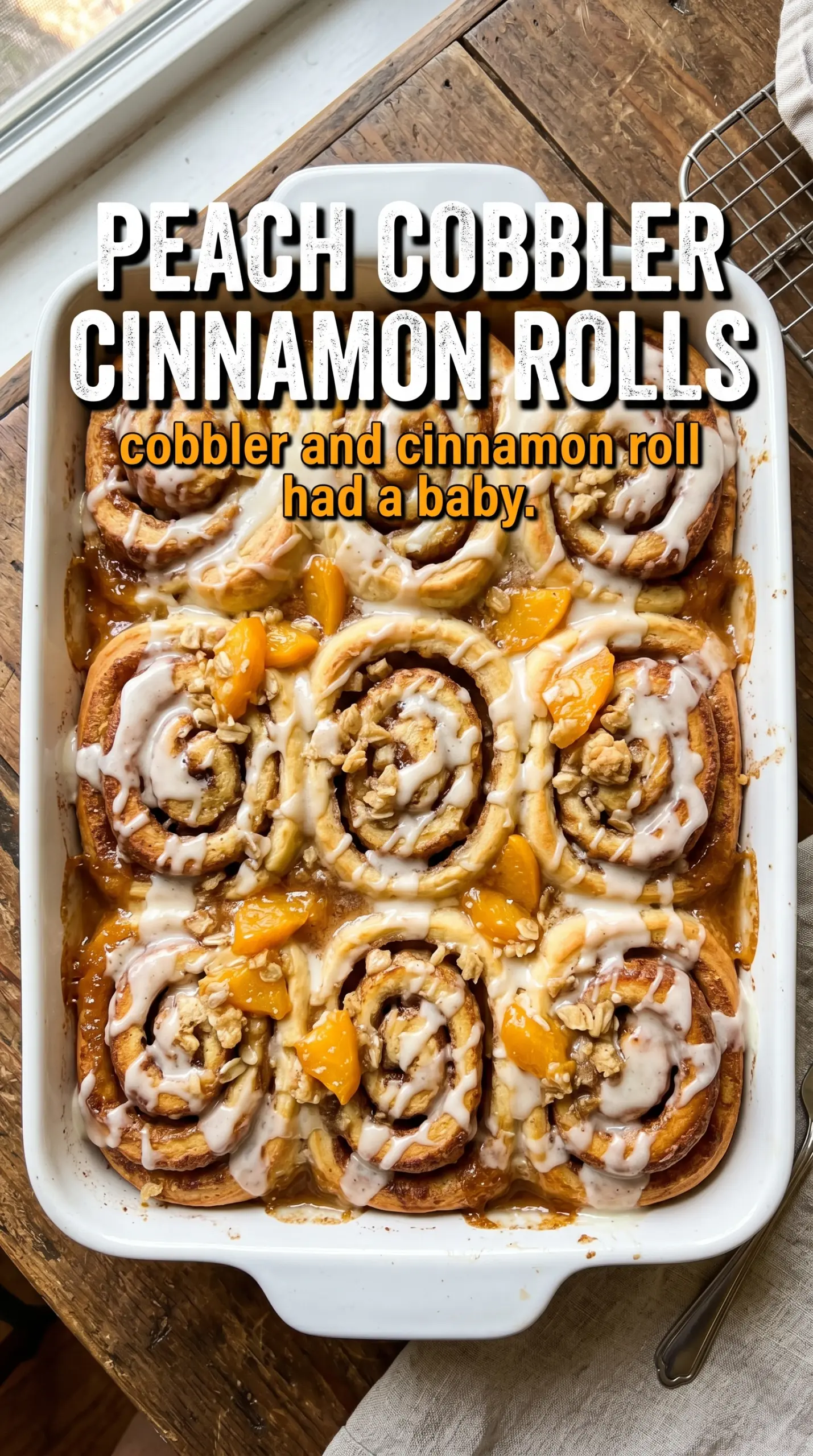
Peach cobbler cinnamon rolls bake up soft, tall, and sticky in the middle with those caramelized peachy edges that make you reach for a second one before the glaze has even set. The filling turns jammy in the oven, so every swirl stays defined instead of disappearing into the dough, and the finished rolls taste like a bakery cinnamon roll met a peach cobbler at the breakfast table.
What makes this version work is the cooked peach filling. Raw peaches bring a lot of juice, and that can leak out before the dough is done. Cooking them first with brown sugar, cinnamon, and cornstarch concentrates the fruit and gives you a filling that stays where you spread it. The other piece that matters is cooling the filling completely before rolling. Warm filling softens the dough and makes tight spirals harder to cut cleanly.
Below, I’ll walk you through the one step that keeps the rolls from becoming soggy, plus a couple of smart swaps if your peaches aren’t perfect or you need to work with what’s already in your kitchen.
The peach filling thickened up beautifully, and the rolls baked up fluffy instead of soggy. I used the full amount of glaze and my family was scraping the pan clean.
Love the peach cobbler cinnamon roll filling and that glossy peach cream cheese glaze? Save this for the next weekend breakfast when you want something sweet, swirled, and worth waking up early for.
The Filling Needs to Be Thick Before It Touches the Dough
The biggest mistake with fruit rolls is treating the filling like a jamless layer of chopped fruit. Fresh peaches release juice as they bake, and if that juice isn’t cooked off first, it runs into the dough and leaves you with a loose, wet spiral instead of neat layers. Cornstarch isn’t there just for structure; it catches that peach juice and turns it glossy and spoonable.
Cooking the filling for just a few minutes is enough as long as you stir until it looks heavy and starts to mound slightly on the spoon. Cool it all the way down before spreading. Warm filling softens the dough, makes the log harder to roll tightly, and can lead to rolls that open up in the oven.
- Peaches — Fresh peaches give you the bright, juicy middle that makes these taste like cobbler. Dice them finely so they cook fast and spread evenly. If your peaches are a little firm, they’ll still work because they soften in the pan before they go into the rolls.
- Cornstarch — This is what keeps the filling from soaking into the dough. Flour won’t thicken fruit the same way here, and you’d need more of it, which can make the filling pasty instead of glossy.
- Brown sugar — White sugar sweetens, but brown sugar brings the deeper cobbler note that makes the peach filling taste cooked and caramelized.
- Instant yeast — Instant yeast keeps the dough reliable and fast enough for a breakfast bake. If you only have active dry yeast, bloom it in the warm milk a few extra minutes before mixing the dough.
What Each Part Is Doing in the Dough and Glaze
All-purpose flour gives you enough strength to hold the filling without turning the rolls dense. Bread flour makes a chewier roll, which isn’t wrong, but it changes the soft, tender bite that works best here.
Whole milk enriches the dough and helps the rolls bake up plush. Warm it just enough to take the chill off; hot milk can kill the yeast, and cold milk slows the rise for no good reason.
Butter and egg keep the dough soft and give it a richer crumb. The egg also helps the rolls hold their shape once they’re baked, which matters when you’re packing fruit into the center.
Cream cheese, peach jam, and powdered sugar make the glaze taste like the filling instead of just sweet dairy. The jam matters here because it carries the peach flavor straight through the topping, and the milk lets you thin it to a drizzle instead of a frosting.
Rolling, Rising, and Baking Without Losing the Spiral
Mix the Dough Until It’s Smooth and Elastic
Combine the warmed milk and yeast first, then mix in the rest of the dough ingredients and knead until the surface looks smooth and the dough springs back when you press it. Eight minutes is about right by hand or mixer, but the real cue is feel: it should be soft, tacky, and stretchy, not sticky enough to cling in long strings. If the dough tears quickly, it needs more kneading. If it’s dry and stiff, the rolls will bake up heavy.
Cook and Cool the Peach Filling
Stir the peaches, brown sugar, cinnamon, and cornstarch in a small saucepan over medium heat until the fruit breaks down and the liquid turns thick and shiny. It should look like a loose fruit jam, not a puddle. Spread it only after it cools completely. If it’s still warm, the dough will slide around while you roll and the log won’t seal well.
Roll Tight, Then Cut Cleanly
Roll the dough into a 12×18 rectangle so you get even layers from end to end. Spread the filling edge to edge, leaving only a small strip bare along one long side so the log can seal. Roll it as tightly as you can without squeezing filling out the ends, then cut into nine even rolls. A sharp knife or unflavored dental floss keeps the spirals intact better than a sawing motion.
Bake Until the Centers Are Set
Place the rolls in a greased 9×13-inch pan, cover them, and let them puff until they touch and look airy. Bake until the tops are deeply golden and the center roll no longer looks doughy in the middle. If they brown too fast, lay a loose piece of foil over the pan for the last few minutes. Underbaked rolls collapse when you glaze them; the center should feel springy, not wet.
Glaze While They’re Warm
Beat the cream cheese, powdered sugar, peach jam, and milk until smooth, then drizzle it over the rolls while they’re still warm enough to melt the glaze slightly. That’s when it slips into the swirls and clings to the crust. If the rolls are piping hot, the glaze will disappear; if they’re cold, it sits on top instead of soaking into the seams.
How to Adjust These Rolls for Different Kitchens and Cravings
Frozen Peaches When Fresh Aren’t at Their Best
Frozen peaches work well here, but thaw them first and drain off excess liquid before cooking the filling. They usually release more water than fresh peaches, so you may need an extra minute or two on the stove before the mixture thickens. The flavor stays bright, and the texture still bakes down into that cobbler-like middle.
Dairy-Free Rolls
Swap the milk for an unsweetened neutral non-dairy milk and use a plant-based butter in both the dough and glaze. The dough still rises well, though the crumb is a little less rich, and the glaze will be slightly softer. Keep the cream cheese substitute cold so the topping doesn’t turn thin before you drizzle it.
A More Dessert-Like Finish
Add a pinch of nutmeg to the filling and a little extra peach jam to the glaze if you want a stronger cobbler-style sweetness. That pushes the rolls toward dessert without changing the method. The rolls will taste a touch richer, but the peach flavor stays front and center.
Storage and Reheating
- Refrigerator: Store covered for up to 4 days. The rolls stay soft, but the fruit filling thickens a bit as it chills.
- Freezer: Freeze baked rolls without glaze for up to 2 months. Wrap tightly and thaw overnight in the refrigerator before reheating.
- Reheating: Warm individual rolls in the microwave for 20 to 30 seconds or cover the pan and heat in a 300°F oven until just warm. Don’t overheat them or the filling can turn loose again and the dough can dry out.
Answers to the Questions Worth Asking
Peach Cobbler Cinnamon Rolls
Ingredients
Equipment
Method
- Mix the instant yeast with the warmed whole milk and let stand 5 minutes until foamy. Visual cue: the surface should look bubbly and active.
- Combine the yeast-milk mixture with all-purpose flour, sugar, salt, melted unsalted butter, and egg, then knead for 8 minutes until smooth. Visual cue: dough should feel elastic and no dry flour streaks remain.
- Cover the dough and let rise for 1 hour until doubled in size. Visual cue: the dough should puff and leave a visible indentation when lightly pressed.
- Cook the finely diced fresh peaches with brown sugar, cinnamon, and cornstarch in a small saucepan over medium heat for 5 minutes until thickened. Visual cue: the mixture should look glossy and cling to the spoon.
- Cool the peach filling completely before assembling. Visual cue: it should thicken to a spreadable jam-like consistency.
- Roll the risen dough into a 12x18 rectangle and spread the peach filling evenly across the surface. Visual cue: filling should reach near the edges without being watery.
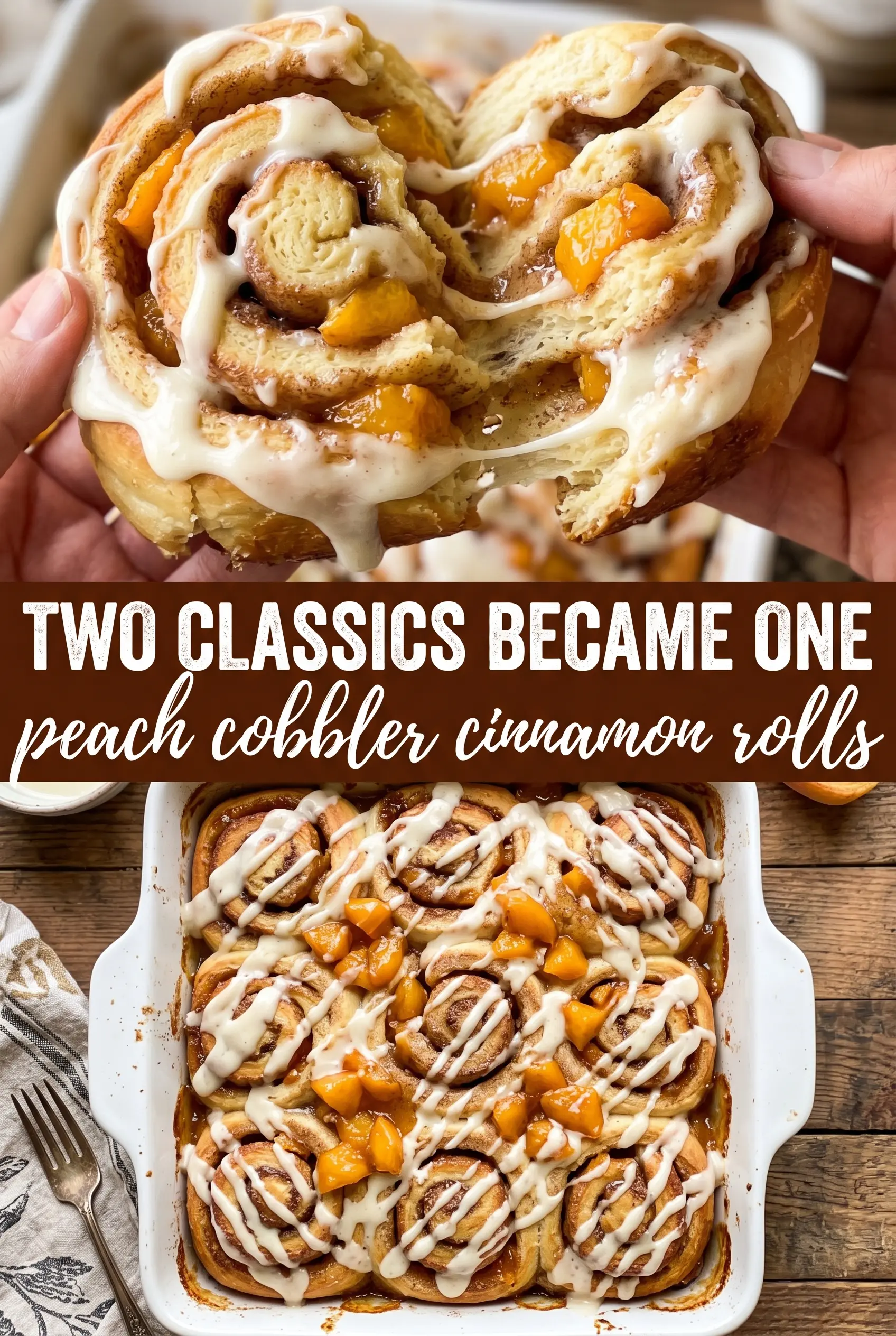
- Roll the dough tightly into a log and cut into 9 rolls. Visual cue: each cut roll should show a spiral with visible peach jam layers.
- Place the rolls in a greased 9x13 pan, cover, and let rise for 30 minutes. Visual cue: rolls should look puffed and touching or nearly touching in the pan.
- Bake at 375°F for 25-30 minutes until golden. Visual cue: tops should be deeply golden and the swirls should look set with bubbling around the edges.
- Beat the softened cream cheese, powdered sugar, peach jam, and milk until smooth, then drizzle generously over warm rolls. Visual cue: glaze should flow in thin ribbons and slightly melt into the ridges of the swirls.