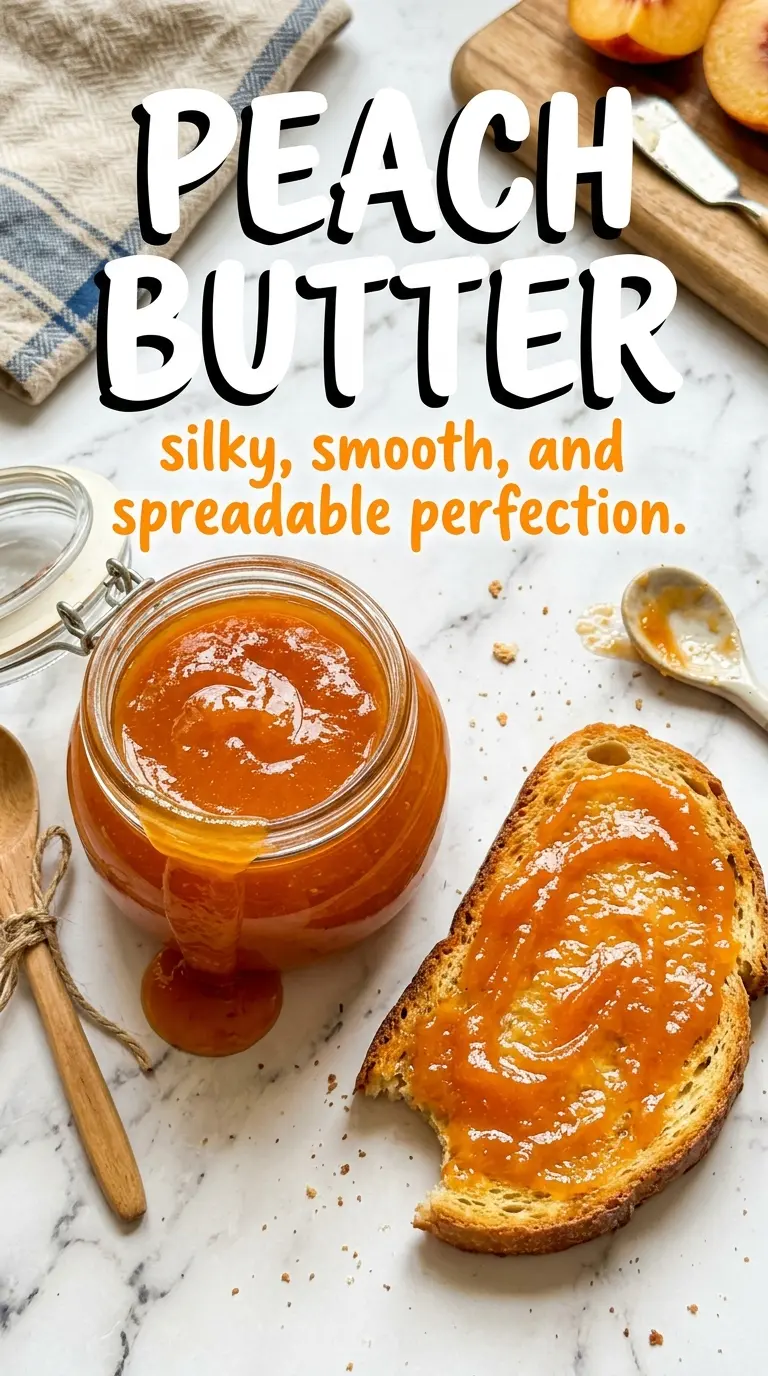
Silky peach butter has a way of turning a pile of ripe fruit into something that tastes cooked down to the very center of summer. It’s thick, glossy, and deeply peachy, with enough body to sit on toast in a soft mound instead of running off the sides. The long simmer is what gives it that concentrated, almost caramelized sweetness, and the cinnamon quietly rounds out the fruit instead of overpowering it.
What makes this version work is balance. A little lemon juice keeps the sweetness from going flat, brown sugar adds a deeper note than white sugar alone, and the peaches are blended after they’ve softened so the final texture is smooth instead of jammy. The slow reduction does the heavy lifting here; that’s where the spread turns from loose purée into a spoonable fruit butter with that amber color and velvety finish.
Below, I’ve included the small details that matter most: how thick it should get before you stop cooking, what to do if your peaches aren’t very sweet, and a few easy ways to serve or store it once the jars are filled.
I cooked mine down a little longer than the recipe said, and it set up perfectly. The texture was smooth enough to spread thinly, but still thick enough to stay on my toast without sliding off.
Love how this peach butter turns glossy and thick? Save it to Pinterest for the next time you want a smooth homemade spread with warm cinnamon depth.
The Quiet Trick Behind Smooth Peach Butter: Cook the Fruit First, Blend It Second
The biggest mistake with fruit butter is chasing thickness before the peaches have broken down. If you start blending too early, you end up with a loose, uneven purée that takes longer to reduce and can scorch before it ever turns silky. Let the peaches soften first. They should slump apart easily when stirred, with very little resistance from the pieces.
Once the fruit is soft, the blender does the texture work in seconds. That smooth base matters because peach butter is all about concentration, not chunks. The long second simmer is where the water cooks off and the sugars deepen, so patience here is part of the recipe, not a delay.
What Each Ingredient Is Doing in This Peach Butter
- Peaches — Fresh, ripe peaches give the butter its color and perfume. Slightly soft fruit works fine, but very underripe peaches will taste flat and need more sugar. If your peaches are especially juicy, expect the simmer to take a little longer.
- Granulated sugar — This lifts the natural peach flavor and helps the butter cook down with a smooth, glossy finish. You can start with less if your peaches are already sweet, then taste near the end and adjust.
- Brown sugar — This brings the deeper, almost caramel note that makes peach butter taste cooked and rounded instead of one-note sweet. Light or dark brown sugar both work; dark brown gives a stronger molasses edge.
- Lemon juice — The acid keeps the fruit butter bright and helps balance the sweetness after a long cook. Bottled lemon juice works here if that’s what you have, since the amount is small and used for balance rather than fresh flavor.
- Cinnamon, nutmeg, and vanilla — These are the finishing notes, not the main event. Add them after blending so the spices stay warm and distinct instead of disappearing into the fruit as it cooks.
The Part That Decides the Texture: Reduction, Not Guesswork
Softening the Peaches
Cook the peaches with both sugars and lemon juice until they collapse into a thick, bubbling mash. Stir often so the bottom doesn’t catch, especially once the juices start to thicken. If the pan looks dry before the fruit is soft, lower the heat slightly instead of adding extra liquid. You want concentrated peach flavor, not a thin sauce that has to cook off later.
Blending to a Smooth Base
Blend the fruit until it’s completely smooth before adding the spices. Any little chunks left now will stay in the finished butter, and they also make it harder to judge the final thickness. If you’re using a countertop blender, let the purée cool for a minute first and work in batches so it doesn’t splatter. A silky base is what gives this its spreadable, jam-like finish.
Cooking It Down to Spoon-Standing Thickness
Return the purée to the pan with the cinnamon, nutmeg, and vanilla, then simmer low and slow. The mixture should bubble lazily, not boil hard. Stir frequently and scrape the corners of the pan, because fruit butter likes to thicken unevenly and scorch where it sits still. It’s done when a spoon dragged through the center leaves a trail that closes slowly and the butter mounds on the spoon instead of running off.
Jarring While It’s Hot
Ladle the peach butter into sterilized jars while it’s still hot and glossy. For refrigerator storage, leave a little headspace and cool the jars before sealing. If you’re water-bath canning, follow the full processing time in the recipe card so the jars seal properly. The most common mistake here is underfilling too early; the butter thickens more as it cools, so judge by texture in the pan, not by how loose it looks in the jar.
How to Adapt This Peach Butter for Different Kitchens and Different Needs
Lower-Sugar Peach Butter
Cut the granulated sugar back first, then taste after the fruit has cooked down a bit. The butter will still thicken, but it may take longer because sugar helps with both balance and body. If the peaches are naturally very sweet, you can keep the brown sugar for depth and reduce the white sugar without losing much.
Spiced Peach Butter with More Warmth
Add a pinch of cloves or allspice if you want a more autumn-leaning version. Keep the amount small, because those spices can take over fast and hide the peach. The result is darker and more aromatic, with a deeper baked-fruit feel.
Smooth, Seed-Free Peach Butter for Gifting
If you want an especially polished finish, push the blended fruit through a fine mesh sieve before the final simmer. That extra step removes any fibrous bits left from the skins and gives you a more refined spread. It takes a little longer, but the texture turns almost custard-smooth.
Storage and Reheating
- Refrigerator: Store in sealed jars for up to 3 weeks. The butter will firm up as it chills, so expect a thicker texture straight from the fridge.
- Freezer: Freezes well in freezer-safe containers, leaving headspace for expansion. Thaw overnight in the refrigerator before using.
- Reheating: You usually don’t need to reheat peach butter, but if it’s too firm to spread, let a jar sit at room temperature for 10 to 15 minutes. Microwaving tends to make the edges watery before the center loosens.
Answers to the Questions Worth Asking

Peach Butter
Ingredients
Equipment
Method
- Combine peaches, granulated sugar, brown sugar, and lemon juice in a large saucepan over medium heat, stirring to coat.
- Cook for 15 minutes, stirring often, until the peaches are very soft and beginning to break down.
- Use an immersion blender or transfer the mixture to a blender and puree until completely smooth.
- Return the puree to the saucepan and stir in cinnamon, nutmeg, and vanilla extract.
- Simmer over low heat for 40–50 minutes, stirring frequently, until the butter is very thick and holds its shape on a spoon (visual cue: a ribbon sits on the spoon rather than running).
- Ladle the hot peach butter into sterilized jars, leaving appropriate headspace, then refrigerate for up to 3 weeks.
- For shelf stability, process the filled jars in a water bath for 10 minutes, then cool and store.