Deep orange-red, glossy, and full of slow-cooked pepper flavor, Nigerian chicken stew is the kind of pot that changes the whole table. The sauce clings to the chicken instead of running thin, and the oil rising to the top tells you the tomatoes and peppers have cooked long enough to lose that sharp, raw edge. Spoon it over rice and the whole dish turns into something bold, comforting, and worth making on repeat.
The step that matters most is cooking the blended tomato-pepper base until it darkens and the oil separates. That’s where the harsh, watery flavor disappears and the stew gets its deep, rounded taste. I also like to season the chicken before it ever hits the pot, because the meat carries flavor into the sauce instead of depending on the sauce alone. Frying or baking the chicken first gives you a better texture and keeps the final stew from turning greasy or pale.
Below, I’ve laid out the part that most people rush, plus the ingredient choices that make the sauce taste rich instead of flat. If you’ve ever had Nigerian chicken stew that looked right but tasted thin, the fix is in the cooking time on that pepper base.
The pepper sauce cooked down until the oil rose on top just like you said, and the chicken stayed juicy even after simmering in it. I served it with rice and my husband went back for seconds before I even sat down.
Save this Nigerian Chicken Stew for the rich tomato-pepper sauce and golden chicken that stay bold over rice.
The Part Most Chicken Stews Get Wrong: Cooking Out the Pepper Base
The mistake that ruins this dish is rushing the blended tomatoes and peppers. At first the mixture looks too loose and loud, almost like salsa, but it needs time for the raw tomato taste to cook off and for the oil to separate from the sauce. That separation is the sign you’re moving from blended vegetables to actual stew.
If you stop too early, the flavor stays sharp and the sauce stays thin. Keep the heat at medium-high and stir often, scraping the bottom so nothing catches, because the sugars in the tomatoes can burn before the moisture has fully reduced. When the sauce darkens from bright red to a deeper brick-red and the oil pools at the edges, you’re there.
- Chicken pieces on the bone — Bone-in chicken holds up better in the long simmer and gives the stew more body. Thighs and drumsticks are easiest to keep juicy, but mixed pieces work well. If you use boneless chicken, shorten the simmer so it doesn’t dry out.
- Plum tomatoes — These bring the body of the sauce. Canned plum tomatoes are dependable here because they’re less watery than many fresh tomatoes, which helps the stew cook down faster and taste fuller.
- Red bell peppers — They add sweetness and that signature deep color. Don’t swap them for green peppers unless you want a sharper, more bitter edge.
- Scotch bonnet or habanero — This is the heat and perfume of the stew. Start with less if you’re cautious; you can always serve extra heat at the table, but once it’s blended in, there’s no pulling it back.
- Oil — The oil does more than keep things from sticking. It helps fry the pepper base properly and gives the sauce that rich, glossy finish. Vegetable oil is the safest choice, though any neutral oil works.
What Each Ingredient Is Actually Doing in This Recipe

- Primary ingredient (the star) — Quality matters most. Choose the best you can find.
- Cooking medium (oil, butter, or broth) — This carries flavors and prevents dryness.
- Seasonings (salt, pepper, spices, herbs) — Layer flavors so nothing overpowers. Build depth gradually.
- Aromatics (garlic, onion, herbs) — Cook with fat to bloom flavors. Become the foundation.
- Supporting ingredients — Complement the main ingredient without overpowering it.
- Sauce or liquid (if applicable) — Brings flavors together. Balance richness with acid.
- Acid (lemon, vinegar, wine, or other) — Brightens and prevents flat-tasting results.
- Final finish (garnish, glaze, or sauce) — Prevents one-dimensional taste and adds visual appeal.
Building the Stew in the Right Order
Seasoning the Chicken First
Grated onion, thyme, curry powder, bouillon, salt, and pepper need time to sit on the chicken before cooking. Thirty minutes is enough to pull the flavor into the surface and get past that flat, just-seasoned taste. The grated onion matters because it melts into the marinade instead of sitting in chunks, so the seasoning clings more evenly. If the chicken looks wet after marinating, that’s fine — the onion and spices should form a loose paste.
Getting Color on the Chicken
Fry or oven-bake the chicken until it’s golden and mostly cooked through. You’re not trying to finish it all the way here; you’re building flavor and keeping the meat from going soft once it hits the stew. The outside should pick up color, and the juices should run clearer, not raw and pink. If you overcrowd the pan while frying, the chicken steams instead of browns, so work in batches.
Cooking the Pepper Sauce Down Hard
Heat the oil, add the blended mixture, and let it fry long enough for the watery edge to disappear. This is the longest part of the recipe, and it’s the part people quit too soon. Stir often, then more often as it thickens, because once the sauce starts to reduce, it can catch at the bottom quickly. When the stew looks darker, thicker, and the oil rises to the top, it’s ready for the chicken.
Finishing the Simmer
Add the fried chicken and turn it through the sauce until every piece is coated. Let it simmer long enough for the chicken to absorb the pepper base and for the sauce to settle around it, about 15 to 20 minutes. Taste at the end and adjust salt only after the sauce has reduced, because bouillon and reduction both concentrate seasoning. Serve it hot over steamed rice while the sauce is still glossy and spoonable.
How to Adjust Nigerian Chicken Stew Without Losing What Makes It Work
Milder Heat for Everyday Eating
Use one pepper instead of two, or remove the seeds before blending. You’ll still get the bright heat and aroma, just with less burn at the back of the throat. The stew should taste lively, not punishing.
Dairy-Free and Gluten-Free Without Changes
This recipe is naturally both dairy-free and gluten-free as written, which makes it easy to serve a mixed crowd. Just check your bouillon or stock powder to be sure it doesn’t contain wheat-based fillers. The rest of the ingredient list stays exactly the same.
Using Chicken Thighs Only
Thighs are forgiving and stay juicy during the simmer, so this is the easiest route if you want a softer final texture. Reduce the simmer slightly if the pieces are small, since thighs can fall apart if they stay in the sauce too long. The stew still tastes full and rich because the bones and skinless meat both contribute to the pot.
Making It Ahead for Better Flavor
This stew tastes even better the next day after the pepper base settles and the chicken has more time to soak up the sauce. Cook it fully, cool it fast, and refrigerate overnight. Reheat gently so the sauce stays smooth and the oil doesn’t separate too aggressively.
Storage and Reheating
- Refrigerator: Store in an airtight container for up to 4 days. The sauce thickens and deepens as it sits.
- Freezer: Freezes well for up to 3 months. Cool completely first, then freeze in portions so the chicken and sauce reheat evenly.
- Reheating: Warm gently on the stovetop over low heat with a splash of water if needed. High heat can make the sauce catch at the bottom before the chicken is hot through.
Questions I Get Asked About This Recipe
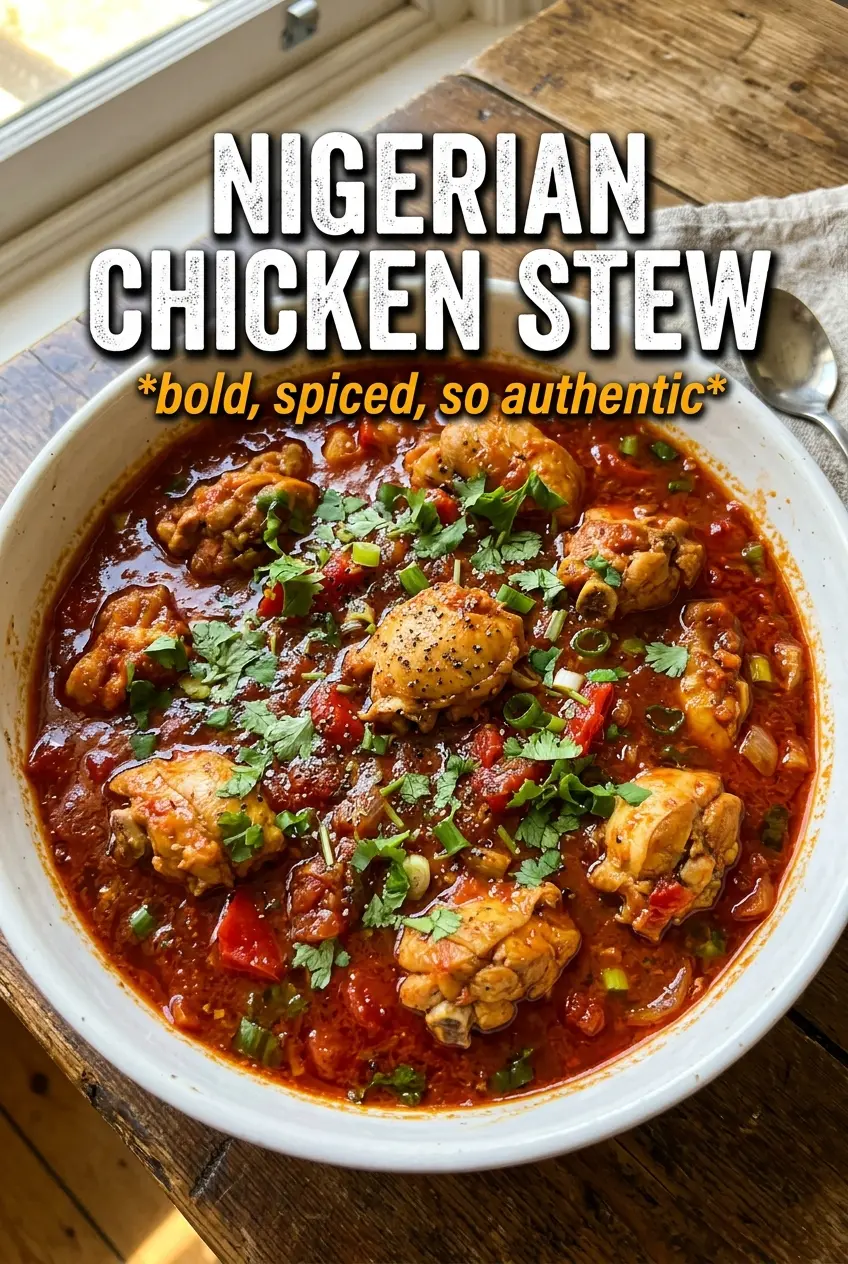
Nigerian Chicken Stew
Ingredients
Equipment
Method
- Season the chicken pieces with half the onion (grated), thyme, curry powder, bouillon, salt, and pepper. Let it marinate for 30 minutes so the flavors begin to penetrate, turning the chicken until coated.
- Fry or oven-bake the chicken until golden and mostly cooked through, using a method that gets browned edges. Set the chicken aside while you cook the sauce.
- Blend the plum tomatoes, red bell peppers, scotch bonnet, and the remaining onion until smooth. Blend until no visible pepper skins remain, scraping down the jar as needed.
- Heat 1/2 cup of the vegetable oil in a large pot over medium-high heat. Carefully fry the blended pepper sauce for 30-40 minutes, stirring frequently until the sauce darkens and oil floats on top.
- Add the fried chicken to the pot and stir until coated in the sauce. Simmer for 15-20 minutes so the chicken finishes cooking and absorbs the deep tomato-pepper flavor.
- Taste and adjust seasoning with salt and pepper as needed. Serve hot over steamed rice and garnish with fresh parsley.