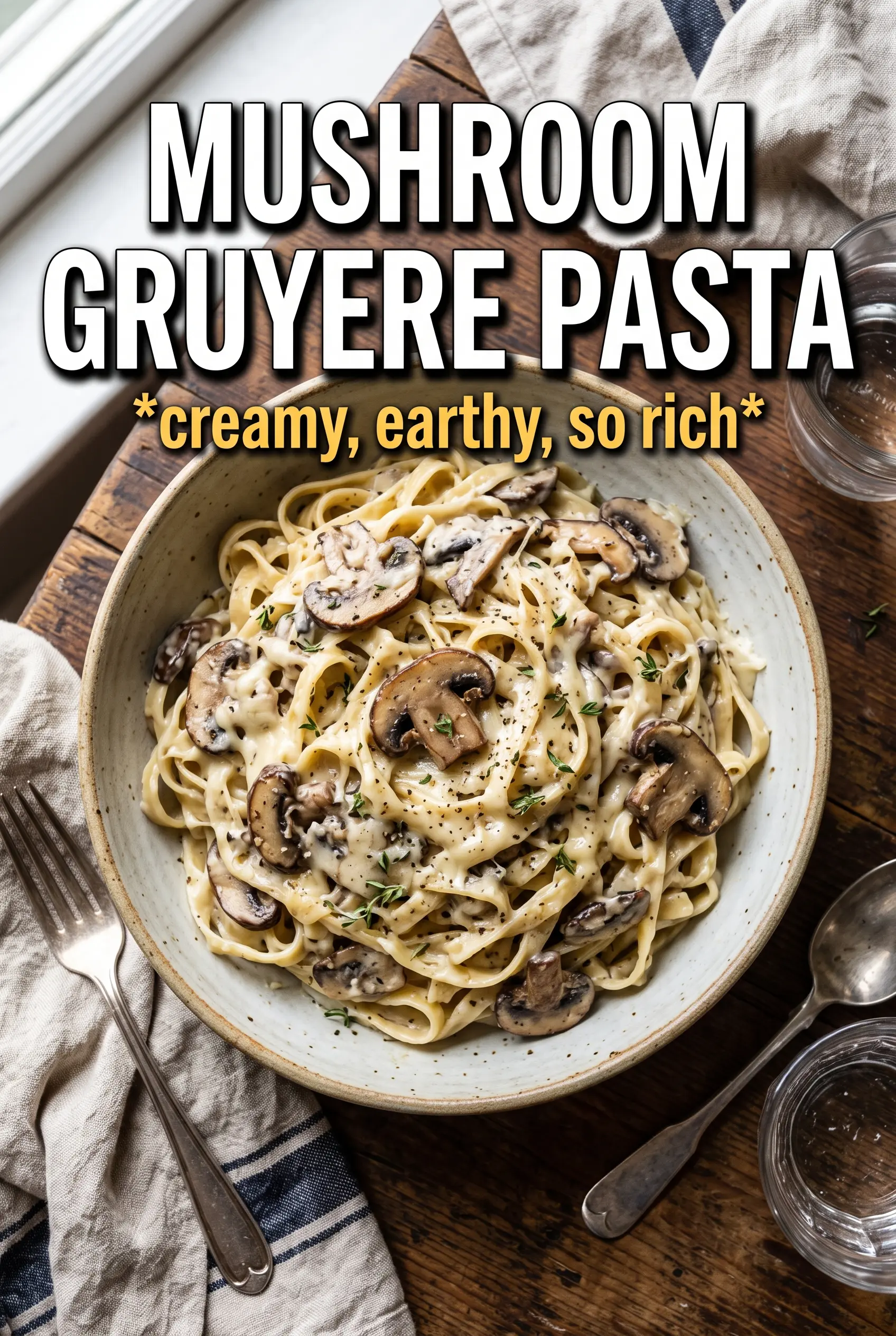
Deeply browned mushrooms, a silky Gruyere sauce, and a pile of pasta that clings to every bite make this mushroom Gruyere pasta the kind of dinner that disappears fast. The mushrooms stay meaty instead of soggy, the sauce turns glossy without feeling heavy, and the thyme gives the whole dish that French bistro feeling without making it fussy.
What makes this version work is the order. The mushrooms need enough heat to actually brown before anything else goes in, and that means leaving them alone long enough to lose their moisture and take on color. Once the wine goes in, it lifts all those browned bits from the pan, and the cream, broth, and Gruyere build a sauce that tastes layered instead of flat. The pasta water matters too; it loosens the sauce just enough so it coats the noodles instead of sitting at the bottom of the bowl.
Below, I’ll walk through the parts that matter most: how to get the mushrooms properly golden, how to keep the sauce smooth, and what to change if you want to make it a little lighter or fully vegetarian.
The mushrooms browned instead of steaming, and the Gruyere melted into a smooth sauce that coated every piece of rigatoni. I added a splash of extra pasta water at the end and it turned out perfect.
Save this mushroom Gruyere pasta for the night you want a silky, wine-kissed sauce and deeply browned mushrooms without a lot of cleanup.
The Mistake That Keeps Mushrooms Pale and the Sauce Thin
The biggest trap in a mushroom pasta like this is crowding the pan. Mushrooms give off a lot of water before they brown, and if they’re piled on top of each other they steam first and sear later, which leaves you with soft, gray mushrooms instead of the deep, nutty flavor this dish needs. A hot skillet and a little patience fix that problem fast.
Another thing that matters here is when the dairy goes in. Once the wine has reduced and the pan is scraped clean, the cream and broth should simmer gently, not boil hard. Gruyere melts smoothly when the heat is moderate; if the pan is too hot, the sauce can turn grainy or separate around the edges. Keep the heat steady and let the cheese melt in before tossing in the pasta.
What Each Ingredient Is Doing in the Pan
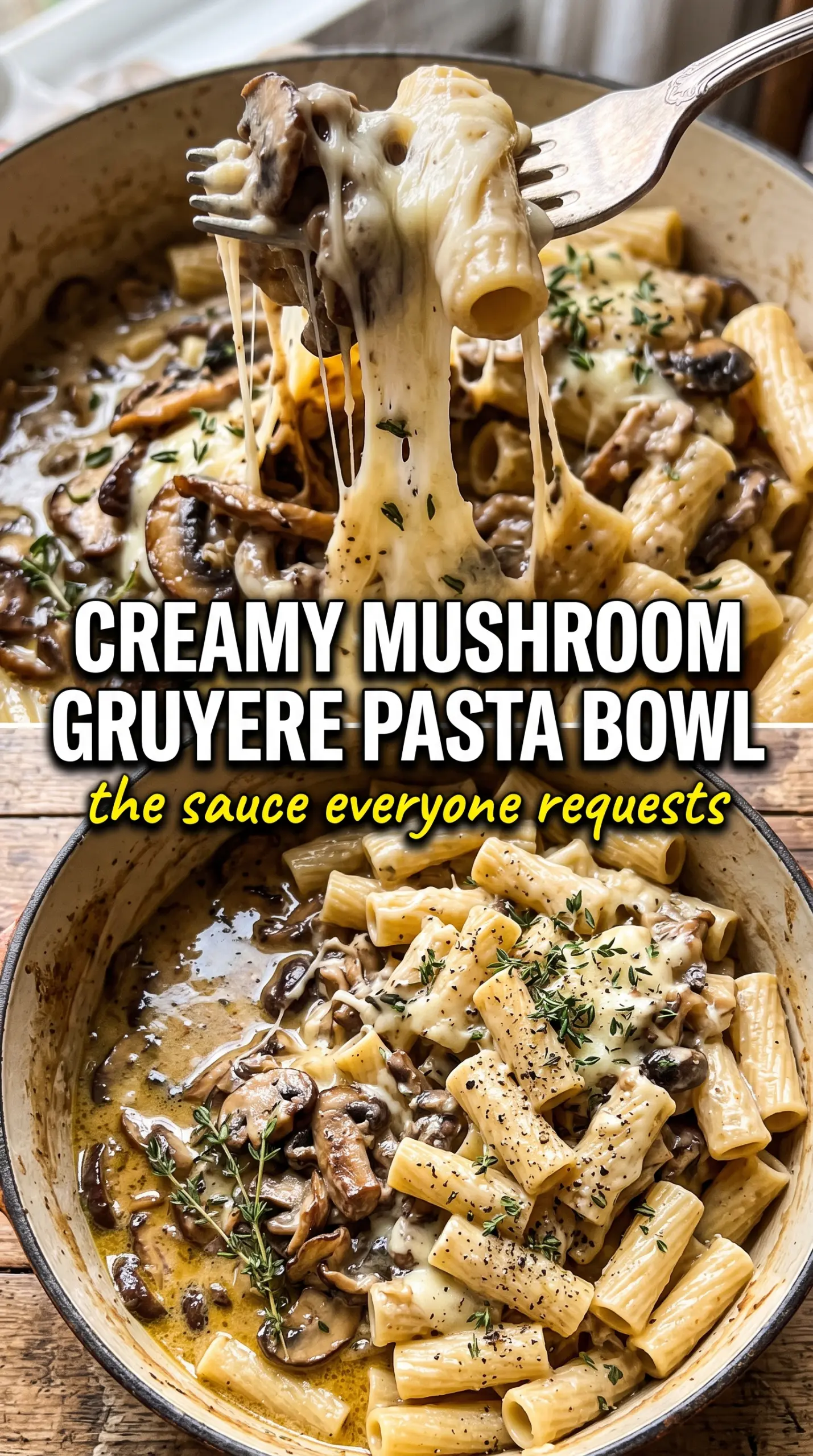
- Mixed mushrooms — Using a blend of cremini, shiitake, and oyster mushrooms gives you better texture and depth than one type alone. Cremini bring body, shiitake add a savory edge, and oyster mushrooms stay a little tender and delicate. If you only have cremini, the dish still works, but you lose some of that layered mushroom flavor.
- Gruyere — This is the cheese that makes the sauce taste nutty and French without becoming heavy. It melts smoothly, but shred it yourself if you can; pre-shredded cheese often carries anti-caking starch that can make the sauce less silky. If Gruyere is out of reach, Swiss is the closest swap, though it tastes a little milder.
- Dry white wine — The wine is there to deglaze the pan and bring brightness through the cream. Pick something crisp and dry, not sweet, because the sweetness can make the sauce taste flat. If you don’t cook with wine, use a splash more broth plus a teaspoon of lemon juice at the end to replace some of that lift.
- Heavy cream and pasta water — Cream gives the sauce body, but pasta water is what helps it cling to the pasta. The starch in the water turns the sauce glossy and keeps it from feeling thick and heavy. Save more than you think you’ll need, because a splash at the end can pull the whole dish together.
- Shallot, garlic, and thyme — Shallot adds sweetness, garlic adds bite, and thyme gives the sauce its savory backbone. Add them after the mushrooms have browned so they don’t burn in the pan. Fresh thyme tastes cleaner here than dried, but if dried is all you have, use about one-third as much.
Building the Sauce Without Losing the Mushroom Flavor
Letting the Mushrooms Brown First
Melt the butter in a large skillet, then add the mushrooms in an even layer and leave them alone for 4 to 5 minutes. You want the edges to turn deep golden and the pan to smell nutty, not wet. If you stir too soon, the mushrooms release their moisture and never really brown. Once they start taking on color, stir and cook a few minutes more so the remaining moisture cooks off.
Adding the Aromatics at the Right Time
Once the mushrooms have color, stir in the shallot, garlic, and thyme. Cook just until fragrant, about 2 minutes, because garlic burns fast and turns bitter if it sits in dry heat too long. At this point the pan should still have enough butter and mushroom fat to keep everything moving. If the pan looks dry, add a small knob of butter before the garlic goes in.
Deglazing and Finishing the Sauce
Pour in the white wine and scrape the bottom of the skillet with a wooden spoon. Those browned bits are concentrated mushroom flavor, and they need to dissolve into the sauce. Let the wine simmer until it smells less sharp and has reduced a bit, then stir in the cream and broth and cook gently for about 5 minutes. Once the sauce is slightly thickened, add the Gruyere off the hottest part of the burner and stir until smooth before tossing in the pasta with a little reserved water.
Three Smart Ways to Adjust This Pasta
Make it gluten-free with the right pasta
Use a sturdy gluten-free pasta shape that can handle a rich sauce, then undercook it by a minute or two so it doesn’t soften too much when tossed with the sauce. Gluten-free pasta can turn mushy fast if it sits in the pan too long, so add the sauce and serve right away.
Swap in vegetable broth for a vegetarian version
Vegetable broth keeps the sauce fully vegetarian without losing body. Choose a broth with real savory depth, not something too salty or thin, because it becomes part of the sauce rather than just a cooking liquid.
Use half-and-half for a lighter sauce
Half-and-half works if you want a lighter finish, but the sauce won’t be quite as rich or stable as it is with heavy cream. Keep the heat low and give the sauce an extra minute to thicken before adding the cheese, since the lower fat content makes it a little more delicate.
Storage and Reheating
- Refrigerator: Store leftovers in an airtight container for up to 3 days. The sauce will thicken as it chills, and the pasta will absorb some of it.
- Freezer: I don’t recommend freezing this one. Cream and cheese sauces often separate after thawing, and the mushrooms lose their best texture.
- Reheating: Warm gently in a skillet over low heat with a splash of broth or water, stirring until the sauce loosens again. The common mistake is blasting it in the microwave or over high heat, which makes the sauce split and the pasta dry out.


