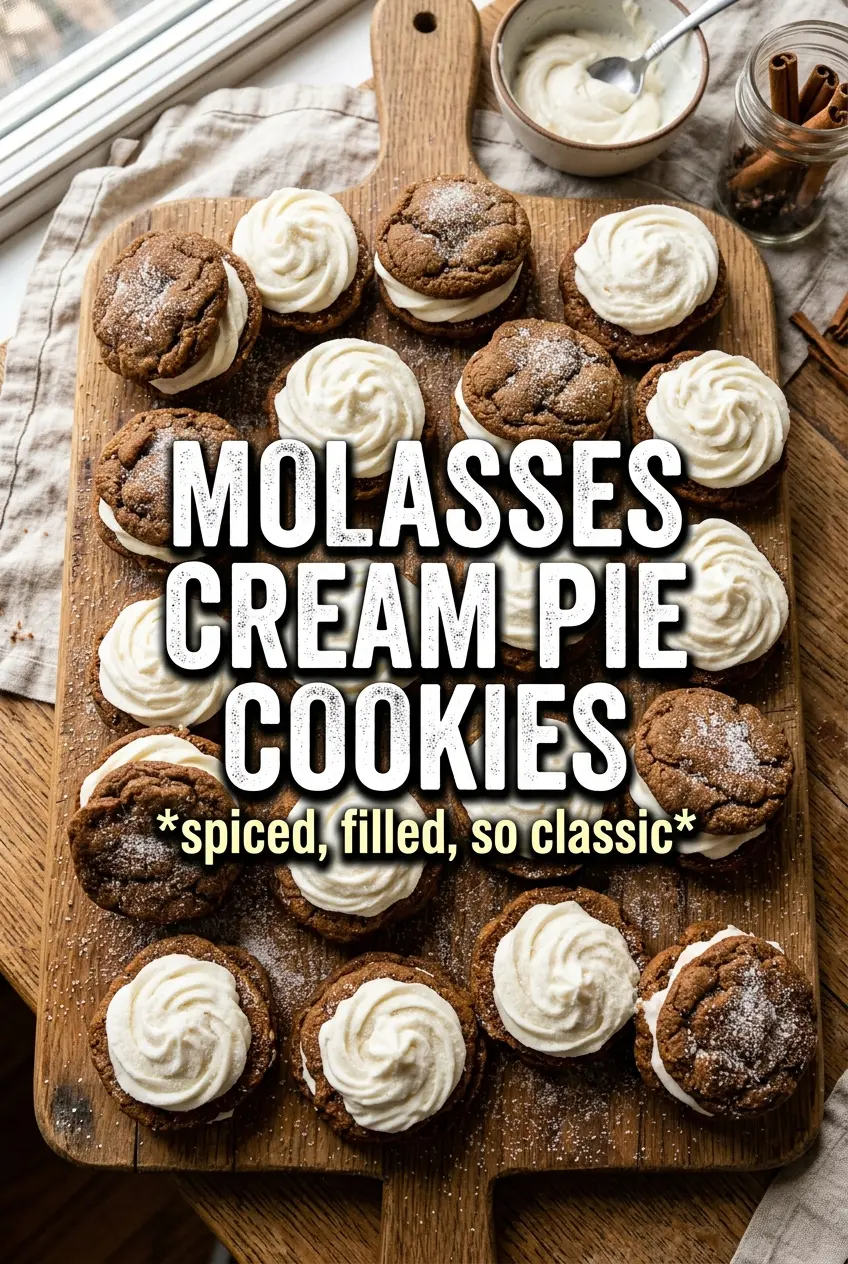
Molasses cream pie cookies land right in that sweet spot between soft spice cookie and nostalgic sandwich treat. The cookies bake up thick and tender with crisp-edged bottoms, then the vanilla cream filling turns the whole thing into something halfway between a cookie and a slice of cream pie. That contrast is what makes them memorable: deep, dark molasses on the outside, plush and sweet in the center.
This version gets its character from the spice blend. Cinnamon and ginger do the obvious work, but cloves, allspice, and just a little black pepper give the molasses a sharper edge so the cookies taste warm instead of flat. Brown sugar keeps the crumb soft, and the dough is mixed just enough to hold together without turning bready. The filling matters too. Cream cheese keeps it from being cloying, while marshmallow creme gives it that fluffy, old-fashioned pie filling feel that holds its shape between two soft cookies.
Below, I’ve included the exact points that matter most: how to keep the cookies soft, how to make the filling pipeable without making it stiff, and a few swaps that still keep the texture on track.
The cookies stayed soft after cooling and the filling tasted like vanilla pie cream, not just sweet frosting. I paired them the next day and the spice in the cookie had deepened even more.
Save these molasses cream pie cookies for when you want a soft spiced cookie with a fluffy vanilla filling and real pie-shop charm.
The Trick to Keeping Molasses Cookies Soft Instead of Dry
Molasses cookies can go dry fast if they’re baked like a standard drop cookie. The dough needs enough structure to hold the sandwich filling, but the center should still look a little underdone when they come out of the oven. That residual heat finishes the bake while the cookies stay tender instead of turning cakey.
The other thing that matters is spacing and size. Two-tablespoon portions give you cookies that are thick enough to sandwich without cracking, and they bake evenly in the 10- to 12-minute window. If the dough balls are too small, they’ll overbake before the centers stay soft. If they’re too large, the edges will set before the middle has a chance to stay plush.
- Molasses — Use regular unsulphured molasses here. Blackstrap is too bitter and will overpower the spices instead of supporting them.
- Brown sugar — Packed brown sugar keeps the crumb moist and gives the cookies that deep caramel note that works with the molasses.
- Butter — Softened butter creams properly with the sugar, which helps the cookies spread just enough without thinning out.
- Baking soda — This reacts with the molasses and gives the cookies their lift. If it’s old, the cookies bake up dense and flat.
What Each Ingredient Is Actually Doing in the Filling

- Cream cheese — This keeps the filling from tasting like straight frosting. It adds just enough tang to balance the sweetness and helps the filling hold its shape.
- Marshmallow creme — This is what gives the filling that fluffy, pie-cream texture. A simple buttercream won’t taste the same or sit as light between the cookies.
- Powdered sugar — It thickens the filling without grittiness. Add it gradually so the mixture stays smooth instead of turning pasty.
- Vanilla and cinnamon — Vanilla rounds out the filling, and a little cinnamon echoes the spice in the cookies without making the center taste like another cookie layer.
Building the Cookies and Filling So They Sandwich Cleanly
Creaming the Base
Beat the butter and brown sugar until the mixture looks lighter in color and a little fluffy. That step traps air, which helps the cookies stay tender. Add the egg, molasses, and vanilla after the butter and sugar are combined so the mixture emulsifies smoothly instead of looking curdled. If the batter looks broken for a moment, keep going; it comes back once the dry ingredients are in.
Mixing the Spiced Dough
Stir in the flour, baking soda, spices, and salt just until no dry streaks remain. Overmixing here tightens the dough and makes the cookies tougher than they should be. The dough should be soft and scoopable, not sticky enough to slump into a puddle. If it feels loose, chill it for 15 minutes before scooping.
Baking for Soft Centers
Shape the dough into two-tablespoon ovals and bake at 350°F for 10 to 12 minutes. Look for set edges and centers that still look slightly puffed and soft. They’ll finish on the hot pan as they cool. If you wait for the tops to look fully dry in the oven, you’ve gone too far.
Whipping the Cream Filling
Beat the butter and cream cheese until smooth before adding the marshmallow creme, powdered sugar, vanilla, and cinnamon. The filling should turn airy and spreadable, not loose or greasy. If it looks too soft, chill it for 10 to 15 minutes before assembling. That short rest makes the filling easier to spread without squeezing out the sides.
Matching and Filling the Cookies
Pair cookies by size before filling so each sandwich looks neat and stays balanced. Spread the filling generously on one cookie, then press the second cookie on top just until the filling reaches the edge. Don’t smash them together or the filling will ooze out and the cookie tops may crack. A little pressure is enough.
Three Ways to Adjust These Cookies Without Losing the Texture
Dairy-Free Version
Use plant-based butter in both the cookies and filling, and swap in a dairy-free cream cheese that’s meant for baking. The texture will still be soft, but the filling may set a little less firmly, so chill it before assembling if it feels loose.
Gluten-Free Swap
Use a good 1:1 gluten-free baking flour blend in place of the all-purpose flour. The cookies will still be soft, but they may spread a touch less and look a little more rounded, so flatten the dough ovals slightly before baking.
Less Sweet Filling
Cut the powdered sugar back by 1/2 cup if you want the filling to lean more tangy and less sweet. The cream will still pipe or spread, but it won’t be as firm, so chill it briefly before sandwiching the cookies.
Make Ahead for Better Flavor
Bake the cookies a day ahead and fill them just before serving, or even a few hours ahead if you want the edges to soften slightly around the filling. The spices deepen overnight, and the texture turns even more tender once the cookies sit against the cream.
Storage and Reheating
- Refrigerator: Store assembled cookies in an airtight container for up to 4 days. The cookies soften a little as they sit, which actually works well with the filling.
- Freezer: Freeze the baked cookies without filling for up to 2 months. Thaw at room temperature, then fill them fresh for the best texture.
- Reheating: These don’t need reheating once assembled. If you want to soften chilled cookies slightly, let them sit at room temperature for 15 to 20 minutes instead of microwaving them, which can melt the filling and make the cookies sticky.
Answers to the Questions Worth Asking
Molasses Cream Pie Cookies
Ingredients
Equipment
Method
- Beat the softened unsalted butter and packed brown sugar until smooth. Beat in the egg, then mix in the molasses and vanilla until glossy.
- In a separate bowl, fold together the all-purpose flour, baking soda, cinnamon, ginger, cloves, allspice, black pepper, and salt. Fold the dry ingredients into the wet mixture until a thick dough forms.
- Scoop 2-tablespoon ovals of dough onto a baking sheet, spacing them evenly. Bake at 350F for 10-12 minutes, until the cookies look set at the edges but still soft in the centers.
- Let the cookies cool completely on the tray or a wire rack. Do not fill until fully cool, so the cream stays fluffy and doesn’t melt.
- Beat the softened unsalted butter and softened cream cheese until smooth. Beat in the marshmallow creme until combined, then gradually beat in the powdered sugar, vanilla, and cinnamon until very fluffy.
- Pair the cookies by size, then spread the filling generously on one cookie in each pair. Press the matching cookie on top to create sandwich cookies with a visible, thick white filling.


