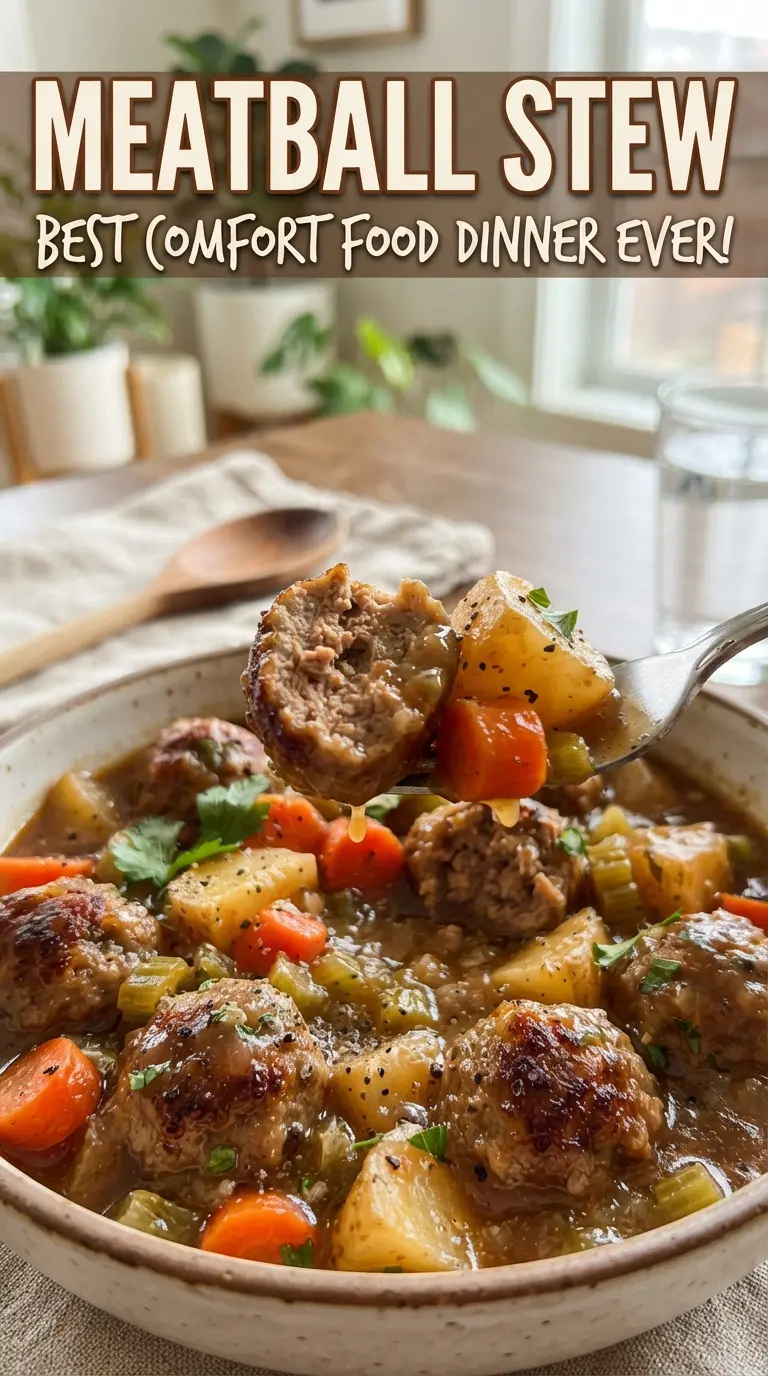
Hearty meatball stew lands in that sweet spot between comfort food and practical dinner. The meatballs stay tender, the broth turns rich and brown, and the potatoes soak up every bit of flavor as they simmer. It eats like a full meal in one bowl, which is exactly why it earns a repeat spot when you want something filling without a lot of fuss.
The key is building the stew in layers. Browning the meatballs first gives the pot a deep savory base, and that flour-coated onion mixture thickens the broth without turning it pasty. Tomato paste and Worcestershire add the kind of background depth that makes the gravy taste cooked, not just seasoned. The peas go in at the end so they stay bright and sweet instead of dull and mushy.
Below, I’ll walk you through the timing that keeps the meatballs tender, the vegetables intact, and the gravy just thick enough to cling to a spoon. There’s also a quick note on swaps if you need to work with what’s already in your kitchen.
The gravy thickened up right after I added the broth, and the meatballs stayed soft instead of falling apart. My kids asked for the potatoes and carrots extra-saucy.
Save this meatball stew for the nights when you want browned meatballs, tender potatoes, and rich gravy in one pot.
The Reason the Meatballs Stay Tender Instead of Turning Dense
The meatballs need just enough mixing to hold together, not enough to turn the texture tight and springy. Breadcrumbs and milk do the heavy lifting here, soaking into the beef and keeping the interior soft while the outside browns in the pot. If you pack them too firmly, they’ll survive the simmer, but they won’t eat like the kind of meatballs you want in a stew.
Browning them in batches matters more than it looks on paper. Crowding the pan drops the temperature and the meatballs start steaming before they can form a crust, which means less flavor in the stew and a paler finish on the meat itself. You’re looking for deep color on the outside, not full cooking yet; the simmer finishes the job later.
What Each Ingredient Is Doing in the Pot
- Ground beef — An 80/20 blend works best because it stays juicy through the simmer. Leaner beef can work, but the meatballs will eat a little firmer and drier.
- Breadcrumbs, egg, and milk — This is the binder trio that keeps the meatballs tender. If you need to substitute, crushed saltines or plain cracker crumbs can stand in for breadcrumbs, but don’t skip the milk because it softens the mixture before it ever hits the pot.
- Tomato paste and Worcestershire sauce — These two ingredients build the stew’s depth. Tomato paste gives body and a slow-cooked taste, while Worcestershire adds the savory edge that makes the broth taste fuller.
- Potatoes and carrots — Both hold up well to a covered simmer and turn the dish into a complete meal. Cut the potatoes into even cubes so they finish at the same time as the carrots instead of falling apart or staying hard in the middle.
- Frozen peas — They go in at the end because they only need a few minutes to warm through. If they simmer too long, they lose their bright color and their sweet snap.
Building the Stew So the Broth Turns Rich, Not Thin
Mixing the Meatball Base
Combine the beef, breadcrumbs, egg, milk, salt, and garlic powder just until the mixture comes together. The texture should hold its shape when rolled, but still feel soft in your hands. If the mixture looks sticky, chill it for a few minutes instead of adding more breadcrumbs, which can make the meatballs heavy.
Browning for Flavor
Warm the oil and brown the meatballs in batches until they pick up a dark golden crust on a few sides. They don’t need to be cooked through yet, and if the pan looks crowded, pause and work in smaller batches. That deep color left behind in the pan becomes part of the stew base.
Making the Gravy Base
Cook the onion until it turns soft and translucent, then sprinkle in the flour and stir for a full minute. That step takes away the raw flour taste and starts the thickening process before the broth goes in. Whisk in the broth gradually so the sauce stays smooth instead of turning lumpy.
Finishing the Simmer
Add the potatoes, carrots, and browned meatballs, then cover and simmer until the vegetables are tender and the broth has thickened slightly. If the stew looks too thick before the vegetables are done, add a splash of broth; if it looks thin near the end, uncover it for a few minutes to let the excess steam off. Stir in the peas at the very end so they stay bright and intact.
How to Adapt This for Different Kitchens and Different Appetites
Use ground turkey for a lighter stew
Ground turkey works, but it needs the milk and breadcrumbs even more than beef does because it dries out faster. Use a turkey blend with some fat if you can, and expect a milder flavor that leans more on the broth and thyme.
Make it gluten-free without losing body
Swap the breadcrumbs for gluten-free crumbs and use a gluten-free flour blend for the onion base. The stew still thickens well, but you may need an extra minute or two of simmering to get the same gravy-like texture.
Add mushrooms for a deeper, earthier pot
Sliced mushrooms can go in with the onions and cook down before the flour. They add a richer, woodsy note and help the stew taste even meatier without changing the basic method.
Storage and Reheating
- Refrigerator: Store for up to 4 days. The stew thickens as it chills, so it may look a little tighter the next day.
- Freezer: It freezes well for up to 3 months. Cool it completely first, then portion it into airtight containers, leaving a little room for expansion.
- Reheating: Reheat gently on the stove over medium-low with a splash of broth or water. Don’t boil it hard, or the potatoes can break apart and the meatballs can tighten up.
Answers to the Questions Worth Asking

Meatball Stew
Ingredients
Equipment
Method
- Mix ground beef with breadcrumbs, egg, milk, salt, and garlic powder until fully combined. Form the mixture into 1 1/2-inch meatballs and set them on a plate with clear spacing so they brown evenly.
- Heat vegetable oil in a Dutch oven over medium-high heat until shimmering. Brown the meatballs in batches, turning so they develop deep golden-brown crusts, then set aside.
- In the same Dutch oven, cook onion for 4 minutes until softened. Sprinkle in all-purpose flour and stir for 1 minute to cook out the raw flour taste.
- Whisk in beef broth, tomato paste, Worcestershire sauce, and dried thyme until smooth. Add potatoes and carrots, then scrape up any browned bits clinging to the pot.
- Return the meatballs to the pot and bring the stew to a gentle simmer. Simmer covered for 25-30 minutes until the vegetables are tender and the meatballs are cooked through.
- Stir in frozen peas and simmer uncovered for 5 minutes. Serve hot with a thick brown gravy coating the meatballs and vegetables.