Glossy, sticky, and balanced with smoke, fruit, and tang, this maple peach barbecue sauce clings to grilled meat instead of sliding off the first time it hits heat. The peaches give it a soft, jammy sweetness, while maple syrup deepens the finish in a way plain sugar never does. It tastes layered, not sugary, and that makes it the kind of sauce people keep reaching for at the table.
The key is cooking the peaches until they collapse completely before blending. That step turns the sauce from chunky fruit topping into a smooth barbecue glaze with body. The vinegar and Worcestershire keep the sweetness in check, and the smoked paprika adds a quiet smoky note that makes the sauce taste like it belongs beside ribs, chicken, or pork.
Below, you’ll find the one trick that keeps the sauce from tasting flat, plus a few smart ways to adjust the heat, sweetness, or texture depending on what you’re cooking.
The peaches broke down into a smooth sauce and the maple flavor came through without making it taste candy-sweet. I brushed it on chicken thighs and it thickened up beautifully on the grill.
Save this maple peach barbecue sauce for grilled chicken, ribs, or a sticky dipping sauce that starts with fresh peaches and ends with a smoky glaze.
The Reason This Sauce Thickens Without Turning Gluey
Fruit-based barbecue sauce fails when the pan is rushed. The peaches need time to break down and release their moisture before the sauce can tighten. If you pull it too early, you’ll get a thin, sharp sauce that tastes like ketchup with fruit in it. If you boil it hard the whole time, the sugars can turn harsh and the edges of the pan can scorch before the center is even close to finished.
Low-to-medium simmering gives the fruit time to soften and the maple syrup time to mellow into the base. The sauce should bubble gently, not aggressively, and you’ll know it’s ready for blending when the peach pieces look soft and almost dissolved. After blending, that extra five-minute simmer matters because it removes the last raw edge and helps the sauce settle into a glossy, spoon-coating consistency.
What Each Ingredient Is Actually Doing in This Sauce
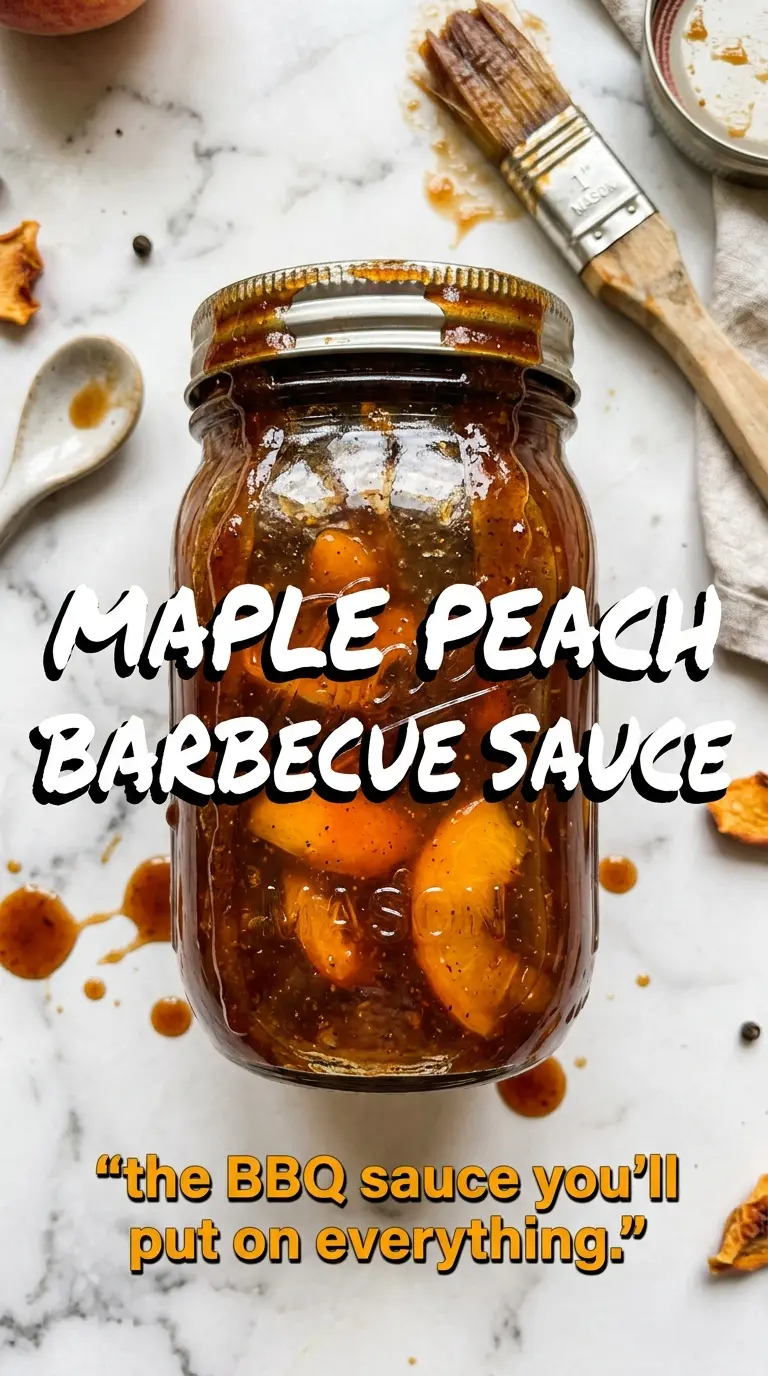
- Peaches — Ripe peaches give the sauce its body and natural fruit sweetness. Underripe peaches stay fibrous and tart, so use fruit that smells fragrant and yields slightly when pressed. If peaches aren’t in season, thawed frozen peaches work well and save you the peeling step.
- Pure maple syrup — This adds a deeper sweetness than sugar alone and gives the sauce a rounder finish. Use real maple syrup, not pancake syrup, because the flavor here is noticeable. If you need to stretch the batch, a little brown sugar can fill in, but it won’t replace the maple character.
- Ketchup and apple cider vinegar — Ketchup supplies the tomato base that makes this read as barbecue sauce, while vinegar keeps the sweetness from taking over. The vinegar also sharpens the fruit so the sauce tastes lively instead of heavy. If your peaches are especially sweet, that vinegar becomes even more important.
- Worcestershire, smoked paprika, and cayenne — These are the savory and smoky layers underneath the fruit. Worcestershire brings depth, smoked paprika gives the sauce that grilled-note aroma, and cayenne adds heat without changing the texture. If you want less heat, cut the cayenne in half rather than removing it entirely.
Building the Sauce in the Right Order
Starting the Pot Gently
Combine everything in the saucepan before turning on the heat. That lets the sugar and vinegar dissolve evenly, and it keeps the garlic from scorching in an empty pan. Stir as soon as the mixture starts to warm so the brown sugar doesn’t settle on the bottom and stick.
Cooking Down the Peaches
Bring the sauce to a gentle simmer over medium heat, then reduce the heat if the bubbles get too aggressive. The peaches should soften into a jammy base over 20 to 25 minutes. If the mixture starts splattering, your heat is too high and the sugars are moving faster than the fruit can break down.
Blending to the Right Texture
Once the peaches are completely soft, blend the sauce until smooth. An immersion blender is easiest, but a regular blender works too if you vent the lid and work in batches. A few tiny flecks of peach are fine, but if you still see large pieces, the sauce won’t brush on cleanly.
The Final Reduction
Return the blended sauce to the pan and simmer it for about five more minutes. This is where it turns glossy and a little thicker, the kind of consistency that coats a spoon and clings to ribs or chicken skin. Season with salt and pepper at the end so you can judge the balance after the sauce has reduced.
How to Adapt the Sauce When You Need a Different Finish
For a spicier barbecue sauce
Increase the cayenne to 1/2 teaspoon or add a pinch of crushed red pepper. That gives the sauce a sharper finish that works well on chicken wings or pulled pork, but it will pull attention away from the peach, so use it only if you want the heat to lead.
For a smoother, glaze-like texture
Simmer the finished sauce a few extra minutes after blending. That extra reduction gives you a thicker glaze for brushing on grilled meat during the last few minutes of cooking. If you over-reduce it, add a splash of water or vinegar to loosen it back up.
For a dairy-free and gluten-free sauce
This recipe is naturally dairy-free, and it can be gluten-free if you use a gluten-free Worcestershire sauce. That one swap matters because standard Worcestershire often contains soy sauce or other gluten sources. The rest of the ingredients already work without adjustment.
For frozen peaches instead of fresh
Use thawed sliced peaches and cook them exactly the same way. Frozen fruit softens quickly, which can actually make the sauce easier to blend, but it sometimes brings extra liquid. If the sauce looks thin near the end, give it a few more minutes in the pan rather than adding more sugar.
Storage and Reheating
- Refrigerator: Store in an airtight container for up to 2 weeks. It thickens a little as it chills, so expect a tighter texture the next day.
- Freezer: It freezes well for up to 3 months. Portion it into small containers so you can thaw only what you need, because the sauce is easiest to use in smaller batches.
- Reheating: Warm it gently on the stove over low heat or in short microwave bursts, stirring between each one. High heat can make the sugars seize up and the sauce can look overly thick before it loosens again.
Answers to the Questions Worth Asking
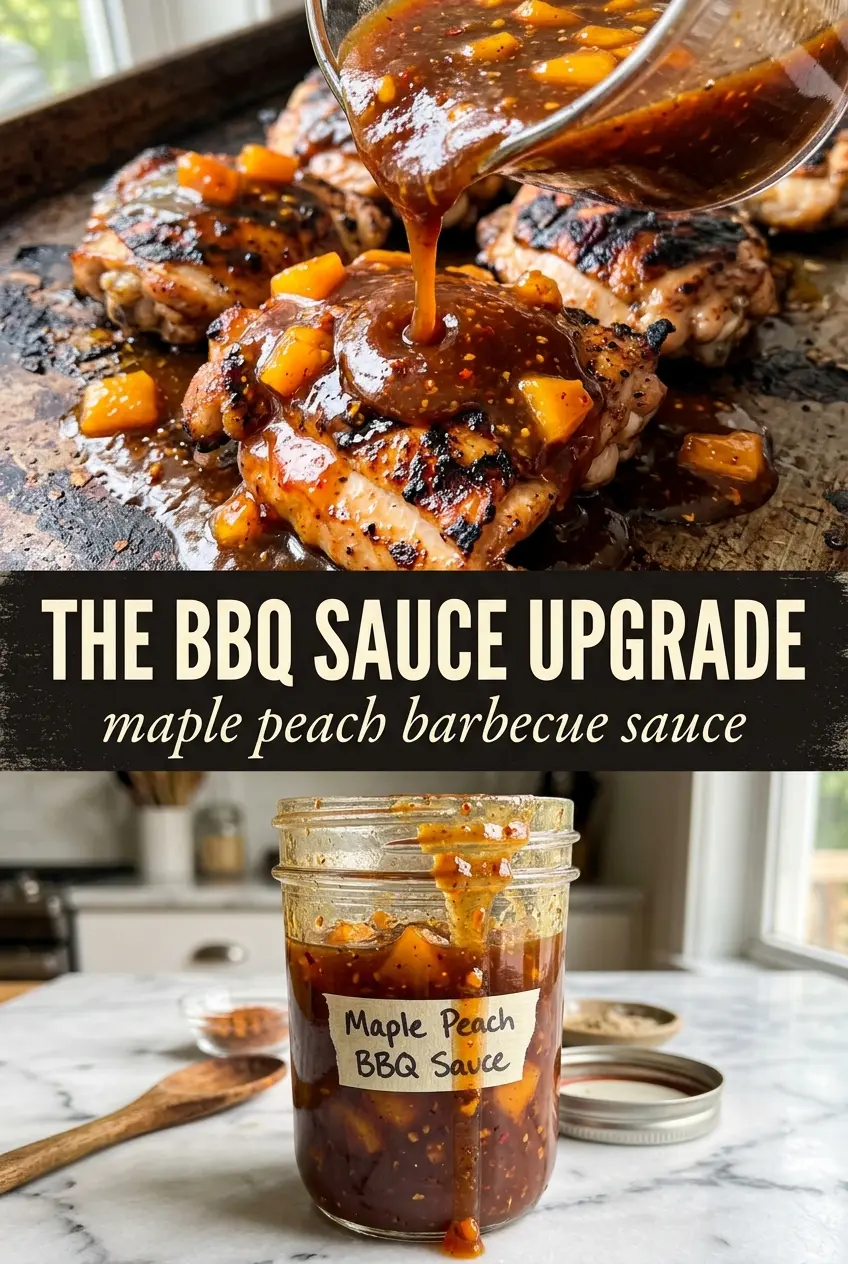
Maple Peach Barbecue Sauce
Ingredients
Equipment
Method
- Combine the diced peaches, maple syrup, ketchup, apple cider vinegar, Worcestershire sauce, brown sugar, garlic, smoked paprika, onion powder, and cayenne in a medium saucepan.
- Bring to a simmer over medium heat, stirring frequently until you see steady bubbling across the surface (about 5 minutes).
- Cook for 20-25 minutes, stirring occasionally, until the peaches have fully broken down and the sauce is thick enough to coat a spoon.
- Blend until smooth using an immersion blender or a regular blender, pulsing carefully if using a regular blender.
- Return the blended sauce to the pan and simmer 5 more minutes over medium heat, stirring until it reaches your desired thickness and looks glossy.
- Season with salt and pepper to taste.
- Cool completely, then refrigerate in a sealed container for up to 2 weeks before using.