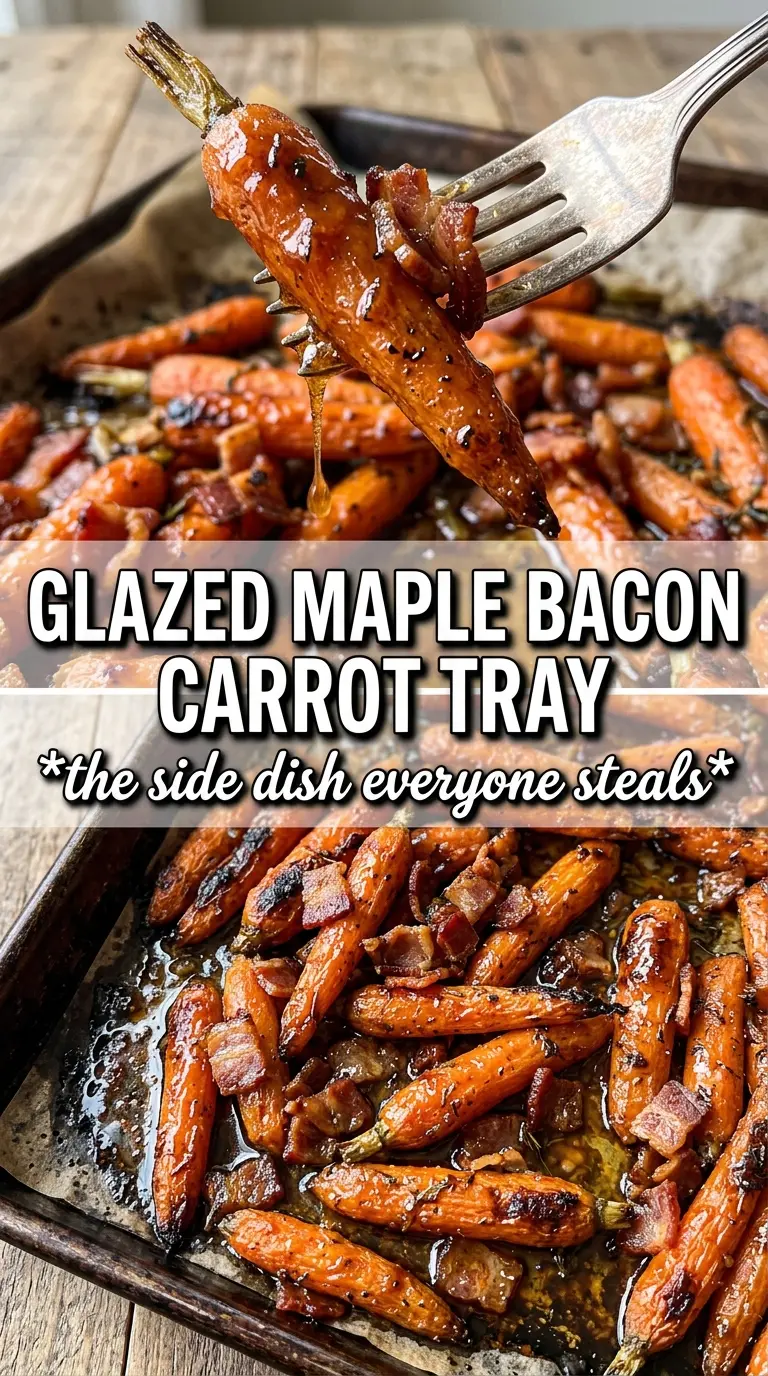
Maple bacon carrots hit that sweet-savory spot that keeps people sneaking forkfuls straight off the pan. The carrots roast until tender at the center and caramelized at the edges, while the bacon adds salty crunch and a little smoke that keeps the glaze from tasting one-note. It’s the kind of side dish that can sit next to roast chicken, pork, or a holiday spread and still steal attention.
What makes this version work is the balance in the glaze. Maple syrup brings the sticky shine, but the brown sugar deepens the caramelization and the Dijon keeps the sweetness from turning flat. Cooking the bacon first gives you rendered fat for flavor, and that little bit of bacon drippings in the pan helps the carrots brown instead of drying out. Tossing once halfway through matters too; it keeps the glaze clinging evenly instead of pooling underneath.
Below, I’ve included the part that saves this recipe from being just another sweet carrot side: how to keep the carrots glossy, not mushy, and how to swap the shape or sweetener without losing the finish.
The carrots came out glossy and tender, and the bacon stayed crisp even after I tossed everything together at the end. The Dijon in the glaze was the little thing that kept it from tasting too sweet.
Save these maple bacon carrots for the nights when you want a caramelized side dish with smoky bacon and a glossy maple glaze.
The Caramelization Problem That Ruins Most Glazed Carrots
The difference between glossy carrots and soggy carrots comes down to moisture. If the pan is crowded, the carrots steam before they brown, and the maple mixture just slides off instead of clinging. A hot oven and enough space on the sheet pan let the glaze reduce as the carrots cook, which is what gives you those sticky edges that catch the salt at the end.
Bacon changes the equation too. The rendered fat helps the carrots roast with more flavor, but using too much makes the glaze greasy and keeps it from tightening properly. You want just enough fat left in the skillet to carry the maple mixture, not enough to pool under the carrots on the pan.
- Baby carrots or halved whole carrots — Baby carrots are convenient and roast evenly, but halved whole carrots often taste a little sweeter and hold their shape better. Cut them into similar sizes so the smallest pieces don’t turn soft before the rest are tender.
- Pure maple syrup — Use the real stuff here. Pancake syrup won’t caramelize the same way and tends to taste flat once baked.
- Dijon mustard — This is the balancing ingredient. It doesn’t make the carrots taste mustardy; it cuts the sweetness and keeps the glaze from becoming cloying.
- Bacon — Thick-cut bacon works, but standard bacon crisps faster and gives you more even little bits to scatter over the top. Drain it well so the garnish stays crisp after it hits the hot carrots.
What Each Ingredient Is Actually Doing in This Recipe
- Primary ingredient (the star) — Quality matters most. Choose the best you can find.
- Cooking medium (oil, butter, or broth) — This carries flavors and prevents dryness.
- Seasonings (salt, pepper, spices, herbs) — Layer flavors so nothing overpowers. Build depth gradually.
- Aromatics (garlic, onion, herbs) — Cook with fat to bloom flavors. Become the foundation.
- Supporting ingredients — Complement the main ingredient without overpowering it.
- Sauce or liquid (if applicable) — Brings flavors together. Balance richness with acid.
- Acid (lemon, vinegar, wine, or other) — Brightens and prevents flat-tasting results.
- Final finish (garnish, glaze, or sauce) — Prevents one-dimensional taste and adds visual appeal.
Building the Glaze So It Clings Instead of Sliding Off
Crisping the Bacon First
Start with the bacon in a cold skillet and cook it over medium heat until the pieces are crisp and the fat has rendered out. If you rush this part on high heat, the bacon burns before it gives up enough fat, and you lose both flavor and the cooking fat that helps the carrots roast cleanly. Remove the bacon to a paper towel-lined plate, then leave about a tablespoon of fat in the pan.
Whisking the Maple Mixture
Stir the maple syrup, melted butter, brown sugar, Dijon, thyme, and pepper together until the sugar dissolves and the mixture looks glossy. If the butter is too hot, the glaze can separate slightly, so let it cool for a minute before whisking. The thyme should smell fragrant, not sharp; that’s your sign it’s distributed well.
Roasting Until the Edges Turn Sticky
Toss the carrots with the glaze and spread them in a single layer on the baking sheet. Roast at 400°F until the carrots are tender enough to pierce with a fork and the glaze has started to tighten around the edges, usually 25 to 30 minutes. Toss them once halfway through so the bottom side doesn’t scorch while the top stays pale.
Finishing With Bacon and Salt
Scatter the bacon over the carrots right after they come out of the oven so it warms through without losing all its crunch. Finish with flaky sea salt while the glaze is still tacky; that final salt hit wakes up the maple and makes the whole dish taste brighter. If you wait too long, the glaze sets and the salt just sits on top instead of sticking.
Three Small Changes That Still Keep the Dish Working
Use whole carrots for a more rustic side
Peel and halve them lengthwise so they roast at the same rate as the baby carrots. Whole carrots bring a little more chew and a deeper carrot flavor, but they need a few extra minutes in the oven, especially if they’re thick.
Make it dairy-free without losing the glaze
Swap the butter for olive oil or a plant-based butter. Olive oil gives a cleaner finish and a slightly lighter glaze, while plant-based butter keeps the richer mouthfeel closer to the original.
Skip the bacon and keep the sweet-savory balance
For a vegetarian version, leave out the bacon and add an extra pinch of salt plus a teaspoon of olive oil to the glaze. You’ll lose the smoky bite, so a tiny pinch of smoked paprika can help replace some of that depth without making the dish taste like barbecue.
Storage and Reheating
- Refrigerator: Store leftovers in an airtight container for up to 4 days. The carrots soften a little, and the bacon loses some crunch, but the flavor holds up well.
- Freezer: I don’t recommend freezing this one. The carrots turn soft and watery after thawing, and the glaze loses its glossy finish.
- Reheating: Warm in a 375°F oven for 10 to 12 minutes, or until hot. The oven keeps the carrots from turning mushy; the microwave heats them fast, but it also makes the glaze loose and the bacon chewy.
Answers to the Questions Worth Asking
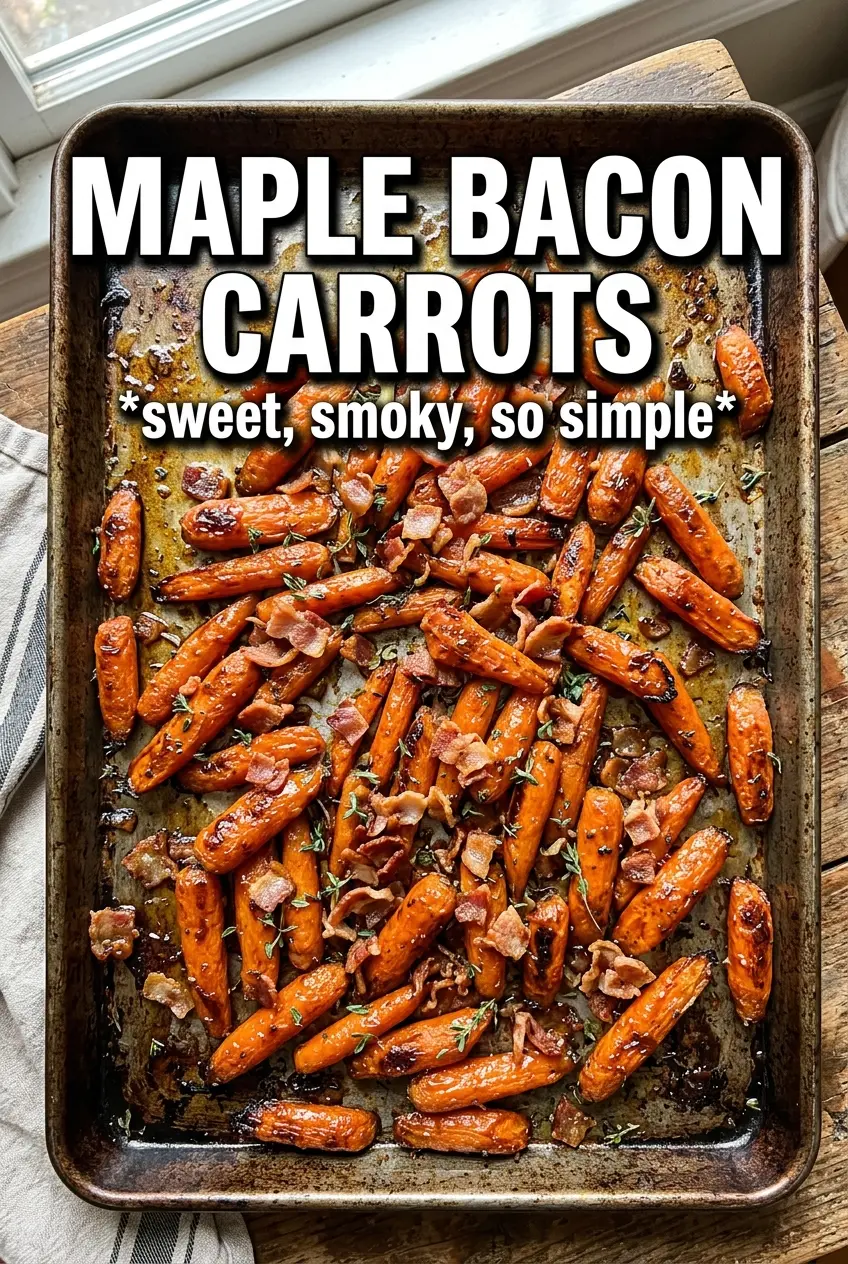
Maple Bacon Carrots
Ingredients
Equipment
Method
- Preheat the oven to 400F. In a skillet, cook the diced bacon until crispy, then remove and drain, keeping about 1 tablespoon bacon fat in the skillet.
- In the same skillet, whisk pure maple syrup, melted unsalted butter, brown sugar, Dijon mustard, fresh thyme, and black pepper until smooth.
- Toss the peeled, halved baby carrots in the maple mixture until evenly coated, then spread them in a single layer on a sheet pan. Roast for 25-30 minutes at 400F, tossing halfway, until caramelized and tender.
- Scatter the cooked crispy bacon bits over the hot carrots. Finish with flaky sea salt to serve.


