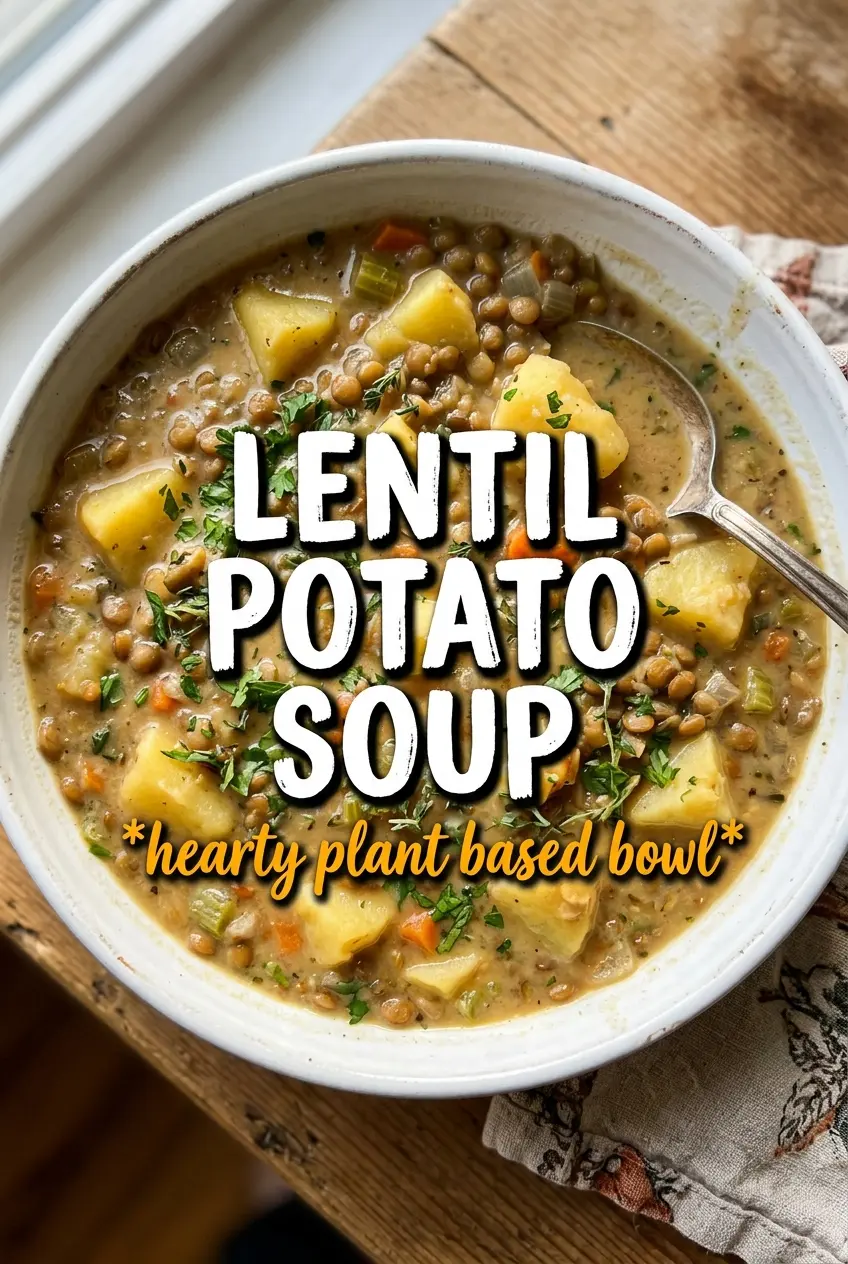
Thick, hearty lentil potato soup earns its place in the regular dinner rotation because it lands in that sweet spot between comforting and substantial. The potatoes break down just enough to give the broth body, while the lentils stay intact enough to bring texture and a clean, earthy bite. By the time it hits the bowl, it’s the kind of soup that eats like a meal, not a starter.
This version leans on a few small decisions that matter: blooming the spices in oil before the liquid goes in, using Yukon gold potatoes for a naturally creamy finish, and finishing with lemon juice to keep the whole pot from tasting flat. I also like a partial mash at the end instead of full blending. It gives you thickness without turning everything into purée.
Below, I’ve included the exact point where the soup turns from brothy to silky, plus the swaps that still keep it satisfying if you’re working with what’s in the pantry.
The potatoes softened into the broth and the lentils held their shape, so the soup came out thick without needing cream. The lemon at the end made the flavors pop.
Pin this lentil potato soup for a thick, lemony one-pot dinner with tender potatoes and spoonable lentils.
The Trick to Thick Lentil Soup Without Losing the Broth
The biggest mistake with lentil soup is rushing the texture. If you start with too little liquid or blend the whole pot too early, the soup can turn pasty instead of hearty. Here, the potatoes do a lot of the thickening work as they simmer, and the lentils release just enough starch to give the broth a fuller body without making it muddy.
The other thing that matters is timing. Spices bloom in the hot oil before the broth goes in, which wakes them up and takes away that raw, dusty edge. Then the soup needs a true simmer, not a hard boil. A vigorous boil can break the potatoes down too fast and make the lentils split before they’re tender.
- Green or brown lentils — Either one holds its shape well enough for this soup. Red lentils will work in a pinch, but they dissolve and give you a much softer, more stew-like pot.
- Yukon gold potatoes — These are the best choice because they turn creamy around the edges without falling apart completely. Russets can work, but they’re more likely to disappear into the broth.
- Smoked paprika and cumin — This pair gives the soup depth and warmth. Don’t skip the blooming step, or they’ll taste flat and a little chalky.
- Lemon juice — This is the finishing move that keeps the soup from tasting heavy. If you only have vinegar, use a small splash, but lemon gives a cleaner, brighter lift.
Building the Pot in the Right Order
Softening the vegetables first
Start with the onion and carrots in olive oil and cook them until the onion turns translucent and the carrots just begin to soften. That first five minutes builds sweetness into the base, which matters because lentils and potatoes can taste blunt if the aromatics stay undercooked. If the pot looks dry, add another small drizzle of oil rather than letting the vegetables stick.
Waking up the spices
Add the garlic only for a minute, then stir in the cumin, smoked paprika, turmeric, coriander, and cayenne while the pot is still hot. You want the spices to smell fragrant almost immediately. If they sit in the liquid from the start, they’ll still taste fine, but they won’t have the same depth. Stir constantly here so the garlic doesn’t brown and turn bitter.
Letting the lentils and potatoes finish together
Once the tomatoes, lentils, potatoes, and broth go in, bring everything to a boil only long enough to get it moving, then drop it to a steady simmer. The potatoes and lentils should both be tender at the same time, which is what makes the soup feel cohesive. If the lentils are done but the potatoes still feel firm, keep simmering and add a splash of water if the pot gets too thick.
Thickening without overblending
When the vegetables are completely tender, mash part of the soup with a spoon or use an immersion blender for just a few pulses. You’re aiming for a thick, spoonable texture with some chunks left in the bowl. If you blend it smooth, you lose the contrast that makes each bite satisfying. Finish with salt and lemon juice after thickening, since pureed soups often need a little more seasoning at the end.
What Each Ingredient Is Actually Doing in This Soup

- Vegetable or chicken broth — Use a broth you actually like sipping, because it sets the tone for the whole pot. Chicken broth gives a little more roundness; vegetable broth keeps it fully plant-based.
- Diced tomatoes — They add acidity and help the soup taste layered instead of flat. If your tomatoes are especially sharp, the lemon at the end may need to be a little lighter.
- Carrots and onion — These are the quiet backbone of the soup. They soften into the broth and give the lentils something sweet and savory to lean on.
- Garlic — Fresh garlic matters here because it gets bloomed with the spices. Jarred garlic will work, but it won’t give the same clean bite.
- Parsley — Don’t treat it as garnish only. It adds freshness that keeps the finished bowl from feeling heavy, especially if you’re serving it with bread.
How to Adapt This Pot for Your Pantry and Your Diet
Make it vegetarian or vegan
Use vegetable broth and you’re set. The soup still tastes full and savory because the lentils, tomatoes, and spices carry enough depth on their own. If your broth is weak, add an extra pinch of salt and a little more smoked paprika at the end.
Make it extra creamy without dairy
Blend a bit more of the soup, or mash a larger portion of the potatoes against the side of the pot. That gives you a naturally creamy texture without adding milk or cream, and it keeps the flavor clean instead of rich in a heavy way.
Swap the potatoes if that’s what you have
Gold potatoes are best, but russets will still work. They break down more, so the soup will be looser and a little more rustic. If you want a chunkier finish, add the russets in larger cubes and shorten the simmer slightly.
Storage and Reheating
- Refrigerator: Store in an airtight container for up to 5 days. It will thicken as it sits, which is normal for lentil and potato soup.
- Freezer: Freezes well for up to 3 months. Cool it completely first, and leave a little headspace in the container since the soup expands.
- Reheating: Warm it slowly on the stove over medium-low heat with a splash of broth or water. The common mistake is blasting it over high heat, which can make the potatoes break down too much and turn the soup gluey.
Questions I Get Asked About This Recipe
Lentil Potato Soup
Ingredients
Equipment
Method
- Heat 2 tablespoons olive oil in a large pot over medium heat. Sauté the diced onion and carrots for 5 minutes, stirring now and then, until the vegetables soften and look glossy.
- Add the minced garlic and cook for 1 minute, stirring constantly so it becomes fragrant without browning. Stir in cumin, smoked paprika, turmeric, coriander, and cayenne until the spices look evenly combined.
- Add diced tomatoes, rinsed lentils, cubed potatoes, and broth to the pot. Bring to a boil over high heat, then reduce to a simmer.
- Simmer for 30-35 minutes until the lentils and potatoes are completely tender. You should see lentils split slightly and potatoes break down easily when pressed.
- Mash a portion of the soup in the pot for a thicker consistency, or blend partially with an immersion blender. Stop once it reaches your preferred texture with still-visible chunks if desired.
- Season with salt and a squeeze of lemon juice, then taste and adjust. Garnish with fresh parsley for a fresh green finish.