Kielbasa breakfast hash earns its place in the morning rotation when you want something hearty, crisp-edged, and built in one pan. The potatoes turn golden and shattery on the outside while staying tender in the middle, the kielbasa adds smoky salt, and the eggs tie everything together with a runny yolk that turns the whole skillet into sauce.
The key is giving the potatoes time to sit against the hot skillet instead of stirring them every minute. That’s what creates the crust. Kielbasa goes in first for a quick browning, then the potatoes take over, and the onion and bell pepper come in later so they soften without steaming the potatoes into mush. A cast iron skillet helps a lot here because it holds heat steady and keeps the browning going even after you add the vegetables.
Below, I’ve included the small details that make this hash cook like it should, plus a few variations for using what you have on hand and getting the eggs exactly how you like them.
The potatoes got crisp on the bottom before I even stirred them, and the kielbasa browned up beautifully. I covered the pan for the eggs and the yolks stayed runny while the whites set, which was exactly what I wanted.
Save this kielbasa breakfast hash for the mornings when you want crispy potatoes, smoky sausage, and runny eggs in one skillet.
The Secret to Crisp Potatoes Is Leaving Them Alone
The biggest mistake with hash is treating it like a stir-fry. If you keep moving the potatoes, they release steam and soften before the cut sides ever have a chance to brown. The first stretch of cooking is all about contact with the pan. Let the diced potatoes sit in the butter and rendered sausage drippings until the bottoms turn deep golden and the edges look set.
That same rule applies once the onion and bell pepper go in. Add them after the potatoes have had time to crisp, not before, or the extra moisture will slow everything down. If your skillet starts looking dry before the potatoes finish, add a small knob of butter to keep the browning going and help the seasoning cling to the surface.
What Each Ingredient Is Doing in the Pan

- Kielbasa — This brings salt, smoke, and fat, which means it does more than add flavor; it helps season the potatoes as they cook. Any good fully cooked smoked sausage will work, but kielbasa has the right firmness and browning quality for a hash. Slice it small enough to pick up color fast, not so small that it dries out before the potatoes finish.
- Potatoes — Russet or Yukon Gold both work. Russets get fluffier inside and crisp a little more aggressively, while Yukon Golds stay a touch creamier and hold their shape better. Peel them if you want a cleaner, classic hash texture, and keep the dice even so the pieces finish at the same time.
- Butter — Butter carries the browning and gives the hash a richer finish than oil alone. If you need to cook this dairy-free, use a neutral oil with a spoonful of bacon fat or sausage drippings if you have them. You’ll lose some of the roundness, but the crisping still works.
- Red bell pepper and onion — These add sweetness and a little moisture, but they’re not the main event. Dice them small so they soften quickly and don’t steal the heat from the potatoes. If your onion pieces are too large, they stay sharp while everything else finishes, and that throws the texture off.
- Eggs — The eggs should be cooked last so the yolks stay soft and the whites set over the hot hash. Covering the skillet traps steam and finishes the tops without overcooking the bottoms. If you want firmer yolks, leave the lid on a minute or two longer, but start checking early because the carryover heat moves fast.
Building the Skillet So the Eggs Finish Right
Brown the Kielbasa First
Melt the butter in a large cast iron skillet over medium-high heat, then add the diced kielbasa. Give it a few minutes to pick up color before anything else goes in. You want the edges browned, not just warmed through, because that browned surface seasons the whole skillet. If the pan is crowded, the sausage will steam instead of sear, so use a skillet that gives everything room.
Crisp the Potatoes Without Stirring Too Soon
Add the potatoes and spread them into an even layer. Leave them alone for 5 to 7 minutes so the bottom side can crust over. When you finally stir, scrape up the browned bits and flip the pieces, then let them sit again. If the potatoes are softing before they brown, your heat is too low or the pan is too full.
Soften the Vegetables and Finish the Eggs
Stir in the onion and bell pepper and cook just until the onion loses its raw edge and the potatoes are tender. Then make four wells in the hash and crack in the eggs. Cover the skillet and cook until the whites are set and the yolks are as loose as you like, about 4 minutes for runny yolks. Season at the end so the salt doesn’t draw extra moisture from the vegetables while they’re still crisping.
Swap in breakfast sausage instead of kielbasa
Breakfast sausage gives you a softer, more seasoned hash with less smoke and a little less chew. Brown it well so it breaks into crisp bits, then keep the rest of the method the same. This swap works when you want a more classic diner-style flavor.
Make it dairy-free with oil
Use a neutral oil or avocado oil instead of butter. You’ll still get crisp potatoes, but the hash will taste a little leaner and the browning will be less rich. If you have rendered sausage fat in the pan, keep every bit of it and let that do part of the work.
Use sweet potatoes for a softer, sweeter hash
Sweet potatoes work, but they brown a little differently and won’t get as crisp as russets. Cut them a bit smaller so they cook through before the sausage over-browns. The result is sweeter and softer, with less of the classic hash crunch.
Storage and Reheating
- Refrigerator: Store the hash without the eggs for up to 4 days. The potatoes soften a little, but the flavor holds up well.
- Freezer: The potato texture turns mealy after freezing, so I don’t recommend freezing the finished hash.
- Reheating: Reheat in a skillet over medium heat with a small splash of oil until the potatoes crisp back up. The microwave will warm it, but it won’t bring back the edges, and that’s the whole point of this dish.
Questions I Get Asked About This Recipe
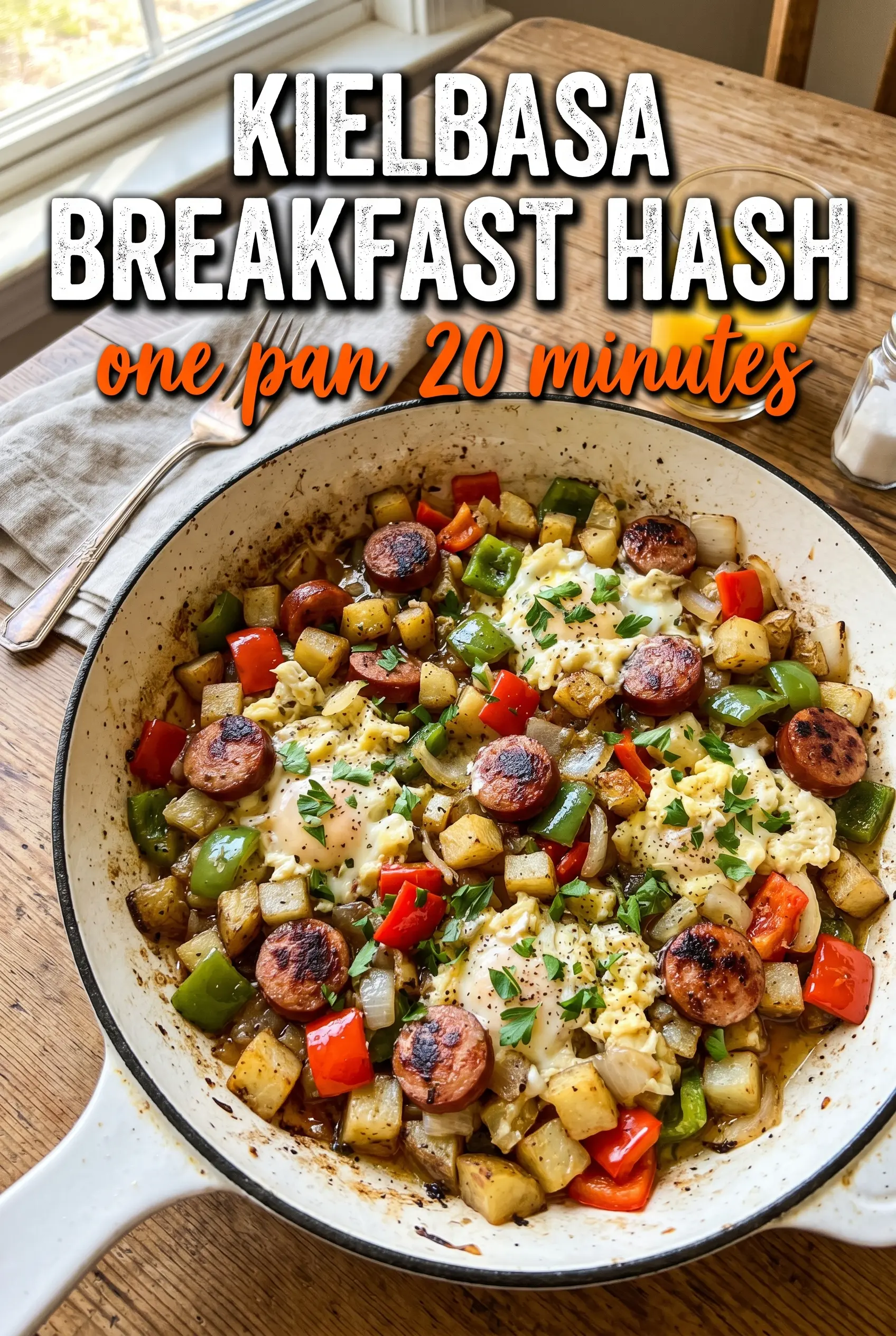
Kielbasa Breakfast Hash
Ingredients
Equipment
Method
- Melt the butter in a large cast iron skillet over medium-high heat. Add the diced kielbasa and cook for 3 minutes until it begins to brown, using a steady sizzle as the cue.
- Add the diced potatoes and cook without stirring for 5-7 minutes. Let them crisp and deepen in color on the underside before you move to the next step.
- Stir in the diced onion and diced red bell pepper, then spread everything into an even layer. Cook for another 5 minutes until the potatoes are tender and the edges are golden brown.
- Make four wells in the hash and crack an egg into each well. Nestle the yolks so they sit above the potatoes.
- Cover the skillet and cook until the eggs reach your desired doneness, about 4 minutes for runny yolks. Watch for set whites with a glossy, still-runny yolk as the cue.
- Season with salt and pepper, then garnish with fresh chives. Serve directly from the skillet while the edges stay crisp.