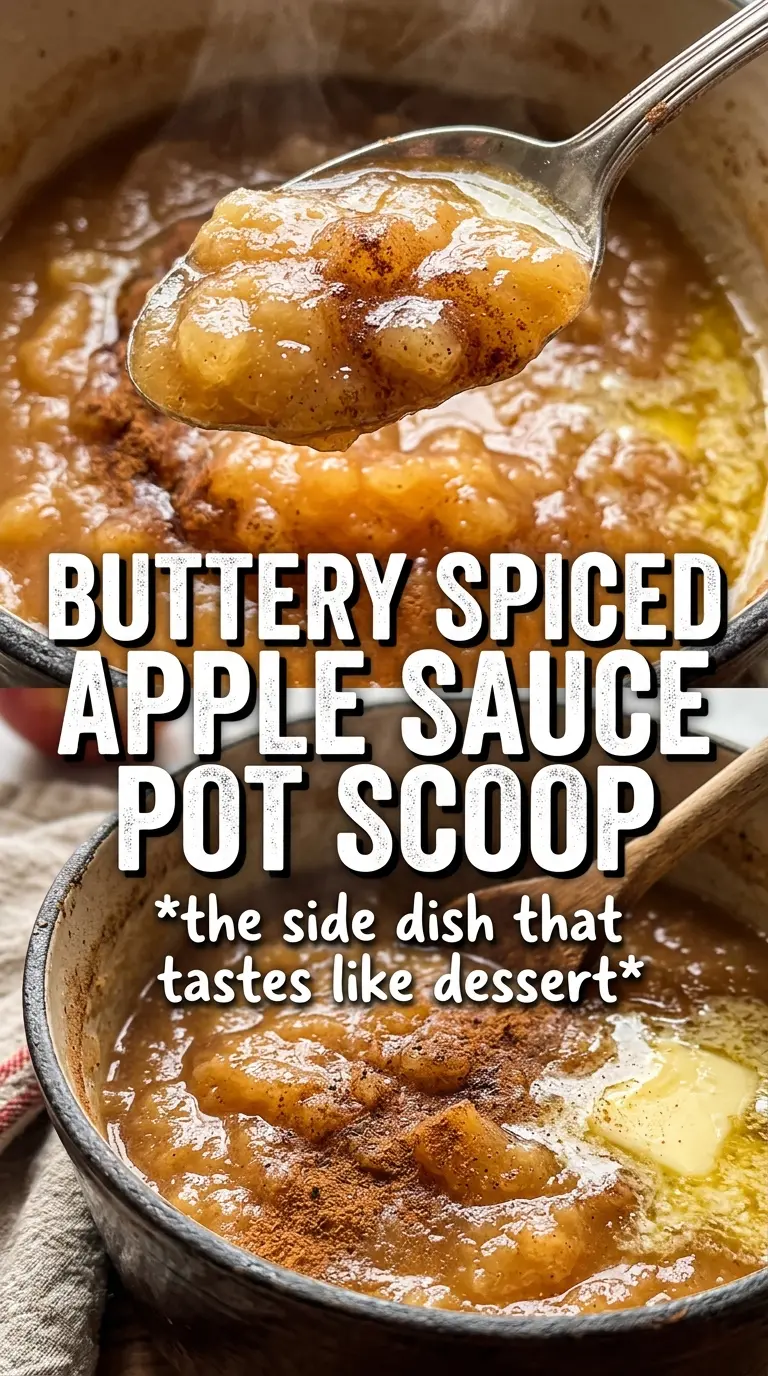
Hot buttered applesauce hits a different level from the jarred kind: warmer, silkier, and full of real apple flavor with a little brown-butter depth underneath. The butter coats the fruit as it cooks, so the apples soften into something rich and spoonable instead of tasting flat or one-note. Cinnamon and nutmeg do what they should here — they round everything out without taking over.
The trick is starting the apples in butter that’s just beginning to brown. That first minute gives the sauce a deeper, almost caramel-like edge, but you don’t want the butter too dark or it will fight the fruit. A small splash of cider or apple juice keeps the pan from scorching and helps the apples break down into a smooth base while brown sugar or maple syrup adds enough sweetness to highlight the fruit instead of burying it.
Below, I’ve included the small details that make this applesauce worth making on purpose: how to tell when the apples are soft enough, what to do if you want it completely smooth, and a few easy ways to adjust the spice or sweetness without losing that fresh-cooked apple taste.
The apples broke down into the smoothest, most buttery sauce, and the cinnamon never tasted harsh. I served it with pork chops and everyone kept spooning extra onto their plates.
Save this hot buttered applesauce for the days when you want a warm, cinnamon-scented side with a silky finish and browned butter on top.
The Part Where Brown Butter Stops the Applesauce From Tasting Flat
A lot of applesauce recipes start with water and end up tasting like soft apples that were boiled into submission. This one doesn’t. Browning the butter first gives the sauce a deeper, rounder flavor right from the beginning, and adding the apples as soon as the butter starts to take on color keeps that nutty note gentle instead of burnt. That matters because applesauce doesn’t have a lot of ingredients to hide behind.
The other thing worth paying attention to is the simmer. Once the cider, sugar, spices, and salt go in, the pot should stay at a low, steady bubble under a lid. Too much heat and the bottom catches before the apples soften through. Too little and you’ll never get that soft, spoonable texture without mashing forever.
- Apples — Honeycrisp, Fuji, and McIntosh all break down nicely, but I like a mix if I have it. Honeycrisp stays a little brighter, while McIntosh gives you that classic soft applesauce texture faster. If you use a firmer apple, just give it a few extra minutes.
- Butter — Unsalted butter lets you control the seasoning and gives the sauce its rich, glossy finish. Salted butter works in a pinch, but cut back on the added salt so the flavor stays balanced.
- Apple cider or apple juice — This is the liquid that helps the apples steam and soften without watering down the flavor. Cider gives a deeper apple taste; juice is a fine substitute if that’s what you have.
- Brown sugar or maple syrup — Brown sugar adds a little molasses depth, while maple syrup makes the sauce taste softer and more rounded. Either one works, but don’t oversweeten before the apples are fully cooked because the sweetness changes as the fruit collapses.
- Fresh nutmeg and vanilla — Fresh nutmeg has a warmer, sharper aroma than pre-ground, and vanilla goes in at the end so it doesn’t cook off. Both are finishing touches, not background noise.
What Each Ingredient Is Actually Doing in This Recipe
- Primary ingredient (the star) — Quality matters most. Choose the best you can find.
- Cooking medium (oil, butter, or broth) — This carries flavors and prevents dryness.
- Seasonings (salt, pepper, spices, herbs) — Layer flavors so nothing overpowers. Build depth gradually.
- Aromatics (garlic, onion, herbs) — Cook with fat to bloom flavors. Become the foundation.
- Supporting ingredients — Complement the main ingredient without overpowering it.
- Sauce or liquid (if applicable) — Brings flavors together. Balance richness with acid.
- Acid (lemon, vinegar, wine, or other) — Brightens and prevents flat-tasting results.
- Final finish (garnish, glaze, or sauce) — Prevents one-dimensional taste and adds visual appeal.
The 25 Minutes That Turn Apples Into Spoonable Sauce
Let the Butter Just Start to Brown
Melt the butter in a large saucepan over medium heat and keep it moving until the foam settles and the milk solids turn lightly golden. You’re looking for a nutty smell, not dark specks and smoke. The moment it starts to color, add the apples so the butter stops cooking before it turns bitter.
Build the Simmer
Stir in the cider, brown sugar or maple syrup, cinnamon, nutmeg, and salt. The apples should be coated and glossy, and the liquid should barely come up around them. Put the lid on and lower the heat so the mixture simmers gently; if it’s boiling hard, the outside of the apples will collapse before the center softens.
Cook Until the Apples Give Up Their Shape
Let everything cook for 20 to 25 minutes, stirring once or twice so nothing sticks. The apples are ready when they press apart easily with a spoon and the pot smells like warm pie filling. If there’s still a lot of liquid at the end, uncover the pan for a few minutes and let it reduce before mashing.
Mash, Blend, and Finish Warm
Mash the apples for a chunky texture or use an immersion blender for something smooth and silky. Add the vanilla after the heat is off or very low so it stays fragrant. Taste before serving; if the apples were tart, you may want another small spoonful of maple syrup, and if the sauce tastes a little dull, a pinch more salt usually wakes it up.
How to Adjust This Applesauce for Different Tables
Make It Completely Smooth
Use an immersion blender after the apples are fully tender and the pan is off the heat. Blending too soon can make the sauce thinner than you want, so wait until the fruit is soft enough to collapse with almost no pressure.
Keep It Chunky
Stop mashing while some pieces still hold their shape. That gives you a more rustic side dish with texture instead of puree, and it works especially well if you’re serving it alongside pork or spooning it over oatmeal.
Make It Dairy-Free
Swap the butter for coconut oil or a neutral plant-based butter. You’ll lose the browned-butter depth, but the apples will still cook down into a fragrant, soft sauce with the same spice profile.
Storage and Reheating
- Refrigerator: Store in an airtight container for up to 5 days. It thickens as it chills, which is normal.
- Freezer: Freezes well for up to 3 months. Cool it completely, portion it into freezer-safe containers, and leave a little room at the top for expansion.
- Reheating: Warm it gently on the stove over low heat or in short bursts in the microwave. Add a splash of water or cider if it looks too thick, and don’t let it boil hard or the texture can turn loose and watery.
Questions I Get Asked About This Recipe
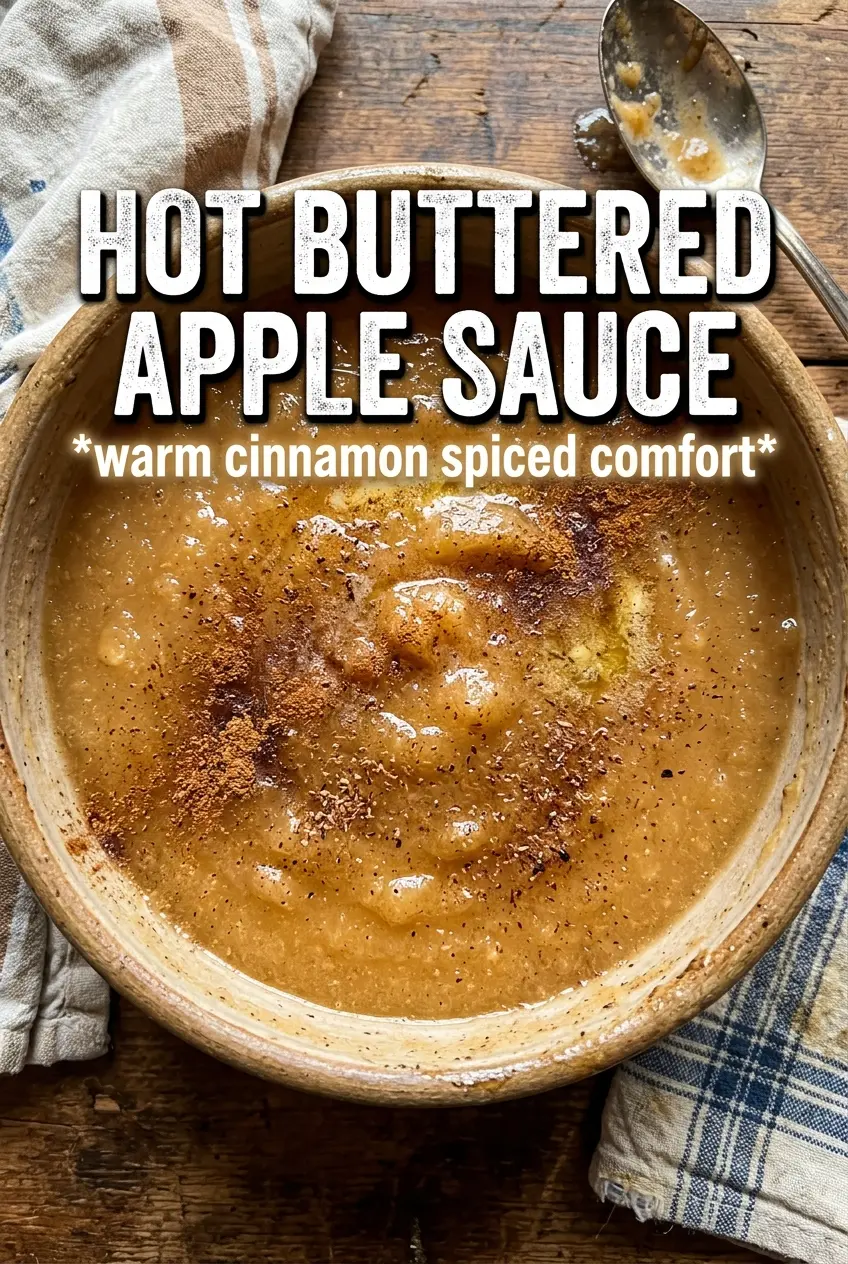
Hot Buttered Apple Sauce With Cinnamon And Nutmeg
Ingredients
Equipment
Method
- Melt the unsalted butter in a large saucepan over medium heat until it is just starting to brown, then add the apples immediately. The apples should begin to coat in the hot, browned butter right away.
- Cook over medium heat for 3-4 minutes, stirring so the apples don’t stick. You’ll see the apples slightly soften around the edges.
- Add the apple cider or apple juice, brown sugar or maple syrup, cinnamon, nutmeg, and salt. Stir until the spices dissolve and the mixture looks evenly glossy.
- Cover the pan and simmer over medium heat for 20-25 minutes, until the apples are completely soft. Check for doneness by pressing a piece—there should be no firm center.
- Mash the apples to your desired texture, chunky or smooth. For chunky applesauce, stop when most pieces are broken down but still distinct.
- For smooth applesauce, blend with an immersion blender until silky. Stop when no visible apple chunks remain and the sauce looks uniform.
- Stir in the vanilla extract and taste, then adjust sweetness if needed. The flavor should feel warm and balanced with a gentle vanilla note.
- Serve warm with an extra pat of brown butter and a dusting of cinnamon. The top should look slightly glossy as the butter melts.


