Honey roasted sweet potatoes hit that sweet spot between tender and caramelized, with edges that turn sticky and bronzed while the centers stay soft and creamy. The honey and brown sugar glaze clings to every cube, and the little hit of smoked paprika keeps the whole dish from leaning too sugary. This is the kind of side that disappears fast because it tastes rich without feeling heavy.
What makes this version work is the balance of fat, sugar, and high heat. Olive oil keeps the sweet potatoes from drying out, butter adds depth and helps the surface brown, and the oven temperature is high enough to caramelize the glaze instead of just steaming the cubes. Cutting the potatoes into even chunks matters here too; uneven pieces mean some will collapse before the others get any color.
Below, I’ve included the small details that make the biggest difference, plus a few easy ways to adjust the seasoning if you want to lean sweeter, spicier, or more savory.
The sweet potatoes came out caramelized on the edges and tender inside, and the rosemary with the smoky paprika kept the honey glaze from tasting flat. I roasted them on parchment and they still browned beautifully.
Save these honey roasted sweet potatoes for the nights when you want a caramelized, buttery side with a little smoky heat.
The Trick to Getting Honey to Caramelize Instead of Burn
The mistake with honey-glazed vegetables is starting too low and ending too late. Honey needs enough heat to reduce and cling, but not so much sugar-heavy exposure that it scorches before the sweet potatoes are tender. At 425°F, the cubes have a chance to soften first, then the glaze thickens and darkens at the edges.
- Spacing matters — if the pieces are crowded, they steam and the honey turns loose instead of sticky. Use a large sheet pan and keep them in one layer.
- Toss halfway through — this exposes new surfaces to the hot pan and gives you more browned edges instead of one caramelized side and one pale side.
- Watch the edges, not the clock — pull them when the corners look bronzed and the centers yield easily with a fork. If the cubes are very small, they can go from done to mushy fast.
What Each Ingredient Is Actually Doing in This Dish
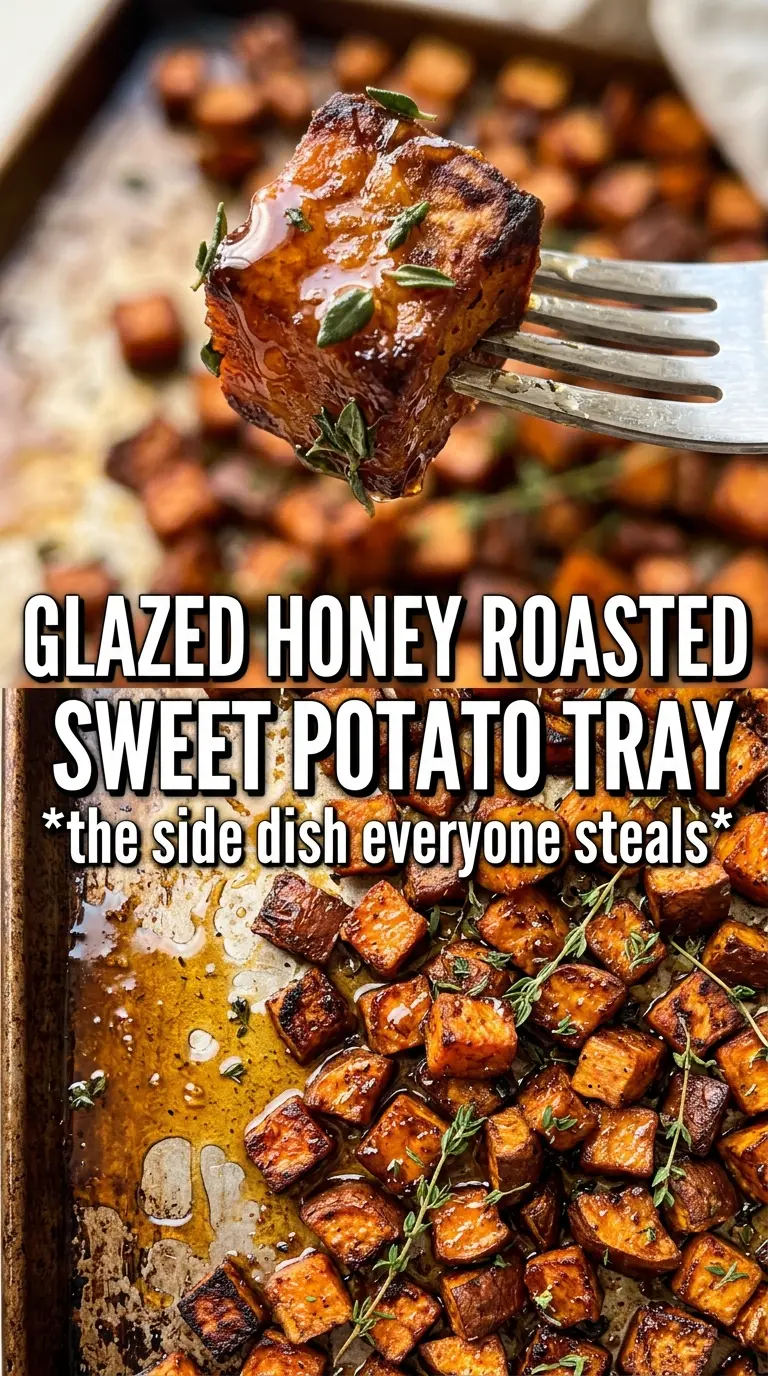
- Sweet potatoes — choose firm potatoes with smooth skins and cut them into even cubes so they roast at the same pace. The natural starch and sugar are what give you that soft center and crisping edge.
- Honey — this is the ingredient that gives the glossy finish and sticky glaze. If you swap in maple syrup, the flavor shifts earthier and the coating stays a little looser, which is still good but less classic here.
- Butter and olive oil — butter adds richness and helps the glaze taste rounder, while olive oil keeps the coating from burning too fast. You can use all olive oil if you need a dairy-free version, but the final dish will taste lighter.
- Smoked paprika and cinnamon — cinnamon brings warmth, and smoked paprika keeps the sweetness grounded. That tiny smoky note is what makes people go back for another bite.
- Fresh rosemary — chopped rosemary perfumes the whole pan and works better here than dried because it stays brighter in the heat. If you only have dried, use half as much and crush it between your fingers first.
Building the Glaze So It Clings and Browns
Coating the Cubes Evenly
Mix the sweet potatoes with the glaze until every surface looks lightly coated, not puddled. If the bowl looks wet at the bottom, the pan will too, and that extra liquid keeps the potatoes from browning. A large bowl makes this easier because you can toss without crushing the cubes.
Roasting Hot Enough for Color
Spread the potatoes on a lined baking sheet in a single layer and give them space. If they touch too much, the steam trapped between them softens the glaze before it can set. Roast until the edges are caramelized and the centers are tender when pierced with a fork, usually 30 to 35 minutes.
Finishing for Balance
Flaky salt at the end sharpens the sweetness and makes the glaze taste deeper. Fresh thyme adds a clean herbal note that cuts through the butter and honey. Add both after roasting so they stay fragrant instead of getting lost in the oven.
How to Adapt These Sweet Potatoes Without Losing the Caramelized Edge
Dairy-Free Version
Swap the butter for another tablespoon of olive oil or melted coconut oil. You’ll lose a little of the round, buttery finish, but the potatoes still caramelize well because the honey and brown sugar do the browning work.
More Savory, Less Sweet
Cut the brown sugar to 1 teaspoon and add an extra pinch of salt plus a little more smoked paprika. The glaze will still brown, but the rosemary and spice come forward instead of the candy-like finish.
Maple Syrup Swap
Use maple syrup in place of the honey for a deeper, woodsy sweetness. The glaze won’t get quite as sticky, so let the potatoes roast until the syrup has visibly thickened on the pan edges.
Storage and Reheating
- Refrigerator: Store in an airtight container for up to 4 days. The edges soften, but the flavor stays good.
- Freezer: These freeze fairly well for up to 2 months, though the texture gets softer after thawing. Freeze in a single layer first so the cubes don’t clump together.
- Reheating: Reheat on a sheet pan at 400°F until hot and the edges start to re-caramelize. The microwave works in a pinch, but it turns the glaze loose and makes the potatoes softer.
Questions I Get Asked About This Recipe
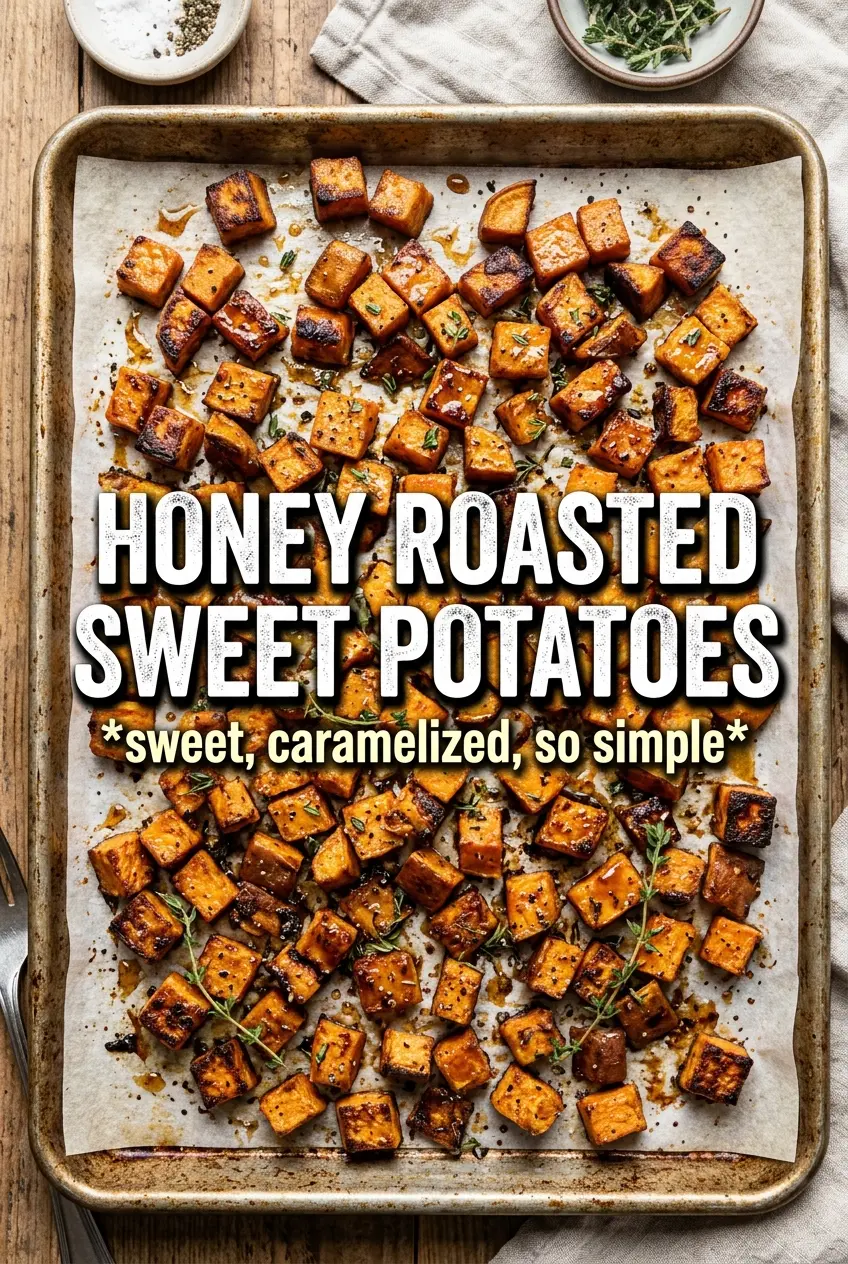
Honey Roasted Sweet Potatoes
Ingredients
Equipment
Method
- Preheat oven to 425F and line a sheet pan with parchment or a silicone mat for easy release.
- Toss sweet potato cubes with honey, melted butter, olive oil, brown sugar, cinnamon, smoked paprika, cayenne, fresh rosemary, salt, and pepper until evenly coated.
- Spread coated sweet potatoes in a single layer and roast 30-35 minutes, tossing halfway, until caramelized and golden at the edges.
- Remove from the oven and finish with flaky sea salt and fresh thyme before serving.


