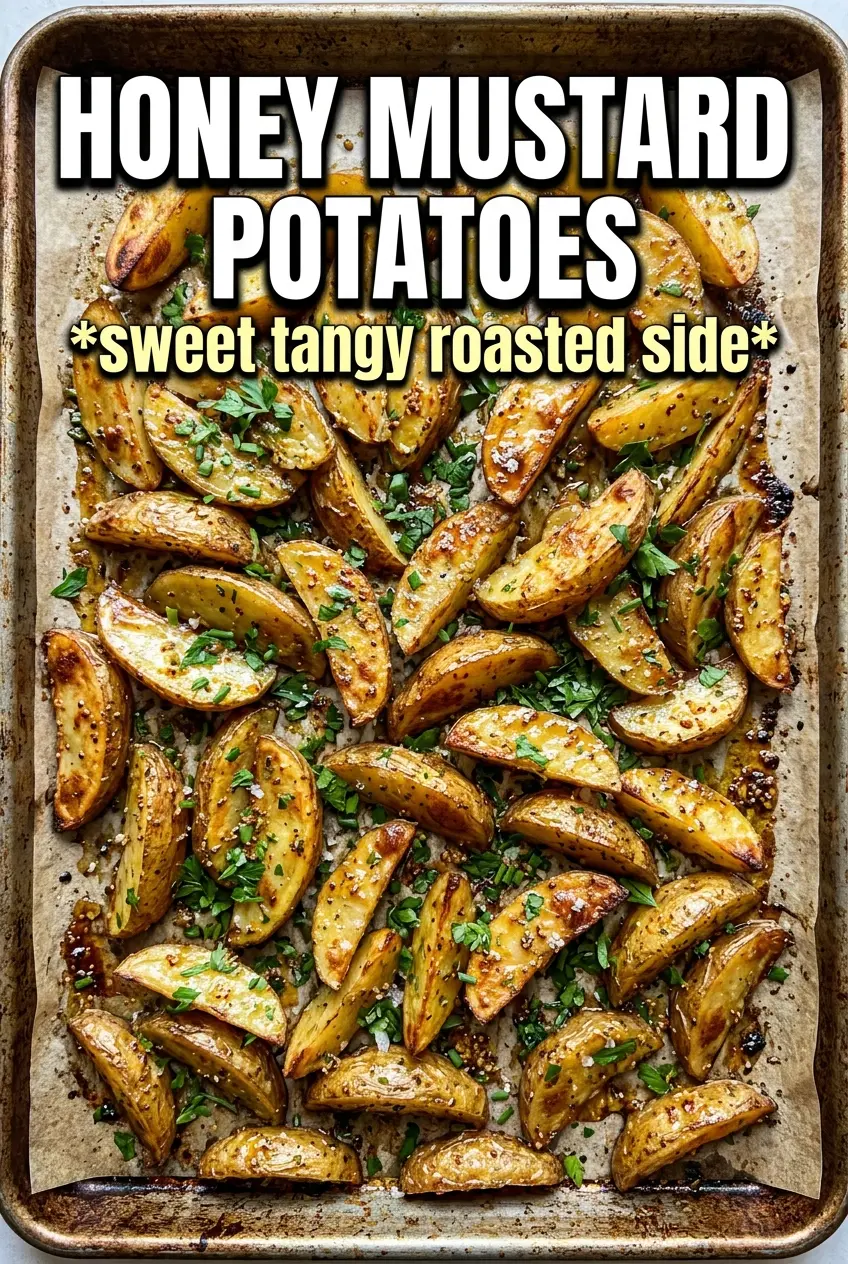
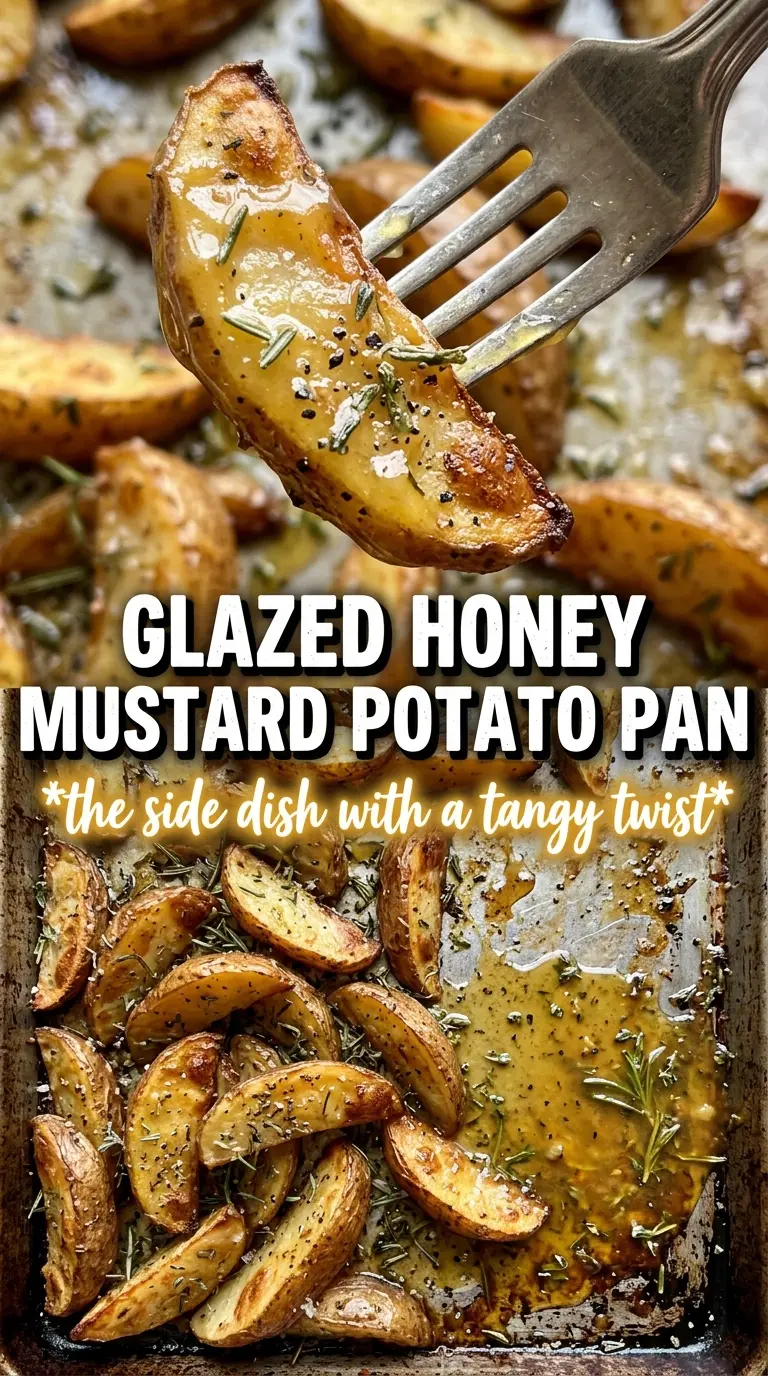
Honey mustard potatoes come out with the kind of sticky-edged caramelization that makes people reach for a second spoonful before they’ve finished the first. The centers stay tender, the cut sides turn golden, and the glaze bakes down into something sharp, sweet, and just a little smoky. They’re the kind of side dish that quietly steals the plate.
What makes this version work is the balance in the glaze. Dijon gives it backbone, whole grain mustard adds texture and a mellow tang, and honey helps the potatoes lacquer instead of just dry-roast. A splash of apple cider vinegar keeps the sweetness from flattening out, and the garlic and rosemary round everything out without turning the pan muddy.
Below, I’ve included the small details that matter most: how to keep the potatoes from steaming, why the cut size changes the final texture, and what to do if you want to make them a little more savory or a little more heat-forward.
The glaze baked onto the potatoes instead of sliding off, and the rosemary with the mustard gave them such a good savory edge. I tossed them halfway through and every piece came out caramelized.
Bookmark these honey mustard potatoes for the nights when you want a caramelized, tangy roasted side with almost no cleanup.
The Reason These Potatoes Caramelize Instead of Going Soft
Roasted potatoes only get those crisp, lacquered edges when the glaze can actually cling to the surface long enough to cook. If the pan is crowded, the potatoes steam before they brown, and the honey stays loose instead of turning sticky and deep gold. A hot oven and a single layer do most of the work here.
The other piece people miss is the balance in the coating. Too much honey and the potatoes brown too fast on the outside before the centers are tender; too much mustard without enough fat and the glaze tastes sharp but never turns rounded. This mix gives you enough sweetness to caramelize, enough acid to keep it lively, and enough oil to help the potatoes roast instead of dry out.
What Each Ingredient Is Actually Doing in This Dish
- Baby potatoes or Yukon golds — Both stay creamy inside and hold their shape well. Baby potatoes give you neat, bite-size pieces; Yukon golds cut into similar chunks work just as well and brown a little more deeply on the cut sides.
- Dijon mustard — This brings the sharp, smooth backbone of the glaze. It emulsifies better than a coarse mustard alone, which helps the coating stay on the potatoes instead of pooling on the pan.
- Whole grain mustard — The seeds add texture and a gentler mustard flavor. If you only have Dijon, the recipe still works, but the finished potatoes will taste smoother and less rustic.
- Honey — This is what gives the potatoes their sticky, glossy finish. Maple syrup can stand in, but it browns a little differently and tastes less rounded with the mustard.
- Apple cider vinegar — A small amount sharpens the glaze so it doesn’t taste heavy. Lemon juice can replace it in a pinch, though the finish will be a little brighter and less mellow.
- Fresh rosemary and garlic — These keep the potatoes tasting savory instead of candy-sweet. If your rosemary is strong, chop it finely; big woody pieces can get distracting in the final dish.
Roasting the Potatoes So the Glaze Sticks and Stays Put
Whisking the glaze until it looks unified
Start by whisking the Dijon, whole grain mustard, honey, olive oil, vinegar, garlic, rosemary, smoked paprika, salt, and pepper until the mixture looks glossy and smooth. The honey should disappear into the mustard enough that the texture feels cohesive, not streaky. If it looks broken at this stage, keep whisking for another 20 to 30 seconds; the oil needs a little time to emulsify with the mustard.
Tossing every cut surface
Add the potatoes and stir until every piece is coated, especially on the cut sides. Those flat surfaces are what caramelize, so leave no bare patches. If the bowl looks dry before the potatoes are fully covered, don’t add more honey first; add a teaspoon of oil or a splash of vinegar so the glaze stays balanced.
Roasting without crowding
Spread the potatoes in a single layer on a lined baking sheet and roast at 425°F for 30 to 35 minutes, tossing halfway through. You’re looking for deep golden edges, tender centers, and a glaze that has thickened enough to cling. If they’re piled up, they’ll steam and the sugar in the honey will never get the chance to turn sticky and crisp.
Finishing with the last bit of contrast
As soon as the potatoes come out, scatter over parsley and flaky salt. The herbs keep the glaze from feeling heavy, and the flaky salt gives you little sharp pops against the sweet coating. Serve them right away if you want the edges at their crispest.
Three Ways to Adjust the Glaze Without Losing the Character of the Dish
Make it dairy-free and naturally gluten-free
The recipe already lands in both of those lanes as written, which is part of why it works so well for a mixed table. Just check your mustard label if you’re cooking for someone sensitive, since some brands use additives that vary by manufacturer. The texture and browning stay the same.
Swap in maple syrup for a deeper sweetness
Maple syrup can replace the honey one-for-one. The result is a little darker and more woodsy, with less of that sticky floral note honey brings. It still caramelizes well, but the glaze reads more savory-sweet than bright-sweet.
Use thyme instead of rosemary
Thyme gives the potatoes a softer herbal note and keeps the glaze a little more delicate. It works especially well if you’re serving these next to roasted chicken or fish. The dish loses some of the piney edge, but the mustard still carries the flavor.
Storage and Reheating
- Refrigerator: Store leftovers in an airtight container for up to 4 days. The glaze will tighten up and the potatoes will soften a bit, but the flavor holds well.
- Freezer: These freeze, but the texture turns softer after thawing, so I only do it if I’m fine with a less crisp finish. Cool completely, freeze in a single layer, then transfer to a bag or container.
- Reheating: Reheat on a sheet pan in a 400°F oven until hot and the edges start to re-crisp, about 10 to 15 minutes. The microwave works in a pinch, but it will turn the potatoes soft and mute the glaze.


