Bubbling hobo stew is the kind of campfire dinner that earns its place because it feeds a crowd, uses one pot, and tastes better the longer it simmers. The broth turns rich and savory, the potatoes soften just enough to thicken the pot, and every spoonful catches a little bit of beef, tomato, sweet corn, and tender carrots.
What makes this version work is the order. Browning the meat first builds a deep base right in the Dutch oven, and the vegetables go in after so they can simmer in that seasoned broth instead of getting watered down. The canned tomatoes and broth do the heavy lifting here, while the paprika and garlic powder keep the flavor round without turning it fussy.
Below, I’ve included the detail that matters most for camp cooking: how to keep the stew simmering steadily instead of boiling itself into mush, plus a few easy ways to adapt it if you’re cooking with what’s on hand.
I made this in my Dutch oven at deer camp, and the potatoes held their shape while the broth thickened up just enough to coat the spoon. Even my picky brother went back for a second bowl.
Save this hobo stew for a one-pot campfire dinner with tender vegetables and a rich, hearty broth.
The Trick to Keeping Hobo Stew From Turning Mushy
Hobo stew can go wrong fast if the heat is too aggressive. A hard boil breaks down the potatoes and carrots before the broth has time to pick up flavor, and the meat turns stringy instead of tender. A steady simmer is what gives you soft vegetables with some shape left and a broth that tastes like it spent the afternoon over the fire.
Brown the meat first and leave those browned bits in the bottom of the Dutch oven. That’s where the depth comes from. Once the vegetables and broth go in, scrape the bottom well, then move the pot to a spot where the contents bubble lazily instead of rolling. If the stew looks like it’s churning, it’s too hot.
- Sturdy potatoes — Yukon Golds or russets both work, but cut them into even cubes so they cook at the same pace. Uneven pieces leave you with some falling apart while others stay firm.
- Tomatoes and broth — The canned tomatoes bring acidity and body, and the beef broth keeps the stew from tasting flat. If you use water instead of broth, the whole pot loses that savory backbone.
- Ground beef swap — Ground beef makes this faster and still gives you a hearty stew. If you use stew meat, the simmer matters more because it needs the full time to soften.
What Each Ingredient Is Doing in the Pot
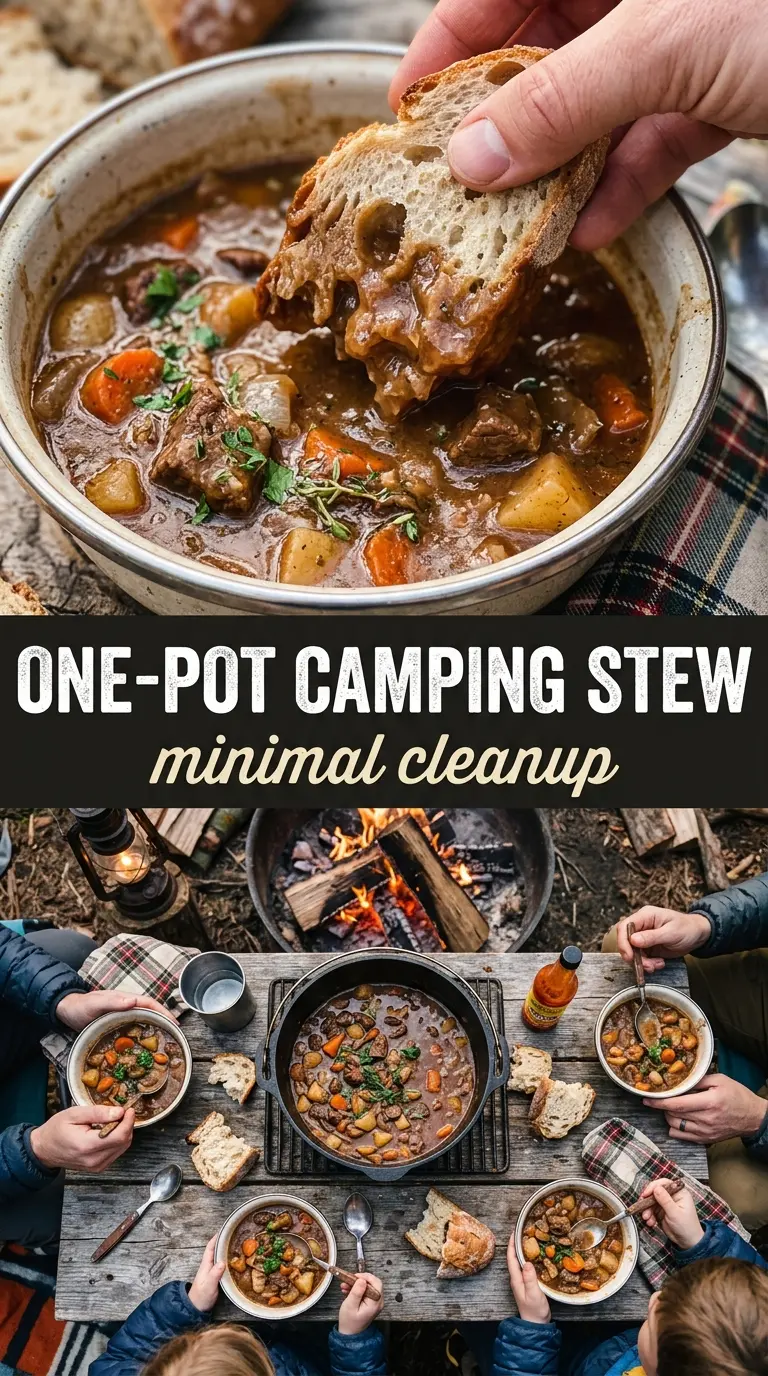
- Stew meat or ground beef — Stew meat gives you a deeper, beefier bite after a longer simmer. Ground beef is the quicker route and works well when you want something ready on the fire without waiting for tougher meat to soften.
- Potatoes — These thicken the stew naturally as they cook and break down a little around the edges. Peel them if the skins are thick; otherwise, keep the skin on for a rustic texture.
- Carrots, onion, corn, and green beans — This mix brings sweetness, texture, and color. The canned vegetables are fine here because they’re going into a long simmer, but drain them first so the stew doesn’t get overly salty or thin.
- Diced tomatoes — These add acidity and a little body to the broth. Don’t drain them; the juice is part of the liquid that makes the stew taste complete.
- Beef broth and seasoning — Broth carries the whole pot, while garlic powder and paprika give it that camp-style, smoky savoriness without needing a long ingredient list. Paprika is worth keeping; it gives warmth even when there’s no smoke from the fire reaching the pot.
Building the Stew So Everything Finishes at the Same Time
Brown the meat first
Set the Dutch oven over steady heat and let the meat develop real color before anything else goes in. You want browned bits on the bottom, not gray steam. If you rush this part, the stew tastes flat no matter how long it simmers later.
Add the vegetables and liquid
Stir in the potatoes, carrots, onion, corn, green beans, tomatoes, and beef broth, then scrape the bottom so the browned bits dissolve into the liquid. Cut the potatoes and carrots into similar-size pieces so they finish together. If the cubes are too large, the outside softens before the center does.
Season and simmer covered
Add the garlic powder, paprika, salt, and pepper, then bring the pot just to a boil before lowering the heat. Cover it and let it simmer until the vegetables are tender and the broth has a little body. If the lid is left off too long, the liquid reduces too far and the potatoes can stick.
Serve while the broth is still lively
Give the stew one final stir and taste for salt before ladling it into bowls. It should be thick enough to cling to the spoon but still soupy enough to eat with a ladle. If it sits too long, it tightens up a bit, so loosen it with a splash of broth if needed.
How to Adjust Hobo Stew for the Pan You’ve Got
Use ground beef for a faster camp meal
Ground beef shortens the cook time and gives you a looser, more rustic stew. Brown it well and drain off excess fat if the pan looks greasy, because too much fat can make the broth feel heavy.
Make it dairy-free and gluten-free without changing the texture
This stew already fits both dairy-free and gluten-free eating as written, as long as your broth is labeled gluten-free. The texture stays the same because the potatoes do the thickening work instead of cream or flour.
Swap in whatever vegetables are in the cooler
Peas, celery, or mushrooms can stand in for part of the canned vegetables or join them. Just keep the potato amount the same, since that’s what gives hobo stew its body and keeps it from eating like thin soup.
Stretch it for more people
Add another can of tomatoes and a second cup of broth, then bump the seasoning a little at a time. The stew will feed more people without losing its heartiness, but don’t dilute it too much or the flavor goes thin.
Storage and Reheating
- Refrigerator: Store leftovers in a covered container for up to 4 days. The potatoes soften a little more overnight, which actually helps the broth taste even fuller.
- Freezer: It freezes well for up to 3 months. Cool it completely first, then freeze in portions; the potatoes will be a bit softer after thawing, but the flavor holds up.
- Reheating: Warm it gently on the stovetop over medium-low heat with a splash of broth or water. A hard boil can turn the potatoes mealy and make the meat tougher, so heat it just until steaming hot.
Answers to the Questions Worth Asking
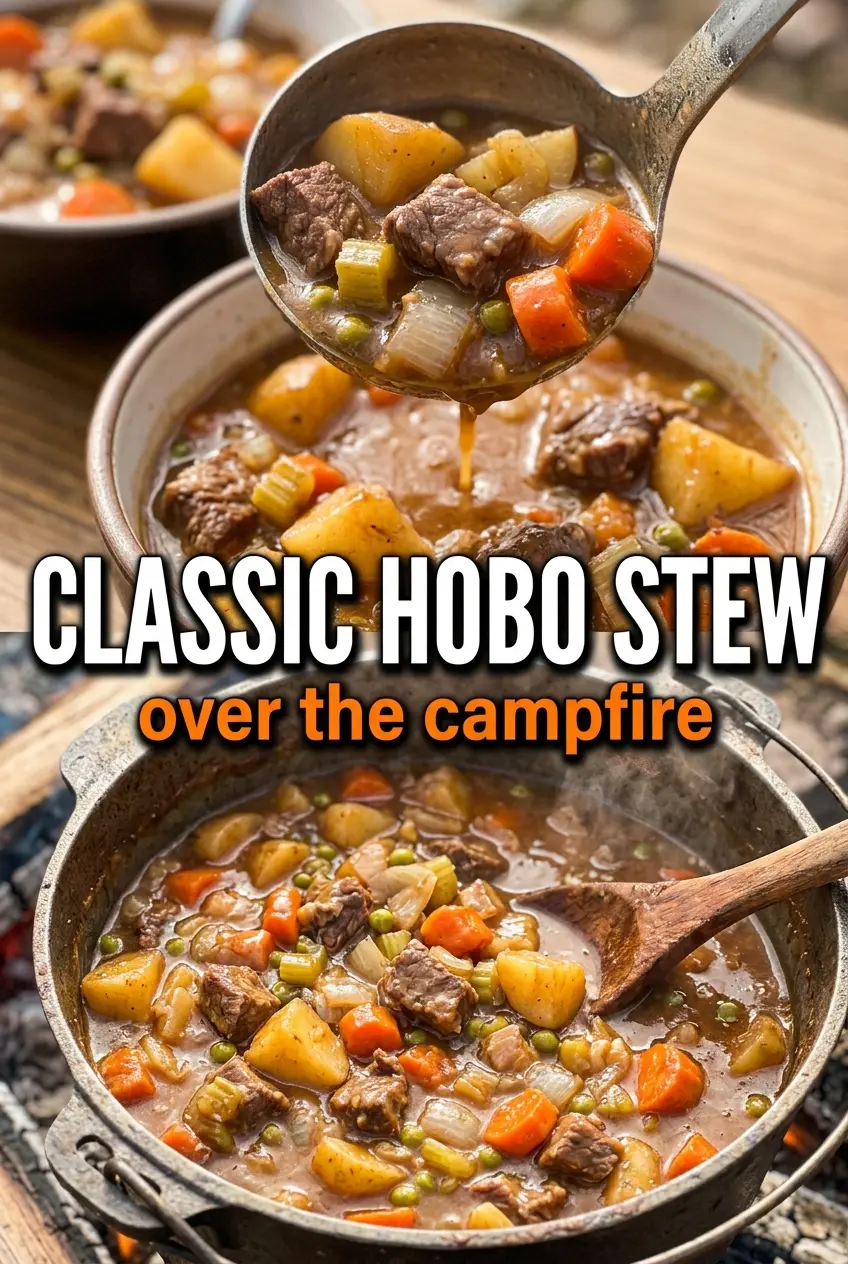
Hobo Stew
Ingredients
Equipment
Method
- Brown the stew meat or ground beef in a Dutch oven over the campfire until browned on the outside, with a steady bubbling cue around the edges.
- Add the cubed potatoes, sliced carrots, diced onion, drained corn, drained green beans, diced tomatoes, and beef broth, then stir to combine so everything is evenly distributed.
- Season with garlic powder, paprika, salt, and pepper, then stir again until the seasonings are fully mixed through the pot.
- Bring the mixture to a boil, watching for rolling bubbles that cover the surface.
- Reduce heat to a gentle simmer, cover, and cook for 35-40 minutes until the vegetables are tender, looking for consistent bubbling underneath the lid.
- Serve hot in bowls, using a ladle when the pot is actively bubbling.