Creamy white beans, shredded chicken, and tender kale give this soup the kind of hearty finish that sticks with you without feeling heavy. The broth turns rich from the parmesan rind and the beans, and the pancetta on top adds just enough salt and crunch to make each bowl taste finished. It eats like a full meal, not a starter, which is exactly why it ends up in the rotation again and again.
What makes this version work is the way it builds texture in layers. A few of the beans get mashed right in the pot, so the broth thickens without cream, and the kale goes in at the end so it stays green and tender instead of turning dull and mushy. The lemon at serving time matters more than it sounds like it should; it wakes up the broth and keeps the soup from tasting flat.
Below, I’ll walk through the small decisions that make this soup taste like it simmered all afternoon, plus a few swaps that still keep it filling and balanced. If you’ve ever had white bean soup turn bland or brothy, the notes in this post will help.
The beans broke down just enough to make the broth creamy, and the lemon at the end made the whole pot taste brighter. Even my picky eater went back for a second bowl.
Save this high protein white bean soup for nights when you want a thick, lemony broth with chicken, kale, and pancetta in one bowl.
The Reason This Soup Stays Thick Without Cream
A lot of white bean soups stay thin because the beans are treated like a garnish instead of part of the broth. This one fixes that by mashing some of the cannellini beans directly into the pot after they’ve simmered long enough to soften and pick up flavor. That gives you body without turning the soup pasty or heavy.
The parmesan rind does a lot of quiet work here too. It melts just enough to season the broth with savory depth, but it doesn’t make the soup feel cheesy in an obvious way. If you skip it, the soup still works, but it tastes more like bean soup and less like a finished bowl of something worth repeating.
- 1 parmesan rind — This is the ingredient that gives the broth its round, savory edge. A wedge of hard parmesan left in the fridge works fine; just trim off any waxy bits and simmer it in the pot, then pull it out before serving.
- Cannellini beans — These are the best choice because they break down into a creamy texture without disappearing completely. Great Northern beans can step in if needed, but they stay a little firmer and won’t thicken quite as smoothly.
- Pancetta or turkey bacon — Pancetta brings deeper flavor and a better render of fat for sautéing the onion, but turkey bacon will still give you the salty, smoky note you want. If using turkey bacon, cook it until it’s crisp enough to leave some browned bits in the pan.
- Kale — Kale holds up better than spinach here because it won’t collapse the moment it hits the broth. Chop it small and strip out the thick stems so it turns tender in the last few minutes instead of lingering tough.
- Shredded chicken — This is what turns the soup from a side dish into a full meal. Rotisserie chicken is the easiest swap, and it’s ideal here because it stays juicy even after a short simmer.
What Each Ingredient Is Actually Doing in This Recipe

- Primary ingredient (the star) — Quality matters most. Choose the best you can find.
- Cooking medium (oil, butter, or broth) — This carries flavors and prevents dryness.
- Seasonings (salt, pepper, spices, herbs) — Layer flavors so nothing overpowers. Build depth gradually.
- Aromatics (garlic, onion, herbs) — Cook with fat to bloom flavors. Become the foundation.
- Supporting ingredients — Complement the main ingredient without overpowering it.
- Sauce or liquid (if applicable) — Brings flavors together. Balance richness with acid.
- Acid (lemon, vinegar, wine, or other) — Brightens and prevents flat-tasting results.
- Final finish (garnish, glaze, or sauce) — Prevents one-dimensional taste and adds visual appeal.
Building the Broth in the Right Order
Crisping the Pancetta First
Start with the diced pancetta in a cold pot and let it render over medium heat until the pieces turn crisp and the fat has pooled in the bottom. That fat is the base for the onion, garlic, and spices, so don’t drain it unless there’s a huge amount in the pot. If you rush this step, the pancetta stays chewy and the soup loses one of its best flavor sources.
Softening the Onion Before the Garlic Goes In
Cook the onion in the rendered fat until it turns translucent and a little glossy at the edges, about four minutes. Garlic burns fast, so it goes in after the onion has already softened. Once the garlic and red pepper flakes hit the pot, cook them just long enough to smell fragrant; if the garlic browns, the broth can pick up a bitter edge.
Simmering the Beans and Tomatoes Together
Add the broth, tomatoes, beans, Italian seasoning, and parmesan rind, then let the pot come to a steady simmer. You want the beans to soften enough that they’ll mash easily later, and the tomatoes should lose their sharp raw edge. Keep the heat at a gentle simmer instead of a hard boil so the broth stays clear and the beans don’t split apart too aggressively.
Finishing With Chicken, Kale, and Lemon
Once the rind comes out and some of the beans are mashed, stir in the chicken and kale. The chicken only needs a few minutes to warm through, and the kale should wilt and turn bright green without going limp. Finish with lemon, parmesan, olive oil, and the crispy pancetta; if the soup tastes flat at the end, it usually needs more salt or one more squeeze of lemon rather than more time on the stove.
Ways to Adjust the Soup Without Losing the Heart of It
Make It Dairy-Free
Skip the parmesan rind and finish the bowl with extra lemon, olive oil, and a little more salt. You’ll lose some of the savory depth that parmesan gives the broth, so let the pancetta or turkey bacon do more of the heavy lifting.
Make It Vegetarian
Use vegetable broth instead of chicken broth, leave out the pancetta, and add a tablespoon of olive oil with the onion so the base still tastes full. For extra richness, stir in a little grated parmesan at the end if you’re not keeping it fully vegetarian.
Use White Beans Only for a Lower-Carb Bowl
If you want the soup to lean lighter in carbs, reduce the beans a little and add more chicken and kale. The broth will be thinner, so mash a smaller portion of the beans more aggressively to keep the texture satisfying.
Storage and Reheating
- Refrigerator: Store in an airtight container for up to 4 days. The soup thickens as it sits because the beans keep absorbing liquid.
- Freezer: It freezes well for up to 3 months, though the kale softens a bit after thawing. Cool it completely before freezing and leave a little space in the container for expansion.
- Reheating: Warm it gently on the stove over medium-low heat with a splash of broth or water. Don’t boil it hard or the chicken can turn dry and the beans can break down too much.
Questions I Get Asked About This Recipe
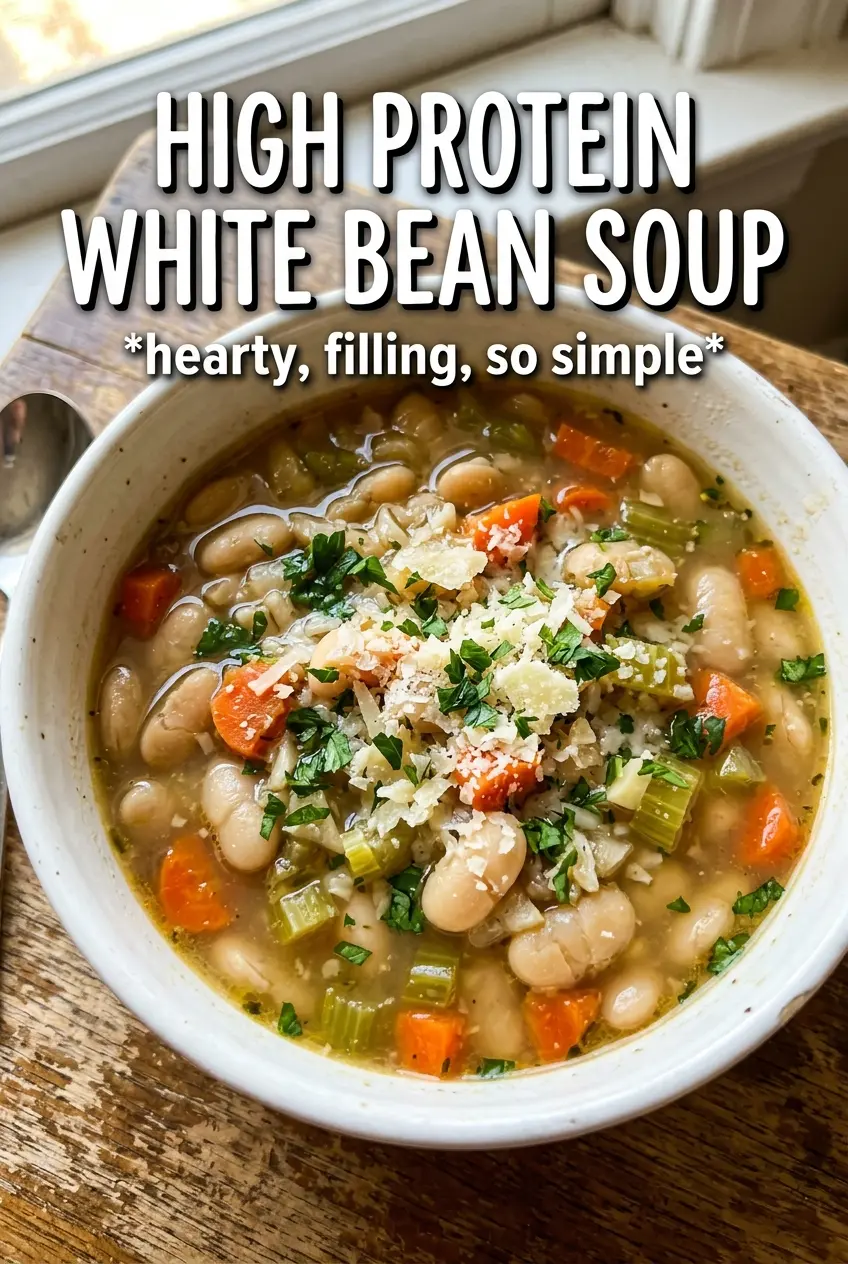
High Protein White Bean Soup
Ingredients
Equipment
Method
- In a Dutch oven, cook the pancetta (or turkey bacon) over medium heat until crispy, about 6-8 minutes, then remove and set aside.
- Sauté the diced onion in the rendered fat over medium heat for 4 minutes until softened.
- Add the minced garlic and red pepper flakes and cook for 1 minute, stirring until fragrant.
- Add the chicken broth, diced tomatoes, drained cannellini beans, Italian seasoning, and the parmesan rind; bring to a simmer over medium-high heat.
- Simmer for 20 minutes, keeping the soup at a steady bubble and stirring occasionally.
- Remove the parmesan rind and mash some of the beans in the pot to thicken the broth.
- Stir in the shredded chicken and chopped kale, then simmer for 5-7 minutes until the kale is wilted.
- Season with salt and black pepper to taste.
- Top each bowl with the crispy pancetta, parmesan, a drizzle of olive oil, and lemon for serving.


