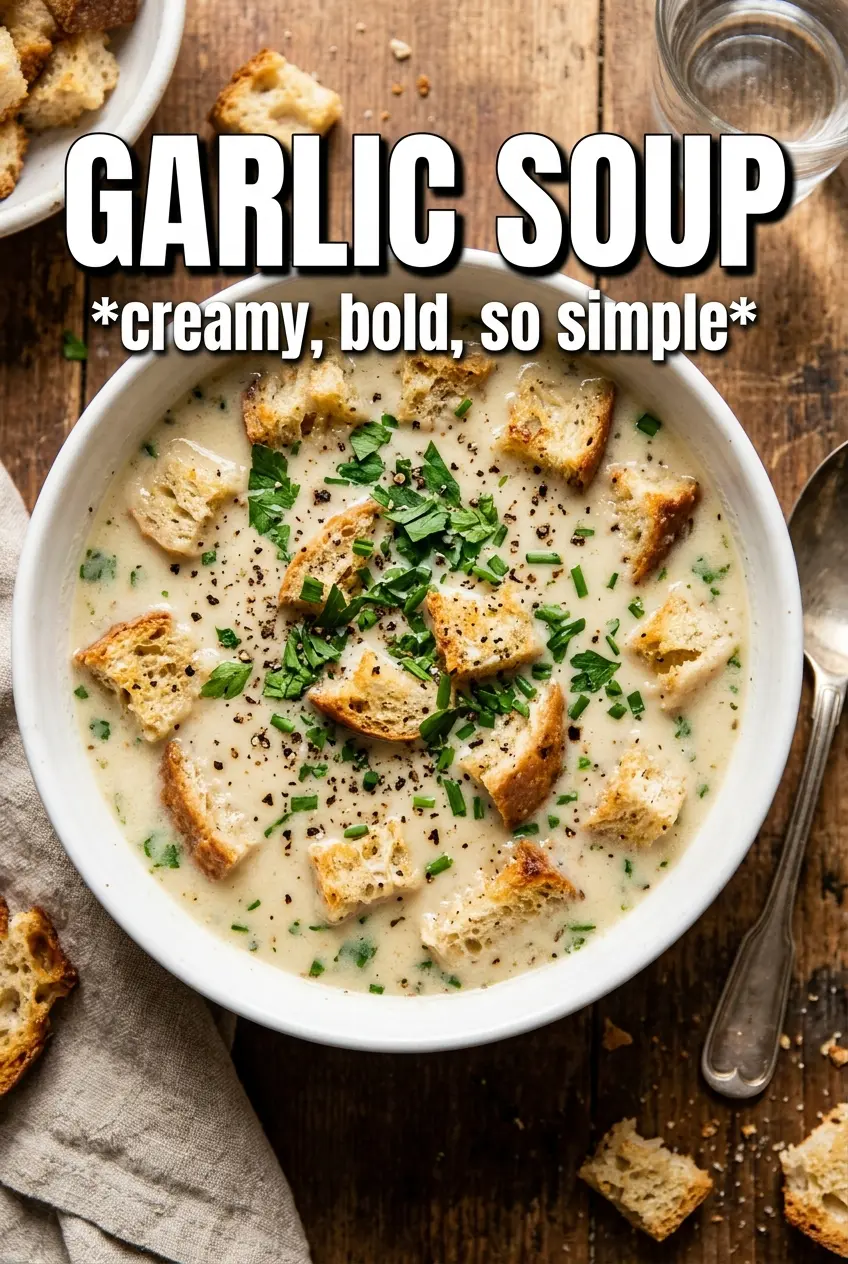
Garlic soup turns mellow and silky when it’s cooked the right way, with all the sharp edges taken off the cloves and the broth carrying that deep, sweet garlic flavor all the way through. The best bowls have a little richness from the olive oil, a gentle heat from smoked paprika and cayenne, and just enough texture left in the soup so it doesn’t eat like baby food. Topped with a soft egg and crusty toast, it lands somewhere between rustic comfort and a smart, elegant supper.
The trick is patience with the garlic. Letting it soften over medium-low heat before the broth goes in keeps the flavor sweet instead of harsh, and blending only most of it gives the soup body without losing those little bits that make each spoonful interesting. The poached egg goes right into the simmering soup at the end, where the whites set softly and the yolk turns into part of the broth.
Below you’ll find the timing that keeps the garlic from browning, the ingredient swaps that still work, and the small details that make this soup feel complete in the bowl.
The garlic turned sweet and buttery instead of sharp, and the egg on top made the broth taste like a full meal. I left a few cloves whole like the recipe said, and that little bit of texture made it feel special.
Save this garlic soup for the nights when you want a silky broth, soft egg, and crusty bread in one bowl.
The Part Where Garlic Turns Sweet Instead of Sharp
Garlic soup lives or dies on the first 15 minutes. If the cloves brown hard at the beginning, the whole pot can taste bitter before the broth even goes in. Cook them in olive oil over medium-low heat until they’re soft, glossy, and pale gold. They should smell round and mellow, not aggressive.
That low heat also gives the garlic time to turn almost spreadable, which is what gives this soup its body. A quick sauté leaves you with a thin broth and harsh garlic. Slow cooking builds the base without needing cream, and that’s why the final soup tastes rich even though it stays light.
- Olive oil — This carries the garlic flavor and adds the silky mouthfeel you want in the finished broth. Use a good everyday extra-virgin oil; you’ll taste it here.
- Broth — Chicken broth gives a fuller, rounder result, while vegetable broth keeps it lighter and fully meatless. Use the best broth you have, because there’s nowhere for a bland one to hide.
- Smoked paprika and cayenne — These don’t make the soup spicy-hot so much as they wake up the garlic. Add them briefly to the oil so they bloom before the liquid goes in.
- Crusty bread — Toast it well. Soft bread sinks and turns pasty, while a sturdy toast stays crisp long enough to give the soup some contrast.
- Eggs — A soft-poached egg makes the bowl feel complete. If you’d rather not poach them in the soup, top each bowl with a jammy boiled egg instead.
What Each Ingredient Is Actually Doing in This Recipe

- Primary ingredient (the star) — Quality matters most. Choose the best you can find.
- Cooking medium (oil, butter, or broth) — This carries flavors and prevents dryness.
- Seasonings (salt, pepper, spices, herbs) — Layer flavors so nothing overpowers. Build depth gradually.
- Aromatics (garlic, onion, herbs) — Cook with fat to bloom flavors. Become the foundation.
- Supporting ingredients — Complement the main ingredient without overpowering it.
- Sauce or liquid (if applicable) — Brings flavors together. Balance richness with acid.
- Acid (lemon, vinegar, wine, or other) — Brightens and prevents flat-tasting results.
- Final finish (garnish, glaze, or sauce) — Prevents one-dimensional taste and adds visual appeal.
How to Build the Broth Without Losing the Garlic
Softening the Garlic Slowly
Warm the olive oil in a large saucepan and add the peeled garlic cloves. Keep the heat at medium-low and stir often so the cloves cook evenly instead of catching on the bottom. After 12 to 15 minutes, they should be tender enough to smash with a spoon and just starting to take on color. If they’re browning fast, pull the pan off the heat for a minute; once garlic goes dark, the bitterness stays.
Blooming the Spices
Stir in the smoked paprika and cayenne and cook for about a minute. You’re looking for the spices to darken slightly and smell warm, not burnt. This step pulls their flavor into the oil, which spreads them through the soup more evenly than tossing them into the broth later. If the pan seems dry, don’t rush in with extra heat — a gentle sizzle is all you want.
Simmering and Blending
Add the broth and water, then bring everything to a boil before lowering it to a steady simmer. Let it cook for 15 minutes so the garlic fully softens and the flavors meld. Blend most of the soup with an immersion blender, but leave a few cloves whole for texture. A completely smooth puree can feel flat here; those little pieces of garlic give each spoonful a bit of bite.
Poaching the Eggs in the Pot
Season with salt, pepper, and thyme, then crack the eggs directly into the gently simmering soup. Keep the heat low enough that the broth barely moves, or the whites will shred and cloud the soup. In 3 to 4 minutes, the whites should be set and the yolks still soft. Lift the eggs out carefully if you need to portion the soup first, then slide them back on top of each bowl.
How to Adapt This Bowl for Different Tables
Make It Vegetarian
Use a rich vegetable broth and keep the rest of the method the same. The garlic and olive oil carry enough weight that you won’t miss the chicken broth, but choose a vegetable broth with some body, not a watery one, or the soup can taste thin.
Skip the Egg for a Dairy-Free, Egg-Free Bowl
Leave out the poached eggs and top the soup with extra parsley and a drizzle of olive oil instead. You lose the richness of the yolk, so add a few more croutons or a thicker slice of toast to keep the bowl satisfying.
Turn Up the Heat
If you want more kick, add another pinch of cayenne at the end rather than doubling it at the start. Heat reads sharper once the soup is blended, and adding it late lets you control the finish without making the base taste harsh.
Storage and Reheating
- Refrigerator: Store the soup without the eggs for up to 4 days. The garlic flavor deepens a little as it sits, which works in its favor.
- Freezer: The soup base freezes well for up to 2 months. Freeze it before adding the eggs and toast, then thaw overnight in the fridge.
- Reheating: Warm it gently on the stove over low heat until steaming. Don’t boil it hard after blending, or the texture can turn dull and the garlic can taste tighter instead of sweet.
Answers to the Questions Worth Asking
Garlic Soup with Roasted Garlic and Poached Eggs
Ingredients
Equipment
Method
- Heat 3 tablespoons olive oil in a large saucepan, then gently cook the garlic cloves over medium-low heat for 12-15 minutes until soft and golden but not brown. Stir occasionally so the cloves soften evenly without coloring.
- Add 1/2 teaspoon smoked paprika and 1/4 teaspoon cayenne, then cook for 1 minute. Keep the heat gentle so the spices bloom without burning.
- Add 4 cups chicken or vegetable broth and 2 cups water, then bring to a boil and simmer for 15 minutes. You want a steady simmer to meld the flavors.
- Use an immersion blender to blend most of the garlic smooth, leaving a few cloves whole for texture. Blend until the broth turns silky with small visible garlic pieces.
- Season the soup with salt, pepper, and 1 tablespoon fresh thyme leaves. Taste and adjust so the broth is clearly seasoned.
- Poach the eggs directly in the simmering soup for 3-4 minutes. The whites should be set while the yolks stay soft if you want a runny center.
- Serve the soup with the toasted crusty bread, the poached egg in the center, and fresh parsley for garnish. Spoon some broth over the bread and finish with parsley right before eating.


