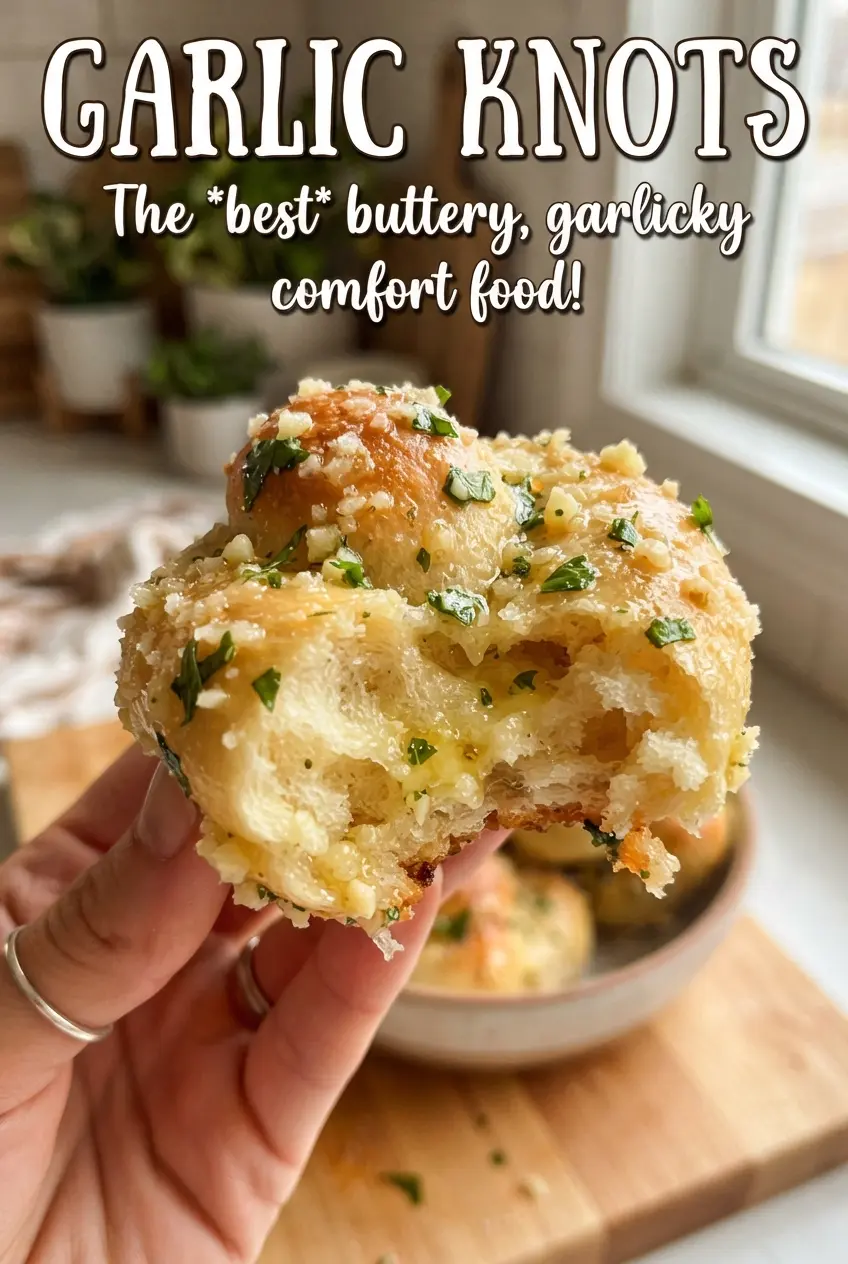
Golden garlic knots come out with a crisp, bronzed top and a soft, stretchy middle that pulls apart in ribbons. The garlic butter sinks into every twist, the Parmesan clings to the warm surface, and each bite lands with that salty, buttery hit people keep reaching for before dinner even hits the table.
This version works because the dough is shaped simply and baked hot enough to set the outside before the inside dries out. The first light butter brush goes on before baking, which helps the knots color and keeps the crust from turning tough. Then the garlicky butter gets brushed on while the knots are still hot, so the flavor sticks instead of sliding off.
Below, I’ll show you how to keep the knots from unraveling, how to get the garlic butter on at the right moment, and what to change if you want to make them ahead or use a different cheese.
The knots baked up with a soft middle and the garlic butter soaked into the twists instead of pooling on the pan. I served them with marinara and they disappeared before the pasta was done.
Save these garlic knots for the night you want warm, buttery twists with a crisp edge and plenty of marinara for dipping.
The Trick to Keeping Garlic Knots Soft Inside and Golden Outside
Garlic knots fail in two common ways: they bake up pale and doughy, or they dry out before the center has a chance to stay tender. The fix is a hot oven, a short bake, and dough that’s rolled evenly so the knots finish at the same pace. If one piece is much thicker than the others, it’ll still be raw when the smaller ones are already turning hard.
The other key is timing the garlic butter. Butter brushed on before baking helps the surface color, but the garlic itself goes on after the knots come out. Garlic can scorch in the oven fast, which turns it bitter; keeping it out of the oven preserves that sharp, fresh flavor and leaves the butter fragrant instead of burnt.
What the Pizza Dough, Butter, and Parmesan Are Each Doing Here
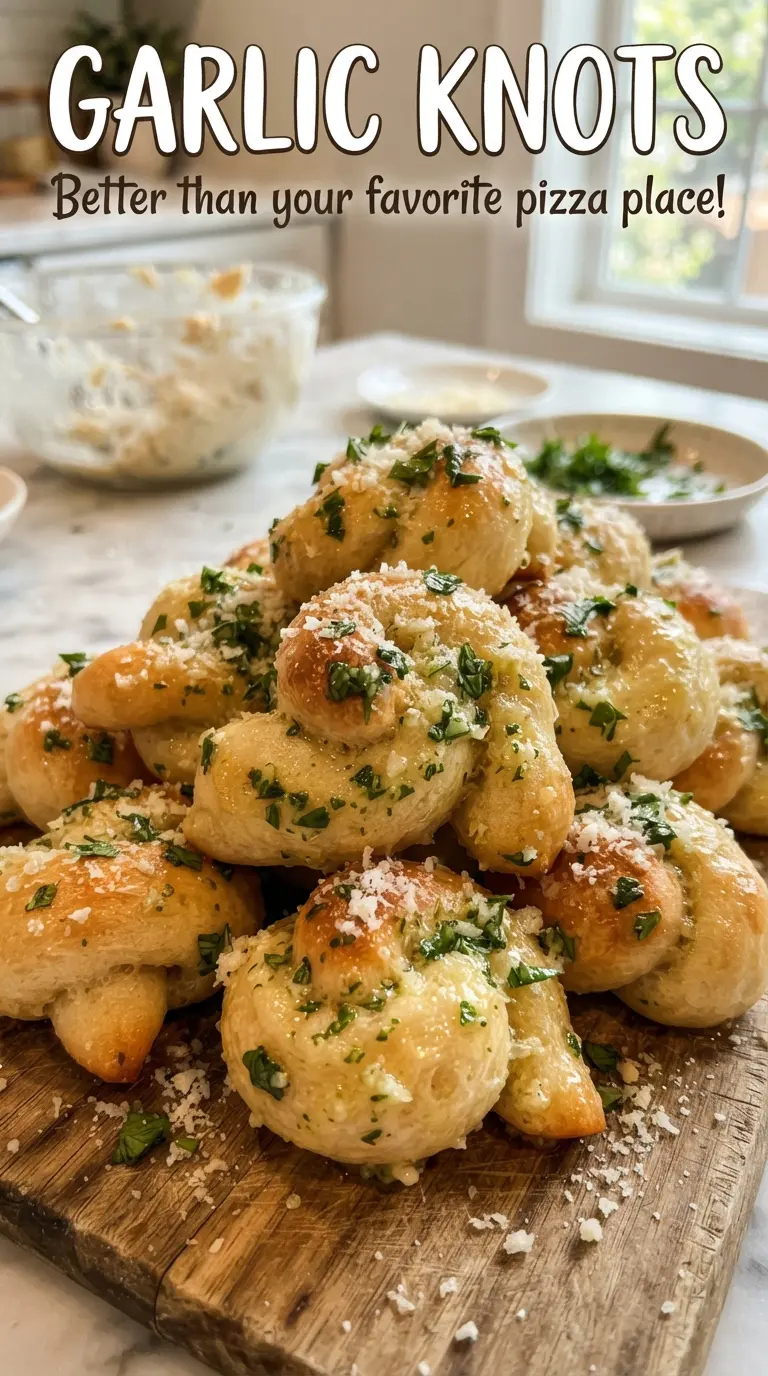
- Refrigerated pizza dough — This is what keeps the recipe fast without turning it into a project. Room-temperature dough stretches more easily and ties into clean knots; cold dough snaps back and tears. If yours resists rolling, let it rest another 10 minutes before fighting it.
- Butter — Melted butter carries the garlic, helps the knots brown, and gives the finished tops that glossy look. If you use oil instead, the knots will still bake, but they’ll lose the richer, softer finish butter gives here.
- Garlic and parsley — Fresh garlic matters because this topping is all about immediate flavor. The parsley cuts through the butter and keeps the knots from tasting flat. Mince the garlic finely so it disperses evenly; big pieces can brown unevenly and taste sharp in one bite and missing in the next.
- Parmesan — Use grated Parmesan, not a powdery shelf-stable version, if you want it to cling and melt lightly over the hot knots. It adds salt and a nutty edge without making the topping greasy. Pecorino Romano works too if you want a sharper finish.
How to Shape, Bake, and Finish the Knots So They Don't Unravel
Cutting and Tying the Dough
Cut the dough into 16 even pieces so every knot bakes at the same rate. Roll each piece into a rope about 7 inches long, then tie it into a loose knot with the ends tucked underneath. If the rope is too short, the knot will spring open; if it’s too tight, the center turns dense instead of fluffy.
The First Brush Before Baking
Set the knots on parchment-lined baking sheets with a little space between them, then brush them lightly with melted butter. That thin layer helps the surface color evenly and keeps the crust tender. Heavy butter here can pool under the knots and make the bottoms greasy instead of crisp.
Watching for the Right Bake
Bake at 400°F for 13 to 15 minutes until the tops are deeply golden and the knots feel set when nudged. Don’t chase a dark brown color; by then the centers have usually gone past soft. If your oven runs hot, start checking at 12 minutes, because these go from perfect to dry fast.
The Garlic Butter Finish
Stir the garlic, parsley, and salt into the remaining melted butter, then brush it over the knots while they’re still hot. The heat from the bread wakes up the garlic and helps the topping soak into the cracks. Finish with Parmesan right away so it sticks before the butter cools.
Three Smart Ways to Change These Garlic Knots Without Losing the Point
Dairy-Free Garlic Knots
Use a dairy-free butter substitute and skip the Parmesan, or finish with a dairy-free parmesan-style topping. The knots will still be tender and garlicky, but you’ll lose a little of the rich gloss that real butter gives. Brush a touch more topping on right after baking to help the flavor stick.
Extra-Cheesy Garlic Knots
Mix a little mozzarella or finely shredded provolone into the Parmesan topping for a softer, stretchy finish. This makes them taste closer to pizza breadsticks, with a bit more richness and a little less of the sharp Parmesan edge. Keep the extra cheese light, or the topping can slide off instead of melting into the knots.
Herby Garlic Knots
Add a teaspoon of finely chopped oregano or basil to the garlic butter for a stronger Italian-American edge. Fresh herbs change the aroma more than the structure, so this is an easy way to shift the flavor without changing the method. If you use dried herbs, crush them between your fingers first so they don’t taste dusty.
Make-Ahead Garlic Knots
Shape the knots and refrigerate them on the tray, covered, for several hours before baking. This saves time and still gives you fresh-baked texture, but the dough may need a minute or two longer in the oven if it goes in cold. Don’t brush with the garlic butter until after baking, or the garlic can dull and the tops can overbrown.
Storage and Reheating
- Refrigerator: Store in an airtight container for up to 3 days. The knots soften as they sit, but they stay usable for snacks or side dishes.
- Freezer: Freeze baked knots for up to 2 months. Wrap tightly and thaw at room temperature before reheating so the centers don’t stay cold.
- Reheating: Warm in a 350°F oven for 8 to 10 minutes. The mistake to avoid is the microwave, which turns the crust rubbery and the garlic butter greasy.
Answers to the Questions Worth Asking
Garlic Knots
Ingredients
Equipment
Method
- Preheat the oven to 400F and line a sheet pan with parchment for an even bake.
- Cut the room-temperature pizza dough into 16 pieces, then roll each piece into a 7-inch rope and tie into a knot.
- Place the knots on the prepared sheet pan and brush lightly with the melted butter.
- Bake at 400F for 13-15 minutes, until the knots are golden brown and lightly crisp on the outside (visual cue: browned tops and edges).
- Stir the minced garlic, chopped parsley, and salt into the remaining butter, then brush the hot knots thoroughly.
- Sprinkle the Parmesan over the knots right after brushing, then serve immediately with marinara sauce for dipping.