Sweet peaches, sharp red onion, jalapeño heat, and a hit of lime turn into a salsa that disappears faster than anything else on the table. The peaches stay chunky and juicy, but after a short rest they pick up enough salt and acid to taste balanced instead of sugary. It’s the kind of bowl you set down with chips and suddenly everyone keeps reaching for “just one more” scoop.
What makes this version work is restraint. The peaches are diced fine enough to hold together with the onion and herbs, but not so small that they turn mushy after the rest. Lime zest matters here too; it gives the salsa a bright top note that juice alone can’t carry, and it keeps the fruit tasting fresh instead of flat. If your peaches are soft and fragrant, you’re in the right place. If they’re hard, wait a day or two — underripe peaches stay dull and watery in salsa.
Below you’ll find the simple timing that keeps the texture lively, the ingredient swaps that actually make sense, and the one thing to watch if you want the salsa to taste bright instead of watery.
The peaches stayed chunky after the 15-minute rest, and the lime zest made it taste fresh instead of sugary. I served it with fish tacos and my husband kept sneaking spoonfuls straight from the bowl.
Fresh Peach Salsa keeps the peach chunks bright and juicy — save this one for chips, tacos, and grilled fish nights.
The Secret to Keeping Peach Salsa Chunky Instead of Watery
Peaches release juice fast once they’re cut, and that’s where most fruit salsas go sideways. The answer isn’t more lime or more salt. It’s a short rest, enough to let the flavors blend without giving the fruit time to collapse. Fifteen minutes is the sweet spot for ripe peaches. Any longer and you start losing that clean, spoonable texture.
The other trap is overmixing. Stir just until the lime, cumin, and salt are distributed. If you beat the bowl up like a relish, the peach edges break down and the salsa starts reading as mushy instead of fresh. Keep the pieces visible and you keep the salsa bright.
What Each Ingredient Is Actually Doing in This Bowl
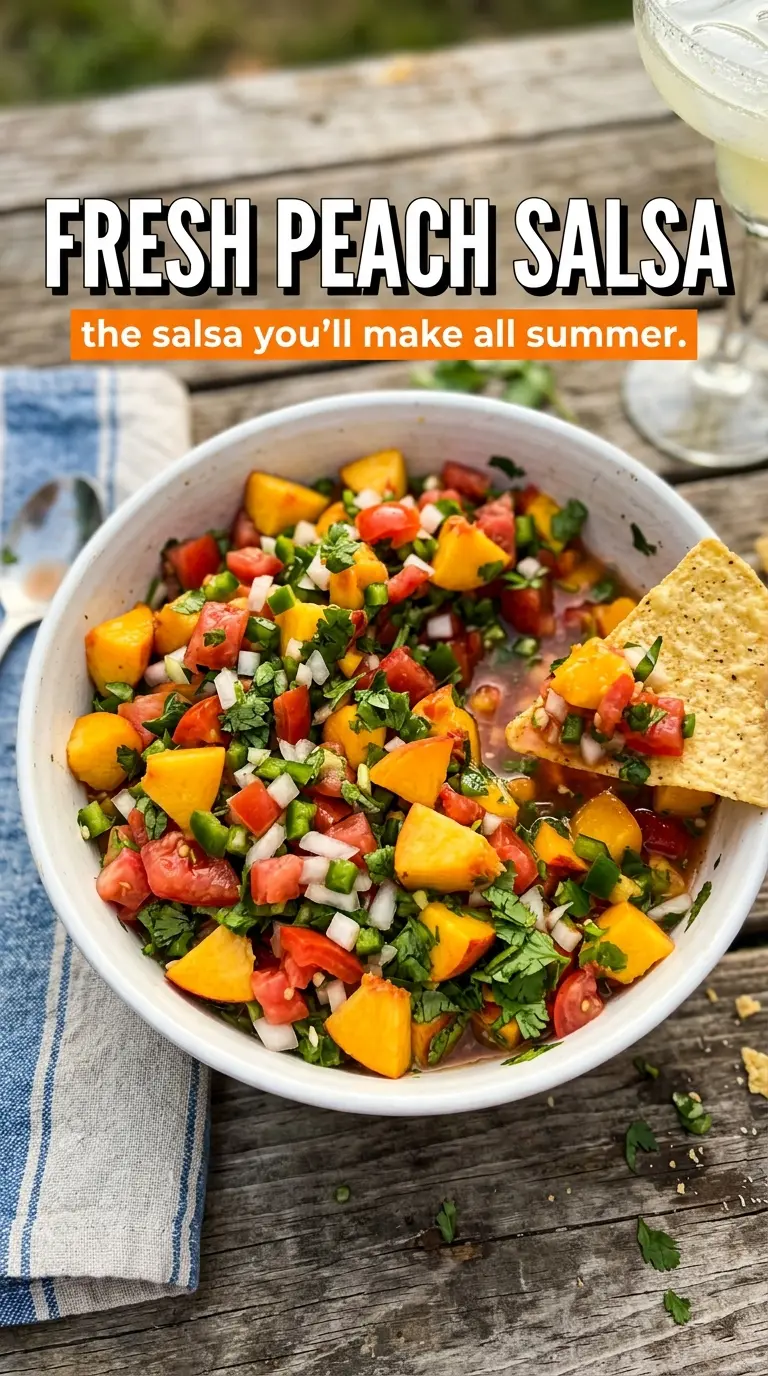
- Ripe peaches — These are the base, so fruit that’s fragrant and just tender gives the best texture. If the peaches are rock hard, the salsa tastes flat; if they’re overripe, they slump. A good peach should yield slightly when pressed near the stem.
- Red onion — Raw onion gives the salsa crunch and a sharp edge that keeps the peaches from tasting too sweet. Dice it finely so it disperses through the bowl instead of landing in big, harsh bites. If yours tastes extra strong, soak it in cold water for 10 minutes and drain well.
- Jalapeño — This brings heat and a green, peppery note. Removing the seeds keeps the salsa mild, but the real heat sits in the white ribs, so scrape those out too if you want a gentler bowl.
- Fresh cilantro — Cilantro adds freshness and lifts the whole mix. Dried cilantro won’t work here; it tastes dusty and doesn’t give the same clean finish. Chop it right before mixing so it stays fragrant.
- Lime juice and zest — Juice adds acid; zest adds aroma. Both matter. If you only use juice, the salsa tastes tighter and less vivid, especially after it rests.
- Cumin — Just a little cumin gives the salsa a Tex-Mex backbone. Too much and it starts tasting heavy, which fights the fruit. Keep it at half a teaspoon and let it read as warmth, not spice blend.
- Corn or mango — This is optional, but it changes the texture in a useful way. Corn adds little pops of sweetness and crunch; mango makes the salsa softer and more tropical. Don’t use both unless you want the fruit to take over.
The 15 Minutes That Matter Most
Building the Bowl
Combine the peaches, onion, jalapeño, and cilantro in a medium bowl first. This lets you see the balance before the acid goes in. If the jalapeño is spreading everywhere in tiny specks, the dice is too fine and the heat will come across faster than the fruit. Aim for pieces that are small enough to fit on a chip but still look like fruit, not relish.
Adding the Acid and Salt
Stir in the lime juice, zest, cumin, and salt with a light hand. The goal is to coat the fruit, not crush it. If you taste it right away, it may seem underseasoned. Give it the full 15-minute rest at room temperature, then taste again — that’s when the peaches soften the sharp edges and the whole bowl comes into focus.
Final Adjustments
After resting, taste for balance. If it tastes flat, it needs salt, not more fruit. If it tastes too sweet, add a small squeeze of lime. If it needs more heat, add a little extra minced jalapeño. Serve it right away with chips or spoon it over grilled chicken, fish, or tacos while the texture is still crisp and bright.
How to Adapt This for Different Tastes and Dinners
Mango-Peach Version
Swap the optional corn for diced mango if you want a softer, sweeter salsa with a more tropical finish. Mango blends into the peaches instead of contrasting them, so the result feels smoother and less crunchy. Use firm-ripe mango so it holds its shape.
Mild, Kid-Friendly Salsa
Leave out the jalapeño seeds and ribs, or use half a pepper instead of a whole one. You’ll still get the fresh pepper flavor without the bite. A tiny extra pinch of salt helps the fruit taste full when the heat is dialed back.
Cilantro-Free Swap
If cilantro tastes soapy to you, use finely chopped mint or a little flat-leaf parsley instead. Mint gives the salsa a cool, bright edge that works well with peaches, while parsley keeps the flavor cleaner and more neutral. Don’t use dried herbs here; they won’t bring the same freshness.
Make It Dairy-Free and Naturally Gluten-Free
This salsa is already dairy-free and gluten-free as written, which makes it an easy topper for a lot of meals. Keep an eye on the chips or main dish you serve with it if you’re cooking for dietary needs. The salsa itself stays light, fresh, and uncomplicated.
Storage and Reheating
- Refrigerator: Best within 1 day. After that, the peaches soften and release more juice, though it still works if you drain off some liquid.
- Freezer: Don’t freeze it. The peaches lose their fresh texture and the salsa turns watery when thawed.
- Reheating: No reheating needed. If it’s been chilled, let it sit at room temperature for 10 to 15 minutes and stir before serving so the flavors open back up.
Answers to the Questions Worth Asking
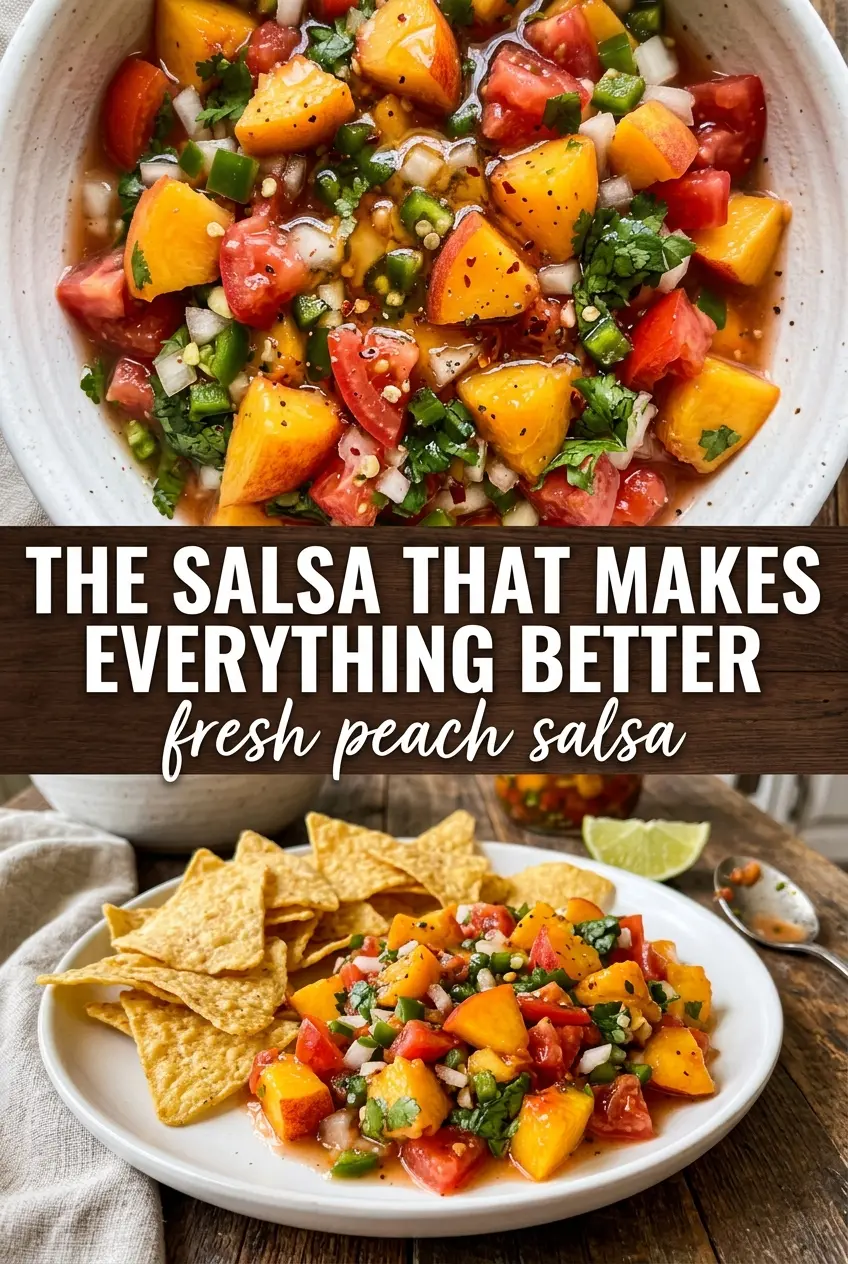
Fresh Peach Salsa
Ingredients
Method
- Combine the diced peaches, red onion, jalapeño, and cilantro in a bowl, stirring until the mixture looks evenly speckled with green herbs. Use a gentle hand so the peaches stay chunky.
- Add the lime juice, lime zest, cumin, and salt, then stir gently to combine and coat everything. The salsa should look glossy and aromatic.
- Add corn or mango if using, folding through just until distributed. You should still see distinct peach chunks throughout.
- Let the salsa sit for 15 minutes at room temperature so juices release and the flavors meld. Watch for a slight increase in liquid pooling around the peaches.
- Taste and adjust salt, lime, or jalapeño level to your preference. Aim for bright citrus and balanced heat.
- Serve immediately with tortilla chips, or spoon over grilled chicken, fish, or tacos. For best texture, keep it chunky and avoid letting it sit too long.