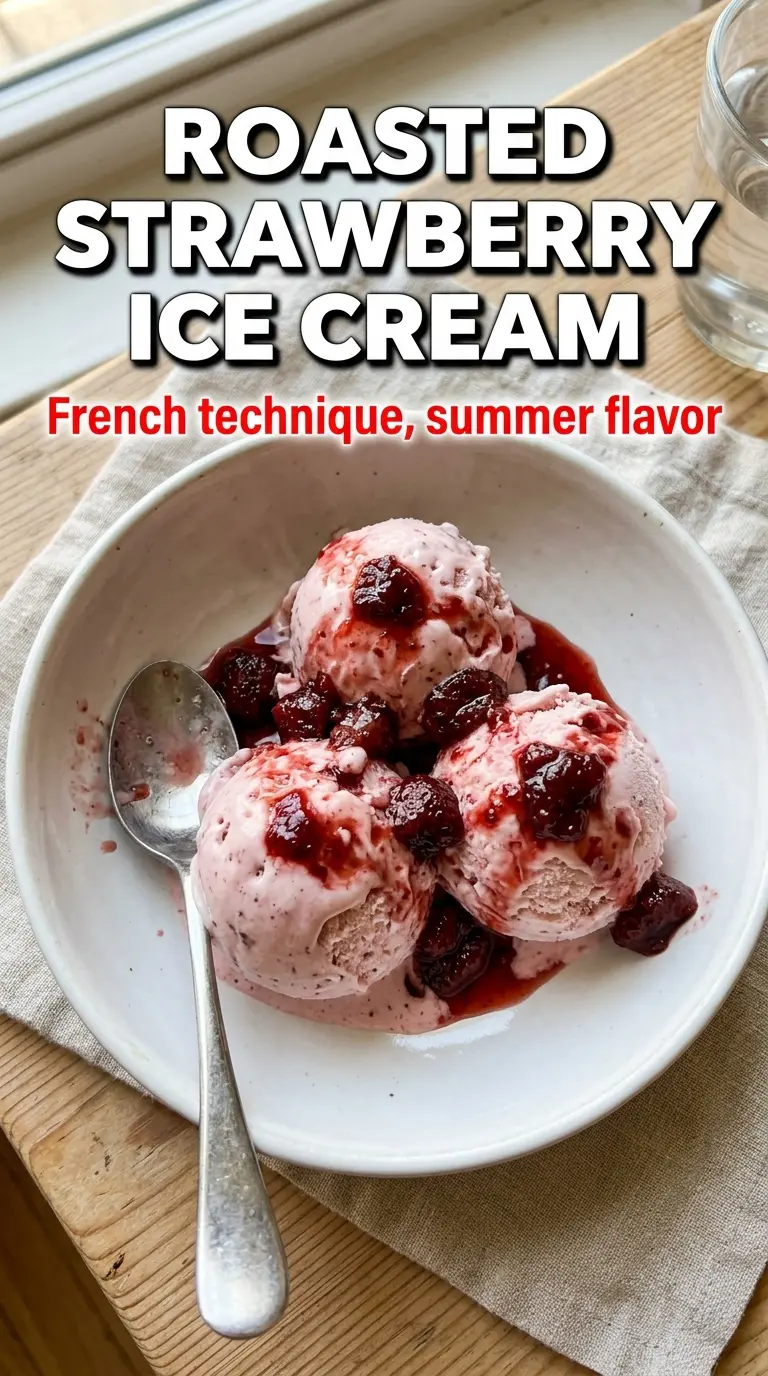
Ruby-deep strawberry ice cream with a custard base and roasted fruit flavor earns its place fast. The berries don’t taste thin or watery here; they turn jammy in the oven, pick up a little balsamic depth, and fold into the cream base with a concentrated, almost preserves-like intensity. The texture lands dense and scoopable instead of icy, with enough body to hold a clean scoop and enough richness to feel special.
The key move is roasting the strawberries before they ever meet the custard. That step drives off excess water and concentrates the flavor, which matters because fresh strawberries can taste muted once frozen. A little aged balsamic doesn’t make the ice cream taste savory; it sharpens the fruit and keeps the sweetness from going flat. Then the custard base is cooked gently and strained, which gives you a smooth finish without any eggy bits.
Below you’ll find the one temperature I watch most closely, the best way to puree the roasted berries, and a few smart swaps if you need to adjust for what’s in your kitchen.
The roasted strawberries made all the difference — the ice cream churned thick, set up beautifully in the freezer, and didn’t get that icy texture I usually fight with fruit ice cream.
Like this roasted strawberry custard ice cream? Save it for the days when you want a deep berry dessert with jammy fruit flavor and a creamy French-style finish.
The Roasting Step That Keeps Strawberry Ice Cream From Tasting Flat
Fresh strawberries can disappear once they’re folded into ice cream base, especially if they’re pale or out of season. Roasting changes that. The heat pulls out moisture, concentrates the sugars, and gives the berries a deeper, almost candied edge that tastes stronger after freezing than raw berries ever will. The balsamic helps too, but only because it boosts the fruit; it shouldn’t read as a separate flavor.
The common mistake here is rushing the fruit. If the strawberries come out of the oven before they’ve turned syrupy and collapsed, the puree will taste bright but thin, and the finished ice cream can freeze with a little ice on the palate. Wait until the pan juices look glossy and the berries have softened into a jammy layer. That’s the point where the flavor gets big enough to survive the churn.
What Each Ingredient Is Doing in the Custard
- Strawberries — Use ripe berries, but don’t worry about perfection. Roasting helps even average fruit taste fuller, and it’s the best way to rescue berries that are fragrant but not especially sweet.
- Aged balsamic vinegar — This is the quiet intensifier. A good balsamic gives the strawberries a darker, rounder finish; skip the harsh, thin stuff if you can, because that sharp vinegar note won’t cook off completely.
- Heavy cream and whole milk — The cream gives the ice cream its plush body, while the milk keeps it from turning overly rich. Don’t replace both with lower-fat dairy unless you want a firmer, icier result.
- Egg yolks — These build the custard and give the ice cream its dense, French-style texture. Temper them slowly or they’ll scramble; the goal is a smooth, pale base that thickens on the stove without ever boiling.
- Vanilla extract — Use a clean, plain vanilla here. It rounds out the berry flavor without turning the ice cream into a vanilla dessert with strawberries mixed in.
Building the Custard Without Scrambling the Eggs
Roast the berries until they collapse
Toss the halved strawberries with half the sugar and the balsamic, then spread them in a single layer on the baking sheet. Roast until they’re deeply softened, glossy, and surrounded by syrupy juices. If the pan looks dry, the berries need more time; if they’re already starting to brown at the edges but still look firm, keep going until they slump. Cool them before blending so you don’t blast hot fruit into the custard later.
Temper the yolks slowly
Warm the cream and milk, then whisk the remaining sugar into the yolks until they look smooth and slightly lighter. Drizzle the hot dairy into the yolks in a thin stream while whisking constantly. That gradual addition raises the temperature without turning the eggs into curds. If you dump the hot liquid in all at once, the yolks can seize and you’ll end up straining out bits of cooked egg instead of making custard.
Cook just to nappe and strain
Return the mixture to the pot and cook over medium-low heat, stirring with a spatula and scraping the bottom, until it reaches about 175°F and lightly coats the spoon. It should look silky, not bubbly. Pull it off the heat before it boils; once custard boils, the texture turns grainy fast. Strain it, then stir in the roasted strawberry puree, vanilla, and salt so the base stays smooth and even.
Chill completely before churning
Set the bowl over an ice bath and stir until the custard feels cool, then refrigerate until fully cold. This step matters more than people think. If the base goes into the churn even a little warm, it takes longer to thicken and can freeze with a looser, icier texture. Once churned, freeze until firm enough to scoop cleanly.
How to Adapt This for Different Kitchens and Different Needs
Make It Dairy-Free
Use full-fat canned coconut milk in place of the heavy cream and whole milk, then expect a slightly firmer freeze and a gentle coconut note in the background. You’ll still get the roasted strawberry depth, but the custard won’t have the same classic French richness.
Skip the Balsamic, Keep the Depth
If you don’t want vinegar in dessert, leave it out and add an extra teaspoon of sugar to the roasting pan. The ice cream will still be good, but it won’t have that same dark, jammy edge that makes the berry flavor linger.
Use Frozen Strawberries When Fresh Aren’t Good
Frozen strawberries work well here because roasting is already part of the method. Roast them straight from frozen, and give them a few extra minutes until the liquid turns syrupy and the fruit looks deeply concentrated. They won’t taste quite as bright as peak-season fresh berries, but the roasted finish still carries the recipe.
Storage and Reheating
- Refrigerator: The churned ice cream should go straight to the freezer, not the refrigerator. In the freezer, it keeps best for about 2 weeks before the texture starts to dull.
- Freezer: Freeze in a shallow, airtight container with parchment pressed directly on the surface. It will keep longer than 2 weeks, but the clean strawberry flavor is best within the first week.
- Reheating: Not applicable for serving. Let it sit at room temperature for 5 to 10 minutes before scooping; if it feels rock-hard, don’t microwave it, or the edges will melt while the center stays frozen.
Questions I Get Asked About This Recipe
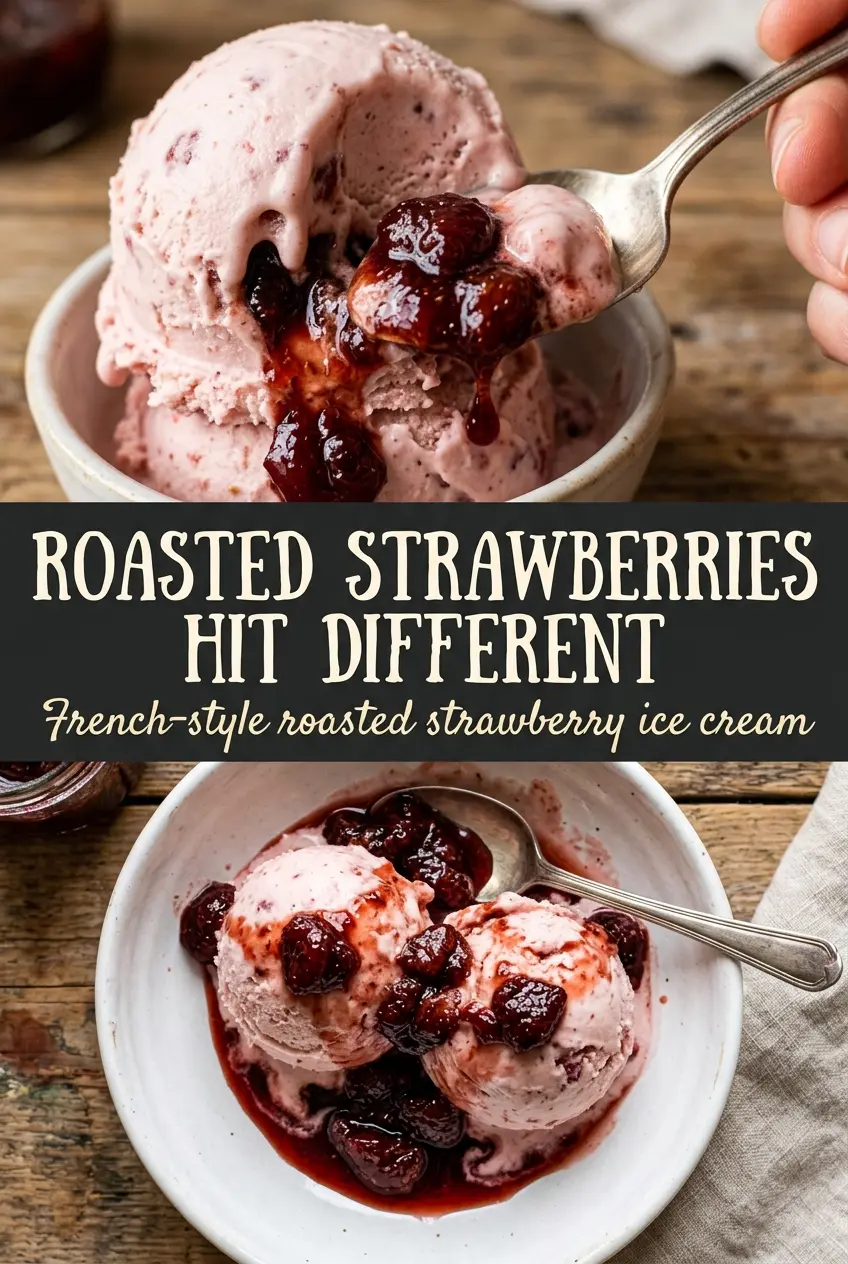
French-Style Roasted Strawberry Ice Cream
Ingredients
Equipment
Method
- Preheat the oven to 375F. Toss the hulled, halved strawberries with 1/4 cup sugar and the aged balsamic vinegar on a baking sheet.
- Roast at 375F for 30-35 minutes until deeply caramelized and jammy. Cool the roasted berries, then puree until smooth and intensely ruby.
- Heat the heavy cream and whole milk until steaming, not boiling. Whisk into the egg yolks (beaten with the remaining 1/4 cup sugar) in a steady stream while whisking.
- Cook the mixture to 175F, stirring until it thickens into a custard-like consistency and lightly coats a spoon. Strain it, then stir in the roasted strawberry puree, vanilla extract, and salt for a dense, pink-ruby base.
- Cool completely over an ice bath until no longer warm to the touch. Refrigerate for 4 hours to fully chill the custard.
- Churn in an ice cream maker until thick and scoopable with visible volume. Transfer to a freezer-safe container and freeze until firm.