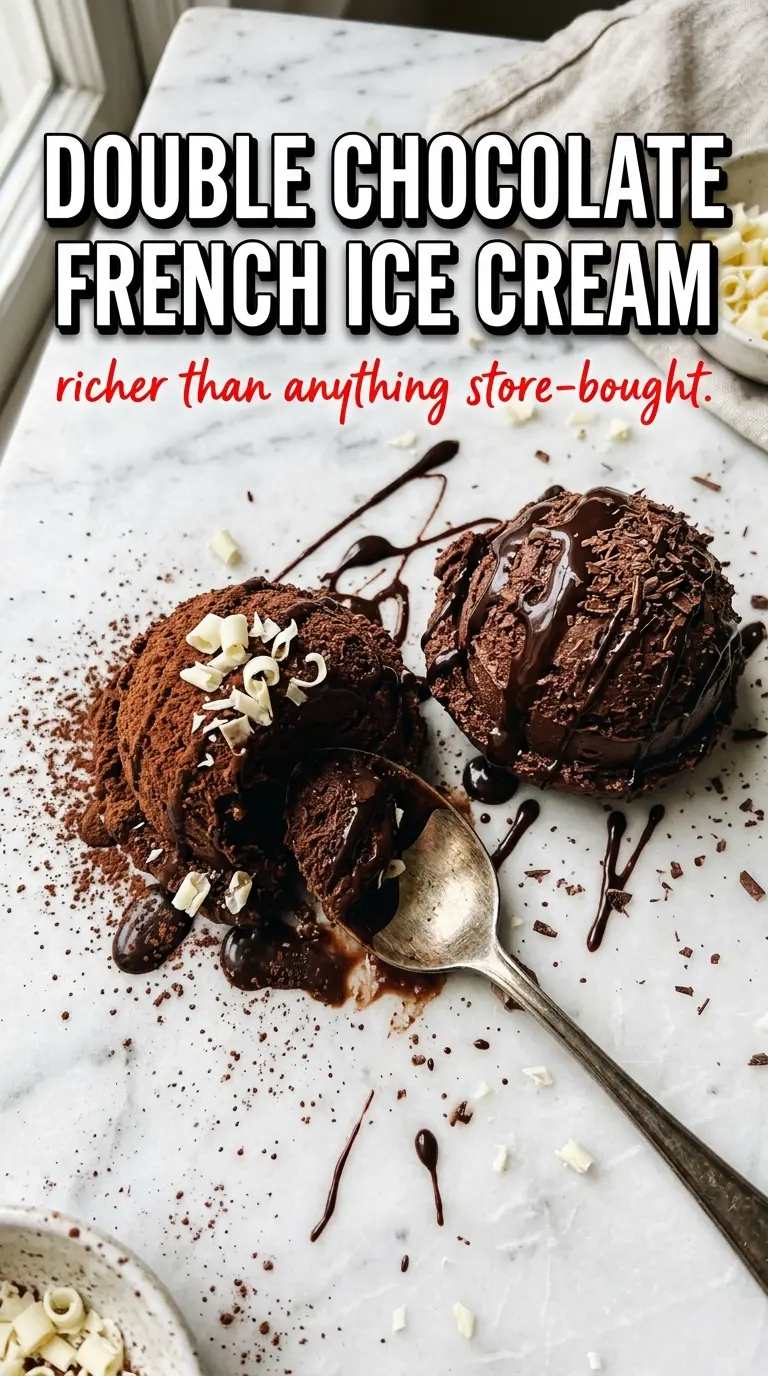
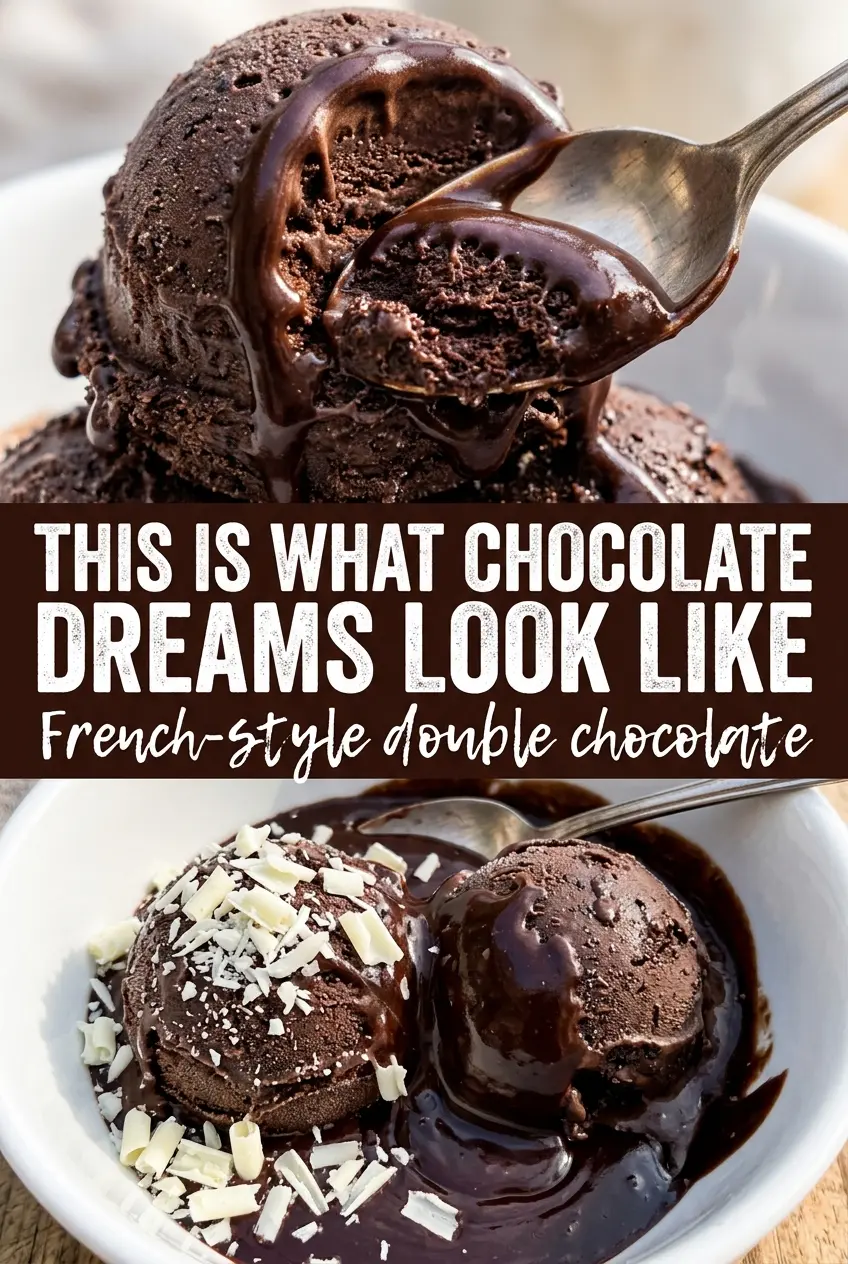
French-style double chocolate ice cream lands with the kind of dense, glossy richness that feels closer to spooning up a frozen chocolate custard than a typical scoop of ice cream. The base stays deep and dark, with a clean chocolate finish that tastes fudgy instead of flat, and the texture turns silky enough to slice through with a spoon but still melts slowly on the tongue. It’s the kind of dessert that makes plain chocolate ice cream seem thin by comparison.
The difference here is the layered chocolate approach. Dutch-process cocoa goes into the dairy first, which builds a broad, almost cocoa-brown depth before the custard even starts thickening. Then melted dark chocolate gets whisked in at the end, giving the finished base that almost ganache-like body. Tempering the yolks and cooking the custard to 175°F keeps it smooth; going hotter is how you get a grainy base or scrambled edges.
Below, I’m walking through the details that matter most: how to keep the custard from breaking, why the chocolate goes in after cooking, and what to change if you want a slightly softer, darker, or dairy-free version.
The custard came out unbelievably smooth, and the dark chocolate flavor stayed bold even after freezing. I let it churn until it looked like soft fudge, and it scooped beautifully after a few hours in the freezer.
Save this French-Style Double Chocolate Ice Cream for the nights when you want a deeply fudgy custard base and an almost ganache-like scoop.
The Key Step That Keeps This Custard Silky, Not Eggy
With French-style ice cream, the line between luxurious and overcooked is thin. The custard should thicken enough to coat a spoon and leave a clear trail when you drag a finger across the back, but it should never boil. Once it starts bubbling, the yolks tighten fast and the texture turns from satin to grainy.
The other mistake is adding the chocolate too early. Dark chocolate belongs in after the custard comes off the heat, when the mixture is hot enough to melt it but not so hot that the cocoa butter separates. That’s what gives this ice cream its dense, glossy body instead of a dull, sandy finish.
- Egg yolks — These give the base its French custard texture and keep the finished ice cream from tasting icy. Whole eggs won’t give you the same velvet-soft result.
- Dark chocolate — Use 70-72% chocolate if you want that near-black color and a deep, grown-up bitterness. Lower-percentage chocolate makes the ice cream sweeter and softer, but it loses some of the intensity.
- Dutch-process cocoa — This deepens the chocolate flavor without adding extra sweetness. Natural cocoa can work in a pinch, but the flavor will be sharper and less rounded.
- Butter — The small amount helps the melted chocolate turn glossy and emulsify smoothly into the custard. Don’t skip it if you want that ganache-like finish.
What Each Ingredient Is Actually Doing in the Freezer Bowl
- Heavy cream and whole milk — The cream brings richness and body; the milk keeps the base from becoming heavy or greasy. Swapping in more milk will make the ice cream lighter, but it also makes it less plush and less stable when frozen.
- Sugar — This doesn’t just sweeten the ice cream. It also lowers the freezing point, which keeps the texture scoopable instead of icy hard.
- Vanilla and salt — Vanilla rounds out the chocolate, and salt keeps the flavor from tasting one-note. That small pinch is what makes the dark chocolate taste deeper instead of just bitter.
- Finely chopped chocolate — Fine pieces melt evenly into the custard. If the chunks are too large, you’ll have to stir longer and risk cooling the base too much before the chocolate fully emulsifies.
From Steaming Dairy to Scoopable Custard
Warm the cocoa into the dairy
Whisk the cocoa powder into the cream and milk before heating. This keeps the cocoa from clumping and gives the base a smoother, darker start. Heat just until steaming and watch for small bubbles around the edge of the pan; that’s enough. If the dairy boils, the chocolate flavor gets harsher and the custard is harder to control later.
Temper the yolks without scrambling them
Whisk the sugar into the egg yolks until they look thick and pale, then slowly stream in the hot dairy while whisking constantly. The goal is to warm the yolks gradually so they thicken the custard instead of turning into bits of cooked egg. Pour the mixture back into the saucepan and cook over medium-low heat, stirring constantly, until it reaches 175°F and lightly coats the spoon.
Finish with the melted chocolate
Take the pan off the heat before adding the melted chocolate and butter. Whisk until the base turns glossy and completely smooth. If it looks slightly split at first, keep whisking; the warm custard usually pulls it back together. Stir in the vanilla and salt, then strain through a fine mesh sieve to catch any little cooked egg bits before chilling.
Chill hard before churning
Set the custard over an ice bath to cool it quickly, then refrigerate it until it’s fully cold. A warm base won’t churn properly and will give you a softer, less creamy result. After churning, the ice cream should look like thick soft-serve. Freeze it until firm enough to scoop cleanly, which usually takes a few more hours.
Ways to Adjust the Chocolate Without Losing the Custard
Darker and More Intense
Use a 72% or even 75% chocolate if you want a more bittersweet finish. The result is firmer and less sweet, so it reads more like frozen ganache than classic chocolate ice cream.
Dairy-Free Version
Swap in full-fat coconut milk for the cream and milk, and use a dairy-free dark chocolate. The texture will still be rich, but you’ll pick up a faint coconut note and lose a little of the classic French custard flavor.
Softer Scoop Straight From the Freezer
Add 1 tablespoon of vodka or dark rum to the finished base before churning if you want a slightly softer freeze. Use just enough to affect texture, not enough to make the ice cream taste boozy.
Storage and Reheating
- Refrigerator: The custard base can sit covered in the fridge for up to 2 days before churning, and the flavor actually deepens as it rests.
- Freezer: The churned ice cream keeps well for about 2 weeks in an airtight container with parchment pressed on top. After that, it can start to pick up ice crystals and lose some of its glossy texture.
- Reheating: Not applicable for the finished ice cream. For the softest scoop, let it sit at room temperature for 5 to 10 minutes before serving instead of trying to microwave it, which melts the outside before the center loosens.
Answers to the Questions Worth Asking
French-Style Double Chocolate Ice Cream
Ingredients
Equipment
Method
- Melt the dark chocolate and unsalted butter over a double boiler, stirring until smooth; set aside so it stays warm but glossy.
- Whisk the Dutch process cocoa powder into the heavy cream and whole milk, then heat to steaming, stirring until fully combined and thickened slightly around the edges.
- Whisk the steaming cream mixture slowly into the egg yolks and granulated sugar, then return everything to the saucepan and cook, stirring constantly, until the custard reaches 175°F and coats the back of a spoon.
- Remove the saucepan from the heat and immediately whisk in the melted dark chocolate until the mixture turns glossy and smooth.
- Stir in the vanilla extract and salt, then strain through a fine mesh sieve to ensure a silky texture.
- Cool completely over ice, then refrigerate for 4 hours before churning in an ice cream maker.
- Freeze the churned ice cream until firm, then scoop and serve with a glossy, dense chocolate texture.