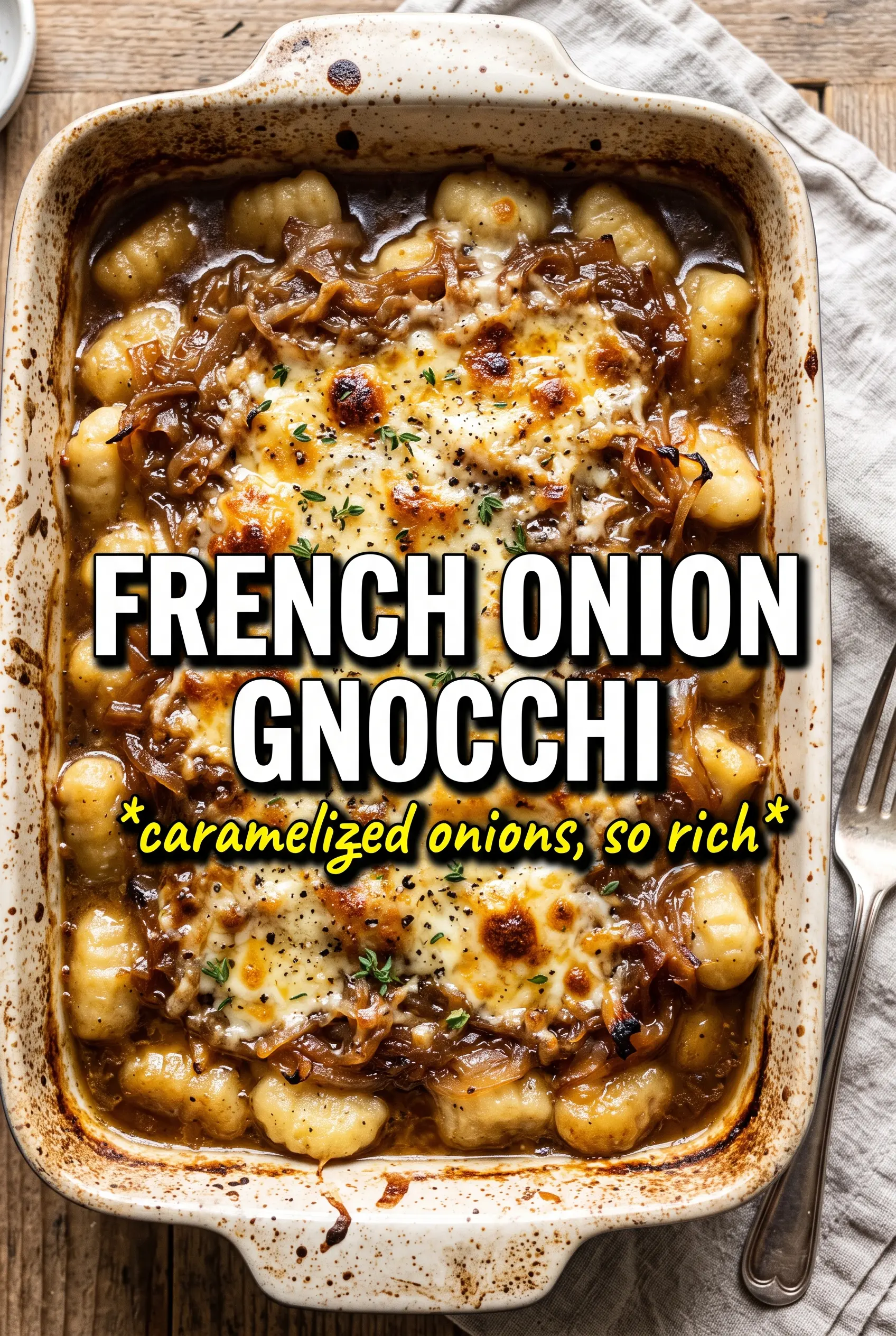
French onion gnocchi brings everything people love about classic French onion soup into one skillet: deeply caramelized onions, a glossy savory broth, pillowy gnocchi, and a blanket of melted Gruyere that turns golden under the broiler. The sauce clings instead of pooling, and every bite has that sweet-savory onion depth that makes this kind of dish hard to stop eating.
The magic is in giving the onions enough time to go from soft and pale to jammy and browned before anything else gets added. That slow cook builds the base of the whole dish. Then the wine loosens the browned bits from the pan, the broth and cream turn it into a real sauce, and the uncooked gnocchi finishes right in that liquid so it absorbs flavor instead of tasting like an afterthought.
Below, I’ve laid out the part that matters most: how to keep the onions moving without rushing them, how to keep the sauce balanced, and what to do if you want to swap ingredients without losing that French onion character.
The onions got that deep sweet flavor I was hoping for, and the gnocchi cooked right in the sauce without turning mushy. The Gruyere on top browned beautifully under the broiler.
Like this French onion gnocchi? Save it to Pinterest for the nights when you want a brothy, cheesy skillet dinner with caramelized onions front and center.
The Part People Rush: Caramelizing the Onions
The onions need time, not heat. If the pan runs too hot, they brown at the edges before their moisture cooks off, and you end up with uneven flavor instead of that deep onion sweetness that makes this dish taste like French onion soup. Keep the heat at medium-low and stir often enough to prevent scorching, but not so often that the onions steam in their own liquid.
Thirty-five to forty minutes sounds long until you see the change. The onions start floppy and pale, then slowly collapse, turn amber, and eventually take on a jammy, brown, almost spreadable texture. That is the point where the dish gets its backbone.
- Butter gives the onions a round, rich base and helps them brown more evenly than oil alone.
- Dry white wine pulls the browned bits off the pan and adds acidity so the sauce doesn’t taste flat.
- Worcestershire sauce deepens the savory side of the broth and gives the dish more of that classic French onion soup character.
What Each Ingredient Is Actually Doing in the Skillet
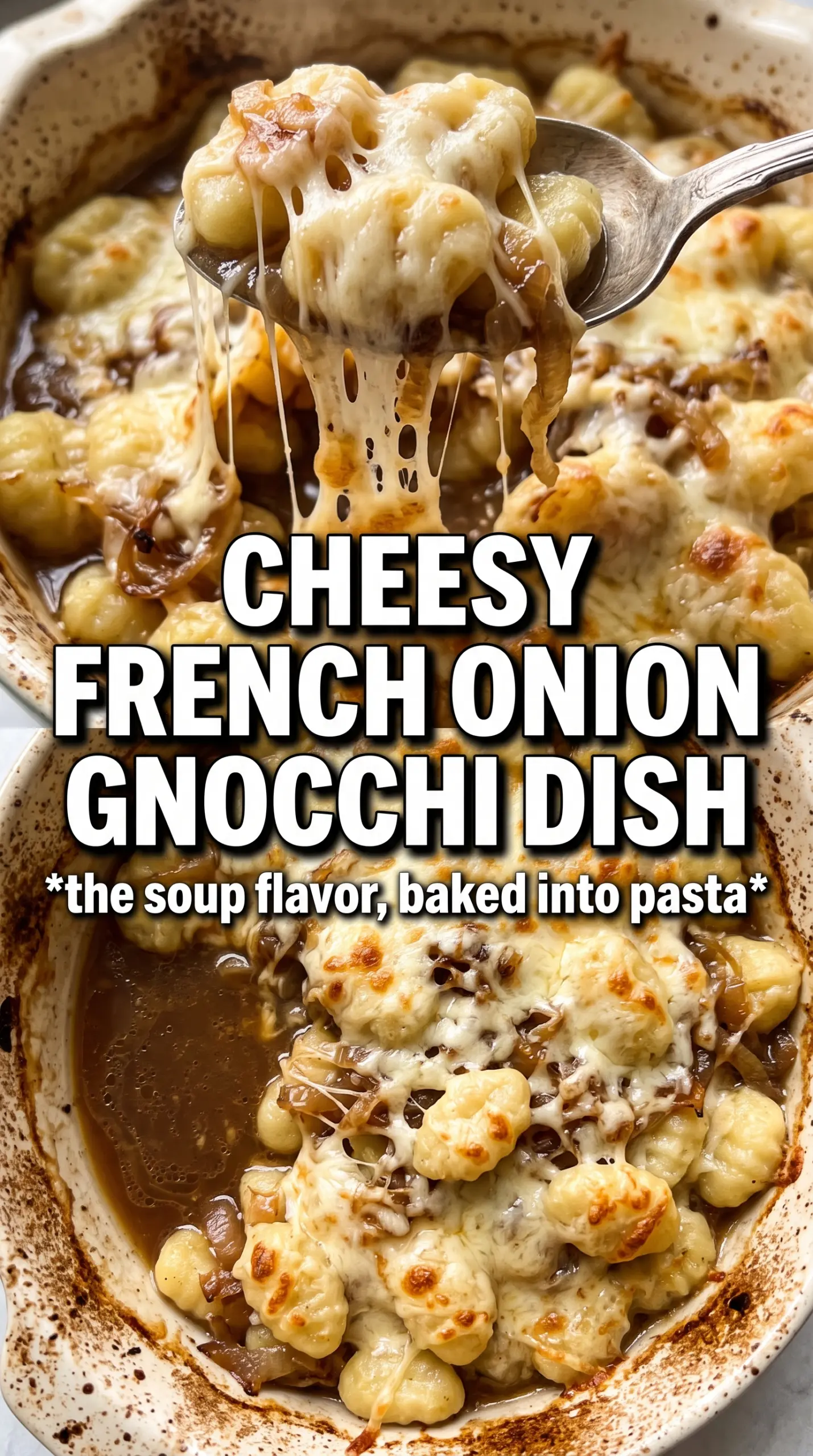
- Potato gnocchi is the shortcut that makes this feel substantial without turning it into pasta. Use shelf-stable or refrigerated gnocchi; both work well because they cook directly in the sauce.
- Gruyere is worth keeping. It melts smoothly, browns well, and brings that nutty French onion flavor that shredded mozzarella can’t match.
- Heavy cream softens the broth into a sauce that coats the gnocchi instead of tasting thin. Half-and-half will work in a pinch, but the sauce will be looser and a little less luxurious.
- Fresh thyme matters here because it cuts through the richness and echoes the flavor you expect in French onion soup. Dried thyme can stand in, but use less since it reads stronger once it simmers.
Building the Sauce So the Gnocchi Cooks Cleanly
Deglaze Before the Liquid Loses Its Steam
Once the garlic and thyme hit the pan, stir just long enough to wake them up, then add the wine while the pan is still hot. It should hiss and loosen the browned bits immediately. If the pan looks dry or the bottom starts to darken too much before the wine goes in, lower the heat and move quickly. Those browned bits are flavor, but burnt garlic tastes harsh.
Simmer the Broth and Cream Together
Add the broth, Worcestershire, and cream, then bring everything to a gentle simmer, not a boil. A hard boil can make the cream separate slightly and can reduce the liquid too fast before the gnocchi has time to cook through. You want a small, steady bubble around the edges and a sauce that looks lightly thickened before the gnocchi goes in.
Cook the Gnocchi Right in the Sauce
Uncooked gnocchi goes straight into the simmering sauce. Stir once or twice so it doesn’t stick in one layer, then let it cook until the gnocchi floats and the sauce starts clinging to the spoon, usually 4 to 5 minutes. If the sauce gets too tight before the gnocchi is tender, splash in a little extra broth. The gnocchi should be pillowy, not gummy.
Broil Until the Cheese Blisters
Scatter the Gruyere evenly over the top and move the skillet under the broiler just until the cheese is melted, bubbling, and spotted with gold. Step away for this part; the line between browned and burnt can be less than a minute. A white skillet or oven-safe pan helps you judge the color better, which is why this step is worth watching closely instead of timing blindly.
How to Adapt This French Onion Gnocchi Without Losing the Point
Make It Vegetarian
Swap the beef broth for a strong mushroom broth or vegetable broth with a splash of soy sauce. You’ll lose a little of the deep roast-beef note, but the caramelized onions still carry the dish, and the mushrooms bring back some of that savory weight.
Make It Dairy-Free
Use olive oil instead of butter and replace the cream with unsweetened oat cream or a thick cashew cream. Skip the Gruyere or use a dairy-free meltable shreds if you have one you trust, but the top won’t brown quite the same way.
Make It Gluten-Free
Use gluten-free gnocchi and check that your Worcestershire sauce is certified gluten-free. The rest of the dish already works naturally, so this is an easy swap as long as you cook the gnocchi until it’s tender and not chalky in the center.
Turn It Into a Heartier Main
Add browned mushrooms, shredded rotisserie chicken, or seared sausage after the sauce comes together. Keep the balance in mind: this dish works because the onions stay front and center, so add enough protein to make it more filling without burying the broth and cheese.
Storage and Reheating
- Refrigerator: Store leftovers in an airtight container for up to 3 days. The sauce will thicken and the gnocchi will soften a bit more as it sits.
- Freezer: I don’t recommend freezing this. Cream sauces can separate and the gnocchi turns softer after thawing.
- Reheating: Rewarm gently on the stovetop over low heat with a splash of broth or water to loosen the sauce. High heat is the fastest way to break the cream and make the gnocchi tough at the edges.
Answers to the Questions Worth Asking
French Onion Gnocchi
Ingredients
Equipment
Method
- Melt the butter in a cast iron skillet over medium-low heat and add the thinly sliced onions. Cook for 35-40 minutes, stirring occasionally, until deeply caramelized with dark golden-brown edges and reduced volume.
- Add the minced garlic and fresh thyme to the onions and cook for 30-60 seconds until fragrant. Pour in the dry white wine to deglaze and cook for 2 minutes, scraping up browned bits from the pan.
- Add the beef broth, Worcestershire sauce, and heavy cream to the skillet. Bring the mixture to a simmer, then keep it at a steady simmer so it thickens slightly.
- Add the potato gnocchi directly into the simmering sauce. Cook for 4-5 minutes until the gnocchi is cooked through and the sauce coats the back of a spoon.
- Scatter the shredded Gruyère evenly over the top and season with salt and pepper to taste. Broil for 3-4 minutes until golden and bubbly, with melted cheese bubbling at the edges.